Orthodox, Conservative, and Reform: Understanding Jewish Denominations
Judaism is not monolithic — it encompasses diverse movements from Ultra-Orthodox to Reform, each with its own approach to tradition, law, and modern life.
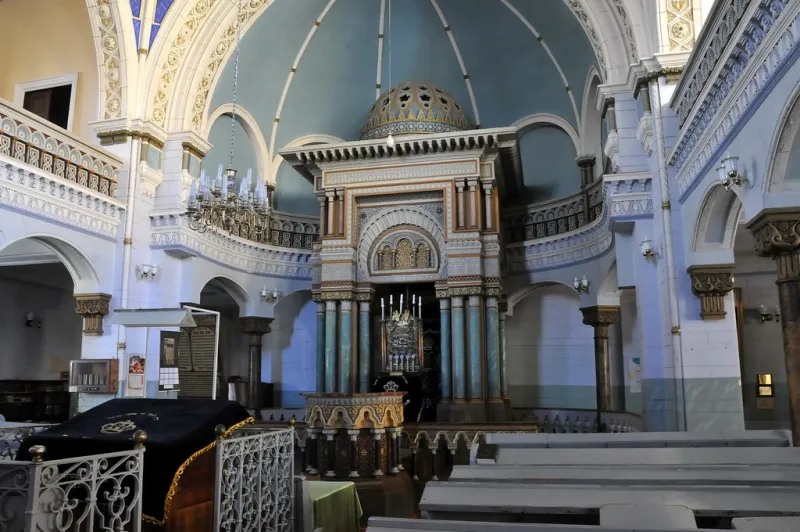
Walk into three different synagogues on a Shabbat morning and you might think you have stumbled into three different religions.
In the first, men draped in black and white prayer shawls sway intensely over thick Hebrew prayer books. A partition separates men from women, and the chanting of the cantor fills every corner of the room. In the second, a mixed congregation follows along in Hebrew and English while a rabbi in a suit delivers a sermon that references both Talmud and the morning’s headlines. In the third, a woman wearing a kippah leads the congregation in song accompanied by a guitar, and the overhead screen displays transliterated lyrics so everyone can sing along.
All three are Jewish. All three are reading from the same Torah. And all three would tell you they are carrying forward an unbroken tradition stretching back thousands of years. The differences lie in how they carry it — and that is the story of Jewish denominations.
A Shared Foundation
Before exploring what divides Jewish movements, it is worth pausing at what unites them. Every major denomination shares a core set of commitments: the centrality of the Torah as a sacred text, monotheism, a sense of Jewish peoplehood that transcends national borders, the observance of Shabbat in some form, lifecycle rituals from circumcision to mourning, and a deep investment in ethical living. Jews across the spectrum gather for Passover seders, fast on Yom Kippur, and celebrate a child’s bar or bat mitzvah. The melody may differ, the liturgy may be shorter or longer, but the underlying rhythm of Jewish life runs through every movement.
The denominational landscape as we know it is relatively modern — mostly a product of the eighteenth and nineteenth centuries, when Jewish communities in Europe confronted the Enlightenment, emancipation, and rapid social change. The question at the heart of every denomination is ultimately the same: how should an ancient tradition respond to a changing world?
Orthodox Judaism: Guarding the Covenant
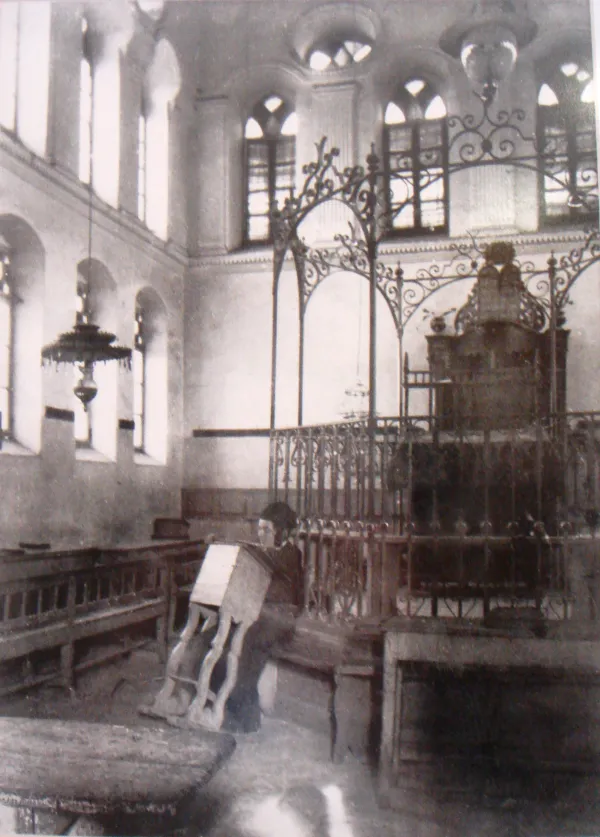
Orthodox Judaism holds that the Torah was given by God to Moses at Mount Sinai and that Jewish law — halakha — is divinely mandated and binding. The 613 commandments are not suggestions; they are obligations that shape every aspect of daily life, from what you eat to how you conduct business.
Within Orthodoxy, there is considerable diversity:
- Modern Orthodox Jews engage fully with secular society — attending universities, pursuing professional careers, participating in civic life — while maintaining strict halakhic observance. They see no contradiction between a modern education and a traditional Jewish life.
- Haredi (Ultra-Orthodox) communities prioritize Torah study and religious life above all else. Men often spend years in yeshiva (religious academy), and communities tend to be insular, with distinct dress codes and limited engagement with secular media and culture.
- Hasidic Jews follow charismatic spiritual leaders called rebbes and emphasize joy, mysticism, and intense devotion in prayer. Hasidic communities such as Lubavitch (Chabad), Satmar, and Breslov each have their own customs, melodies, and traditions.
In Orthodox synagogues, men and women sit separately, divided by a mechitzah (partition). Services are conducted entirely in Hebrew, and the liturgy follows a traditional structure that has remained largely unchanged for centuries. The rabbi is always male, and women’s religious roles, while valued, are defined differently than men’s.
Approximately 10 percent of American Jews identify as Orthodox, though the community is growing rapidly due to high birth rates.
Conservative Judaism: Tradition in Dialogue with Modernity
Conservative Judaism — known as Masorti Judaism outside North America — emerged in the late nineteenth century as a middle path between the strict traditionalism of Orthodoxy and the radical reforms of the Reform movement. Its founders believed that Jewish law is binding but that halakha has always evolved in response to new circumstances, and that it should continue to do so through careful scholarly deliberation.
In practice, Conservative Judaism looks different from congregation to congregation. Most Conservative synagogues today are fully egalitarian: women read from the Torah, lead services, and serve as rabbis and cantors. The liturgy is predominantly in Hebrew, and the Shabbat service follows a traditional structure, though it is often somewhat shorter than an Orthodox service. Driving to synagogue on Shabbat, while technically a violation of traditional law, is widely accepted as a practical necessity.
The Conservative movement’s Committee on Jewish Law and Standards issues teshuvot (legal opinions) on contemporary questions, carefully balancing precedent with present realities. This has led to landmark decisions on issues like the ordination of women (approved in 1983) and the acceptance of LGBTQ+ members and clergy.
Conservative Judaism was the largest Jewish denomination in the United States for much of the twentieth century, though its numbers have declined in recent decades as Jews increasingly gravitate toward Orthodox or Reform communities — or choose not to affiliate at all.
Reform Judaism: Autonomy and Ethical Vision

Reform Judaism, which began in early nineteenth-century Germany, was the first organized movement to argue that Judaism must change with the times. Its early leaders stripped away what they considered outdated rituals — head coverings, dietary laws, Hebrew-only prayer — in favor of a Judaism centered on ethical monotheism and universal moral principles.
Today, Reform Judaism is the largest denomination in the United States, encompassing roughly 35 percent of affiliated Jews. Modern Reform congregations have actually reclaimed many traditions that earlier generations abandoned: Hebrew has returned to the liturgy, many members keep some form of kashrut, and ritual objects like tallitot (prayer shawls) and kippot are common.
What defines Reform Judaism is the principle of informed personal autonomy. Each individual is encouraged to study Jewish tradition deeply and then make their own decisions about observance. The movement ordains women (since 1972), welcomes interfaith families, recognizes patrilineal descent (a significant departure from the traditional matrilineal standard), and has been at the forefront of LGBTQ+ inclusion.
Reform services typically blend Hebrew and the vernacular language, and congregations vary widely — some are deeply liturgical, others incorporate contemporary music and creative programming. The emphasis on tikkun olam (repairing the world) drives significant social justice activism, from civil rights to environmental advocacy.
Reconstructionist Judaism: An Evolving Civilization
The smallest of the major denominations, Reconstructionist Judaism grew out of the ideas of Rabbi Mordecai Kaplan (1881–1983), who taught that Judaism is not merely a religion but an “evolving religious civilization” encompassing language, culture, art, history, and community as much as theology and law.
Kaplan challenged traditional theology directly: he rejected the idea of a supernatural God who intervenes in human affairs and reimagined God as the sum of natural processes that give life meaning. Reconstructionist communities are radically egalitarian and emphasize democratic decision-making, with congregants playing an active role in shaping ritual and policy.
The Reconstructionist Rabbinical College, founded in 1968, was the first rabbinical seminary to admit openly LGBTQ+ students and the first to ordain women alongside men from its founding.
Other Voices on the Spectrum
Beyond the four major movements, other approaches to Jewish life continue to emerge:
- Jewish Renewal blends traditional practice with mystical, meditative, and creative elements, drawing on Hasidic spirituality and contemporary consciousness.
- Humanistic Judaism, founded by Rabbi Sherwin Wine in 1963, celebrates Jewish culture and identity without reference to God, centering ethics, reason, and human responsibility.
- “Just Jewish” or unaffiliated — perhaps the fastest-growing category. According to the Pew Research Center, a growing number of American Jews do not identify with any denomination, preferring to draw freely from multiple traditions or to define their Judaism in personal, non-institutional terms.
Beyond Labels
Jewish life has never fit neatly into boxes, and it does not now. A family might attend an Orthodox synagogue on Rosh Hashanah and a Reform seder on Passover. A college student raised Conservative might find spiritual meaning in a Renewal meditation circle. A Hasidic musician might collaborate with a secular Israeli artist, and both would call what they are doing Jewish.
The denominations are less like separate religions and more like different dialects of the same language. They argue — sometimes fiercely — about the proper way to read the Torah, the role of women, the meaning of chosenness, and the relationship between tradition and change. But the argument itself is deeply Jewish. The Talmud, after all, is a record of rabbis disagreeing with one another across centuries and still considering every voice part of the conversation.
What matters most, perhaps, is not which denomination a Jew belongs to but that they are asking the question that has animated Jewish life from the very beginning: how should we live?
Frequently Asked Questions
What are the main Jewish denominations?
The four largest Jewish denominations are Orthodox, Conservative, Reform, and Reconstructionist. Orthodox Judaism maintains strict adherence to Jewish law (halakha), Conservative Judaism balances tradition with modernity, Reform Judaism emphasizes personal autonomy, and Reconstructionist Judaism views Judaism as an evolving civilization.
What is the difference between Orthodox and Reform Judaism?
Orthodox Judaism considers the Torah divinely given and Jewish law (halakha) binding in all areas of life. Reform Judaism views the Torah as divinely inspired but human-authored, and sees Jewish law as a guide rather than an obligation, emphasizing ethical teachings and personal choice.
Can you switch between Jewish denominations?
Yes. Many Jews move between denominations throughout their lives based on personal belief, community, and life circumstances. Conversions performed by Reform or Conservative rabbis may not be recognized by Orthodox authorities, which can affect matters like marriage in Israel.
Sources & Further Reading
Related Articles
The 613 Commandments: The Framework of Jewish Life
Judaism identifies 613 commandments in the Torah — 248 positive and 365 negative — covering everything from prayer and charity to agriculture and justice.
Converting to Judaism: A Thoughtful Guide to Joining the Jewish People
Converting to Judaism is a serious, transformative journey involving study, mentorship, and ritual — welcomed by tradition yet approached with care across all denominations.
Halakha: The Jewish Path of Law
Halakha — literally 'the way of walking' — is the comprehensive system of Jewish law that governs everything from prayer and diet to business ethics and family life.
Haskalah: The Jewish Enlightenment That Changed Everything
The Haskalah — the Jewish Enlightenment of the 18th and 19th centuries — transformed Jewish life, sparking debates about tradition, modernity, and identity that continue to this day.
The Jewish Wedding: A Complete Guide to the Ceremony
Under the chuppah, surrounded by family and tradition, two lives become one — the Jewish wedding ceremony is a beautiful blend of ancient law, symbolism, and joy.
Jews in America: Four Centuries of History
From 23 refugees arriving in New Amsterdam in 1654 to a thriving community of nearly seven million, the story of Jews in America is a story of reinvention, contribution, and enduring identity.
Kabbalah: An Introduction to Jewish Mysticism
Beyond the law and the stories lies a hidden dimension of Judaism — Kabbalah, the mystical tradition that seeks to understand the nature of God, creation, and the human soul.
Jewish Prayer: Connecting with the Divine
From the three daily prayer services to personal meditation, discover how Jewish prayer works and what it means.
The Synagogue: House of Prayer, Study, and Assembly
More than just a place of worship — the synagogue is the heart of Jewish community life, combining prayer, learning, and social gathering under one roof.
The Talmud: A Beginner's Guide to Jewish Oral Law
The Talmud is the vast ocean of Jewish thought — centuries of rabbinic debate on law, ethics, storytelling, and the meaning of life, all compiled into one extraordinary work.
The Torah: The Heart of Judaism
The Torah is more than a book — it is the living constitution of Jewish life, studied and debated for over three millennia.
What Is a Rabbi? Teacher, Leader, and Guide
The word 'rabbi' means 'my teacher' — but the role has evolved from ancient legal authority to modern spiritual leader, counselor, and community guide across every denomination.
What Is Judaism? A Living Introduction to the World's Oldest Monotheistic Faith
Judaism is the world's oldest monotheistic religion, built on covenant, Torah, ethical living, and an unbroken chain of tradition stretching back four thousand years.
Who Is a Jew? Understanding Jewish Identity Across Denominations, Law, and History
Jewish identity is complex — shaped by matrilineal descent, denominational differences, ethnic diversity, secular belonging, and Israeli law in ways that defy simple answers.