The Jewish Wedding: A Complete Guide to the Ceremony
Under the chuppah, surrounded by family and tradition, two lives become one — the Jewish wedding ceremony is a beautiful blend of ancient law, symbolism, and joy.
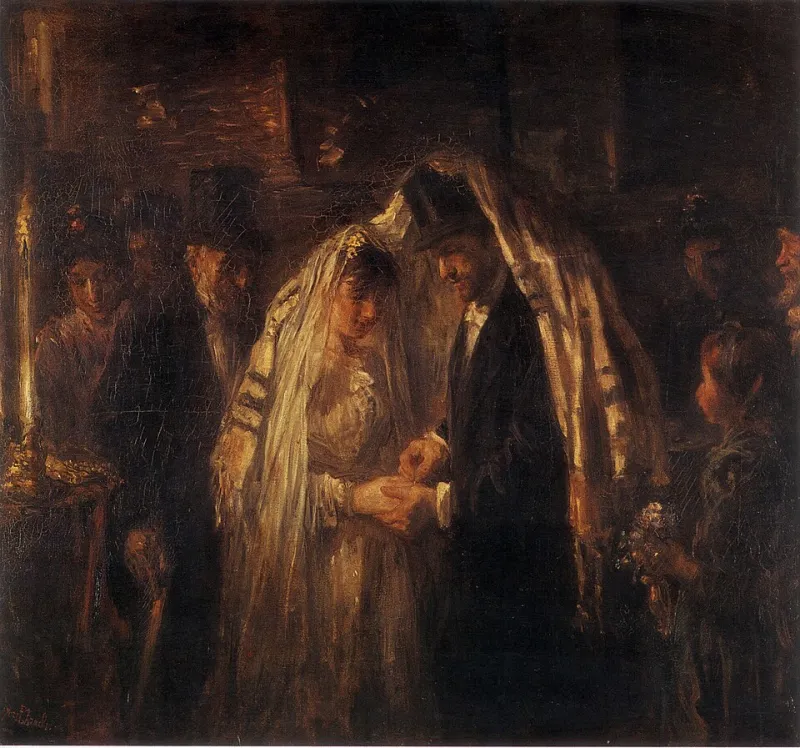
The Moment Before the Glass Breaks
Everyone holds their breath. The groom lifts his foot. The wrapped glass sits on the ground beneath it, catching the light. In this suspended instant, the entire room is gathered into a single point of attention — hundreds of people, two families, years of anticipation — all focused on one fragile object. Then the foot comes down, the glass shatters, and the room erupts. “Mazel tov!” The music crashes in. People are clapping, crying, laughing. The couple kisses. And just like that, everything has changed.
The Jewish wedding ceremony is one of the most beautiful and layered rituals in all of Judaism. It is ancient — rooted in practices described in the Talmud and developed over two thousand years — yet it feels, every single time, utterly fresh. Every element carries meaning: legal, spiritual, emotional, historical. A Jewish wedding is not merely a celebration of love between two people (though it is certainly that). It is a covenant — a brit — echoing the covenant between God and the Jewish people, enacted before witnesses, under an open sky.
Before the Ceremony
The Tisch
In many traditional Ashkenazi communities, the wedding day begins with a tisch (Yiddish for “table”) — a gathering of the groom and his male friends and family, often accompanied by singing, words of Torah, and drinking. The tisch is lively and boisterous, a deliberate contrast to the solemnity that is about to follow. The groom may attempt to share a Torah teaching, while his friends drown him out with song — a playful tradition acknowledging that on this day, the groom’s mind is elsewhere.
The Ketubah Signing
Before the ceremony begins, the ketubah — the Jewish marriage contract — is signed in the presence of two witnesses. The ketubah is one of the oldest continuously used legal documents in history. Written traditionally in Aramaic, it outlines the groom’s obligations to the bride: to provide food, clothing, and conjugal rights, and to pay a specified sum in the event of divorce.
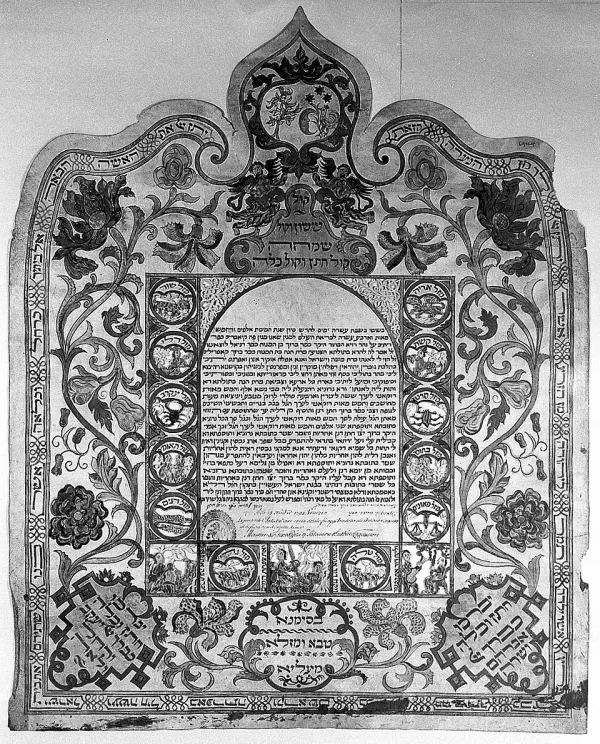
Today, ketubot are often works of art — hand-lettered, painted, and illuminated — and many couples frame and display them in their homes. In Conservative and Reform ceremonies, the ketubah text may be modified to reflect egalitarian values, with both partners assuming mutual obligations. Some couples commission custom ketubot that incorporate personal vows alongside the traditional language.
The Bedeken (Veiling)
After the ketubah is signed, the groom is led — usually by a singing, dancing procession of friends — to the bride for the bedeken (veiling ceremony). The groom places the veil over the bride’s face. This custom is traced to the biblical story of Jacob, who was tricked into marrying Leah instead of Rachel because the bride was veiled. By veiling the bride himself, the groom confirms: this is the person I intend to marry.
The bedeken is often one of the most emotional moments of the day. The families see each other for the first time. The bride, sitting on a decorated chair surrounded by her attendants, receives the groom’s gesture in a moment of quiet intensity before the public ceremony begins.
Under the Chuppah
The heart of the Jewish wedding is the ceremony under the chuppah — a canopy supported by four poles, open on all sides. The chuppah symbolizes the home the couple will build together: sheltering but not enclosed, rooted but open to the world. Some families use a tallit (prayer shawl) as the canopy; others use a decorated cloth. The chuppah is traditionally held outdoors, under the open sky, recalling God’s promise to Abraham that his descendants would be as numerous as the stars.
The ceremony under the chuppah is led by a rabbi (and sometimes a cantor) and consists of two distinct parts that were historically performed separately but are now combined:
Kiddushin (Betrothal)
The first section is kiddushin — the formal betrothal. A blessing is recited over a cup of wine, and the couple drinks. Then the groom places a ring on the bride’s right index finger and recites the ancient declaration:
Harei at mekudeshet li b’taba’at zo k’dat Moshe v’Yisrael. “Behold, you are consecrated to me with this ring according to the law of Moses and Israel.”
In egalitarian ceremonies, the bride may also place a ring on the groom’s finger and recite a corresponding declaration. The ring must be a simple, unadorned band — traditionally, so that its value is clear and there can be no deception.
The Ketubah Reading
Between the two sections of the ceremony, the ketubah is read aloud — often in the original Aramaic, sometimes with a translation. This serves as a legal pause between the betrothal and the marriage proper, and it publicly declares the couple’s commitments before the community.
Sheva Brachot (Seven Blessings)
The second section is nissuin — the actual marriage — marked by the recitation of the sheva brachot (seven blessings) over a second cup of wine. These blessings move from the universal to the particular: from the creation of the world, to the creation of humanity, to the joy of this specific couple. The sixth blessing is especially beautiful:
Grant great joy to these loving companions, as You gave joy to Your creations in the Garden of Eden.
The seventh blessing asks God to bring gladness and rejoicing, love and harmony, to the couple and to all of Israel. It is a prayer that links this private joy to the collective hope of the Jewish people.
The seven blessings are often distributed among honored guests — grandparents, teachers, close friends — each one reciting or chanting a blessing. It is a way of weaving the community into the ceremony itself.
Circling
In many traditional ceremonies, the bride circles the groom seven times before the blessings begin (or sometimes three times). The origins of this custom are debated — some connect it to the seven times Joshua circled the walls of Jericho, others to the mystical idea of building a spiritual enclosure around the couple. In egalitarian ceremonies, both partners may circle each other, or the practice may be omitted entirely.
Breaking the Glass
The ceremony concludes with the act that everyone — Jewish or not — associates with a Jewish wedding: the breaking of the glass. The groom (and in some ceremonies, both partners) stomps on a glass wrapped in a cloth napkin, shattering it. The crowd shouts “Mazel tov!” and the celebration begins.
The meaning of the broken glass has been interpreted many ways. The most widely cited explanation is that it commemorates the destruction of the Temple in Jerusalem — a reminder that even at the height of joy, the Jewish people remember their losses. As the Psalmist wrote: “If I forget you, O Jerusalem, let my right hand forget its skill.”
Others see it as a symbol of the fragility of relationships, the irreversibility of change, or simply a dramatic punctuation mark — the sound that transforms two individuals into a married couple.
Yichud
Immediately after the ceremony, the couple retreats to a private room for yichud (seclusion) — a few minutes alone together, away from the crowd. In traditional law, this period of private togetherness is a legal component of the marriage. In practice, it is often the couple’s first quiet moment of the day — a chance to breathe, to eat something (they may have been fasting since dawn), and to absorb the enormity of what just happened.
The Reception
If the ceremony is the soul of a Jewish wedding, the reception is its body — and what a body it is.
The Hora
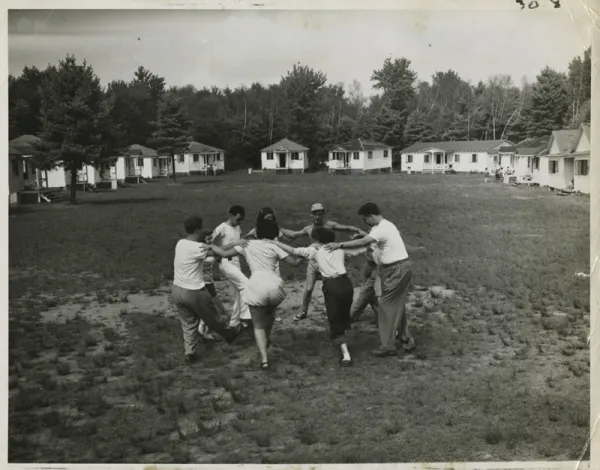
At some point during the reception, the band strikes up a familiar melody, and the guests form a circle. This is the hora — the exuberant circle dance that has become synonymous with Jewish celebration. The newlyweds are lifted on chairs and bounced above the crowd, holding the ends of a napkin or handkerchief between them. It is chaotic, joyful, and slightly terrifying. (Holding on to the chair is strongly recommended.)
The Meal and Blessings
The wedding meal is itself a religious occasion. Grace after meals is recited, followed by a repetition of the sheva brachot — the same seven blessings from the ceremony, now sung or chanted at the table. In traditional practice, the sheva brachot are repeated at festive meals throughout the seven days following the wedding, as long as a new guest (a panim chadashot — “new face”) is present who was not at a previous meal. This extends the joy of the wedding into a full week of celebration.
Across Communities
The Jewish wedding, like the Jewish people, is remarkably diverse:
- Orthodox weddings follow the traditional structure closely. The ceremony is conducted under halakha (Jewish law), the ketubah is in Aramaic, and the couple does not write their own vows. Music and mixed dancing may or may not be present at the reception, depending on the community.
- Conservative weddings retain the traditional framework but may include egalitarian elements — a double ring ceremony, a modified ketubah, both partners circling.
- Reform weddings offer the most flexibility. Rabbis may incorporate personal vows, readings, and contemporary music. The ceremony may take place in a synagogue, a garden, or a ballroom.
- Sephardic weddings feature distinctive customs, including the henna ceremony (hinna) held in the days before the wedding, where the bride’s hands and feet are decorated with henna paste in celebration. Moroccan, Yemenite, and Iraqi Jews each bring their own melodies, foods, and rituals to the occasion.
- Ethiopian Jewish weddings include unique traditions rooted in the ancient practices of Beta Israel, with distinctive wedding garments and communal celebrations.
What unites all of these is the chuppah, the ring, the blessings, the broken glass, and the conviction — shared across every denomination and tradition — that marriage is not merely a contract but a sacred act. Under the canopy, open to the sky, two lives join in a covenant that echoes across generations.
And then someone stomps on a glass, and the party begins.
Frequently Asked Questions
What happens at a Jewish wedding ceremony?
A traditional Jewish wedding includes: signing the ketubah (marriage contract), bedeken (veiling the bride), processing to the chuppah, blessings over wine, ring exchange, reading the ketubah, seven blessings (sheva brachot), and breaking the glass. The ceremony is led by a rabbi and typically lasts 20-30 minutes.
Why does the groom break a glass at a Jewish wedding?
Breaking the glass at the end of the ceremony commemorates the destruction of the Temple in Jerusalem. Even at moments of greatest joy, Jews remember this loss. When the glass shatters, guests shout 'Mazel tov!' (congratulations), and the celebration begins.
What is a ketubah?
A ketubah is a Jewish marriage contract, traditionally written in Aramaic, that outlines the groom's obligations to the bride. Today it is often beautifully illustrated and displayed in the couple's home. Modern ketubot may include egalitarian language in Conservative and Reform ceremonies.
Sources & Further Reading
Related Articles
The Complete Guide to Bar and Bat Mitzvah
Everything you need to know about Bar and Bat Mitzvah — from the meaning of the ceremony and months of preparation to the Torah reading, celebration, and gifts.
Orthodox, Conservative, and Reform: Understanding Jewish Denominations
Judaism is not monolithic — it encompasses diverse movements from Ultra-Orthodox to Reform, each with its own approach to tradition, law, and modern life.
Jewish Lifecycle: From Birth to Death
Judaism marks every stage of life with sacred rituals — from the brit milah eight days after birth to the traditions of mourning and remembrance.