Haskalah: The Jewish Enlightenment That Changed Everything
The Haskalah — the Jewish Enlightenment of the 18th and 19th centuries — transformed Jewish life, sparking debates about tradition, modernity, and identity that continue to this day.
The Hunchback Who Changed the World
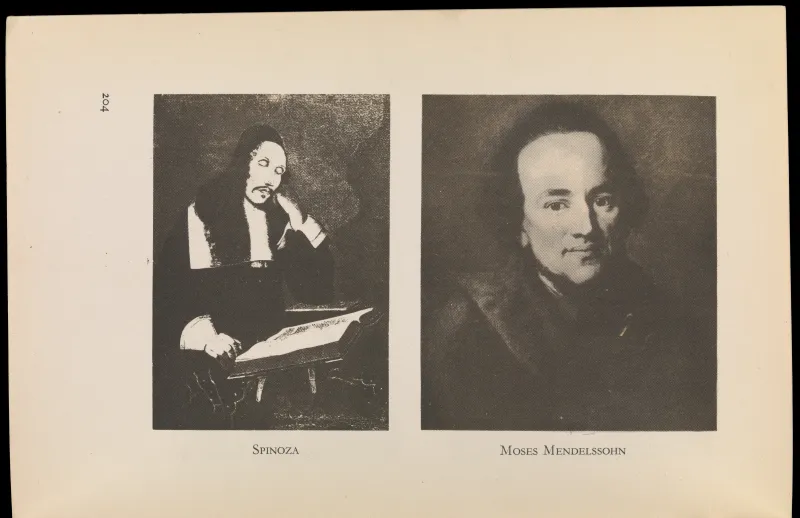
In 1743, a fourteen-year-old boy walked through the Rosenthaler Gate — the only entrance through which Jews were permitted to enter Berlin. He was small, hunchbacked, and poor. He carried almost nothing. The gate’s logbook recorded his arrival with the same notation used for livestock: “Today there passed through the Rosenthaler Gate: six oxen, seven pigs, one Jew.”
The boy’s name was Moses Mendelssohn, and he would become one of the most important Jewish thinkers in modern history. Within two decades, this impoverished son of a Torah scribe from Dessau would be celebrated across Europe as a philosopher, writer, and cultural critic. He would also ignite a revolution within Jewish life — one whose aftershocks are still being felt today.
The movement he helped launch is called the Haskalah — from the Hebrew word sekhel (intellect). It was the Jewish Enlightenment, and it asked a question that sounds simple but proved explosive: Can a Jew be both fully Jewish and fully part of the modern world?
The World Before the Haskalah
To understand what the Haskalah changed, you need to understand what came before it. In the 18th century, most European Jews lived in self-contained communities — ghettos in Western Europe, shtetls in the East. These communities were governed by rabbinic law, educated in yeshivot, and largely isolated from the surrounding Christian culture.
This isolation was partly imposed (Christian societies restricted where Jews could live and what professions they could practice) and partly chosen (Jewish law and custom created a rich, self-sufficient world). The language of daily life was Yiddish in the Ashkenazi world, Ladino among Sephardim. Hebrew was the language of prayer and study. European vernacular languages were learned as needed for commerce but were not the primary medium of culture.
The system had strengths: deep learning, strong communal bonds, and a coherent sense of identity. But it also had limitations. Secular knowledge — science, philosophy, literature — was largely excluded from the curriculum. Most Jews could not read or write in the language of the country where they lived. And the gap between the Jewish and non-Jewish worlds was widening precisely when the broader European Enlightenment was promoting reason, tolerance, and universal human rights.
Mendelssohn’s Revolution
Moses Mendelssohn arrived in Berlin with a Talmudic education and an insatiable curiosity. He taught himself German, Latin, French, English, and Greek. He devoured Locke, Leibniz, and the Greek philosophers. He also remained an observant Jew — keeping Shabbat, eating kosher, studying Talmud.
His philosophical writings earned him fame in the wider world. His friend Gotthold Ephraim Lessing modeled the protagonist of his play Nathan the Wise — a story about religious tolerance — on Mendelssohn. Frederick the Great granted him “protected Jew” status, and Berlin’s intellectual salons welcomed him as an equal.
But Mendelssohn was not content with personal success. He wanted to open the doors of European culture to all Jews — and, simultaneously, to open Jewish culture to the wider world. His key projects included:
- Translating the Torah into German (written in Hebrew letters), giving Jews a bridge to the German language and culture
- Writing Jerusalem (1783), a philosophical argument for religious liberty and the separation of church and state
- Advocating for Jewish civil rights within European society
Mendelssohn’s core argument was radical for its time: Judaism is not incompatible with reason or modernity. Jews should acquire secular education, learn European languages, and participate in civic life — not by abandoning their religion, but by demonstrating that it can coexist with Enlightenment values.
The Maskilim
Mendelssohn inspired a generation of followers called maskilim (enlighteners). These intellectuals spread the Haskalah across Europe, adapting its message to local conditions. In Berlin and Vienna, the emphasis was on integration into German culture. In Galicia and Russia, where the Jewish population was much larger and more traditional, the Haskalah took on a different character — more focused on internal Jewish reform and Hebrew literary revival.
The maskilim established schools that taught secular subjects alongside Jewish studies. They published journals and newspapers in Hebrew and in European languages. They wrote novels, poetry, and satirical works that critiqued what they saw as the obscurantism and insularity of traditional Jewish life.
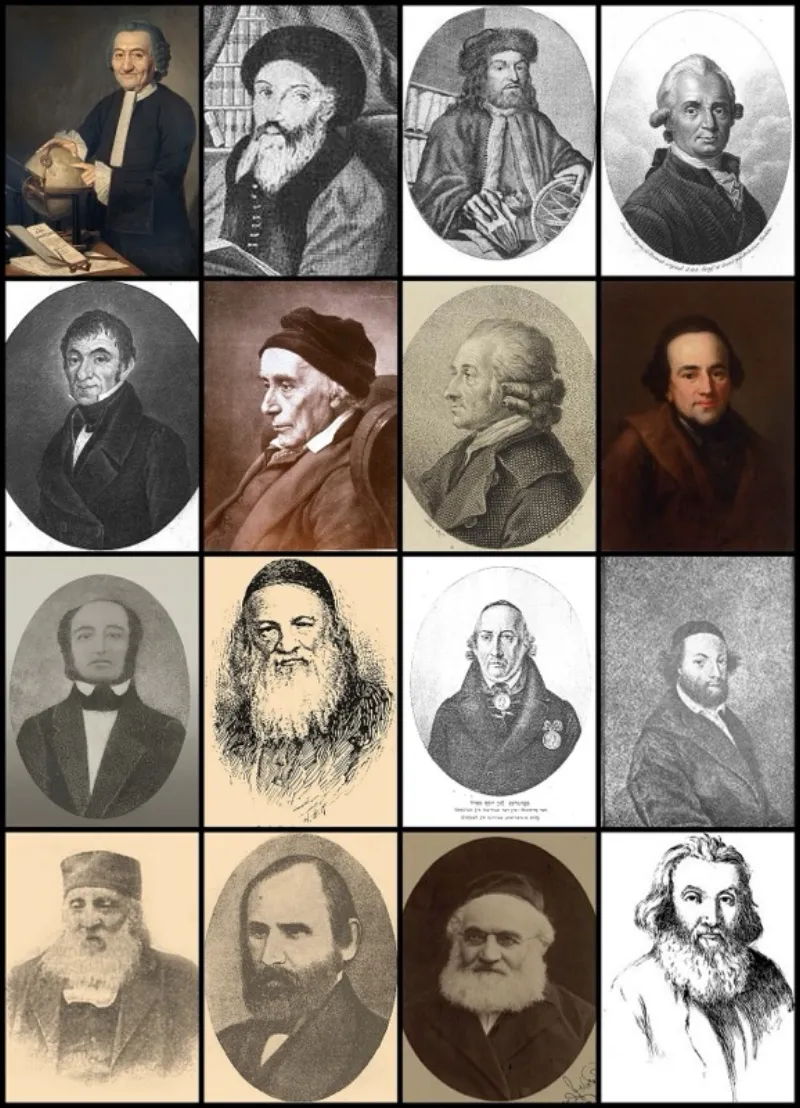
The Hebrew revival was particularly significant. Maskilim argued that Hebrew should be a living literary language, not just a language of prayer. They wrote poetry, essays, and fiction in a modernized Hebrew that drew on biblical models rather than rabbinic Aramaic. This literary revival would later contribute to the emergence of spoken Modern Hebrew and the Zionist movement.
Tension with Tradition
The Haskalah was not universally welcomed. Many traditional rabbis saw it as a Trojan horse — a gateway to assimilation disguised as intellectual enrichment. And they had evidence to support their fears.
Mendelssohn himself remained observant until his death in 1786. But within a generation, four of his six children had converted to Christianity. His grandson, the composer Felix Mendelssohn, was baptized as a child. The trajectory seemed to confirm the worst predictions of the traditionalists: first secular education, then cultural integration, then intermarriage, then conversion.
The great rabbi Moses Sofer (the Chatam Sofer, 1762-1839) crystallized the opposition with a famous dictum: “Chadash asur min haTorah” — “The new is forbidden by the Torah.” Originally a legal principle about new grain, Sofer applied it as a blanket rejection of Haskalah-style innovation. His followers in Hungary and elsewhere drew hard lines against any accommodation with modernity.
The tension was real and painful. Families split. Communities fractured. The question of how much to engage with the non-Jewish world became — and remains — one of the central fault lines in Jewish life.
What the Haskalah Produced
The Haskalah’s influence extends far beyond its original program. It helped give rise to:
- The Reform movement — which applied Enlightenment principles to Jewish worship and law, adapting traditions to modern sensibilities
- Modern Orthodoxy — which accepted secular education while maintaining strict halakhic observance (a synthesis that Mendelssohn himself might have recognized)
- Jewish nationalism and Zionism — partly as a response to the failure of Enlightenment promises of equality (if emancipation did not solve the “Jewish question,” perhaps Jewish sovereignty would)
- Modern Hebrew literature — the novels of S.Y. Agnon, the poetry of Chaim Nachman Bialik, and ultimately the revival of Hebrew as a spoken language
- Jewish life in America — where the Haskalah’s vision of Jews as both culturally distinctive and fully integrated citizens found its most successful expression
The Unfinished Argument
The Haskalah asked whether Jews could maintain their identity while fully participating in modern society. More than two centuries later, the answer is still being debated. In some ways, the Haskalah succeeded beyond its founders’ dreams: Jews today are Nobel laureates, heads of state, cultural icons, and leaders in virtually every field. In other ways, the traditionalists’ warnings proved prescient: rates of assimilation and intermarriage in open societies are high, and Jewish identity in the absence of traditional practice is harder to transmit across generations.
The Haskalah did not resolve the tension between tradition and modernity. It sharpened it, gave it language, and set the terms for a conversation that every Jewish community — from ultra-Orthodox Williamsburg to secular Tel Aviv to suburban American synagogues — is still having.
“Be a Jew at home and a man in the street.” — Judah Leib Gordon, maskilic poet
That motto captured the Haskalah’s dream. Whether it described a workable ideal or an impossible contradiction depends, even now, on who you ask.
Frequently Asked Questions
What was the Haskalah?
The Haskalah (from the Hebrew word for 'intellect' or 'enlightenment') was a Jewish cultural and intellectual movement that began in 18th-century Berlin and spread across Europe. It encouraged Jews to engage with secular education, European languages, and modern science while maintaining Jewish identity. It profoundly reshaped Jewish life, leading to the Reform movement, Zionism, and modern Jewish thought.
Who was Moses Mendelssohn?
Moses Mendelssohn (1729-1786) was a German-Jewish philosopher widely considered the father of the Haskalah. A hunchbacked son of a Torah scribe from Dessau, he became one of the leading intellectuals of Enlightenment Europe, befriending figures like Gotthold Lessing. He argued that Jews could be both fully Jewish and fully modern — a revolutionary idea at the time.
Why did traditional Jews oppose the Haskalah?
Many traditional rabbis saw the Haskalah as a threat to Jewish continuity. They feared that secular education would lead to assimilation, intermarriage, and the abandonment of Torah observance. Their fears were not unfounded — Mendelssohn's own grandchildren converted to Christianity. The tension between tradition and modernity that the Haskalah ignited remains one of the defining dynamics in Jewish life.
Sources & Further Reading
Related Articles
Orthodox, Conservative, and Reform: Understanding Jewish Denominations
Judaism is not monolithic — it encompasses diverse movements from Ultra-Orthodox to Reform, each with its own approach to tradition, law, and modern life.
The Jewish Diaspora: 2,000 Years Across the Globe
How the destruction of the Second Temple scattered the Jewish people across continents, creating diverse communities united by faith.
Jews in America: Four Centuries of History
From 23 refugees arriving in New Amsterdam in 1654 to a thriving community of nearly seven million, the story of Jews in America is a story of reinvention, contribution, and enduring identity.