Who Is a Jew? Understanding Jewish Identity Across Denominations, Law, and History
Jewish identity is complex — shaped by matrilineal descent, denominational differences, ethnic diversity, secular belonging, and Israeli law in ways that defy simple answers.
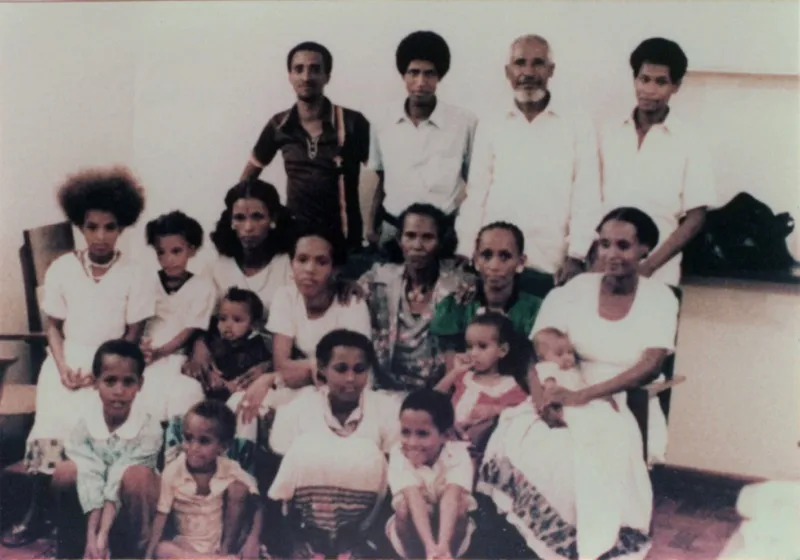
It seems like it should be a simple question. Who is a Jew? But ask it in a room full of Jews and you will discover it is one of the most debated questions in Jewish life — argued across centuries, denominations, courtrooms, and dinner tables with no consensus in sight.
The difficulty is not accidental. Judaism is simultaneously a religion, a people, a culture, and a civilization. It does not map neatly onto categories designed for other traditions. A person can be deeply Jewish without believing in God. A person can believe in the Jewish God without being halakhically (legally) Jewish. A person can look nothing like what the world imagines a Jew looks like and be as Jewish as Moses.
The Traditional Answer: Matrilineal Descent
For most of Jewish history, the answer has been relatively straightforward in legal terms. According to halakha — Jewish religious law — a person is Jewish if they were born to a Jewish mother or underwent a valid conversion. The father’s religion is irrelevant.
This matrilineal principle is codified in the Mishnah (Kiddushin 3:12, c. 200 CE) and has been the standard across Jewish communities for nearly two thousand years. A child born to a Jewish mother and a non-Jewish father is fully Jewish. A child born to a non-Jewish mother and a Jewish father is not — regardless of how the child is raised, what their surname is, or how strongly they identify.
The origins of matrilineal descent are debated by scholars. Some trace it to the practical reality that maternity is always certain. Others connect it to biblical passages or to Roman-era legal norms. Whatever its origins, the rule has carried enormous weight across centuries.
The Reform Challenge: Patrilineal Descent
In 1983, the Reform movement in the United States made a historic decision. The Central Conference of American Rabbis adopted a patrilineal descent resolution, declaring that a child of either a Jewish mother or a Jewish father is presumed Jewish — provided the child is raised with a Jewish identity, including Jewish education and public acts of identification such as naming ceremonies, bar/bat mitzvah, and confirmation.
The decision was both practical and principled. By the 1980s, intermarriage rates among American Jews were climbing rapidly (they now exceed 60% for non-Orthodox Jews). Many children of Jewish fathers and non-Jewish mothers were being raised in Jewish homes, attending Jewish schools, and celebrating Jewish holidays — yet were told by traditional law that they were not Jewish. The Reform movement argued that excluding these children was both unjust and self-defeating.
The response from Orthodox and Conservative Judaism was firm: the matrilineal standard is halakha and cannot be unilaterally changed. This disagreement remains one of the deepest fault lines in Jewish communal life. A person recognized as fully Jewish by their Reform rabbi may not be recognized by an Orthodox one — with real consequences for marriage, burial, and immigration to Israel.
Secular and Cultural Jews
One of the most striking features of modern Jewish identity is the large number of Jews who consider themselves secular or non-religious yet maintain a strong sense of Jewishness. According to the Pew Research Center’s 2020 survey, about 27% of American Jews describe themselves as Jews of “no religion” — they identify as Jewish by culture, ethnicity, ancestry, or some combination, but do not see themselves as religiously Jewish.
This is not a modern invention. The Jewish Enlightenment (Haskalah) of the eighteenth and nineteenth centuries produced a vibrant tradition of secular Jewish culture — in Yiddish literature, socialist politics, Zionist nationalism, and the arts. Some of the most influential Jews in modern history — Sigmund Freud, Albert Einstein, Hannah Arendt — identified deeply as Jewish while maintaining ambivalent or skeptical relationships with religious practice.
For secular Jews, Jewishness may be expressed through ethical commitments (social justice, tikkun olam), cultural practices (holiday meals, humor, specific foods), intellectual traditions, family connections, or a sense of shared historical fate. The comedian’s quip that being Jewish means “feeling guilty about everything and worrying about the rest” captures a real dimension of identity that has little to do with theology.
A People of Astonishing Diversity
One of the most persistent misconceptions about Jews is that they constitute a single ethnic group — typically imagined as Eastern European, Yiddish-speaking, and white. The reality is far more diverse.
Ashkenazi Jews trace their ancestry to Central and Eastern Europe. They developed Yiddish culture, and their descendants make up the majority of Jews in the United States and a large portion of Israeli Jews.
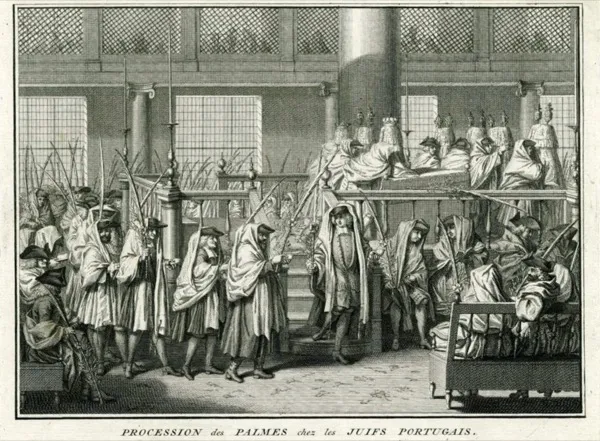
Sephardic Jews descend from the Jewish communities of the Iberian Peninsula (Spain and Portugal), expelled in 1492. They settled across the Ottoman Empire, North Africa, and the Americas, carrying with them the Ladino language and distinctive liturgical traditions.
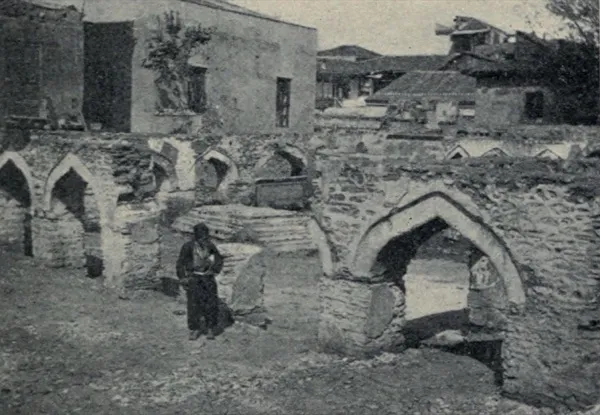
Mizrachi Jews come from the Middle East and North Africa — Iraq, Iran, Yemen, Morocco, Tunisia, and beyond. Their traditions predate the Ashkenazi-Sephardic split and represent some of the oldest continuous Jewish communities in the world.
Ethiopian Jews (Beta Israel) maintained Jewish practice in isolation for centuries. Beginning in the 1980s, dramatic rescue operations airlifted tens of thousands to Israel. Their traditions, developed independently, include unique holidays and prayers not found in other communities.
Indian Jews — the Bene Israel of Maharashtra, the Cochin Jews of Kerala, and the Baghdadi Jews of Calcutta — each developed distinctive practices while maintaining core Jewish observance. Chinese Jews of Kaifeng, Ugandan Jews of the Abayudaya community, and other groups around the world further expand the picture.
This diversity matters because it shatters the notion that Jewishness equals any single ethnicity, appearance, or cultural expression. The Jewish people are, and have always been, multiethnic and multiracial.
Israel’s Law of Return
The question “who is a Jew?” has legal and political dimensions nowhere more sharply felt than in Israel. The Law of Return, enacted in 1950, grants automatic citizenship rights to any person with at least one Jewish grandparent, as well as to converts to Judaism.
This definition is deliberately broader than halakhic standards. Its architects were shaped by the memory of the Holocaust, in which the Nazi regime persecuted anyone with a single Jewish grandparent under the Nuremberg Laws. The Law of Return, in effect, says: anyone whom the world would persecute as a Jew is entitled to refuge as a Jew.
However, personal status matters in Israel — including marriage, divorce, and burial — are controlled by the Orthodox Chief Rabbinate, which applies strict halakhic standards. This creates a paradox: a person can be Jewish enough to qualify for Israeli citizenship under the Law of Return but not Jewish enough to marry in an Israeli religious ceremony.
This tension is a source of ongoing political and social conflict in Israel, particularly for immigrants from the former Soviet Union (many of whom have Jewish fathers but not Jewish mothers) and for converts through non-Orthodox movements.
No Simple Answer — and That May Be the Point
The question “who is a Jew?” has no single answer because Judaism itself is not a single thing. It is a religion for those who practice it, a people for those who belong to it, a culture for those who live it, and a historical identity for those who carry it. Some Jews are defined by all four; others by only one.
What unites this extraordinary diversity is not a checklist of beliefs or a DNA test. It is something harder to define and harder to break: a sense of shared story. Whether you trace your ancestry to a Polish shtetl, a Yemeni village, an Ethiopian highland, or a mikveh of conversion, you enter a narrative that stretches back four thousand years — and that is still being written.
The debate over who belongs in that narrative is not a sign of weakness. It is a sign of vitality. A tradition that did not argue about membership would be a tradition that did not care about it. Judaism cares fiercely — and that, perhaps, is the most Jewish thing of all.
Frequently Asked Questions
Is Judaism passed through the mother or the father?
Traditional Jewish law (halakha) defines Jewish identity through the mother — a child born to a Jewish mother is Jewish regardless of the father's religion. Reform Judaism adopted a patrilineal descent policy in 1983, recognizing children of Jewish fathers as Jewish if raised with a Jewish identity. Orthodox and Conservative Judaism maintain matrilineal descent exclusively.
Can you be Jewish without being religious?
Yes. Millions of Jews identify as secular or cultural Jews. They may not observe religious practices but maintain a strong Jewish identity through culture, ethics, family traditions, community involvement, and a sense of shared peoplehood. The Pew Research Center found that about 27% of American Jews describe themselves as having 'no religion' while still identifying as Jewish.
What is Israel's Law of Return?
Israel's Law of Return (1950) grants automatic citizenship to anyone with at least one Jewish grandparent or who has converted to Judaism. This definition is broader than halakhic (religious law) standards, which require a Jewish mother or formal conversion. The law was shaped by the Holocaust — the Nazis persecuted anyone with a single Jewish grandparent.
Sources & Further Reading
Related Articles
Converting to Judaism: A Thoughtful Guide to Joining the Jewish People
Converting to Judaism is a serious, transformative journey involving study, mentorship, and ritual — welcomed by tradition yet approached with care across all denominations.
Orthodox, Conservative, and Reform: Understanding Jewish Denominations
Judaism is not monolithic — it encompasses diverse movements from Ultra-Orthodox to Reform, each with its own approach to tradition, law, and modern life.
What Is Judaism? A Living Introduction to the World's Oldest Monotheistic Faith
Judaism is the world's oldest monotheistic religion, built on covenant, Torah, ethical living, and an unbroken chain of tradition stretching back four thousand years.