Jewish Prayer: Connecting with the Divine
From the three daily prayer services to personal meditation, discover how Jewish prayer works and what it means.
A Life Structured by Prayer
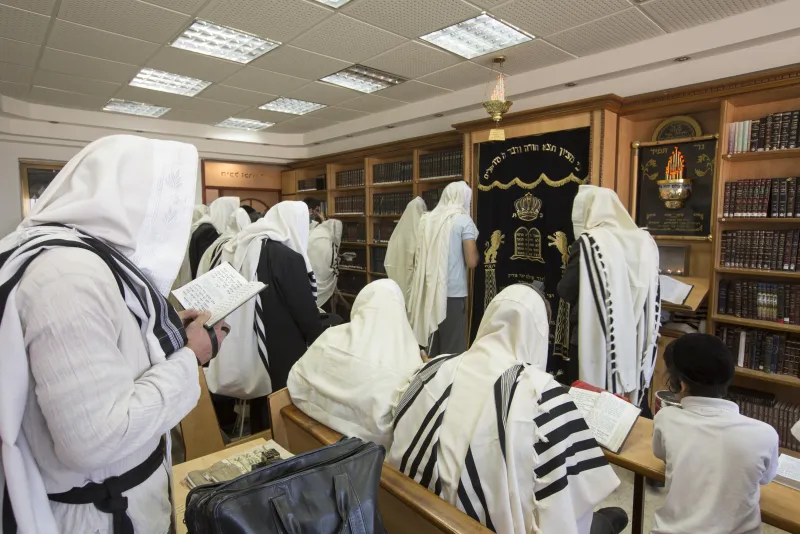
Step into a synagogue on an ordinary weekday morning and you will find a scene that has been repeating itself for centuries. Morning sunlight filters through the windows. A small group of worshippers stands wrapped in tallitot, swaying gently — the rhythmic, almost unconscious motion called shokeling, or davening. The room is quiet except for the murmur of Hebrew, each person moving through the prayers at their own pace, lips moving in near-silence. There is something deeply calming about this gentle swaying, this unhurried rhythm. It looks, from the outside, like breathing made visible.
In traditional Jewish life, prayer is not reserved for weekends or special occasions. It is a daily practice — three times each day — that creates a rhythm of connection between the individual, the community, and God. While the specifics vary across movements and communities, prayer remains one of the defining features of Jewish religious life.
The Three Daily Services
Jewish tradition prescribes three daily prayer services:
- Shacharit (morning): The longest daily service, traditionally recited shortly after dawn. It includes the morning blessings, psalms of praise, the Shema and its blessings, and the central prayer known as the Amidah.
- Mincha (afternoon): A shorter service recited in the afternoon, often squeezed in during a work break. Despite its brevity, the Talmud considers it especially meritorious because it requires interrupting daily activities.
- Maariv/Arvit (evening): The evening service, recited after nightfall. It includes the Shema and a shorter Amidah.
On Shabbat, holidays, and fast days, an additional service called Musaf is added after the morning service.
The Origins
Tradition attributes the three daily services to the three patriarchs: Abraham instituted the morning prayer, Isaac the afternoon prayer, and Jacob the evening prayer. Historically, the fixed prayer liturgy developed after the destruction of the Second Temple in 70 CE, when prayer formally replaced the daily sacrificial offerings.
The Core Prayers
The Shema
The Shema is the most fundamental statement of Jewish faith:
“Shema Yisrael, Adonai Eloheinu, Adonai Echad” (“Hear, O Israel, the Lord is our God, the Lord is One”)
This declaration of monotheism, drawn from Deuteronomy 6:4, is recited twice daily — morning and evening. It is traditionally the first prayer taught to Jewish children and the last words a Jew is meant to say before death.
The full Shema includes three biblical passages commanding love of God, observance of the commandments, and the wearing of tzitzit (fringes). It is recited with great concentration, and many cover their eyes with their hand during the first line to focus completely on its meaning.
The Amidah (Shemoneh Esreh)
The Amidah (“standing prayer”) is the central prayer of every service. On weekdays, it consists of nineteen blessings organized into three sections:
- Praise (3 blessings): Acknowledging God’s greatness, power, and holiness.
- Petition (13 blessings): Asking for wisdom, repentance, healing, prosperity, ingathering of exiles, justice, and more.
- Thanksgiving (3 blessings): Expressing gratitude, requesting peace.
The Amidah is recited standing, feet together, facing Jerusalem. It is first said silently by each individual, then repeated aloud by the prayer leader (shaliach tzibbur). On Shabbat and holidays, the petitionary blessings are replaced with prayers appropriate to the occasion.
The Amidah begins with three steps forward and ends with three steps backward — a symbolic approach to and retreat from the divine presence, as if entering and leaving the presence of a sovereign.
The Kaddish
The Kaddish is an Aramaic prayer praising God that punctuates the prayer service at several points. Though it makes no mention of death, the Mourner’s Kaddish is recited by those who have lost a close relative — for eleven months after a parent’s death and on the anniversary (yahrzeit) each year.
The Mourner’s Kaddish requires a minyan (a quorum of ten adults), which is why mourners make a point of attending communal services. The communal dimension is essential — grief is not borne alone.
The Synagogue
A House of Prayer, Study, and Assembly
The synagogue (in Hebrew, beit knesset, “house of assembly”) serves three functions:
- Beit Tefillah (house of prayer): The primary venue for communal worship.
- Beit Midrash (house of study): A place for Torah study and learning.
- Beit Knesset (house of assembly): A community gathering place.
Inside the Synagogue
Key features found in most synagogues include:
- The Aron Kodesh (Holy Ark): The cabinet at the front that houses the Torah scrolls, oriented toward Jerusalem.
- The Bimah: The raised platform from which the Torah is read. In Ashkenazi synagogues, it was traditionally in the center; Sephardi synagogues often maintain this arrangement.
- The Ner Tamid (Eternal Light): A lamp that burns continuously above the Ark, symbolizing God’s eternal presence and recalling the menorah that burned in the Temple.
Variations Across Communities
Synagogue architecture, music, and customs vary dramatically:
- Ashkenazi Orthodox synagogues feature a cantor (hazzan) who leads services with elaborate melodies. Men and women sit separately, divided by a partition (mechitza).
- Sephardi synagogues are known for their participatory style — the congregation joins actively in prayers and responses. Many retain ancient melodies passed down from Spain and the Ottoman Empire.
- Yemenite synagogues are renowned for their unique Torah chanting melodies and their preservation of ancient pronunciation.
- Reform and Conservative synagogues typically feature mixed seating, organ or instrumental music (in Reform), and services that blend Hebrew with the local language.
Prayer Accessories
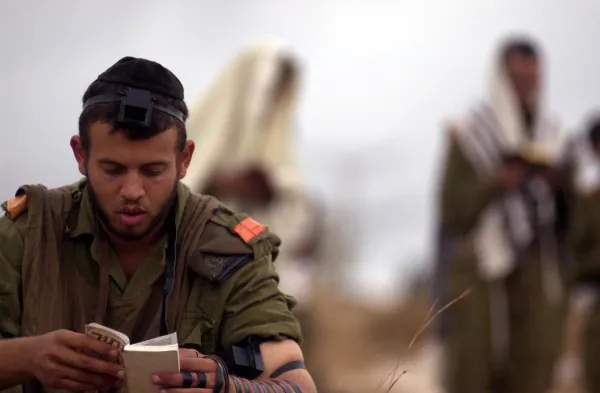
Tallit (Prayer Shawl)
The tallit is a fringed garment worn during morning prayers. Its four corners bear tzitzit (fringes), which serve as a reminder of the commandments.
Tefillin (Phylacteries)
Tefillin are two small leather boxes containing biblical passages, worn on the head and arm during weekday morning prayers. The arm tefillin is bound with leather straps that wrap around the arm and hand in a specific pattern. The head tefillin sits above the forehead. Tefillin are not worn on Shabbat or most holidays.
Kippah (Head Covering)
The kippah (or yarmulke) is worn during prayer by virtually all Jewish men and, in egalitarian communities, by women as well. Many observant Jewish men wear a kippah at all times.
Personal Prayer
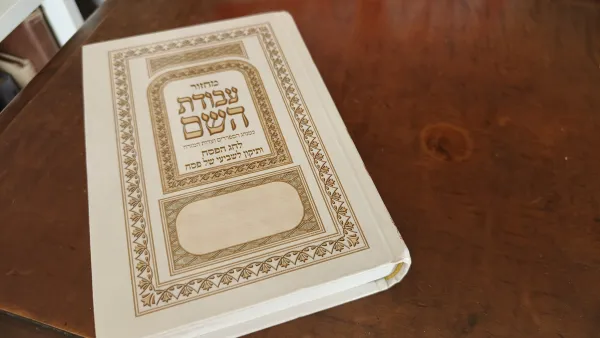
While Jewish prayer is heavily communal and liturgical, personal prayer (tefillah she-ba-lev, “prayer of the heart”) is also valued. The Psalms of David serve as a model for spontaneous, emotional prayer. The Hasidic tradition particularly emphasizes hitbodedut — personal, unscripted conversation with God, often practiced alone in nature.
Rabbi Nachman of Breslov (1772-1810) taught that a person should set aside time each day to speak to God in their own language, about whatever is in their heart — joys, sorrows, frustrations, hopes. This practice has experienced a modern revival.
Prayer as a Way of Life
Jewish prayer is not merely about asking God for things. It is a discipline — a practice that shapes awareness, cultivates gratitude, and connects the individual to a community and a tradition extending back millennia.
You might notice that Jewish prayer looks different from community to community. In a Sephardi synagogue, the congregation responds aloud together, voices overlapping in a warm chorus. In a Hasidic shtiebel, the davening builds to an almost ecstatic intensity, feet shuffling, bodies rocking. In a Reform temple, a guitar might accompany a melody that the whole congregation sings in harmony. And yet, beneath these differences, the core experience is the same: a human being pausing in the middle of a busy life to say, in whatever way feels most honest, “Here I am.”
The Hebrew word for prayer, tefillah, comes from a root meaning “to judge oneself.” In this understanding, prayer is not about changing God — it is about changing the person who prays. Three times a day, the rhythm of prayer invites a pause, a turning inward, and a reconnection with what matters most.
Frequently Asked Questions
How many times a day do Jews pray?
Traditional Jewish practice includes three daily prayer services: Shacharit (morning), Mincha (afternoon), and Ma'ariv (evening). On Shabbat and holidays, an additional Musaf service follows the morning prayers.
What are the most important Jewish prayers?
The Shema ('Hear, O Israel, the Lord our God, the Lord is One') is the central declaration of faith. The Amidah (also called Shemoneh Esrei) is the core prayer of every service, recited standing in silent devotion.
Do you need a minyan to pray?
Individual prayer is always permitted, but certain prayers — including Kaddish, the Torah reading, and the public repetition of the Amidah — require a minyan, a quorum of ten Jewish adults.
Sources & Further Reading
Related Articles
The Amidah: Judaism's Central Standing Prayer
The Amidah — nineteen blessings recited standing, facing Jerusalem, three times daily — is the backbone of every Jewish prayer service. Explore its structure, meaning, and the spiritual practice of standing before God.
Jewish Blessings (Brachot): Sanctifying Every Moment
Judaism has a blessing for everything — from bread to thunder, from waking up to seeing a rainbow. Learn about brachot, the system of blessings that turns daily life into sacred practice.
The Cantor: The Voice of Jewish Prayer
The cantor — hazzan in Hebrew — is the voice that carries a congregation's prayers to heaven. From golden age legends like Yossele Rosenblatt to the modern debate over women cantors, explore this ancient and evolving role.
Kaddish: The Mourner's Prayer That Never Mentions Death
The Kaddish — Judaism's most famous prayer — is not about death at all. Written in Aramaic, it is a bold declaration of God's greatness, spoken precisely when faith feels most difficult.
Shabbat: The Weekly Day of Rest
Every week, Jewish life pauses for 25 hours of rest, reflection, and togetherness — discover the beauty of Shabbat.
The Shema: Judaism's Most Essential Prayer
Six Hebrew words — 'Hear, O Israel, the Lord our God, the Lord is One' — form the bedrock of Jewish faith, recited morning and evening, in joy and on the deathbed.
The Talmud: A Beginner's Guide to Jewish Oral Law
The Talmud is the vast ocean of Jewish thought — centuries of rabbinic debate on law, ethics, storytelling, and the meaning of life, all compiled into one extraordinary work.
The Torah: The Heart of Judaism
The Torah is more than a book — it is the living constitution of Jewish life, studied and debated for over three millennia.
The Western Wall (Kotel): Judaism's Holiest Place of Prayer
The Western Wall — the last remnant of the ancient Temple Mount — is where Jews have prayed, wept, and celebrated for centuries. It is a place of profound spiritual power.