What Is a Rabbi? Teacher, Leader, and Guide
The word 'rabbi' means 'my teacher' — but the role has evolved from ancient legal authority to modern spiritual leader, counselor, and community guide across every denomination.
My Teacher
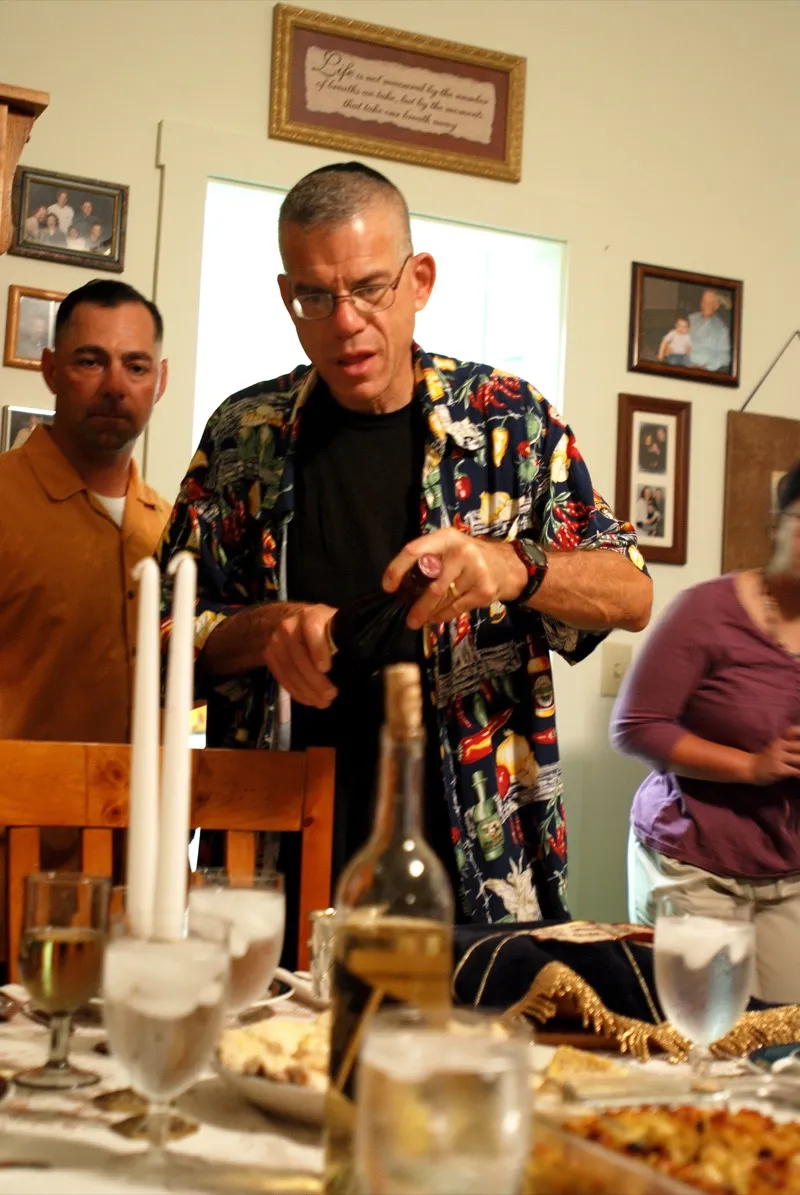
The man standing at the front of the synagogue on a Saturday morning — delivering a sermon, leading prayers, offering comfort to a grieving family afterward — is doing a job that would have been unrecognizable to the rabbis of the Talmud. They did not give sermons. Most did not lead prayer services. Many held day jobs as blacksmiths, farmers, or merchants. The word “rabbi” means “my teacher,” and for most of Jewish history, that is exactly what a rabbi was: a teacher of Torah and a decisor of Jewish law. Everything else — pastor, counselor, public speaker, administrator, interfaith ambassador — came later.
Understanding how the role of the rabbi evolved is understanding how Judaism itself adapted to changing circumstances while trying to preserve its core: the study and application of sacred text.
Origins: From Moses to the Talmud
The concept of rabbinic authority begins, according to tradition, at Sinai. Moses received the Torah from God and transmitted it to Joshua, who transmitted it to the elders, who transmitted it to the prophets, who transmitted it to the “Men of the Great Assembly” — the chain of transmission described in the opening lines of Pirkei Avot (Ethics of the Fathers).
The title “rabbi” itself emerged in the Land of Israel during the first century CE, around the time of the Second Temple’s destruction in 70 CE. Before the destruction, Jewish religious life centered on the Temple, its priests, and its sacrifices. When the Temple fell, the rabbis — scholars of Torah law — became the primary religious authorities. They did not replace the priests in kind. They replaced the entire system. Instead of sacrifices, there would be prayer. Instead of a Temple, there would be study houses. Instead of a hereditary priesthood, there would be a meritocracy of learning.
Semicha: The Chain of Ordination
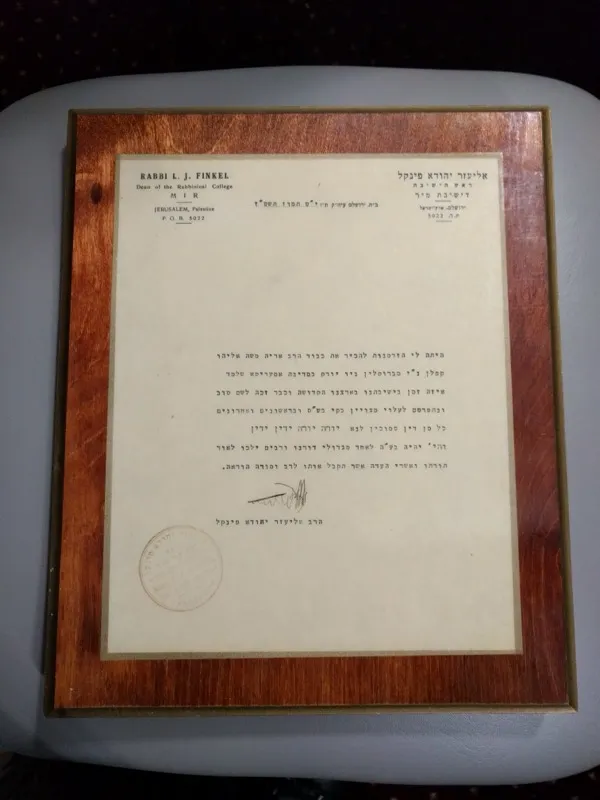
Semicha — literally “leaning” or “laying on” of hands — was the original method of rabbinic ordination, modeled on Moses laying his hands on Joshua (Numbers 27:23). In the early centuries, semicha could only be granted in the Land of Israel by a court of ordained rabbis, creating a direct chain back to Moses.
This original chain of ordination was broken sometime in the fourth or fifth century CE, likely under Roman persecution. After that, rabbinic ordination became a certification of scholarly competence rather than a mystical chain of authority. Today, semicha is granted by rabbinical seminaries — institutions like Yeshiva University (Orthodox), the Jewish Theological Seminary (Conservative), Hebrew Union College (Reform), and the Reconstructionist Rabbinical College — or by individual rabbis who certify their students’ mastery of specific areas of Jewish law.
The requirements for semicha vary by denomination and institution. Orthodox semicha traditionally requires demonstrating expertise in the laws of Shabbat, kashrut (dietary laws), and family purity. Liberal seminaries include pastoral counseling, homiletics, Jewish history, and interfaith studies.
The Historical Rabbi vs. the Modern Rabbi
In the Talmudic period (roughly 200-500 CE), rabbis were primarily legal scholars. They adjudicated disputes, interpreted Torah law, and taught students. Many held no official communal position and earned their living through trades. Rabbi Yochanan was a shoemaker. Rabbi Hillel was famously poor. The idea of a rabbi as a salaried communal employee came much later.
During the medieval period, the role began to shift. Communities in Europe appointed official rabbis — rav ha-ir (rabbi of the city) — who served as the chief legal authority, oversaw the kosher slaughter, supervised the ritual bath, and resolved commercial disputes according to Jewish law. This was still primarily a legal role, not a pastoral one.
The modern rabbinate, as most people know it, is largely a product of the 19th and 20th centuries. As Jews entered Western society and established denominations, the role of the rabbi expanded dramatically. Protestant clergy became the model: rabbis began delivering weekly sermons, leading congregational services, visiting the sick, counseling families, officiating at weddings and funerals, representing the Jewish community to the wider world, and serving as the “face” of their congregation.
Orthodox, Conservative, and Reform Rabbis
The role of the rabbi differs significantly across Jewish movements:
Orthodox rabbis serve primarily as legal authorities (poskim). They answer questions of Jewish law — sheilot u-teshuvot (questions and answers) — on everything from Shabbat observance to business ethics. They also teach, supervise kashrut, and oversee conversions. In Hasidic communities, the Rebbe is not merely a legal authority but a spiritual master whose guidance extends to every aspect of a follower’s life.
Conservative rabbis balance traditional legal authority with pastoral and educational roles. They are trained in halakha (Jewish law) and are expected to render legal decisions, but they also serve as educators, counselors, and community leaders.
Reform rabbis emphasize teaching, pastoral care, and social justice. They view Jewish law as a guide rather than a binding code, and they see the rabbi’s role as helping congregants find personal meaning in Jewish tradition.
Women Rabbis: A Modern Revolution
The question of women’s ordination is one of the most significant developments in modern Jewish life. For most of history, the rabbinate was exclusively male — not because of an explicit biblical prohibition but because of cultural norms and the traditional exemption of women from time-bound commandments that would be part of rabbinic duties.
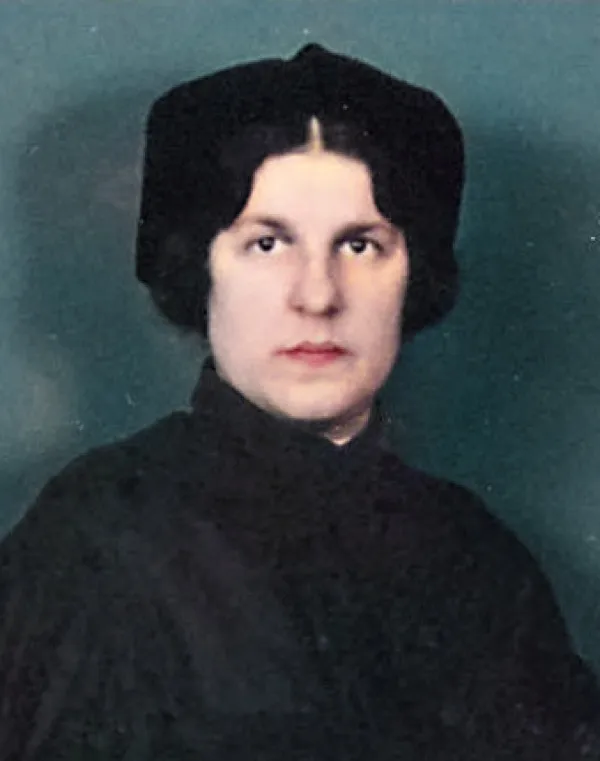
The first woman to receive semicha was Regina Jonas, ordained privately in Germany in 1935 by Rabbi Max Dienemann. She served as a rabbi in the Berlin Jewish community during the darkest years of the Nazi era, ministering to Jews in Theresienstadt concentration camp before being murdered in Auschwitz in 1944. Her story was largely forgotten until researchers discovered her papers in the 1990s.
The wider movement toward women’s ordination began in the 1970s. Sally Priesand became the first woman ordained by a rabbinical seminary (Hebrew Union College, Reform) in 1972. Sandy Eisenberg Sasso was ordained by the Reconstructionist Rabbinical College in 1974. Amy Eilberg became the first Conservative woman rabbi in 1985.
Today, women serve as senior rabbis of major congregations, heads of rabbinical seminaries, military chaplains, and communal leaders. In Reform, Conservative, and Reconstructionist Judaism, women’s ordination is fully normative. Orthodox Judaism remains divided on the question, though some Modern Orthodox institutions — such as Yeshivat Maharat — ordain women under alternative titles.
The Sephardi Chief Rabbi
In Sephardi communities and in the State of Israel, the institution of the Rishon LeZion (First in Zion) — the Sephardi Chief Rabbi — carries enormous prestige. Israel maintains a dual Chief Rabbinate, with both an Ashkenazi and a Sephardi Chief Rabbi, who oversee matters of personal status (marriage, divorce, conversion) for all Jewish citizens. The title Hakham Bashi (Chief Sage) was used in Ottoman-era Sephardi communities, and the Hakham title remains common in Sephardi and Mizrachi congregations worldwide.
More Than a Title
A rabbi is not a priest. Judaism has no sacraments that require a clergyperson to administer. Any knowledgeable Jew can lead services, read Torah, officiate at a wedding (in most circumstances), or conduct a funeral. The rabbi’s authority comes not from a mystical power but from knowledge — from years of study and the community’s trust.
Yet for most Jews today, the rabbi is the person they turn to in moments of crisis and celebration alike. The rabbi visits the hospital, teaches the bar mitzvah student, counsels the couple considering divorce, delivers the eulogy, and answers the midnight phone call. The role has expanded far beyond what “my teacher” once meant — but at its best, teaching remains at the heart of it. A rabbi teaches not only Torah but how to live a Jewish life with integrity, compassion, and depth.
Frequently Asked Questions
What does the word 'rabbi' mean?
The word 'rabbi' comes from the Hebrew root 'rav,' meaning 'great' or 'master,' with the suffix 'i' meaning 'my.' So 'rabbi' literally means 'my teacher' or 'my master.' In Sephardi communities, the equivalent title is 'hakham' (wise one). The title emerged in the first century CE and was originally conferred through a chain of ordination tracing back to Moses.
Can women be rabbis?
Yes, in most Jewish denominations. Regina Jonas became the first woman ordained as a rabbi in 1935 in Germany. Reform Judaism began ordaining women in 1972 (Sally Priesand), Conservative Judaism in 1985 (Amy Eilberg), and Reconstructionist Judaism in 1974 (Sandy Eisenberg Sasso). Orthodox Judaism generally does not ordain women as rabbis, though some Modern Orthodox institutions grant alternative titles like 'maharat.'
What is semicha (rabbinic ordination)?
Semicha is the formal ordination that gives a person the title of rabbi. Originally, it involved the literal laying of hands (semikhat yadayim) in a chain from Moses to Joshua to the elders. This original chain was broken in late antiquity. Today, semicha is granted by rabbinical seminaries or by individual rabbis who certify that a student has mastered the required areas of Jewish law and is qualified to render legal decisions.
Sources & Further Reading
Related Articles
Orthodox, Conservative, and Reform: Understanding Jewish Denominations
Judaism is not monolithic — it encompasses diverse movements from Ultra-Orthodox to Reform, each with its own approach to tradition, law, and modern life.
The Synagogue: House of Prayer, Study, and Assembly
More than just a place of worship — the synagogue is the heart of Jewish community life, combining prayer, learning, and social gathering under one roof.
The Torah: The Heart of Judaism
The Torah is more than a book — it is the living constitution of Jewish life, studied and debated for over three millennia.