Halakha: The Jewish Path of Law
Halakha — literally 'the way of walking' — is the comprehensive system of Jewish law that governs everything from prayer and diet to business ethics and family life.
The Way of Walking
The Hebrew word halakha comes from the root h-l-kh, meaning “to walk” or “to go.” This is not a coincidence. Jewish law is not conceived as a set of abstract principles hung on a wall. It is a path — something you walk on, step by step, through the ordinary terrain of daily life. What do you say when you wake up in the morning? Halakha has an answer. How do you conduct a business transaction? Halakha has an answer. What do you eat, when do you eat it, and what do you say before and after? Halakha has answers for all of it.
To outsiders, this level of legal detail can seem overwhelming, even oppressive. To those who live within it, halakha is often described as liberating — a structure that transforms mundane actions into sacred ones, a grammar for living with intention. As Rabbi Joseph Soloveitchik put it, halakha is not a burden but a “creative act” — the way a Jew participates in building a sanctified world.
The Sources: A Legal Chain
Jewish law does not come from a single source. It is built layer upon layer, each generation adding to and interpreting the work of its predecessors. Understanding halakha requires understanding this chain of authority.
The Torah (Written Law)
The foundation is the Torah — the Five Books of Moses — which contains 613 commandments (mitzvot) according to rabbinic tradition. These range from sweeping ethical principles (“Love your neighbor as yourself”) to highly specific ritual instructions (the dimensions of the Tabernacle). But the Torah, for all its detail, is often ambiguous. It says “Remember the Sabbath day to keep it holy” but does not define what constitutes “work.” It says “do not boil a kid in its mother’s milk” but does not explain exactly what this prohibits. The Written Torah needs interpretation.
The Talmud (Oral Law)
That interpretation is the Oral Law — the vast body of rabbinic discussion and debate believed to have been transmitted orally from Sinai alongside the Written Torah. The Oral Law was eventually written down in the Mishnah (compiled c. 200 CE by Rabbi Judah the Prince) and expanded in the Gemara (completed c. 500 CE in Babylonia). Together, the Mishnah and Gemara form the Talmud — the central text of rabbinic Judaism and the primary source for halakhic reasoning.
The Talmud does not read like a law book. It is more like the transcript of a centuries-long argument. On any given page, you might find a legal principle stated by one rabbi, challenged by another, supported by a third with a parable, and then complicated by a fourth who introduces a novel case. This dialectical method — shakla v’tarya (give and take) — is the engine of halakhic development. The law emerges not from a single authoritative voice but from the collision and refinement of many voices.
The Codes
By the medieval period, the Talmud’s vastness — sixty-three tractates, thousands of pages — had become difficult to navigate for practical legal guidance. Scholars began compiling codes that organized halakha into accessible, systematic formats.
The most influential codes include:
- Mishneh Torah (c. 1180) by Maimonides (Rambam) — a comprehensive, clearly organized summary of all Jewish law, written in lucid Hebrew.
- Arba’ah Turim (c. 1340) by Rabbi Jacob ben Asher (the Tur) — organized Jewish law into four pillars: daily life, dietary laws, festivals, and family law.
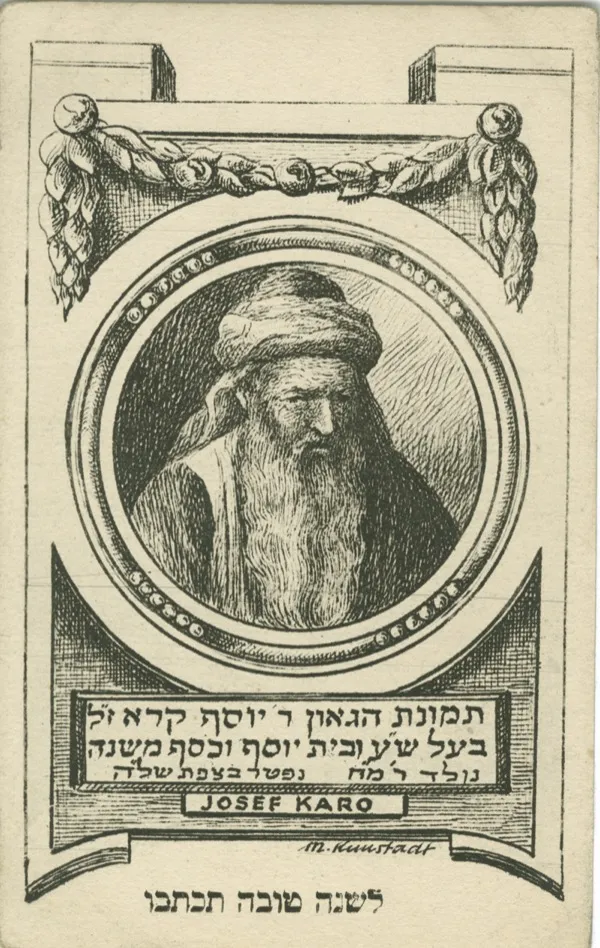
- Shulchan Aruch (1563) by Rabbi Joseph Karo — the “Set Table,” which followed the Tur’s structure and became the most widely accepted code of Jewish law.
The Responsa (She’elot u-Teshuvot)
Jewish law did not stop with the codes. As new situations arose — the printing press, electricity, organ transplantation, the internet — rabbis addressed them through responsa (written answers to legal questions). This literature, spanning over a thousand years, is enormous. A rabbi in 18th-century Poland might write a responsum about whether a particular fabric can be used for tzitzit. A rabbi in 21st-century Jerusalem might write about whether one can use a Shabbat elevator.
The responsa tradition is how halakha stays alive. It is the mechanism by which an ancient legal system engages with a constantly changing world.
The Shulchan Aruch: The Set Table
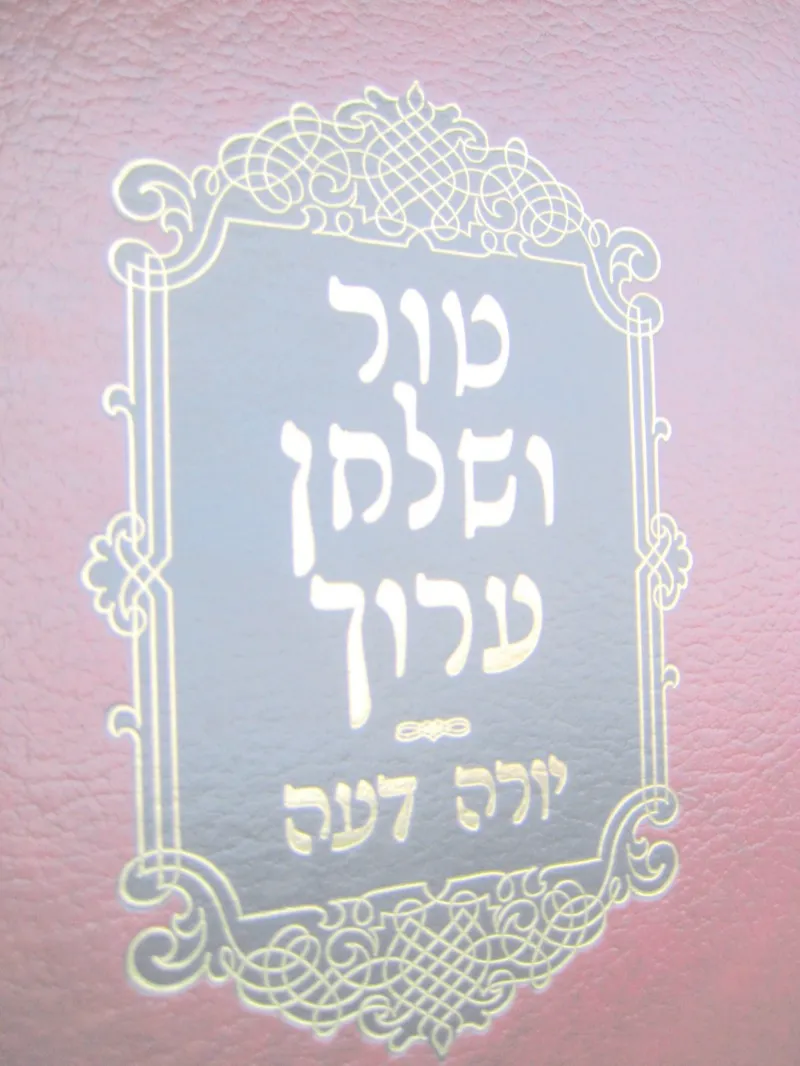
Rabbi Joseph Karo, a Sephardi scholar living in Safed in the Galilee, spent twenty years composing the Shulchan Aruch. Published in 1563, it was organized into four sections:
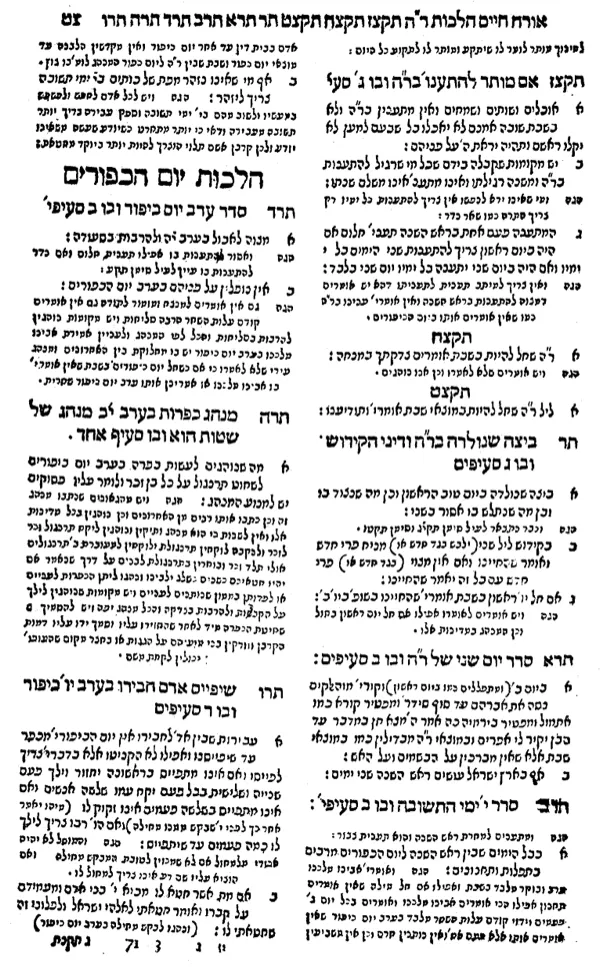
- Orach Chaim (Way of Life) — daily rituals, prayer, Shabbat, holidays
- Yoreh De’ah (Teacher of Knowledge) — dietary laws, mourning, charity, vows
- Even Ha’Ezer (Stone of Help) — marriage, divorce, family law
- Choshen Mishpat (Breastplate of Judgment) — civil law, courts, damages
Because Karo was Sephardi, his rulings reflected Sephardi practice. Rabbi Moses Isserles (the Rema) of Kraków added glosses — called the Mappah (“Tablecloth”) — incorporating Ashkenazi customs. The metaphor is charming: Karo set the table; Isserles laid the tablecloth. Together, they became the standard reference for Jewish law across the entire spectrum of denominations.
How Halakhic Decisions Are Made
When a new question arises in Jewish law, a posek (halakhic decisor) follows a characteristic process:
- Identify the relevant Talmudic sources — what did the Talmud say about analogous cases?
- Consult the codes — how did Maimonides, the Tur, and the Shulchan Aruch rule?
- Examine the responsa — how did later authorities handle similar questions?
- Consider local custom (minhag) — established communal practices carry legal weight.
- Apply reasoning and judgment — where precedent is unclear, the posek must reason by analogy, weigh competing principles, and consider the consequences.
This process is not mechanical. Two equally qualified poskim can examine the same sources and reach different conclusions. This is not a bug — it is a feature. The Talmud itself records that the Schools of Hillel and Shammai disagreed on hundreds of issues, and a heavenly voice declared: “Both these and these are the words of the living God.”
Halakha in Daily Life
For an observant Jew, halakha is not an occasional reference. It shapes the entire day:
- Morning: Wash hands ritually upon waking. Recite morning blessings. Pray Shacharit.
- Eating: Check that food is kosher. Recite the appropriate blessing before and after.
- Business: Do not deceive customers. Pay workers on time. Do not charge interest to fellow Jews (in traditional interpretation).
- Speech: Do not gossip (lashon hara). Do not embarrass others publicly.
- Shabbat: Cease creative work from Friday sunset to Saturday night. Light candles. Make Kiddush. Attend synagogue.
Halakha is, in this sense, a complete operating system for life. It does not distinguish between the sacred and the secular — because in the halakhic worldview, there is no secular. Every act can be elevated.
Denominational Approaches
The question “Is halakha binding?” is one of the key dividing lines between Jewish movements.
Orthodox Judaism holds that halakha is divinely ordained and fully binding. It can be interpreted and applied to new circumstances but cannot be overridden by individual preference or social trends.
Conservative Judaism affirms halakha as binding but believes that authorized legal bodies — particularly the Committee on Jewish Law and Standards — can reinterpret and adapt it in response to changing conditions. This has led to significant rulings, including the ordination of women and the acceptance of driving to synagogue on Shabbat.
Reform Judaism views halakha as a valuable guide but not a binding obligation. Individual Jews are encouraged to study the tradition and make informed personal choices about observance. Ethical principles derived from halakha are emphasized over ritual specifics.
Each approach reflects a different understanding of revelation, authority, and the relationship between tradition and modernity. The debate is ongoing — and it is itself a continuation of the halakhic process: Jews arguing, generation after generation, about how to walk the path.
Frequently Asked Questions
What is halakha?
Halakha (from the Hebrew root meaning 'to walk') is the collective body of Jewish law, encompassing commandments from the Torah, rabbinic legislation, customs, and traditions. It covers ritual life (prayer, Shabbat, holidays), ethics (business dealings, speech), family law (marriage, divorce), dietary laws (kashrut), and more. It is not a single code but an evolving legal tradition spanning thousands of years.
What is the Shulchan Aruch?
The Shulchan Aruch ('Set Table') is the most widely accepted code of Jewish law, compiled by Rabbi Joseph Karo in 1563 in Safed, Israel. It organizes Jewish law into four sections: daily life, dietary laws, festivals, and family law. Rabbi Moses Isserles (the Rema) added Ashkenazi customs in glosses called the Mappah ('Tablecloth'). Together, they became the standard reference for Jewish legal practice.
Do all Jews follow halakha?
Orthodox Jews consider halakha binding and obligatory. Conservative Jews also view halakha as binding but believe it can be reinterpreted by authorized legal bodies to address modern circumstances. Reform Jews treat halakha as an important guide and source of wisdom but emphasize personal autonomy in deciding which practices to adopt. Reconstructionist Jews view halakha as the evolving expression of Jewish civilization.
Sources & Further Reading
Related Articles
Orthodox, Conservative, and Reform: Understanding Jewish Denominations
Judaism is not monolithic — it encompasses diverse movements from Ultra-Orthodox to Reform, each with its own approach to tradition, law, and modern life.
Mikveh: The Sacred Waters of Jewish Ritual Life
The mikveh — a ritual immersion pool fed by natural water — is one of Judaism's most ancient and intimate institutions. From conversion to monthly renewal, discover its meaning, laws, and modern revival.
The Mishnah: How the Oral Law Was Written Down
Around 200 CE, Rabbi Judah HaNasi did something revolutionary: he wrote down the Oral Torah. The result — the Mishnah — became the foundation of the Talmud and all subsequent Jewish law.
The Talmud: A Beginner's Guide to Jewish Oral Law
The Talmud is the vast ocean of Jewish thought — centuries of rabbinic debate on law, ethics, storytelling, and the meaning of life, all compiled into one extraordinary work.
The Torah: The Heart of Judaism
The Torah is more than a book — it is the living constitution of Jewish life, studied and debated for over three millennia.