What Is Judaism? A Living Introduction to the World's Oldest Monotheistic Faith
Judaism is the world's oldest monotheistic religion, built on covenant, Torah, ethical living, and an unbroken chain of tradition stretching back four thousand years.
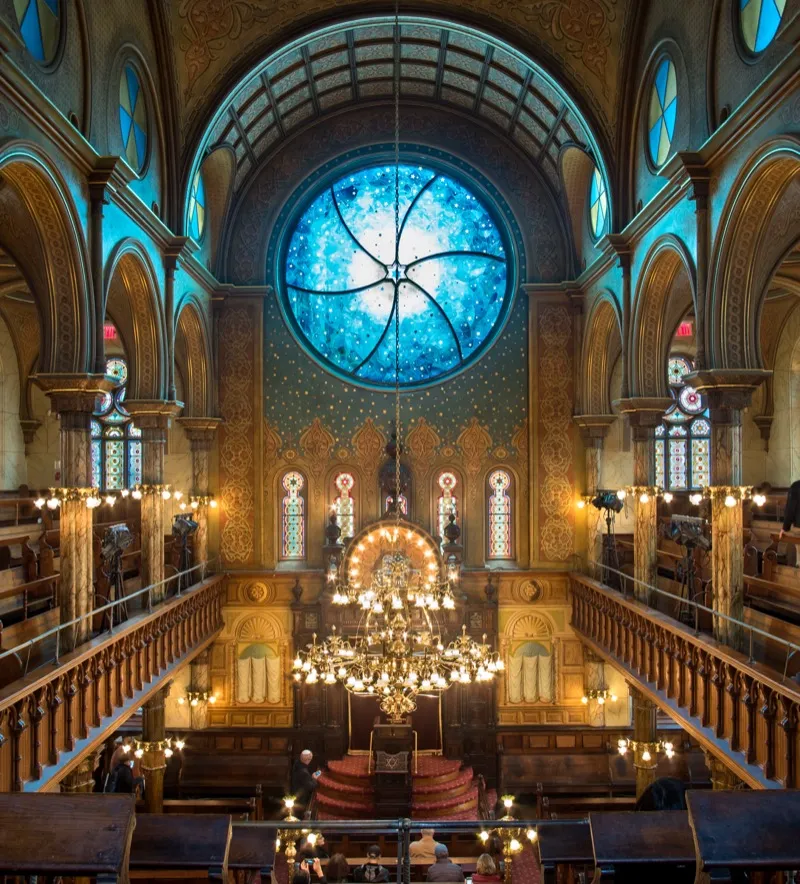
Ask ten Jews what Judaism is and you may well get twelve answers. That old joke hints at something important: Judaism is not a religion that fits neatly into a single definition. It is at once a faith, a people, a legal tradition, an ethical framework, a civilization, and a four-thousand-year conversation that shows no sign of ending.
Some people come to Judaism looking for theology and find a community. Others come looking for community and stumble into profound ideas about justice, purpose, and what it means to be human. Still others inherit it like an accent — something they carry whether they think about it or not.
What follows is an introduction. It cannot be comprehensive — whole libraries exist for that — but it can open the door.
Quick Facts About Judaism
- Founded: ~2000 BCE with Abraham’s covenant
- World population: 15.7 million Jews globally (0.2% of world population)
- Core text: Torah (Five Books of Moses) with 613 commandments
- Monotheism: First religion to declare one, indivisible God
- Sacred language: Hebrew (liturgy), Aramaic (Talmud), local languages (daily life)
- Weekly observance: Shabbat (Friday evening to Saturday evening)
- Life cycle: Brit milah (circumcision), Bar/Bat Mitzvah (13), marriage, mourning rituals
- Major holidays: Rosh Hashanah, Yom Kippur, Passover, Shavuot, Sukkot
- Religious movements: Orthodox, Conservative, Reform, Reconstructionist, others
- Holy sites: Western Wall (Jerusalem), Temple Mount, synagogues worldwide
- Languages preserved: Hebrew revived as modern language, Yiddish, Ladino, Judeo-Arabic
- Diaspora history: 2,000+ years since Temple destruction (70 CE)
- Israel establishment: Modern Jewish state founded 1948 after Holocaust
- Talmudic wisdom: 2,711 pages of commentary and law across 37 tractates
One God, One Covenant
At the center of Judaism stands a radical idea that changed the ancient world: there is one God. Not a god of thunder here and a god of harvest there, but a single, indivisible Creator of everything. The Hebrew declaration of this belief, the Shema — “Hear, O Israel, the Lord our God, the Lord is One” — is recited morning and evening by observant Jews and is often the first prayer a Jewish child learns and the last words a Jew aspires to say before death.
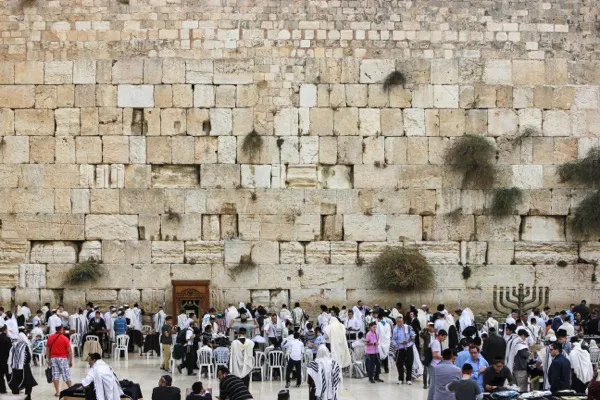
But monotheism alone does not define Judaism. What makes Judaism distinctive is the idea of covenant — brit in Hebrew — a binding relationship between God and the Jewish people. According to tradition, this covenant began with Abraham roughly four thousand years ago, was renewed through the Exodus from Egypt, and reached its fullest expression at Mount Sinai, where God gave the Torah to Moses and the Israelites.
The covenant is not a passive agreement. It is a two-way relationship: God commits to the Jewish people, and the Jewish people commit to living by God’s teachings. This is why Judaism places such emphasis on action — on what you do — rather than solely on what you believe.
The Torah: Judaism’s Foundation
If Judaism has a constitution, it is the Torah — the Five Books of Moses (Genesis, Exodus, Leviticus, Numbers, and Deuteronomy). The Torah contains the narratives that shape Jewish identity: creation, the patriarchs and matriarchs, slavery in Egypt, the giving of the law, and the journey toward the Promised Land. It also contains 613 commandments (mitzvot) covering everything from how to treat strangers to what to eat, from business ethics to Sabbath rest.
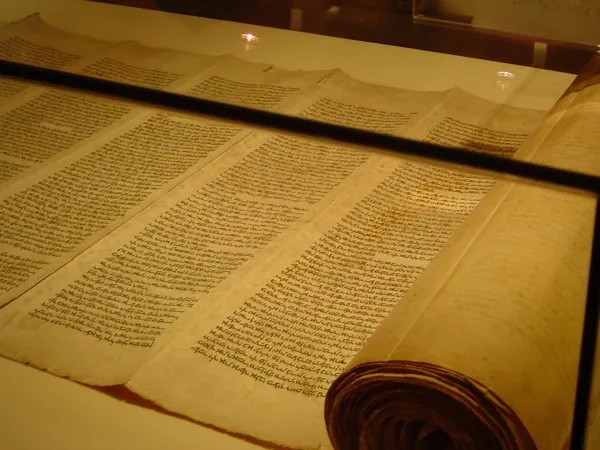
But the Torah is only the beginning. Over centuries, Jewish scholars developed the Mishnah and Talmud — vast works of oral law and commentary — creating layers of interpretation that continue to grow. In Judaism, study is itself a form of worship. The rabbis taught that argument for the sake of understanding — machloket l’shem shamayim, “disagreement for the sake of heaven” — is sacred.
Four Thousand Years in Brief
Judaism’s story begins in the ancient Near East with the patriarchs Abraham, Isaac, and Jacob, and the matriarchs Sarah, Rebecca, Rachel, and Leah. The Exodus from Egypt — commemorated every year at Passover — forged a loose collection of tribes into a people bound by shared liberation and shared law.
The Israelites built a kingdom, then two kingdoms, then watched them fall. The destruction of the First Temple by Babylon in 586 BCE and the Second Temple by Rome in 70 CE forced Judaism to reinvent itself. What had been a Temple-centered religion of sacrifice became a portable religion of prayer, study, and community — centered in the synagogue rather than the altar.
Over the following two millennia, Jewish communities spread across the globe — to North Africa and Spain (Sephardim), to Eastern Europe (Ashkenazim), to Yemen, India, Ethiopia, and beyond. Each community developed distinctive customs, languages, and melodies, yet all shared the same Torah, the same calendar, and the same fundamental commitments.
The twentieth century brought both catastrophe and renewal. The Holocaust destroyed six million Jews — nearly one-third of the world’s Jewish population. Just three years later, in 1948, the State of Israel was established, creating a Jewish homeland for the first time in two thousand years.
A Worldwide Community
Today, approximately 15 million Jews live in virtually every country on earth. Jewish life looks different in a cramped Jerusalem yeshiva than it does in a Reform temple in Los Angeles or a Chabad house in Bangkok — and that diversity is part of the tradition.
Judaism’s major denominations reflect different approaches to the ancient question of how tradition meets modernity. Orthodox Judaism maintains that the Torah is divinely given and that Jewish law (halakha) is binding. Conservative Judaism upholds the authority of law but allows it to evolve through careful scholarship. Reform Judaism emphasizes ethical principles and personal autonomy. Reconstructionist and Renewal movements offer still other perspectives. Each movement would tell you it is faithfully carrying forward the tradition — they simply disagree about what faithfulness looks like.
Values That Shape Daily Life
Judaism is not primarily a religion of abstract theology. It is a religion of lived practice. A few values that run through nearly every expression of Jewish life:
- Tikkun Olam — “Repair of the world.” The idea that human beings are God’s partners in completing and improving creation. This concept drives Jewish engagement in social justice, charity, and ethical business practices.
- Tzedakah — Often translated as “charity,” but literally meaning “justice” or “righteousness.” Giving is not optional generosity; it is an obligation.
- Shabbat — The weekly day of rest, from Friday evening to Saturday night. A pause in the relentless pace of work, dedicated to family, prayer, and renewal.
- Torah study — Learning is a lifelong commandment, not something that ends after school.
- Community — Jewish prayer traditionally requires a minyan (quorum of ten). You cannot be fully Jewish alone.
Lifecycle: From Birth to Mourning
Jewish life is marked by rituals that sanctify every stage of existence. A boy enters the covenant through circumcision (brit milah) at eight days old. At twelve or thirteen, a young person becomes a bar or bat mitzvah — a “child of the commandment” — taking on adult religious responsibility. Marriage takes place under a chuppah (canopy), and death is followed by structured periods of mourning that gradually guide the bereaved back toward life.
These rituals are not mere formalities. They are the architecture of meaning — the way Judaism says that birth matters, coming of age matters, love matters, and even death has a place in a life well lived.
A Tradition of Questions
Perhaps the most surprising thing about Judaism for those encountering it for the first time is how much it values questions. The Talmud is structured as a series of debates, not a catechism. The Passover seder begins with a child asking why this night is different from all other nights. The tradition does not ask you to stop thinking — it asks you to think harder.
Rabbi Abraham Joshua Heschel wrote that Judaism is “a religion of time, aiming at the sanctification of time.” It asks you to pay attention — to the world, to other people, to the passage of days and seasons. It asks you to argue, to wrestle (the name “Israel” literally means “one who wrestles with God”), and to keep showing up.
Whether you are exploring Judaism for the first time, returning to a tradition you once left behind, or simply curious about one of humanity’s oldest and most resilient civilizations, the door is open. In Judaism, the conversation never really ends — it just makes room for one more voice.
Frequently Asked Questions
What is Judaism in simple terms?
Judaism is the world's oldest monotheistic religion, originating nearly 4,000 years ago in the ancient Near East. It is built on the covenant between God and the Jewish people, centered on the Torah, and emphasizes ethical behavior, community, and the sanctification of everyday life.
How many Jews are there in the world?
There are approximately 15–16 million Jews worldwide. The largest communities are in Israel (about 7 million) and the United States (about 6 million), with significant populations in France, Canada, the United Kingdom, Argentina, and Russia.
Is Judaism a religion, a culture, or an ethnicity?
Judaism is all three — and more. It is a religion with defined beliefs and practices, a culture with distinctive foods, music, and literature, and an ethnic identity tied to shared ancestry and peoplehood. Many Jews identify strongly with Jewish culture and community even if they are not religiously observant.
Sources & Further Reading
Related Articles
Orthodox, Conservative, and Reform: Understanding Jewish Denominations
Judaism is not monolithic — it encompasses diverse movements from Ultra-Orthodox to Reform, each with its own approach to tradition, law, and modern life.
The Mezuzah: What's Inside, How to Hang It, and Why It Matters
A small scroll on the doorpost, containing the most important words in Judaism. The mezuzah marks every Jewish home as sacred space — and the rules for writing, placing, and caring for it are as precise as they are meaningful.
Shabbat: The Weekly Day of Rest
Every week, Jewish life pauses for 25 hours of rest, reflection, and togetherness — discover the beauty of Shabbat.
The Star of David: How a Simple Hexagram Became Judaism's Most Recognized Symbol
The Star of David is everywhere — on the Israeli flag, on synagogues, on jewelry. But it was not always a Jewish symbol. Its journey from decorative motif to the universal emblem of Judaism is a surprising story of history, identity, and reclamation.
The Torah: The Heart of Judaism
The Torah is more than a book — it is the living constitution of Jewish life, studied and debated for over three millennia.