Converting to Judaism: A Thoughtful Guide to Joining the Jewish People
Converting to Judaism is a serious, transformative journey involving study, mentorship, and ritual — welcomed by tradition yet approached with care across all denominations.

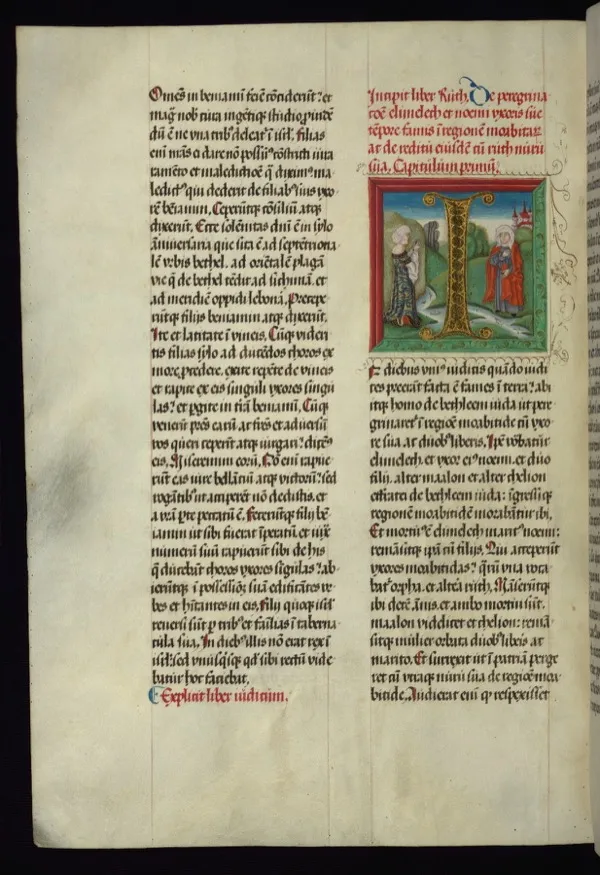
Ruth stood in a foreign field, looked at her mother-in-law Naomi, and said words that have echoed through three thousand years of Jewish history: “Where you go, I will go. Where you stay, I will stay. Your people will be my people, and your God will be my God.”
Ruth was not born Jewish. She was a Moabite woman who chose to bind her fate to the Jewish people — not through a dramatic revelation, but through love, loyalty, and conviction. She went on to become the great-grandmother of King David, from whose line, tradition holds, the Messiah will descend. It is hard to imagine a more powerful statement about how Judaism views converts: not as outsiders accepted on probation, but as people whose choice to join the covenant is so honored that royalty itself descends from one.
If you are considering conversion, or simply curious about how the process works, this guide walks through the journey — its steps, its challenges, and the different paths offered by Judaism’s major movements.
Why Judaism Does Not Proselytize
Unlike Christianity and Islam, Judaism does not seek converts. There is no missionary tradition, no evangelical outreach, no belief that non-Jews need to become Jewish in order to be righteous or to earn a place in the world to come. The Talmud teaches that righteous people of all nations have a share in the afterlife.
This does not mean Judaism rejects converts — quite the opposite. But it does mean that the tradition approaches conversion with seriousness. The rabbis historically required that a prospective convert be turned away three times, to test sincerity. While most modern rabbis do not follow this literally, the principle endures: conversion should be a considered choice, not an impulse.
The General Process
While details vary by denomination, conversion across all major Jewish movements shares a common structure:
1. Finding a Sponsoring Rabbi
Every convert needs a rabbi to guide the process. This relationship is part mentor, part teacher, part pastoral support. Some people approach a rabbi they already know through attending synagogue; others may need to seek one out. The rabbi assesses readiness, designs a course of study, and ultimately advocates for the candidate before the religious court.
2. Study
Conversion requires extensive learning. Candidates study Jewish history, theology, Hebrew, prayer, holidays, Torah, ethics, and the rhythms of Jewish daily life. Programs range from structured classes (many Conservative and Reform synagogues offer “Introduction to Judaism” courses) to private tutorials with a rabbi. Most rabbis expect candidates to read widely — the Torah, selections from the Talmud, modern Jewish thought, and practical guides to observance.
3. Living Jewishly
Study alone is not enough. Rabbis expect candidates to integrate into Jewish life — attending Shabbat services regularly, observing holidays, participating in community events, and beginning to adopt Jewish practices at home (lighting Shabbat candles, keeping kosher to some degree, learning prayers). This immersion period is essential because Judaism is, at its core, a lived tradition.
4. Beit Din
The beit din — a rabbinical court of three — meets with the candidate to discuss their motivations, knowledge, and commitment. This is not an exam designed to trip people up. It is a conversation, often warm and supportive, in which the panel satisfies itself that the candidate understands what they are taking on and is doing so freely.
5. Mikveh
Immersion in a mikveh — a ritual bath fed by natural water — is the culminating act of conversion. The candidate submerges completely, emerging, in the language of the tradition, as a new person. The symbolism is powerful and ancient: water as transformation, as rebirth, as passage from one identity to another.

6. Brit Milah (for men)
Male converts are traditionally required to undergo circumcision. If already circumcised, a symbolic ritual called hatafat dam brit — drawing a single drop of blood — is performed instead.
How Denominations Differ
While all denominations welcome converts, their requirements and processes differ significantly:
Orthodox conversion is the most rigorous. Candidates typically study for two or more years, must commit to full observance of halakha (Jewish law) — including Shabbat, kashrut, and daily prayer — and must be approved by an Orthodox beit din. The sponsoring rabbi often requires the candidate to live within walking distance of an Orthodox synagogue. Orthodox conversion is the most widely recognized across all Jewish movements and by the Israeli Chief Rabbinate.
Conservative conversion requires substantial study (usually one to two years), regular synagogue attendance, commitment to observing Shabbat and holidays, and appearance before a Conservative beit din. Candidates immerse in a mikveh and men undergo brit milah. Conservative conversions are recognized by Reform and Reconstructionist movements but generally not by Orthodox authorities.
Reform conversion emphasizes study, spiritual development, and personal commitment. Programs often include formal classes alongside individual mentorship. Reform Judaism does not require mikveh or circumcision, though both are encouraged and many Reform converts choose to observe them. The process typically takes about a year.
Reconstructionist conversion is similar in length and structure to Reform, with strong emphasis on community involvement and exploration of Jewish civilization as a whole.
What Motivates Converts?
People come to Judaism for many reasons. Some are drawn by intellectual engagement — the tradition of questioning, debate, and study. Some are in relationships with Jewish partners and want a shared religious home for their family. Some feel a spiritual affinity that they cannot find elsewhere. Some discover Jewish ancestry and wish to reclaim it. And some, like Ruth, simply feel that they belong.
The Talmud states that converts are especially beloved because they chose what others inherited. Rabbi Meir taught that a convert who studies Torah is equal to the High Priest. These are not empty sentiments — they reflect a deep conviction that choosing Judaism is itself an act of holiness.
Challenges and Honest Realities
Conversion is not without difficulty. The study is demanding. Adopting new practices — dietary restrictions, Sabbath observance, Hebrew prayers — can feel overwhelming. Family members may not understand. And the question of denominational recognition can be painful: a convert who went through a meaningful Reform process may find that their conversion is not accepted by Orthodox institutions or by the Israeli government for certain civil purposes.
There is also the experience of joining a people with a long history of persecution. Converts take on not just the joys of Jewish life but its burdens — the weight of the Holocaust, the complexity of Israel, the experience of antisemitism.
Yet most converts describe the journey as profoundly enriching. They speak of finding community, intellectual depth, ritual beauty, and a sense of belonging they had not experienced before.
After Conversion
Jewish law is clear: once a person has completed a valid conversion, they are fully Jewish. There is no asterisk, no second tier. The convert takes a Hebrew name — traditionally with the patronymic “ben/bat Avraham v’Sarah” (son/daughter of Abraham and Sarah), linking them to the first Jewish family. They can be called to the Torah, lead prayers, marry a Jewish spouse, and raise Jewish children.
The tradition even prohibits reminding a convert of their non-Jewish origins in a hurtful way. The rabbis understood that true belonging requires not just formal acceptance but genuine embrace.
Judaism does not make conversion easy, but it was never supposed to be a barrier. It is supposed to be a journey — one that transforms not just legal status but identity, community, and the texture of daily life. As the rabbis said of Ruth: she did not merely join the Jewish people. She became the Jewish people.
Frequently Asked Questions
How long does it take to convert to Judaism?
Conversion typically takes one to three years, depending on the denomination and individual circumstances. Most rabbis require at least a year of study, holiday observance, and community involvement. Orthodox conversions tend to take longer, often two years or more, while some Reform programs can be completed in about a year.
Do you need to be circumcised to convert to Judaism?
Male converts are required to undergo circumcision (brit milah) in Orthodox and Conservative conversions. If already circumcised, a symbolic drop of blood (hatafat dam brit) is drawn. Reform Judaism generally encourages but does not require circumcision for male converts.
Is a conversion to Judaism recognized by all denominations?
Not always. Orthodox Judaism generally does not recognize conversions performed by Conservative, Reform, or Reconstructionist rabbis. Conservative Judaism may or may not recognize Reform conversions. Israel's Chief Rabbinate, which controls marriage and certain civil matters, recognizes only Orthodox conversions, though recent court rulings have expanded some civil recognition.
Sources & Further Reading
Related Articles
Orthodox, Conservative, and Reform: Understanding Jewish Denominations
Judaism is not monolithic — it encompasses diverse movements from Ultra-Orthodox to Reform, each with its own approach to tradition, law, and modern life.
Mikveh: The Sacred Waters of Jewish Ritual Life
The mikveh — a ritual immersion pool fed by natural water — is one of Judaism's most ancient and intimate institutions. From conversion to monthly renewal, discover its meaning, laws, and modern revival.
The Torah: The Heart of Judaism
The Torah is more than a book — it is the living constitution of Jewish life, studied and debated for over three millennia.
What Is Judaism? A Living Introduction to the World's Oldest Monotheistic Faith
Judaism is the world's oldest monotheistic religion, built on covenant, Torah, ethical living, and an unbroken chain of tradition stretching back four thousand years.