Kabbalah: An Introduction to Jewish Mysticism
Beyond the law and the stories lies a hidden dimension of Judaism — Kabbalah, the mystical tradition that seeks to understand the nature of God, creation, and the human soul.
Opening the Hidden Door
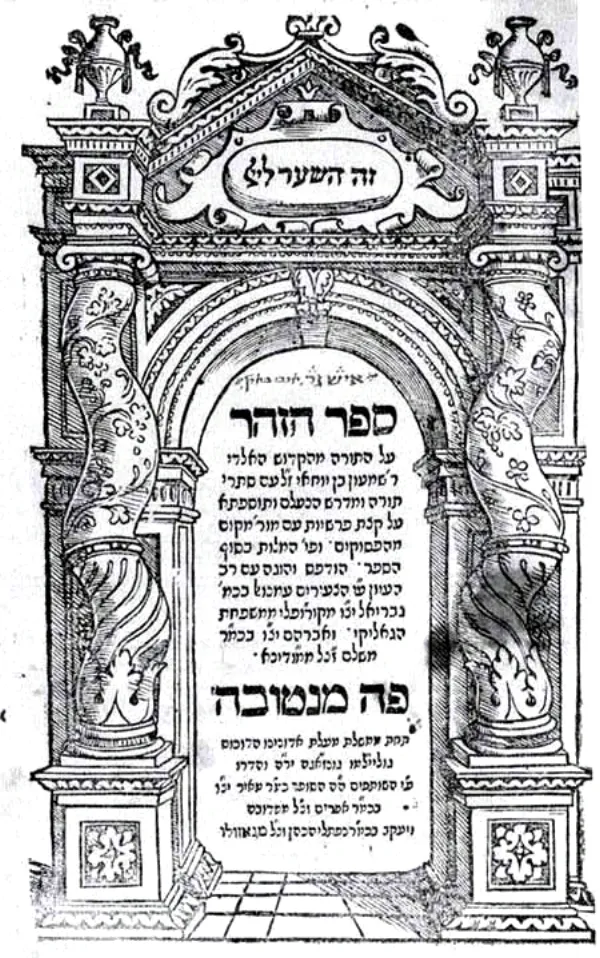
Imagine sitting in a dimly lit study, opening a heavy volume written in dense Aramaic. The language is poetic, almost hallucinatory — fire and light pour through the words, images layer upon images, and the text seems to shimmer between the literal and the infinite. A passage about Abraham walking beneath the stars becomes a meditation on the structure of the divine. A verse about water flowing downhill becomes a map of how God’s energy cascades through creation. You are reading the Zohar, the central text of Kabbalah, and nothing in your previous education has quite prepared you for this.
Kabbalah — from the Hebrew root meaning “to receive” — is the mystical tradition of Judaism. It is not a separate religion or a break from mainstream Jewish practice. It is, rather, the inner dimension of the Torah itself: the hidden meaning beneath the surface of the laws, stories, and commandments that every Jew encounters. If the Torah is the body of Judaism, the Kabbalists would say, then Kabbalah is its soul.
What Is Kabbalah?
At its core, Kabbalah asks the deepest questions a human being can ask: What is the nature of God? Why did God create the world? What is the purpose of the human soul? How do our actions affect the fabric of reality?
Traditional Judaism has always acknowledged that the Torah contains multiple layers of meaning. The rabbis of the Talmud spoke of pardes — an acronym for four levels of interpretation: peshat (plain meaning), remez (hint), drash (homiletical), and sod (secret). Kabbalah lives in that fourth level — the sod, the secret — but its practitioners insist that you cannot reach the secret without first mastering the other three. This is why traditional authorities required that students of Kabbalah first be grounded in Torah and Talmud, and many insisted that only married men over the age of 40 should study it.
Origins: From the Chariot to Medieval Spain
Jewish mysticism did not begin with a single founder or a single moment. Its roots reach back to the biblical period itself — to the prophet Ezekiel’s vision of the divine chariot (the merkavah), to Isaiah’s glimpse of God’s throne surrounded by angelic beings, to the mysterious opening chapters of Genesis where God speaks the world into existence.
In the early centuries of the Common Era, Merkavah mysticism developed among small circles of scholars who meditated on Ezekiel’s chariot vision, seeking to ascend through heavenly palaces (heikhalot) to glimpse the divine throne. These practices were secretive and dangerous — the Talmud tells of four rabbis who “entered the orchard” (a metaphor for mystical contemplation), and only one, Rabbi Akiva, emerged unharmed.
The Sefer Yetzirah (Book of Creation), a brief and enigmatic text possibly dating to the 3rd-6th centuries CE, introduced the idea that God created the world through the 22 letters of the Hebrew alphabet and ten primordial numbers (sefirot). This concept — that language and number are the building blocks of reality — became foundational to all later Kabbalah.
The great flowering of Kabbalah came in medieval Provence and Spain during the 12th and 13th centuries. Kabbalistic circles in Gerona, led by figures like Nachmanides (Rabbi Moshe ben Nachman) and Rabbi Azriel, developed systematic teachings about the sefirot and the hidden structure of the divine. It was in this milieu that the Zohar appeared.
The Zohar: Book of Radiance
The Zohar is to Kabbalah what the Talmud is to Jewish law — the central, indispensable text around which everything else revolves. Written in an ornate, literary Aramaic, it takes the form of a mystical commentary on the Torah, structured as conversations among Rabbi Shimon bar Yochai and his disciples as they wander through the Galilee.
The question of authorship has been debated for seven centuries. Traditional Kabbalists attribute the Zohar to Rabbi Shimon bar Yochai (Rashbi), a 2nd-century sage who, according to legend, hid in a cave for thirteen years to escape Roman persecution — and during that time received divine revelations. Modern scholars, following the research of Gershom Scholem and others, believe the Zohar was largely composed by Rabbi Moses de Leon in 13th-century Castile, though it may draw on earlier mystical traditions.
Regardless of its origin, the Zohar’s influence has been immense. By the 16th century, it was widely regarded as a sacred text on par with the Torah and the Talmud. Sephardi communities, in particular, embraced it deeply — incorporating Zoharic passages into Shabbat prayers, study groups, and lifecycle rituals.
The Tree of Life: Ten Sefirot
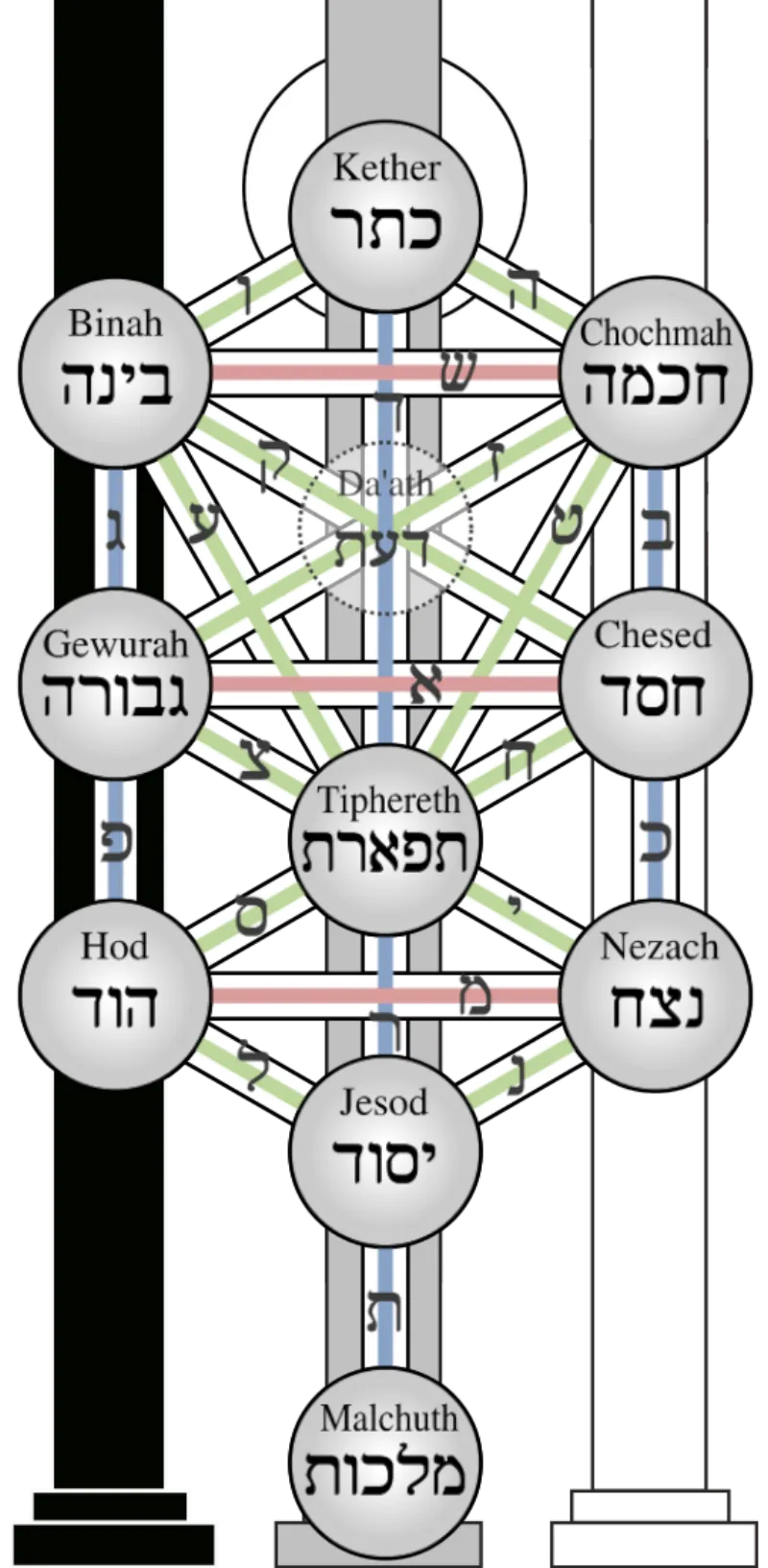
The most recognizable symbol of Kabbalah is the Etz Chaim — the Tree of Life — a diagram of the ten sefirot (emanations) through which the infinite God (Ein Sof) interacts with the finite world. The sefirot are not separate gods — that would be heresy. They are, rather, attributes or channels through which divine energy flows:
- Keter (Crown) — the divine will, beyond comprehension
- Chokhmah (Wisdom) — the first flash of insight, the seed of creation
- Binah (Understanding) — the womb that shapes insight into form
- Chesed (Loving-kindness) — boundless generosity and expansion
- Gevurah (Strength/Judgment) — discipline, restraint, and boundaries
- Tiferet (Beauty) — harmony and balance, the heart of the tree
- Netzach (Victory/Eternity) — endurance, ambition, the drive to overcome
- Hod (Splendor) — humility, gratitude, surrender
- Yesod (Foundation) — the channel that connects all the above to the world below
- Malkhut (Sovereignty) — the divine presence in the physical world, often identified with the Shekhinah
The Kabbalists taught that these sefirot exist not only in God but within every human soul. When we act with kindness, we activate the Chesed within us and draw divine Chesed into the world. When we exercise just discipline, we mirror Gevurah. The human being, in this view, is a microcosm of the divine — and every moral choice reverberates through all of creation.
Tikkun Olam: Repairing the World
The concept of tikkun olam — repairing the world — has deep Kabbalistic roots, though its meaning has shifted over time. In the Kabbalistic framework, creation itself is in a state of brokenness. Divine sparks of light (nitzotzot) are scattered and trapped within the material world, and it is the task of human beings — through prayer, good deeds, and conscious living — to gather those sparks and return them to their source.
This is not merely a metaphor. For the Kabbalists, every commandment performed with proper intention (kavanah) literally repairs a fracture in the cosmos. Saying a blessing before eating, observing Shabbat, acting with justice toward a stranger — each of these acts sends ripples through the sefirot and brings the world closer to wholeness. The stakes, in this view, could not be higher: we are not just following rules. We are healing God’s creation.
Lurianic Kabbalah: The Ari’s Revolution

In the 16th century, the hilltop city of Safed (Tzfat) in the Galilee became the epicenter of a mystical revolution. Refugees from the Spanish expulsion of 1492 had gathered there, and among them arose one of the most influential mystics in Jewish history: Rabbi Isaac Luria (1534-1572), known as the Ari (“the Lion”).
Luria, who died at just 38, wrote almost nothing himself. His teachings were recorded by his devoted student, Rabbi Chaim Vital, and they reshaped Jewish mysticism entirely. Three concepts stand at the heart of Lurianic Kabbalah:
- Tzimtzum (Contraction): Before creation, God’s infinite light filled all reality. To make room for the finite world, God contracted — withdrew into Himself, creating a void within which creation could exist. This radical idea suggests that creation began not with an act of expansion, but with an act of divine restraint.
- Shevirat HaKelim (Shattering of the Vessels): When God poured divine light into the newly created vessels of the sefirot, some of the vessels could not contain the intensity and shattered. Sparks of divine light scattered and became embedded in the material world, trapped within shells of darkness (klipot).
- Tikkun (Repair): The purpose of human existence is to gather these scattered sparks through righteous living, returning them to their source and restoring cosmic harmony. Every soul has specific sparks that only it can elevate.
These ideas gave Jews a powerful framework for understanding suffering and exile. The brokenness of the world was not random — it was built into the structure of creation, and repairing it was the sacred task of every human life.
Kabbalah and Hasidism
In the 18th century, a charismatic teacher from Podolia (modern-day Ukraine) took the esoteric teachings of Kabbalah and made them accessible to ordinary Jews. Rabbi Israel ben Eliezer, known as the Baal Shem Tov (“Master of the Good Name,” c. 1698-1760), founded the Hasidic movement by translating Kabbalistic ideas into a language of joy, prayer, and everyday devotion.
The Baal Shem Tov taught that God is present everywhere — in a field of wheat, in a simple prayer, in the laughter of a child. You did not need to be a scholar to connect with the divine; you needed sincerity, joy, and love. The Hasidic movement that grew from his teachings produced dozens of dynastic courts, each with its own spiritual personality, but all rooted in Kabbalistic theology. When a Hasid sways ecstatically in prayer, or tells a mystical story at the Shabbat table, he is practicing applied Kabbalah — whether he uses that term or not.
Modern Kabbalah: Authentic and Popular
Today, Kabbalah occupies a complex place in Jewish life and broader culture.
Within traditional Judaism, Kabbalistic study thrives in Hasidic communities and among Sephardi scholars. The study of Zohar remains a weekly practice in many Sephardi and Mizrahi synagogues. In the Lithuanian yeshiva world, Kabbalah is studied less publicly but deeply respected — the writings of Rabbi Moshe Chaim Luzzatto (the Ramchal) and the Vilna Gaon on Kabbalistic subjects are part of the advanced curriculum.
Academic scholarship has transformed our understanding of Kabbalah’s history. Gershom Scholem (1897-1982), widely considered the founder of academic Kabbalah studies, demonstrated that Jewish mysticism was not a marginal phenomenon but a central force in Jewish intellectual history. His students and successors — Moshe Idel, Elliot Wolfson, Daniel Matt (translator of the Zohar into English) — have continued to expand this field.
Then there is the world of popularized Kabbalah. The Kabbalah Centre, founded by Philip Berg and made famous by celebrity adherents like Madonna, offers a universalized, simplified version of Kabbalistic teachings — red string bracelets, “Kabbalah water,” and courses open to anyone regardless of Jewish knowledge. Most traditional Jewish authorities and academic scholars regard this as a significant departure from authentic Kabbalah, which requires deep grounding in Torah, Talmud, and Jewish practice. That said, the popularity of the Kabbalah Centre has introduced millions of people to concepts — like the sefirot, tikkun olam, and the power of Hebrew letters — that they might never otherwise have encountered.
Whether studied in a hushed yeshiva in Jerusalem, a university seminar in New York, or a community class in Sao Paulo, Kabbalah remains what it has always been: Judaism’s attempt to peer beyond the veil of the visible world and glimpse the hidden light within all things. It is not easy, it is not quick, and the tradition insists it should not be approached lightly. But for those drawn to its depths, Kabbalah offers something that no other Jewish discipline provides — a language for the ineffable, a map of the invisible, and the audacious claim that every human soul plays a role in the healing of the cosmos.
Frequently Asked Questions
What are the sefirot in Kabbalah?
The sefirot are ten attributes or emanations through which God interacts with the world, arranged in the Tree of Life (Etz Chaim). They include Keter (Crown), Chokhmah (Wisdom), Binah (Understanding), Chesed (Loving-kindness), Gevurah (Strength), Tiferet (Beauty), Netzach (Victory), Hod (Splendor), Yesod (Foundation), and Malkhut (Sovereignty).
Is Kabbalah the same as what celebrities study?
Traditional Kabbalah is a serious Jewish mystical discipline requiring deep knowledge of Torah and Talmud, traditionally studied by men over 40. The 'Kabbalah Centre' popularized by celebrities teaches a simplified, universalized version that mainstream Jewish scholars consider significantly different from authentic Kabbalistic study.
What is the Zohar?
The Zohar ('Book of Radiance') is the central text of Kabbalah, a mystical commentary on the Torah written in Aramaic. It is traditionally attributed to Rabbi Shimon bar Yochai (2nd century CE), though modern scholars believe it was compiled by Rabbi Moses de Leon in 13th-century Spain.
Sources & Further Reading
Related Articles
Orthodox, Conservative, and Reform: Understanding Jewish Denominations
Judaism is not monolithic — it encompasses diverse movements from Ultra-Orthodox to Reform, each with its own approach to tradition, law, and modern life.
Jewish Views on God: Monotheism, Names, and the Mystery Beyond Understanding
Judaism's God is one, incorporeal, and ultimately beyond human comprehension — yet intimately concerned with every human life. From the ineffable Name to the 13 Attributes of Mercy, Jewish theology holds mystery and relationship in constant tension.
Lag BaOmer: Bonfires, Mysticism, and Celebration
On the 33rd day of the Omer count, the mourning lifts and the bonfires blaze — Lag BaOmer is a day of fire, mysticism, first haircuts, and the memory of Rabbi Shimon bar Yochai.
The Talmud: A Beginner's Guide to Jewish Oral Law
The Talmud is the vast ocean of Jewish thought — centuries of rabbinic debate on law, ethics, storytelling, and the meaning of life, all compiled into one extraordinary work.
Tikkun Olam: Repairing the World
From a mystical Kabbalistic concept about gathering divine sparks to a modern rallying cry for social justice, tikkun olam — repairing the world — is one of Judaism's most powerful ideas.
The Torah: The Heart of Judaism
The Torah is more than a book — it is the living constitution of Jewish life, studied and debated for over three millennia.
Tu BiShvat: The New Year of the Trees
On the 15th of Shevat, Jews celebrate the birthday of the trees — a minor ancient date that has blossomed into a holiday of ecological awareness, mystical seders, and tree planting.