Shabbat: The Ultimate Guide to the Jewish Day of Rest
A comprehensive guide to Shabbat — from Friday preparation to Saturday night havdalah. Everything you need to know about the Jewish Sabbath: candle-lighting, prayers, meals, restrictions, and meaning.
A Palace in Time
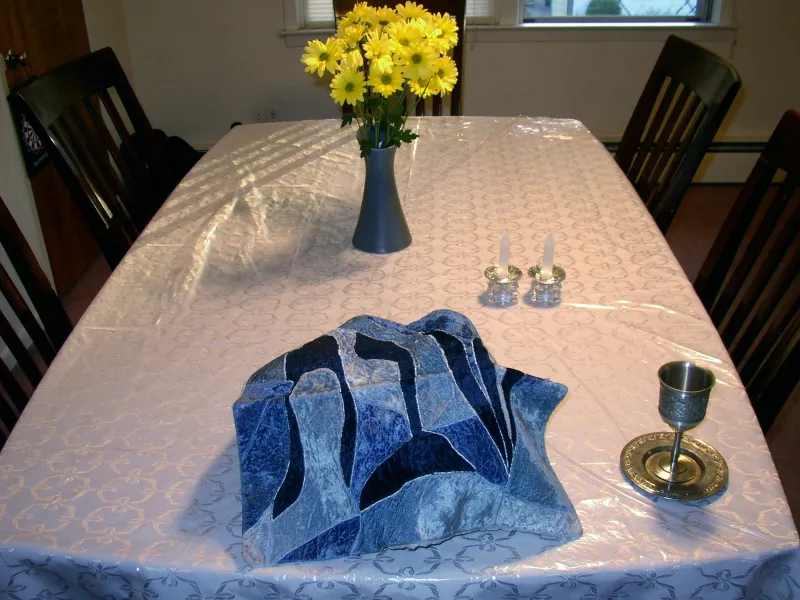
The 20th-century philosopher Abraham Joshua Heschel called Shabbat “a palace in time” — not a place you travel to, but a quality of time you enter. For 25 hours each week, from Friday sunset to Saturday nightfall, the Jewish world shifts. Work stops. Phones (in observant homes) go silent. Candles are lit. Wine is blessed. Challah is broken. And something changes — something that millions of Jews over thousands of years have described as rest, renewal, and a taste of the world to come.
Shabbat is the most important ritual in Judaism. More important than any holiday. More central than any single prayer. The Ten Commandments mention it. The Torah describes it as a sign of the covenant between God and Israel. And the Talmud calls it a foretaste of the messianic era — me’ein olam ha’ba, “a semblance of the world to come.”
This guide walks through every part of Shabbat, from Friday afternoon preparation to Saturday night’s farewell.
Friday: Preparing for the Queen
Jewish tradition personifies Shabbat as a queen — Shabbat HaMalkah — or a bride arriving at sunset. The preparation for her arrival begins hours, sometimes days, in advance.
Shopping and Cooking
Traditional households shop and cook specifically for Shabbat. The three Shabbat meals (Friday dinner, Saturday lunch, and seudah shlishit — the late afternoon “third meal”) are typically more elaborate than weekday meals. Challah is baked or bought. Chicken soup simmers. A slow-cooked stew (cholent in Ashkenazi tradition, hamin or dafina in Sephardi tradition) is prepared for Saturday lunch, since cooking is prohibited on Shabbat.
Cleaning and Bathing
The house is cleaned in honor of Shabbat. Many people bathe, wear special clothes, and set the table with their finest linens and dishes. The Talmud records rabbis who would personally prepare for Shabbat — cutting vegetables, arranging furnishings — even when they could have delegated these tasks to servants.
Candle-Lighting
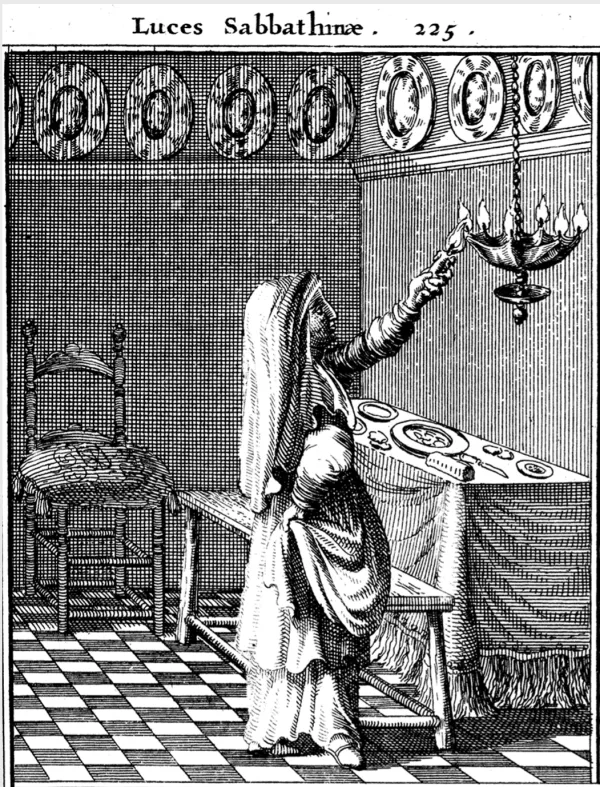
Shabbat begins with the lighting of candles, traditionally by the woman of the household (though anyone may light). The standard time is 18 minutes before sunset, though some communities light earlier.
At minimum, two candles are lit — representing the two versions of the Shabbat commandment: zachor (remember) and shamor (observe). Many families light additional candles — one for each child, or according to family custom.
The one who lights covers their eyes, recites the blessing (“Blessed are You… who has commanded us to kindle the Shabbat light”), and then uncovers their eyes to see the glow of the candles. The reasoning: since the blessing must precede the act, and lighting the candles begins Shabbat (after which lighting fire is prohibited), the custom is to light first, then bless with eyes covered, and then “reveal” the light.
Friday Night: Welcoming Shabbat
Synagogue Services
Many communities attend Kabbalat Shabbat — “Welcoming the Sabbath” — a service composed in 16th-century Safed by the Kabbalists. The service includes six psalms (one for each day of creation), the hymn Lecha Dodi (“Come, My Beloved”), and the Friday evening prayer service (Ma’ariv).
Lecha Dodi, written by Rabbi Shlomo Alkabetz, is one of the most beloved hymns in Jewish liturgy. At its final stanza, the congregation turns toward the entrance of the synagogue and bows, as if greeting a bride — “Come in peace, O crown of her husband… Come, O bride! Come, O bride!”
The Shabbat Dinner
The Friday night meal is the crown jewel of the Jewish week. It typically follows this order:
- Shalom Aleichem — a hymn welcoming the Shabbat angels
- Eishet Chayil — “A Woman of Valor” (Proverbs 31), traditionally sung in honor of the woman of the house
- Blessing the children — parents bless each child individually
- Kiddush — the blessing over wine, sanctifying Shabbat
- Washing hands (netilat yadayim) — ritual handwashing before bread
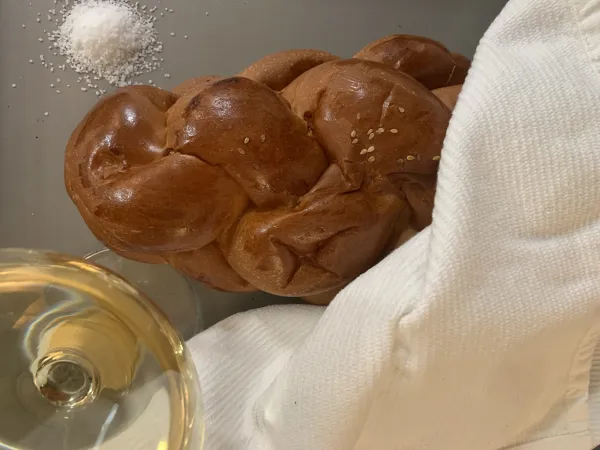
- Hamotzi — the blessing over challah. Two loaves are used, representing the double portion of manna the Israelites received on Fridays in the desert
- The meal — typically including fish, soup, a main course, and desserts
- Zemirot — Shabbat songs sung between courses
- Birkat Hamazon — Grace After Meals, with a special Shabbat addition
The atmosphere is meant to be joyful, relaxed, and focused on family, friends, and conversation.
Saturday: The Day Itself
Morning Services
Saturday morning synagogue services are longer than weekday services and include the Torah reading — a central feature of Shabbat. A portion of the Torah is read each week, completing the entire Five Books of Moses over the course of a year. The Torah reading is followed by a reading from the Prophets (Haftarah).
Shabbat Lunch
The second meal of Shabbat typically features the slow-cooked stew that has been simmering since Friday. Ashkenazi cholent typically contains beans, barley, potatoes, and meat. Sephardi hamin or dafina varies by community — Moroccan dafina includes eggs, chickpeas, and wheat berries; Iraqi tbit features chicken stuffed with rice.
Shabbat Afternoon
The afternoon is a time for rest, study, and socializing. Many communities study Pirkei Avot (Ethics of the Fathers) on Shabbat afternoons between Passover and Rosh Hashanah. Others attend Torah classes or simply nap — the Shabbat nap (shluf) is a beloved tradition.
Seudah Shlishit — The Third Meal
The third meal, eaten in the late afternoon as Shabbat wanes, is typically simpler — bread, salads, fish. It has a melancholy sweetness, as the community feels Shabbat slipping away.
The 39 Melakhot: What Is Prohibited
The Torah says “do not do any work” on Shabbat, but it does not define “work.” The rabbis of the Talmud derived 39 categories of prohibited labor (melakhot) from the types of work used to build the Tabernacle (Mishkan):
The categories include: plowing, sowing, reaping, threshing, winnowing, selecting, grinding, sifting, kneading, baking, shearing, washing, combing, dyeing, spinning, weaving, tying, untying, sewing, tearing, trapping, slaughtering, skinning, tanning, smoothing, scoring, cutting, writing, erasing, building, demolishing, extinguishing, kindling fire, carrying in a public domain, and the final hammer blow (completing work).
In modern application, this means observant Jews refrain from: driving, cooking, turning lights on/off, using phones and computers, writing, shopping, and many other activities. The restrictions are not punitive — they are meant to create a fundamentally different experience of time, free from the constant pressure to produce, consume, and respond.
Saturday Night: Havdalah
Shabbat ends at nightfall on Saturday — when three medium-sized stars are visible in the sky. The farewell ceremony is called Havdalah (“separation”), because it separates the holy (Shabbat) from the ordinary (the weekday).
Havdalah involves four elements:
- Wine — a full cup, symbolizing joy
- Spices (besamim) — fragrant spices (cloves, cinnamon, or a spice mixture), inhaled to comfort the soul as the “extra soul” (neshamah yeteirah) that Jews receive on Shabbat departs
- Fire — a braided multi-wicked candle, held up so its light reflects in the fingernails. Fire is the first thing Adam created after Shabbat, and it symbolizes the resumption of human creative activity
- The Havdalah blessing — “Blessed are You… who separates between the sacred and the profane, between light and darkness, between Israel and the nations, between the seventh day and the six days of work”
After Havdalah, the week begins again. The transition can feel abrupt — from the warmth of Shabbat into the cold efficiency of the weekday. But the memory of Shabbat lingers, and in six days, the queen will return.
Why Shabbat Matters
In a world that never stops — where emails arrive at midnight, where work bleeds into weekends, where screens demand attention every waking moment — Shabbat offers something radical: permission to stop. Not just to slow down, but to stop entirely. To declare, for 25 hours, that the world can manage without you.
Shabbat is not a restriction. It is a liberation. It is the oldest labor law in human history — a weekly guarantee that you are more than your productivity, your inbox, or your to-do list. You are a human being, created in the image of a God who also rested.
And that, the tradition teaches, is worth celebrating with wine, challah, candles, and song — every single week.
Frequently Asked Questions
What time does Shabbat start and end?
Shabbat begins at sunset on Friday evening and ends at nightfall on Saturday — when three stars are visible in the sky, approximately 25 hours after it began. The exact times vary by location and season. Most Jewish calendars and websites list precise candle-lighting times (typically 18 minutes before sunset) for your location.
What is prohibited on Shabbat?
Traditional Jewish law prohibits 39 categories of 'creative work' (melakhot) on Shabbat, derived from the types of work used to build the Tabernacle. These include lighting fire, writing, cooking, sewing, building, and carrying objects in public spaces. In modern practice, this extends to driving, using electricity (debated), and operating electronic devices.
Can non-Jews participate in a Shabbat dinner?
Absolutely. Non-Jews are warmly welcome at Shabbat dinners. There is no requirement to be Jewish to enjoy the candle-lighting, kiddush, challah, and the festive meal. Many families and communities actively invite non-Jewish friends and neighbors to experience Shabbat hospitality.
Test Your Knowledge
Think you know this topic? Try our quiz!
Take the Jewish Holidays: Advanced Quiz →Sources & Further Reading
Related Articles
Havdalah: The Beautiful Ceremony That Ends Shabbat
Havdalah — the multisensory ceremony of wine, spices, and a braided candle that marks the end of Shabbat. Discover its blessings, customs, melodies, and deeper spiritual meaning.
How to Light Shabbat Candles: A Step-by-Step Guide
Everything you need to know about lighting Shabbat candles — when to light, who lights, how many candles, the blessing in Hebrew and English, and the beautiful custom of covering your eyes.
Shabbat: The Weekly Day of Rest
Every week, Jewish life pauses for 25 hours of rest, reflection, and togetherness — discover the beauty of Shabbat.