Jewish Breads: Beyond Challah — A Guide to Every Loaf
From challah to kubaneh, bialy to jachnun — a guide to the diverse world of Jewish breads, each with its own history, origin, and place at the table.
Bread Is the Beginning
In Jewish life, bread is not just food — it is theology. The Torah describes the Land of Israel as “a land of wheat and barley.” The blessing before a meal begins with bread: hamotzi lechem min ha’aretz — “who brings forth bread from the earth.” The rabbis of the Talmud ruled that a meal is not formally a meal unless bread is eaten. And the most sacred of all breads — challah — anchors the Shabbat table every Friday night.
But challah is only the beginning. Jewish communities around the world have created an extraordinary variety of breads, each shaped by local ingredients, climate, and custom. From the boiled bagels of Poland to the overnight breads of Yemen, from the flatbreads of the Middle East to the dense ryes of Lithuania, Jewish bread is a map of the diaspora itself.
Challah: The Shabbat Crown
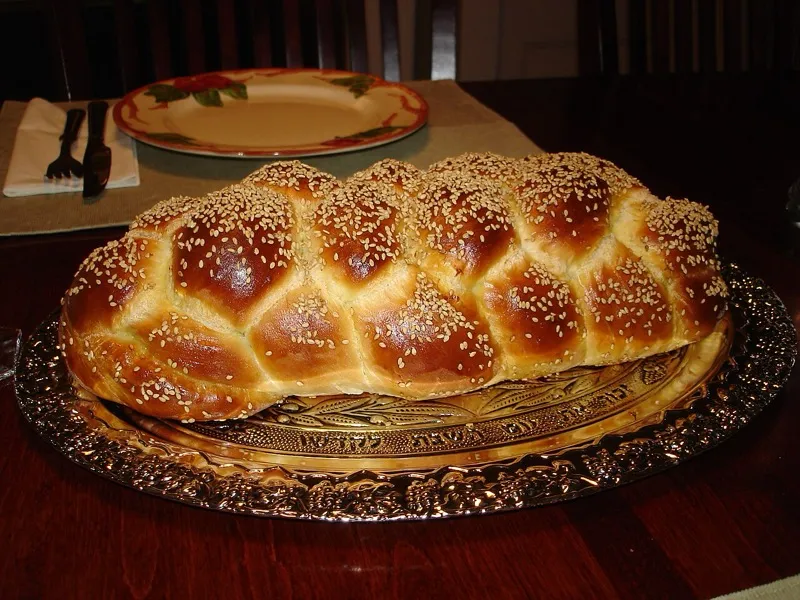
Challah is the most iconic Jewish bread — golden, braided, and slightly sweet. Traditional challah is enriched with eggs, oil, and sugar or honey, producing a tender crumb that tears apart in soft, fragrant strips.
The braiding is not merely decorative. Three-strand braids are most common, but six-strand braids appear on holidays, and round challot (the plural) are baked for Rosh Hashanah, symbolizing the cycle of the year. On Rosh Hashanah, the round challah is often studded with raisins for extra sweetness.
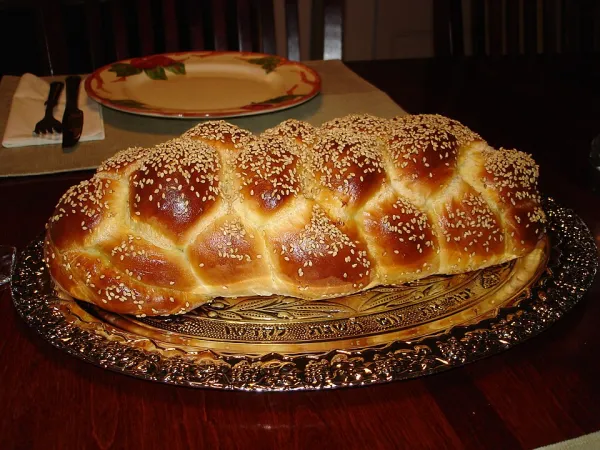
The name “challah” actually refers to the small portion of dough separated and set aside as an offering (hafrashat challah), a practice derived from Numbers 15:20. In Temple times, this portion was given to the priests. Today, it is typically burned.
Matzah: The Bread of Affliction
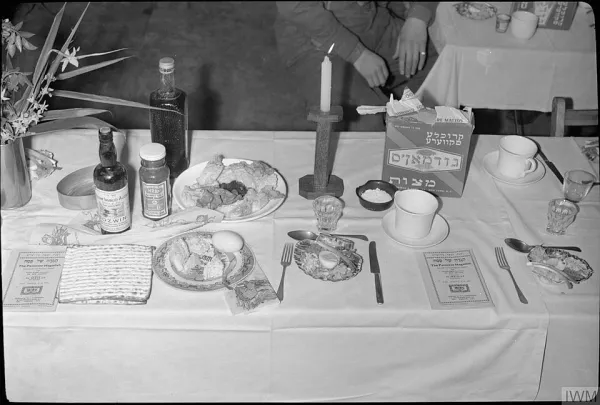
Matzah is the anti-bread — flat, crisp, and made from nothing but flour and water, baked in under 18 minutes to prevent any leavening. It commemorates the Israelites’ exodus from Egypt, when they left in such haste that their bread had no time to rise.
During Passover, matzah replaces all leavened bread for eight days (seven in Israel). There are two main varieties: machine-made (uniform, thin, square or round) and handmade shmura matzah (“watched matzah”), which is round, uneven, and made from grain supervised from the moment of harvest.
Matzah is also used year-round in cooking — matzah meal for breading, matzah ball soup, matzah brei (fried with eggs), and countless Passover desserts.
Bagel: The Ring of the Diaspora
The bagel — boiled, then baked, yielding a chewy exterior and dense interior — is the bread that conquered America. Its origins lie in the Jewish communities of Poland, probably Kraków, where references to “beygl” appear as early as 1610.
Jewish immigrants brought bagels to New York’s Lower East Side in the late 19th century. For decades, bagel baking was controlled by Bagel Bakers Local 338, a Jewish labor union. The bagels were hand-rolled, boiled in water, and baked in coal-fired ovens.
Today’s mass-produced bagels — steamed rather than boiled, soft rather than chewy — would be unrecognizable to those original bakers. But the authentic boiled bagel has made a comeback, with artisan bakeries reviving the original method.
Bialy: Bagel’s Forgotten Cousin
The bialy (short for bialystocker kuchen, from Białystok, Poland) looks like a bagel’s flatter, more scholarly sibling. Instead of a hole, it has a depression filled with diced onion and sometimes poppy seeds. Unlike the bagel, it is not boiled — it is simply baked, producing a softer, chewier texture.
The bialy was the daily bread of Białystok’s Jewish community, which was almost entirely destroyed in the Holocaust. Today, the bialy survives primarily in New York City, particularly at Kossar’s on the Lower East Side, which has been baking them since 1936.
Pita: The Bread of the Middle East
Pita — the round, hollow flatbread that puffs into a pocket during baking — is the staple bread of Mizrachi and Sephardi Jewish communities. Shared with Arab, Turkish, and Greek cuisines, pita has been baked in the Middle East for thousands of years.
In Israel, pita is ubiquitous — torn and dipped in hummus, stuffed with falafel and salad, or used to scoop up every last drop of stew. Israeli pita tends to be thicker and sturdier than the thin, papery versions often found in American supermarkets.
Laffa: The Iraqi Wrap
Laffa (also called taboon bread) is a large, thin, chewy flatbread baked against the walls of a clay oven (taboon). It comes from the Iraqi and broader Mesopotamian Jewish tradition and is now one of the most popular street food wraps in Israel.
A laffa wrapped around shawarma, pickles, and tahini is one of the defining taste experiences of Israeli cuisine.
Kubaneh: The Yemenite Shabbat Bread
Kubaneh is one of the great breads of the Jewish world — and one of the least known outside Israeli and Yemenite communities. It is a rich, buttery pull-apart bread placed in a sealed pot on Friday afternoon and baked on a very low flame (or a hot plate) overnight, emerging on Shabbat morning golden, tender, and deeply aromatic.
The overnight baking method exists because cooking on Shabbat is prohibited — the bread must be placed before Shabbat begins and left to bake without any further intervention. Kubaneh is traditionally served with grated tomato, hard-boiled eggs, and zhug (spicy Yemenite condiment).
Jachnun: The Slow-Cooked Pastry
Jachnun is kubaneh’s sibling — another Yemenite Shabbat-morning bread, also baked overnight. But where kubaneh is soft and pull-apart, jachnun is dense, flaky, and deeply caramelized. Thin sheets of dough are brushed with butter or margarine, rolled tightly, stacked in a pot, and slow-baked for 12+ hours.
The result is a golden-brown, slightly sweet, impossibly rich pastry that is served with the same accompaniments as kubaneh: grated tomato, eggs, and zhug.
Malawach: The Yemenite Pancake
Malawach is a flaky, pan-fried flatbread made from layers of dough and butter — essentially a Yemenite version of puff pastry. Crispy on the outside, soft and layered within, malawach can be served as a savory dish (with cheese, egg, or zhug) or sweet (with honey or date syrup).
In Israel, frozen malawach has become a pantry staple, beloved by Israelis of all backgrounds.
Pumpernickel and Corn Rye: The Breads of Eastern Europe
The dark, dense, tangy breads of Eastern European Jewish communities deserve their own category. Pumpernickel — a dark rye bread baked for hours at low temperature — was a staple of German and Polish Jewish life. Corn rye (rye bread made with a small percentage of cornmeal) became the standard Jewish deli bread in America — the bread that cradled pastrami and corned beef.
These breads are not sweet, not flashy, and not photogenic. But they are deeply satisfying — the bread equivalent of a Yiddish proverb: plain-spoken, dense with meaning, and better the more you chew.
A World in Every Loaf
Jewish breads tell the story of the Jewish people: wanderers who arrived in new lands, adopted local ingredients, adapted local techniques, and created something distinctly their own. A challah on a Shabbat table in Brooklyn, a laffa wrapped around shawarma in Tel Aviv, a kubaneh emerging from a pot in Bnei Brak — each is a different chapter of the same story, written in flour and water, shaped by hands that remember.
Frequently Asked Questions
What makes challah different from other breads?
Challah is an enriched bread made with eggs, oil or butter, and often a touch of honey or sugar, giving it a tender, slightly sweet crumb and golden crust. It is braided — typically in three or six strands — and traditionally baked for Shabbat and holidays. The name 'challah' actually refers to the portion of dough separated as an offering.
Are bagels a Jewish invention?
The bagel's origins are debated, but it is widely associated with the Jewish communities of Poland, particularly Kraków, dating to the early 17th century. The distinctive method — boiling before baking — creates the chewy texture. Jewish immigrants brought bagels to America, where they became a mainstream food by the mid-20th century.
What is the difference between kubaneh and jachnun?
Both are Yemenite Jewish breads baked overnight for Shabbat morning, but they differ in preparation. Kubaneh is a pull-apart bread made from enriched dough arranged in a pot, producing a soft, buttery interior. Jachnun is made from thin sheets of dough rolled tightly with butter or margarine, resulting in a dense, flaky, caramelized pastry.
Sources & Further Reading
Related Articles
Bagels: A Jewish History of the World's Favorite Roll
From 17th-century Krakow to modern Manhattan, the bagel's journey from humble Jewish bread to global breakfast icon is a story of immigration, ingenuity, and fierce debate about what counts as the real thing.
Challah: The Bread of Shabbat
Golden, braided, and fragrant — challah is the crown jewel of the Shabbat table and a beloved symbol of Jewish life.
Israeli Street Food Guide: Falafel, Hummus, Shakshuka, and Beyond
A guide to the vibrant world of Israeli street food — falafel, hummus, shawarma, sabich, shakshuka, jachnun, burekas, fresh salads, and the shuk culture that ties it all together.