Torah Portions: The Weekly Reading Cycle
Every week, Jewish communities worldwide read the same Torah portion. Explore the 54 parashot, the system of aliyot, the Haftarah connection, and the joyous restart on Simchat Torah.
One People, One Page
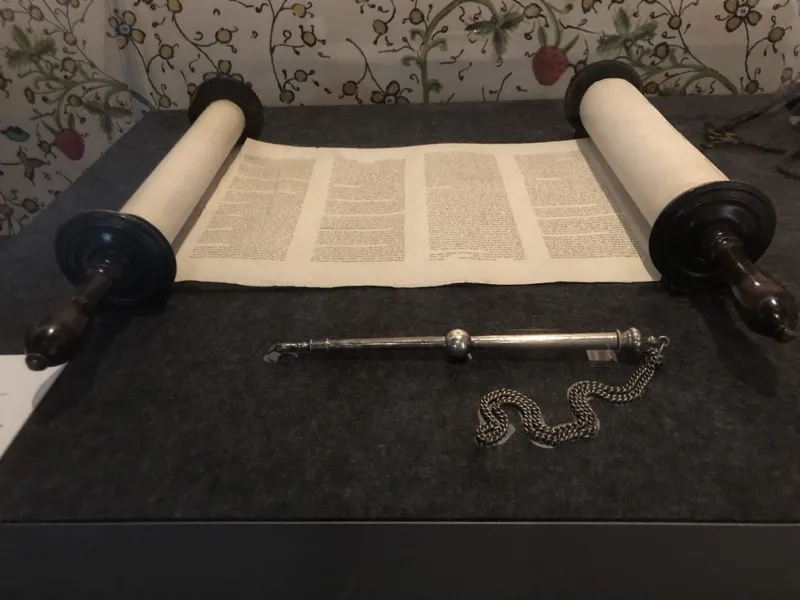
There is something quietly remarkable about the Torah reading cycle. On any given Shabbat morning, a Jew walking into a synagogue in Buenos Aires will hear the same Torah portion being chanted as a Jew in Melbourne, Mumbai, or Minneapolis. The same words, the same ancient melody patterns, the same passage — read simultaneously in thousands of communities across every continent.
This shared reading is not accidental. It is the product of a system perfected over centuries, one that ensures the entire Torah — all five books, from “In the beginning” to the death of Moses — is read aloud in the synagogue every single year. The unit of this reading is the parashah (plural: parashot), commonly translated as “Torah portion.”
The 54 Parashot
The Torah is divided into 54 parashot, named for their opening word or phrase in Hebrew. These names have become the standard way Jews refer to sections of the Torah:
Genesis (Bereshit): Bereshit, Noach, Lech Lecha, Vayera, Chayei Sarah, Toldot, Vayetzei, Vayishlach, Vayeshev, Miketz, Vayigash, Vayechi (12 portions).
Exodus (Shemot): Shemot, Va’era, Bo, Beshalach, Yitro, Mishpatim, Terumah, Tetzaveh, Ki Tisa, Vayakhel, Pekudei (11 portions).
Leviticus (Vayikra): Vayikra, Tzav, Shemini, Tazria, Metzora, Acharei Mot, Kedoshim, Emor, Behar, Bechukotai (10 portions).
Numbers (Bamidbar): Bamidbar, Naso, Beha’alotcha, Shelach, Korach, Chukat, Balak, Pinchas, Matot, Masei (10 portions).
Deuteronomy (Devarim): Devarim, Va’etchanan, Eikev, Re’eh, Shoftim, Ki Teitzei, Ki Tavo, Nitzavim, Vayelech, Ha’azinu, V’Zot HaBrachah (11 portions).
Each parashah has its own character. Some are narrative powerhouses — the binding of Isaac in Vayera, the crossing of the Red Sea in Beshalach. Others are dense with legal detail — the sacrificial regulations of Tzav, the purity laws of Tazria-Metzora. Jewish commentators have found meaning in every single portion, even the ones that seem, at first glance, to be nothing but census data or building specifications.
Double Portions
The Jewish calendar has roughly 50 Shabbatot in a regular year, but there are 54 parashot. When holidays fall on Shabbat, special holiday readings replace the regular portion. To solve this calendar puzzle, certain parashot are doubled — read together on a single Shabbat.
The seven most commonly doubled pairs are: Vayakhel-Pekudei, Tazria-Metzora, Acharei Mot-Kedoshim, Behar-Bechukotai, Chukat-Balak, Matot-Masei, and Nitzavim-Vayelech. In a Jewish leap year (shanah me’uberet), which adds an extra month of Adar, the additional Shabbatot allow most portions to stand alone.
This system requires careful coordination. Rabbis and gabba’im (synagogue administrators) consult calendrical tables to determine which portions are combined each year, ensuring that the entire cycle completes precisely on Simchat Torah.
How the Torah Is Read in Synagogue
The Aliyot
Each Shabbat Torah reading is divided into a minimum of seven aliyot (sections). The word aliyah means “going up” — referring to the honored person who ascends the bimah (reading platform) to stand beside the Torah.
Traditionally, the seven aliyot follow a hierarchy:
- Kohen — a descendant of the priestly line
- Levi — a descendant of the Levitical line 3-7. Yisrael — any other Jew
Each person called for an aliyah recites blessings before and after the reading — the brachot ha-Torah — but does not typically chant the Torah text itself. That task falls to the ba’al korei (Torah reader), a trained specialist who has memorized the text with its cantillation marks (ta’amei ha-mikra or trope), since the Torah scroll itself contains no vowels or musical notation.
The Maftir and Haftarah
After the seven aliyot, an additional aliyah called maftir repeats the final few verses of the portion. The person who receives maftir then chants the Haftarah — a selection from the Prophets (Nevi’im) that thematically connects to the Torah portion or the specific occasion.
The Haftarah readings are ancient — they may date to a period when the reading of the Torah was forbidden by occupying powers, and the Prophets served as a substitute. Each Torah portion has a designated Haftarah, though special Haftarot replace the regular ones on certain Shabbatot and holidays.
The Torah Reading Melody
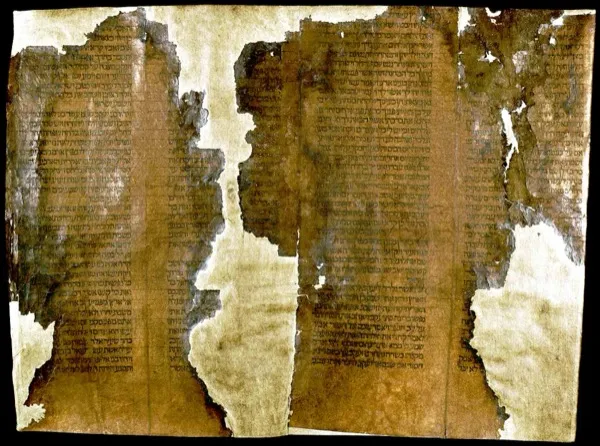
The Torah is not simply read — it is chanted according to a system of musical notation called ta’amei ha-mikra (also known as trope or cantillation). These marks, which appear in printed editions of the Torah but not in the handwritten scroll, indicate both punctuation and melody.
Different communities have different melodic traditions. The Ashkenazi trope melody differs from the Sephardi melody, which differs from the Yemenite tradition, which differs from the Iraqi tradition. A visitor to a Yemenite synagogue might not recognize the melody at all — yet the text and the cantillation marks are identical.
Learning to chant Torah is a significant skill. Bar and bat mitzvah students spend months mastering their portion. Skilled Torah readers can chant the entire weekly portion from the unvocalized scroll, a feat of memorization and musicality that connects them to a tradition stretching back centuries.
Torah Reading Beyond Shabbat
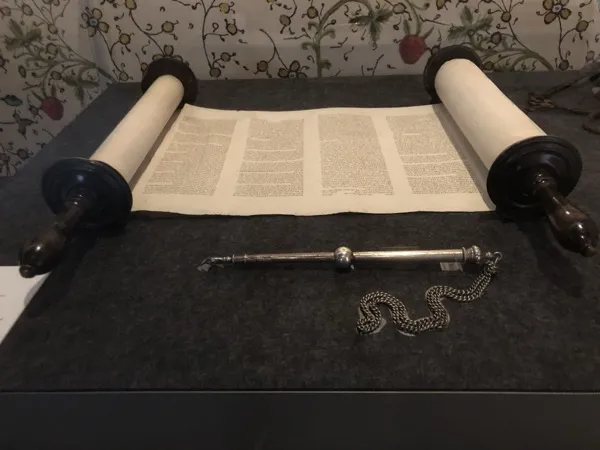
The Torah is not only read on Shabbat morning. Regular public Torah readings also occur on:
- Monday and Thursday mornings: Three aliyot are read from the beginning of the upcoming Shabbat’s portion. This ancient custom ensures that Jews never go more than three days without hearing Torah.
- Shabbat afternoon (Mincha): Three aliyot from the following week’s portion.
- Holidays and fast days: Special readings related to the occasion.
- Rosh Chodesh (New Moon): A special reading from Numbers.
This schedule means that in a traditional community, the Torah scroll is taken from the Ark and read publicly at least four times every week.
Simchat Torah: The Joyous Restart
The annual cycle concludes and immediately restarts on Simchat Torah (“Rejoicing of the Torah”), celebrated at the end of the Sukkot festival. It is one of the most joyous days in the Jewish calendar.
The final parashah, V’Zot HaBrachah (Deuteronomy 33-34), is read in its entirety. The person given the honor of the last aliyah is called the Chatan Torah (“Bridegroom of the Torah”). Immediately afterward, the first chapter of Genesis is read, and the person honored is called the Chatan Bereshit (“Bridegroom of Genesis”). In egalitarian communities, women may receive these honors as well.
The celebration includes hakafot — joyous processions in which all the Torah scrolls are carried around the synagogue while the congregation sings and dances. In many communities, the hakafot spill out into the streets, with dancing that can last for hours. Children wave flags, sometimes topped with apples and candles. It is the Torah’s birthday party — a celebration of the fact that the reading never ends, the study never concludes, the conversation never stops.
The Triennial Cycle
While the annual cycle is nearly universal today, it was not always so. Ancient Palestinian Jewish communities followed a triennial cycle, completing the Torah over three or three and a half years rather than one. This tradition died out in the medieval period but has been revived by many Conservative synagogues, which read approximately one-third of each weekly portion, completing the Torah over three years. This allows for shorter services while maintaining the weekly rhythm.
Living by the Portion
For many Jews, the weekly parashah is not just a liturgical unit — it is a lens through which the week is viewed. Rabbis build their sermons around it. Study groups meet to discuss it. Families talk about it at the Shabbat table. Jewish social media fills with commentaries and reflections each week.
The result is a shared intellectual and spiritual calendar that unites Jews across every boundary of geography, denomination, and practice. Whatever else divides the Jewish world, on Shabbat morning, everyone is reading the same story.
Frequently Asked Questions
How many Torah portions are there?
There are 54 parashot (Torah portions), but the Jewish calendar year typically has only about 50 Shabbatot available for readings. To fit them all in, certain portions are combined ('doubled up') in regular (non-leap) years. In a Jewish leap year, which adds an extra month (Adar II), each portion generally gets its own week.
What is an aliyah in Torah reading?
An aliyah (plural: aliyot) literally means 'going up.' It refers to being called up to the Torah during the public reading. On Shabbat morning, the Torah portion is divided into seven sections, and a different person is honored with an aliyah for each section. They recite blessings before and after the reading. An additional aliyah called maftir follows.
What happens on Simchat Torah?
Simchat Torah ('Rejoicing of the Torah') marks the completion of the annual Torah reading cycle and the immediate restart. The final verses of Deuteronomy are read, and then the first verses of Genesis begin — symbolizing that Torah study never ends. The celebration includes singing, dancing with Torah scrolls, and joyous processions called hakafot.
Sources & Further Reading
Related Articles
Simchat Torah: The Joy of Completing the Torah
On Simchat Torah, the final words of Deuteronomy are read and Genesis begins again — and the synagogue erupts in singing, dancing, and unrestrained joy with the Torah scrolls.
The Synagogue: House of Prayer, Study, and Assembly
More than just a place of worship — the synagogue is the heart of Jewish community life, combining prayer, learning, and social gathering under one roof.
The Torah: The Heart of Judaism
The Torah is more than a book — it is the living constitution of Jewish life, studied and debated for over three millennia.