Havdalah: The Beautiful Ceremony That Ends Shabbat
Havdalah — the multisensory ceremony of wine, spices, and a braided candle that marks the end of Shabbat. Discover its blessings, customs, melodies, and deeper spiritual meaning.
Saturday Night Magic
There is a moment on Saturday evening when the sky darkens and three stars appear — small, faint, barely there — and something shifts. Shabbat is ending. The day that began with candle-lighting on Friday evening is drawing to a close, and the week is about to resume. But before the transition is complete, before phones are checked and ovens turned on and cars started, there is one more ceremony to perform.
It is called Havdalah — from the Hebrew root meaning “to separate” or “to distinguish.” It is brief — five minutes at most. It involves wine, fragrant spices, and a braided candle with multiple wicks. And for those who observe it, it is one of the most beautiful, sensory, and emotionally resonant moments in the Jewish week.
Havdalah does not merely announce that Shabbat is over. It insists that the transition matters — that the boundary between sacred time and ordinary time deserves to be felt, tasted, smelled, and seen.
The Elements
Havdalah engages every sense, which is part of its genius. At a time when the “extra soul” (neshamah yeterah) that tradition says accompanies each Jew during Shabbat is departing, the ceremony provides physical consolation — something to taste, smell, see, and feel.
Wine (or Grape Juice)
The ceremony begins with a cup of wine, filled to overflowing. The overflowing cup symbolizes the hope that the coming week will be full of blessing. The blessing over wine (“borei pri hagafen”) consecrates the moment, just as wine marks the beginning of Shabbat at Kiddush.
Some families use grape juice, which is equally valid. The cup should be full — tradition says to fill it until it spills slightly, a tangible image of abundance.
Spices (Besamim)
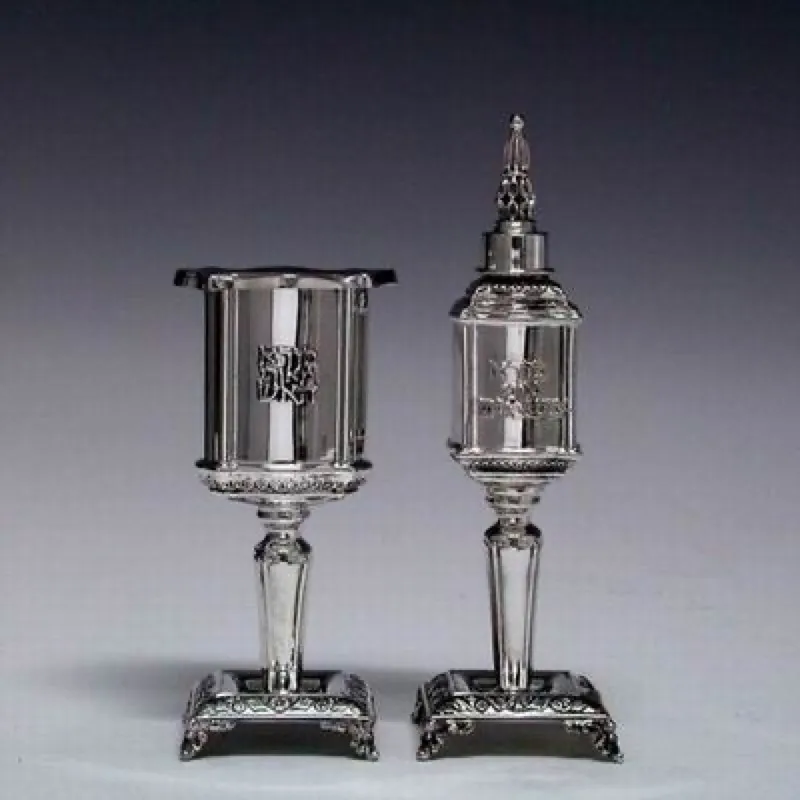
The most distinctive element of Havdalah is the besamim — fragrant spices passed around for everyone to smell. The blessing (“borei minei vesamim” — “who creates varieties of spices”) is recited, and the spice box is sniffed deeply.
Why spices? The Talmud explains that on Shabbat, each person receives an additional soul (neshamah yeterah) that departs when Shabbat ends. The fragrance of the spices revives the spirit that might otherwise faint from the loss. It is a poignant image — the scent carrying just enough sweetness to ease the transition from the sacred back into the ordinary.
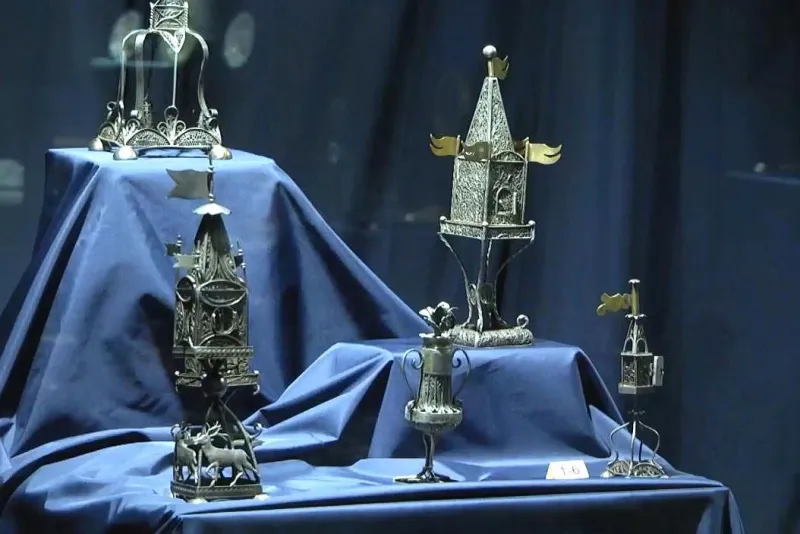
Traditional spice boxes are works of Jewish art — silver towers, fish shapes, filigree boxes — passed down through generations. The spices inside vary: cloves are most common, but cinnamon sticks, star anise, dried orange peel, and other fragrant mixtures are all used. Some families grow their own herbs and use fresh rosemary, mint, or lavender.
The Braided Candle
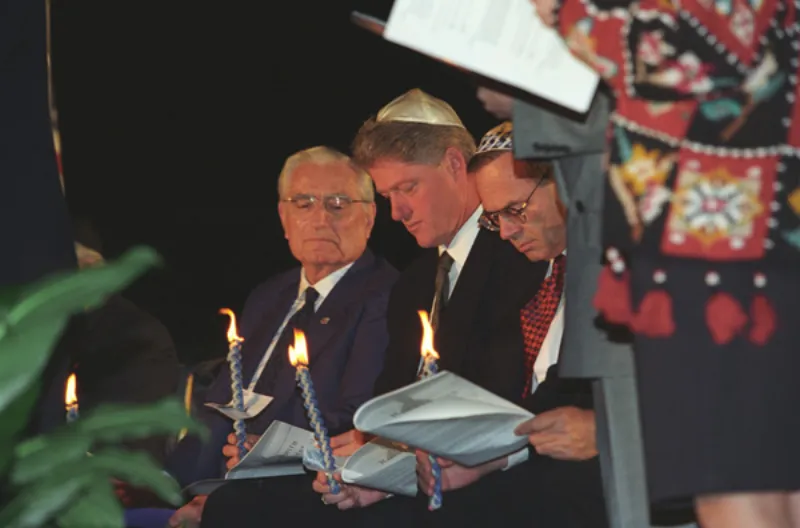
The Havdalah candle is unlike any other candle in Jewish ritual. It has multiple wicks — at least two, traditionally braided together — creating a single torch-like flame. The blessing (“borei me’orei ha’esh” — “who creates the lights of fire”) uses the plural form, acknowledging the multiple flames.
According to tradition, fire was created on the first Saturday night of the world — Adam and Eve, alone in the darkness after their first Shabbat, were terrified until God taught them to make fire. The Havdalah candle recreates that primal moment: the first human-made fire, the first act of creativity after the day of rest.
The candle must be bright enough to derive benefit from its light. This is why the custom arose of looking at one’s fingernails by the candle’s glow — curling the fingers inward so that the light falls on the nails and the shadows fill the palm. The contrast between light and shadow on the hand is itself a visual Havdalah — a separation of brightness from darkness, played out on the body.
The Blessing of Separation
The ceremony concludes with the Havdalah blessing itself:
“Blessed are You, Lord our God, King of the universe, who distinguishes between sacred and ordinary, between light and darkness, between Israel and the nations, between the seventh day and the six days of work. Blessed are You, Lord, who distinguishes between sacred and ordinary.”
The Hebrew word hamavdil — “who distinguishes” — is the heart of the ceremony. Judaism is, in many ways, a religion of distinctions: kosher and non-kosher, Shabbat and weekday, pure and impure. Havdalah celebrates the capacity to make these distinctions, to notice the boundaries that give life its structure and meaning.
After the blessing, the candle is extinguished in the overflowing wine — a small hiss, a curl of smoke, and Shabbat is over.
Elijah the Prophet
Many communities sing “Eliyahu HaNavi” (“Elijah the Prophet”) after Havdalah. The connection is both mystical and hopeful. According to tradition, Elijah — who never died but ascended to heaven in a chariot of fire — will herald the coming of the Messiah. And the Messiah, tradition holds, will not come on Shabbat (since the journey would violate the day of rest). Therefore, Saturday night — the first moment when the Messiah could theoretically arrive — is an appropriate time to invoke Elijah.
The song is simple, haunting, and universally known. Children learn it early, and its melody becomes one of the sonic markers of Jewish life — as recognizable as Kiddush or the Shema.
“Eliyahu HaNavi, Eliyahu HaTishbi, Eliyahu HaGiladi — bimhera beyameinu, yavo eleinu, im Mashiach ben David.” “Elijah the Prophet, Elijah the Tishbite, Elijah the Gileadite — speedily in our days, may he come to us, with the Messiah, son of David.”
Miriam’s Cup
In some contemporary communities, particularly feminist and egalitarian ones, a Cup of Miriam has been added to the Havdalah ceremony. Drawing on the tradition that a miraculous well accompanied the Israelites through the desert in the merit of Moses’s sister Miriam, the cup is filled with water and used to honor women’s contributions to Jewish life.
This innovation is not universally accepted — traditionalists see it as an unauthorized addition — but it illustrates the ongoing evolution of Jewish practice and the creative tension between preservation and renewal.
Melodies and Customs
Havdalah melodies vary enormously across communities. Ashkenazi, Sephardi, Yemenite, and Hasidic traditions each have their own musical settings. In the contemporary world, Debbie Friedman’s Havdalah melody has become iconic in liberal congregations, while Hasidic communities sing elaborate niggunim that extend the ceremony into a musical experience.
Some customs to know:
- Dipping fingers in the spilled wine and touching the eyelids, ears, or pockets — a folk practice believed to bring blessing to the senses and to the coming week’s livelihood
- Not performing Havdalah before specific times — the exact moment varies by community (some wait until three stars, others until a set time after sunset)
- Communal Havdalah — in some communities, Havdalah is performed publicly at the end of Shabbat services, with the entire congregation gathered around a single candle
The Week Begins
After Havdalah, the mood shifts. Lights go on. Phones buzz with accumulated messages. The kitchen becomes available for cooking. The world, with all its noise and urgency, rushes back in. This is why Havdalah matters — it insists on a conscious transition. It refuses to let the sacred bleed into the ordinary without acknowledgment.
Every Saturday night, Havdalah says: pay attention. Something is ending and something is beginning. The week ahead will be full of work, worry, ambition, and exhaustion. But you have just spent twenty-five hours in a different kind of time — slower, deeper, more attentive. Take a sip of wine. Smell the spices. Look at the light on your hands. And carry something of Shabbat into the week to come.
“Shavua tov” — “A good week.” The greeting exchanged after Havdalah, carrying the blessing of Shabbat forward into the days ahead.
Frequently Asked Questions
When do you perform Havdalah?
Havdalah is performed after Shabbat ends — typically about 40-72 minutes after sunset on Saturday evening, depending on community custom. Many follow the appearance of three medium-sized stars in the sky as the traditional indicator. Havdalah can also be performed after major Jewish holidays that have Shabbat-like restrictions. If you miss Saturday night, you can recite an abbreviated Havdalah until Tuesday.
What are the four parts of the Havdalah ceremony?
Havdalah consists of four blessings: (1) an introductory passage of biblical verses, (2) the blessing over wine or grape juice, (3) the blessing over fragrant spices (besamim), and (4) the blessing over the light of the braided candle. The ceremony concludes with the Havdalah blessing itself, praising God who 'distinguishes between sacred and ordinary, between light and darkness, between Israel and the nations, between the seventh day and the six days of work.'
Why do people look at their fingernails during Havdalah?
The custom of looking at fingernails by the light of the Havdalah candle serves a practical and symbolic purpose. Practically, the blessing over fire requires deriving benefit from the light, so examining one's fingernails demonstrates that the light is bright enough to use. Symbolically, some explain that the contrast between the fingernail and the skin beneath represents the distinction (havdalah) between light and dark, sacred and ordinary.
Test Your Knowledge
Think you know this topic? Try our quiz!
Take the Jewish Holidays: Advanced Quiz →Sources & Further Reading
Related Articles
Jewish Blessings (Brachot): Sanctifying Every Moment
Judaism has a blessing for everything — from bread to thunder, from waking up to seeing a rainbow. Learn about brachot, the system of blessings that turns daily life into sacred practice.
The Jewish Calendar: How an Ancient Lunar-Solar System Shapes Jewish Life
The Jewish calendar is a sophisticated lunar-solar system that has kept Jewish holidays, Shabbat, and lifecycle events anchored in their proper seasons for over two thousand years.
Shabbat: The Weekly Day of Rest
Every week, Jewish life pauses for 25 hours of rest, reflection, and togetherness — discover the beauty of Shabbat.