Famous Pirkei Avot Sayings: Timeless Wisdom from the Rabbis
More than twenty famous quotes from Pirkei Avot — the Ethics of the Fathers — with historical context, original Hebrew, and reflections on why these ancient sayings still resonate.
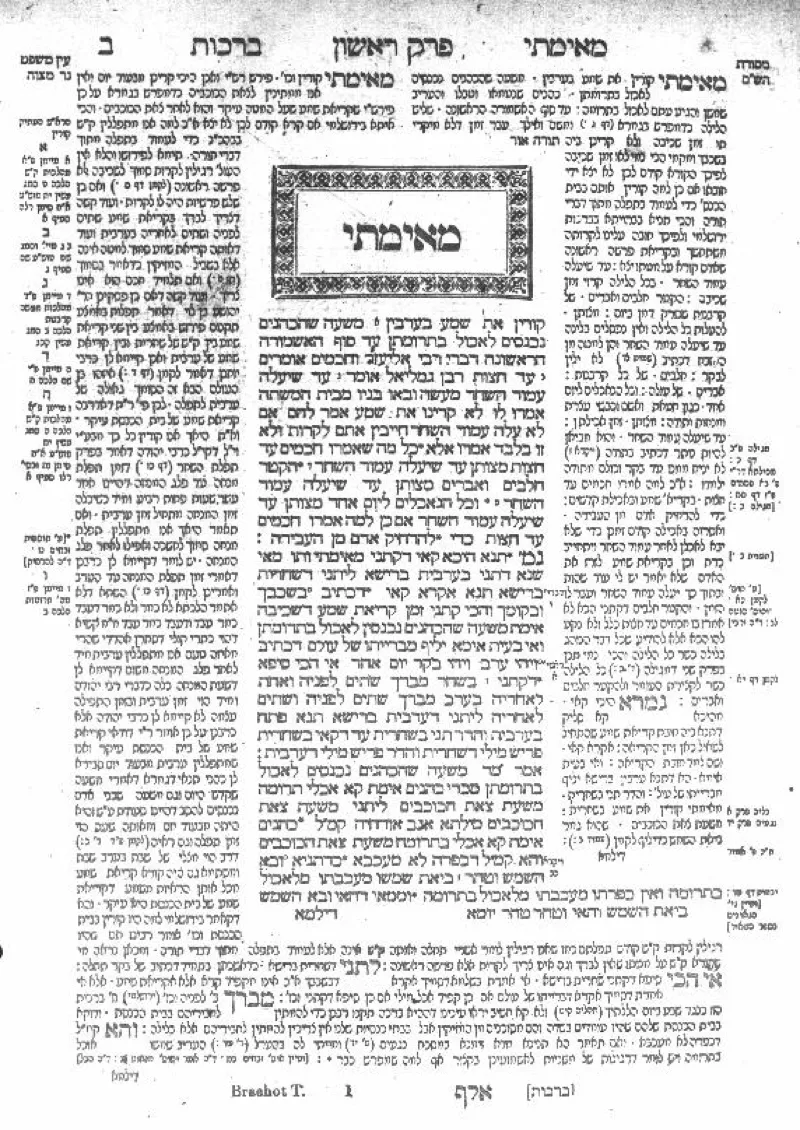
Words That Refuse to Age
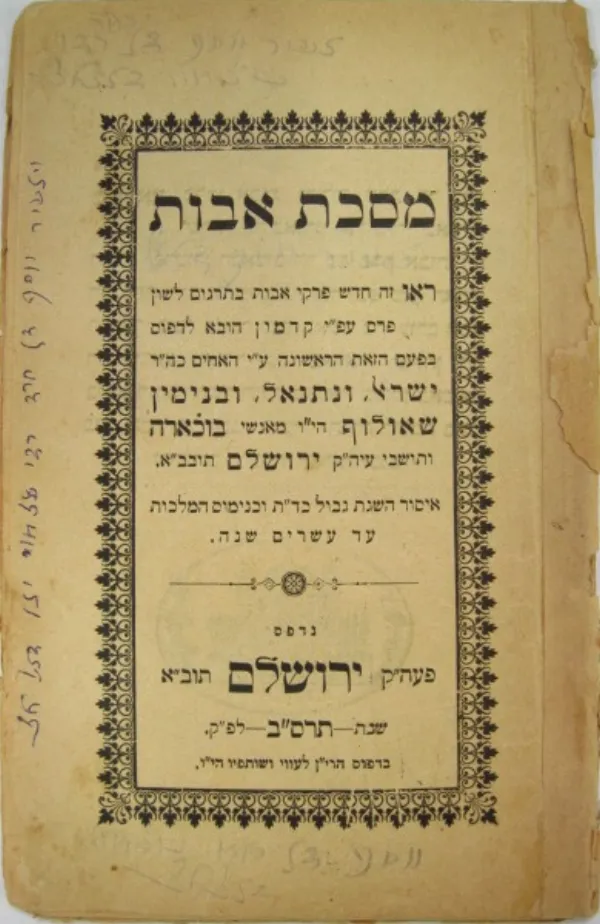
Some books are read once and shelved. Pirkei Avot is not one of them. This slim tractate of the Mishnah — just five chapters in the original — has been memorized by schoolchildren, quoted at weddings, printed on posters, and debated by philosophers for nearly two thousand years. It holds no legal rulings. It prescribes no rituals. What it offers, instead, is a collection of sentences so compressed and so luminous that each one can occupy a lifetime of reflection.
The title, Pirkei Avot, means “Chapters of the Fathers” — the “fathers” being the great rabbis whose teachings are preserved here. These men lived across several centuries, from the late Second Temple period through the compilation of the Mishnah around 200 CE. They were judges, scholars, laborers, and leaders. And they had an extraordinary talent for distilling vast moral insight into a single line.
Here are more than twenty of the most famous sayings, with context for each.
The Chain of Transmission
Pirkei Avot opens not with a teaching but with a genealogy of ideas. “Moses received the Torah from Sinai, and transmitted it to Joshua, and Joshua to the Elders…” This chain establishes that the wisdom that follows is not the invention of any one rabbi — it flows from Sinai itself.
”The world stands on three things: Torah, worship, and acts of loving-kindness.” — Shimon HaTzaddik (1:2)
Shimon the Righteous was among the last members of the Great Assembly. His teaching is architecturally simple: the world rests on study, prayer, and kindness. Remove any one pillar and the structure wobbles. Notice that he does not say “the Jewish world” — he says “the world.” The claim is universal.
”Do not be like servants who serve the master for the sake of receiving a reward.” — Antigonus of Socho (1:3)
This is one of the earliest arguments for intrinsic motivation in Western thought. Do right because it is right — not because you expect payment. The Talmud notes that two of Antigonus’s students misunderstood this teaching and concluded that there was no afterlife reward at all, founding heretical sects. Even great ideas can be misread.
”Let your house be a meeting place for the wise.” — Yose ben Yoezer (1:4)
Surround yourself with people who are smarter and more learned than you. The Hebrew word for “meeting place” (beit va’ad) suggests not a passive gathering but an active assembly — a place of debate and growth.
Hillel: The Most Quoted Rabbi
No figure in Pirkei Avot is quoted more frequently than Hillel, who lived in the first century BCE.
”If I am not for myself, who will be for me? And if I am only for myself, what am I? And if not now, when?” (1:14)
Three questions. Three moral pillars. The first asserts self-worth and personal responsibility. The second insists on obligation to others. The third adds urgency — good intentions without action are hollow. This saying has been quoted by politicians, activists, and writers for centuries, often without knowing its source.
”Do not say, ‘When I have free time I will study,’ for perhaps you will never have free time.” (2:4)
A rebuke to procrastination that feels uncomfortably modern. Hillel understood that “later” is the most dangerous word in any language.
”In a place where there are no people, strive to be a person.” (2:5)
The Hebrew is more vivid: b’makom she’ein anashim, hishtadel lihyot ish. Where humanity is absent — where no one steps up, where moral cowardice reigns — you must be the one who acts. This saying has been invoked by rescuers, whistleblowers, and ordinary people who simply refused to look away.
”Do not judge your fellow until you have reached their place.” (2:4)
Empathy as ethical imperative. Before you condemn someone, imagine their circumstances — their poverty, their fear, their history. You cannot fairly judge what you have not experienced.
On Wisdom and Character
”Who is wise? One who learns from every person.” — Ben Zoma (4:1)
Ben Zoma’s definition of wisdom is radical. Wisdom is not about credentials or intelligence; it is about humility. The truly wise person treats every human encounter as an opportunity to learn — from the scholar and the child, the saint and the stranger.
”Who is strong? One who conquers their own inclination.” — Ben Zoma (4:1)
Strength is not physical power. It is self-mastery. The Hebrew term yetzer (inclination) refers to the inner drives that pull us toward selfishness, anger, and excess. Conquering the self is harder than conquering a city.
”Who is rich? One who is happy with their lot.” — Ben Zoma (4:1)
In a consumer culture, this saying cuts deep. Wealth is not about accumulation — it is about contentment. The person who has little but wants nothing is richer than the billionaire who always craves more.
”Who is honored? One who honors others.” — Ben Zoma (4:1)
Honor is not extracted — it is reflected. The person who gives respect receives it. Ben Zoma’s four definitions together form a complete portrait of the good life: learn from everyone, master yourself, want what you have, and lift others up.
On Responsibility and Action
”It is not upon you to finish the work, but neither are you free to desist from it.” — Rabbi Tarfon (2:16)
Perhaps the most psychologically liberating sentence in all of Jewish literature. You will not solve every problem. You will not perfect the world. But you may not use that fact as an excuse to stop trying. The work continues; your job is to do your part.
”Say little and do much.” — Shammai (1:15)
Shammai, Hillel’s great rival, was known for his terseness. This saying embodies it. Don’t announce your intentions — fulfill them. Words are cheap; actions are costly and therefore meaningful.
”Make your Torah study fixed, and your work secondary.” (1:15)
This does not mean “don’t work.” It means that learning should be the constant around which everything else revolves — not the thing you do when work allows.
”Love work, hate lordship, and do not make yourself known to the government.” — Shemaya (1:10)
A saying born of political experience. Shemaya lived under Roman occupation and knew that proximity to power was dangerous. Better to work honestly, avoid authority, and stay out of the government’s gaze.
On Human Relations
”Do not appease your fellow in the hour of their anger.” — Rabbi Shimon ben Elazar (4:18)
Timing matters as much as intention. When someone is furious, rational arguments only inflame them. Wait. Let the storm pass. Then speak.
”Do not look at the container, but at what is inside it.” — Rabbi Meir (4:20)
A plea against judging by appearances. A rough exterior may conceal brilliance; a polished surface may hide emptiness. This applies to people, to arguments, and to ideas.
”All is foreseen, yet free will is given.” — Rabbi Akiva (3:15)
One of the great paradoxes of Jewish thought. God knows everything that will happen, yet human beings are genuinely free to choose. Rabbi Akiva does not resolve the paradox — he states it and lets it stand, trusting that truth can contain contradictions.
On the World and Its Judgment
”Know before whom you stand.” (Attributed, based on 2:1)
This phrase appears in synagogues worldwide, often inscribed above the ark. It means: remember that you are always in God’s presence. Every action, every word, every thought occurs before the One who sees all.
”Reflect on three things and you will not come to sin: know what is above you — a seeing eye, a hearing ear, and all your deeds recorded in a book.” — Rabbi Judah HaNasi (2:1)
A powerful image of moral accountability. You are being watched — not by a surveillance state, but by the moral order of the universe. Your actions leave traces.
”The day is short, the work is great, the workers are lazy, the reward is much, and the Master is pressing.” — Rabbi Tarfon (2:15)
Life is brief. There is so much to do. Human nature resists effort. But the reward for doing good is real, and God is not patient. This saying combines urgency with honesty about human weakness.
”You are not obligated to complete the work, but neither are you free to abandon it.” — Rabbi Tarfon (2:16)
Worth repeating, because it is the beating heart of Jewish ethics. Perfectionism paralyzes; despair excuses inaction. This saying navigates between both traps.
Why These Words Endure
Pirkei Avot has no legal authority. No rabbi rules on the basis of its maxims. And yet it is arguably the most widely read text in all of rabbinic literature. Why?
Because these sayings speak to the human condition itself. They address the temptations we all face — laziness, arrogance, judgment, procrastination, despair — and they do so with a conciseness that lodges the words permanently in memory. A single line from Pirkei Avot can change how you see your morning, your neighbor, or your life.
The rabbis who composed these sayings were not ivory-tower philosophers. They were butchers, blacksmiths, woodcutters, and shepherds who also happened to be among the most profound moral thinkers the world has produced. Their words were forged in the heat of real life — under foreign occupation, amid poverty, through personal tragedy — and they have the ring of truth that only lived experience can produce.
When Jews study Pirkei Avot on Shabbat afternoons, they are not performing an academic exercise. They are sitting in conversation with teachers who have been dead for two millennia but whose voices remain startlingly alive. And in every generation, someone reads “If not now, when?” and closes the book knowing that the answer is: now. Right now.
Frequently Asked Questions
What is Pirkei Avot?
Pirkei Avot ('Ethics of the Fathers') is a tractate of the Mishnah devoted entirely to ethical and moral teachings. Unlike other Mishnah tractates that focus on law, Avot contains maxims, proverbs, and life advice from rabbis spanning roughly 300 BCE to 200 CE. It is traditionally studied on Shabbat afternoons between Passover and Rosh Hashanah.
Why are Pirkei Avot sayings still relevant today?
The sayings address universal human concerns — humility, justice, responsibility, the value of learning, and the urgency of moral action. Because they deal with character rather than ritual, they transcend their historical setting and continue to inspire Jews and non-Jews alike.
How many chapters does Pirkei Avot have?
Pirkei Avot has five original chapters, with a sixth chapter (Kinyan Torah) added later for the custom of studying one chapter per Shabbat during the six weeks between Passover and Shavuot. The original five chapters contain the core ethical teachings of the tannaitic rabbis.
Sources & Further Reading
Related Articles
Jewish Ethics: A Guide to Moral Living
From Hillel's golden rule to the Mussar movement, Jewish ethics offers a comprehensive framework for moral living — covering speech, the environment, labor rights, medical decisions, and the obligation to repair the world.
Pirkei Avot: Ethics of the Fathers
Pirkei Avot — 'Ethics of the Fathers' — is the Mishnah's collection of rabbinic wisdom and moral teachings. No laws, no rituals — just pure ethical guidance that has shaped Jewish character for two thousand years.
The Talmud: A Beginner's Guide to Jewish Oral Law
The Talmud is the vast ocean of Jewish thought — centuries of rabbinic debate on law, ethics, storytelling, and the meaning of life, all compiled into one extraordinary work.