The Cantor: The Voice of Jewish Prayer
The cantor — hazzan in Hebrew — is the voice that carries a congregation's prayers to heaven. From golden age legends like Yossele Rosenblatt to the modern debate over women cantors, explore this ancient and evolving role.
The Prayer Carrier
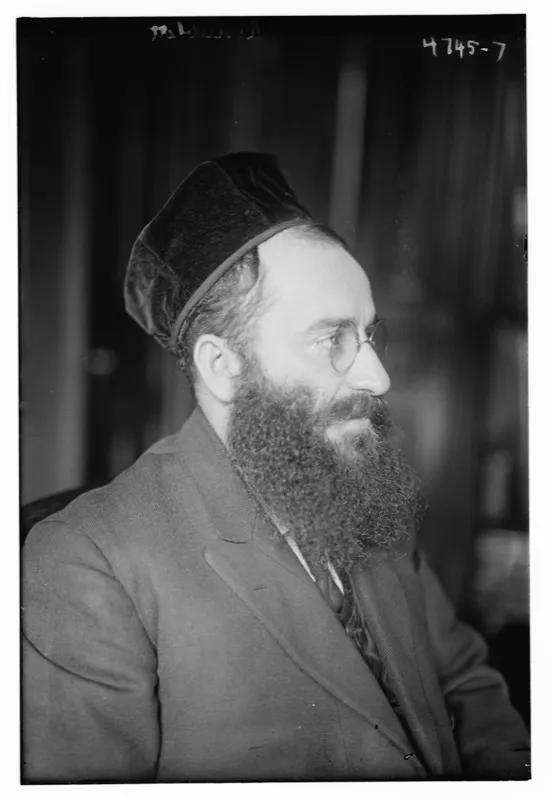
Close your eyes in a synagogue during the High Holy Days and listen. Before the sermon, before the rabbi’s words, before anything else, there is a voice — soaring, trembling, bending notes in ways that seem to pull the room upward. That voice belongs to the cantor, the hazzan, and it has been the soundtrack of Jewish prayer for over a thousand years.
The cantor is not merely a singer. In Jewish tradition, the cantor serves as the shaliach tzibbur — literally, the “emissary of the congregation.” When the cantor stands before the Ark and opens their mouth, they are not performing. They are carrying every prayer in the room — the whispered hopes, the silent griefs, the unspoken gratitudes — and lifting them toward heaven.
It is, by any measure, one of the most demanding and beautiful roles in religious life.
Origins and Evolution
The role of the cantor evolved gradually. In the Talmudic period (roughly 200-500 CE), the shaliach tzibbur was simply whoever in the community had the knowledge and voice to lead prayers. There was no professional clergy role — any competent member of the congregation could serve.
As the liturgy grew more complex through the medieval period, and as poetic additions (piyyutim) were incorporated into the prayer service, the demands on the prayer leader increased. By the 10th and 11th centuries, the hazzan had become a semi-professional position requiring both scholarly knowledge and musical skill. The great prayer-poets of this era — Yannai, Kalir, Solomon ibn Gabirol — composed works that demanded an educated, musically gifted voice to deliver them.
By the 18th and 19th centuries, the cantor had become a central figure in Ashkenazi synagogue life — often more popular than the rabbi. Congregations competed to attract the most talented cantors, and the greatest hazzanim drew audiences the way opera stars draw audiences today.
Nusach: The Musical Grammar of Prayer
At the heart of cantorial art is nusach — the traditional musical modes and melodic formulas that govern Jewish prayer. Nusach is not a fixed melody but a musical language: a set of scales, characteristic phrases, and emotional colors appropriate to each occasion.
Different services have distinct nusach:
- Weekday nusach is relatively simple and understated.
- Shabbat nusach is warmer, more expansive, more lyrical.
- High Holy Day nusach is the most elaborate — dramatic, haunting, building toward the great moments of Kol Nidrei and Ne’ilah.
A trained cantor can signal to the congregation what kind of prayer moment they are in simply through the musical mode. When the nusach shifts, the room’s emotional temperature shifts with it. Congregants who have heard these modes since childhood respond instinctively — the body recognizes the music before the mind processes the words.
Different Jewish communities have their own nusach traditions. Ashkenazi nusach differs from Sephardi nusach, which differs from Yemenite nusach. Even within the Ashkenazi world, Lithuanian, Galician, and German traditions have distinct musical flavors.
The Golden Age of Cantors
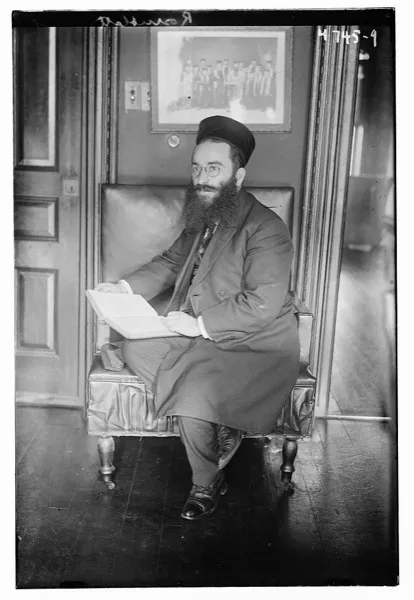
The late 19th and early 20th centuries are often called the Golden Age of Cantorial Music, a period when a handful of extraordinary voices elevated the cantor to celebrity status.
Yossele Rosenblatt (1882-1933)
Born in Ukraine, Rosenblatt was a child prodigy who began leading services at age eight. His voice — a high tenor of extraordinary purity and range, capable of dazzling coloratura passages — made him the most famous cantor in the world. He performed at Carnegie Hall, was offered (and refused) a contract with the Chicago Opera because he would not sing on Shabbat, and even appeared in the 1927 film The Jazz Singer.
Rosenblatt’s recordings remain the gold standard of cantorial art. His rendition of Kol Nidrei can reduce a room to tears nearly a century after his death. He combined operatic vocal technique with deep religious sincerity — you can hear in every note that he is not performing but praying.
Moshe Koussevitzky (1899-1966)
Known as the “Jewish Caruso,” Koussevitzky possessed a dramatic baritone voice of immense power. Born in Belarus, he survived the Holocaust by fleeing to the Soviet Union, eventually settling in the United States. His interpretations of the High Holy Day liturgy are among the most intense ever recorded — music that sounds like it was torn from the soul.
Other Golden Age Legends
Gershon Sirota (1874-1943), the “Jewish Caruso” before Koussevitzky, was murdered in the Warsaw Ghetto. Zavel Kwartin (1874-1952) pioneered cantorial recordings. Leib Glantz (1898-1964) pushed the boundaries of cantorial composition with avant-garde musical ideas while maintaining deep liturgical authenticity.
The Cantor’s Training
Becoming a cantor today requires extensive education. The major cantorial schools include:
- Hebrew Union College-Jewish Institute of Religion (Reform): The Debbie Friedman School of Sacred Music, training cantors since 1948.
- Jewish Theological Seminary (Conservative): The H.L. Miller Cantorial School.
- Yeshiva University (Orthodox): The Philip and Sarah Belz School of Jewish Music.
A cantorial program typically takes five years and includes:
- Voice training — classical vocal technique, breath control, performance.
- Nusach — mastery of the traditional prayer modes for every occasion.
- Liturgy — deep knowledge of the prayer texts and their history.
- Jewish studies — Talmud, Bible, Jewish history, Hebrew.
- Pastoral skills — counseling, hospital visits, lifecycle ceremonies.
- Education — teaching bar/bat mitzvah students, leading children’s services.
Women Cantors
The question of women serving as cantors has been one of the more significant debates in modern Jewish life.
Reform Judaism led the way: Barbara Ostfeld-Horowitz became the first woman invested as a cantor by Hebrew Union College in 1975. Today, women make up a significant portion of Reform cantors.
Conservative Judaism followed in 1987, when Erica Lippitz and Marla Rosenfeld Barugel became the first women ordained as cantors by the Jewish Theological Seminary. The decision was controversial at the time but is now widely accepted within the movement.
Orthodox Judaism does not ordain women as cantors. The halakhic issue centers on kol isha — the principle that a man should not hear a woman’s singing voice in certain liturgical contexts — and on the requirement that the shaliach tzibbur be obligated in the same prayers they lead on behalf of others. Since women are traditionally exempt from time-bound positive commandments, including the three daily services, they cannot serve as prayer leaders in Orthodox law.
However, some Modern Orthodox communities have created expanded roles for women in worship that stop short of the cantorial title — leading Kabbalat Shabbat, reading Torah, or chanting the Haftarah in partnership minyanim.
The Modern Cantor
Today’s cantor occupies a role that would be unrecognizable to the golden age hazzanim. Beyond leading prayer, the modern cantor typically:
- Teaches bar and bat mitzvah students to chant Torah and Haftarah.
- Directs or collaborates with synagogue choirs.
- Provides pastoral care — hospital visits, bereavement support, counseling.
- Composes or arranges music for the congregation.
- Leads lifecycle ceremonies — weddings, funerals, baby namings.
- Programs concerts, musical Shabbat services, and community events.
The cantor has evolved from a pure vocal specialist to a multi-faceted clergy member. In many smaller congregations, the cantor is the only clergy member, serving functions traditionally associated with the rabbi as well.
A Voice That Carries
There is a story told about a great cantor who was asked what he thought about during Kol Nidrei on Yom Kippur eve. “I think about everyone in the room,” he said. “The woman who just lost her husband. The man whose business failed. The teenager who feels invisible. The elderly woman who remembers when her parents stood in this same spot. I gather all their prayers, and I try to carry them.”
That is the cantor’s gift and burden: to be the voice of a community, not a soloist but a vessel — gathering the unspoken prayers of a hundred hearts and lifting them, note by note, toward something larger than any single voice could reach alone.
Frequently Asked Questions
What is a cantor in Judaism?
A cantor (hazzan in Hebrew) is a trained musician and clergy member who leads the musical portions of Jewish worship. The cantor serves as the shaliach tzibbur ('emissary of the congregation'), carrying the community's prayers through song. In many synagogues, the cantor shares clergy duties with the rabbi, including pastoral care, teaching, and lifecycle ceremonies.
What is nusach?
Nusach refers to the traditional musical modes and melodic patterns used for Jewish prayer. Different services (Shabbat, weekdays, holidays) each have their own nusach, as do different Jewish communities (Ashkenazi, Sephardi, Mizrachi). A trained cantor knows the appropriate nusach for every occasion, creating the proper musical atmosphere for each prayer moment.
Can women be cantors?
In Reform Judaism, women have served as cantors since the 1970s. The Conservative movement ordained its first woman cantor in 1987. Today, women cantors serve in Reform, Conservative, and Reconstructionist congregations worldwide. Orthodox Judaism does not permit women to serve as cantors for the main prayer service, based on the halakhic concept of kol isha (a woman's singing voice in prayer).
Sources & Further Reading
Related Articles
Jewish Liturgical Music: The Sound of Prayer
From the haunting chant of Kol Nidre to joyful Shabbat melodies — liturgical music is the soundtrack of Jewish spiritual life.
Jewish Prayer: Connecting with the Divine
From the three daily prayer services to personal meditation, discover how Jewish prayer works and what it means.
The Synagogue: House of Prayer, Study, and Assembly
More than just a place of worship — the synagogue is the heart of Jewish community life, combining prayer, learning, and social gathering under one roof.