Jewish Blessings (Brachot): Sanctifying Every Moment
Judaism has a blessing for everything — from bread to thunder, from waking up to seeing a rainbow. Learn about brachot, the system of blessings that turns daily life into sacred practice.
A Blessing for Everything
There is a blessing in Judaism for seeing a rainbow. There is one for hearing thunder and another for seeing lightning. There is a blessing you say when you smell fragrant spices, and one for when you see a person of extraordinary beauty. There is a blessing for putting on new clothes, for seeing the ocean after a long absence, for encountering a great scholar, and for hearing bad news. Judaism has, quite literally, a blessing for everything.
This system of blessings — brachot in Hebrew (singular: bracha) — is one of the most distinctive features of Jewish religious life. It is also one of the most misunderstood. Brachot are not magic formulas. They do not change the world. They change the person who says them. Each bracha is a tiny act of attention, a pause to notice something that might otherwise slip by unacknowledged. Over the course of a day, these small pauses accumulate into something remarkable: a life lived in awareness.
The Structure of a Bracha
Almost every bracha follows the same basic formula. It begins with six Hebrew words:
בָּרוּךְ אַתָּה יְהוָה אֱלֹהֵינוּ מֶלֶךְ הָעוֹלָם
Baruch Atah Adonai, Eloheinu Melech ha-olam…
“Blessed are You, Lord our God, King of the universe…”
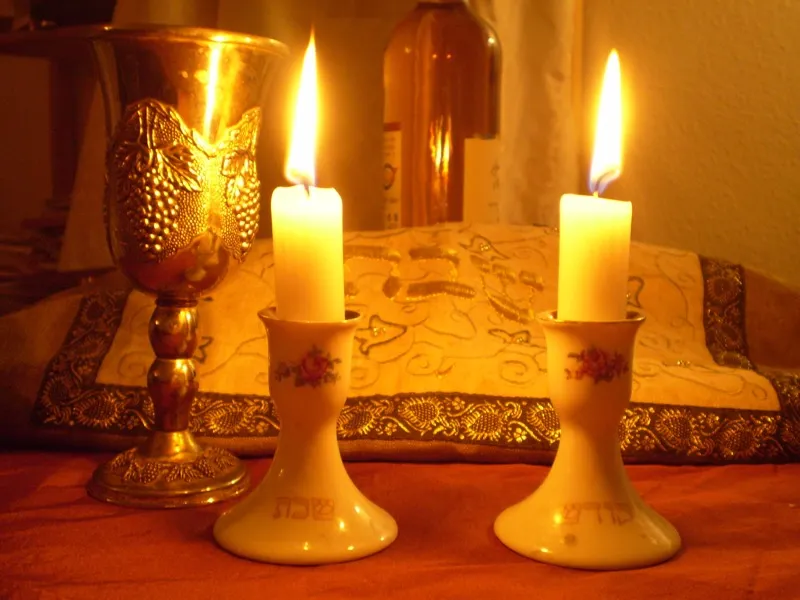
What follows these opening words varies depending on the occasion. Before eating bread: “…ha-motzi lechem min ha-aretz” (“…who brings forth bread from the earth”). Before lighting Shabbat candles: “…asher kidshanu b’mitzvotav v’tzivanu l’hadlik ner shel Shabbat” (“…who has sanctified us with His commandments and commanded us to light the Shabbat candles”).
The formula is intimate and paradoxical. “Blessed are You” — second person, as if speaking to a friend. Then immediately: “King of the universe” — the most cosmic title imaginable. The bracha holds closeness and vastness in a single breath.
Categories of Blessings
The rabbis of the Talmud (Tractate Brachot) organized the vast world of blessings into several categories:
Blessings over Food (Birkot HaNehenin)
Before eating or drinking, a Jew recites a bracha acknowledging God as the source of sustenance. Different foods require different blessings:
| Blessing | Hebrew | When to Say It |
|---|---|---|
| Ha-motzi | הַמּוֹצִיא לֶחֶם מִן הָאָרֶץ | Before eating bread or matzah |
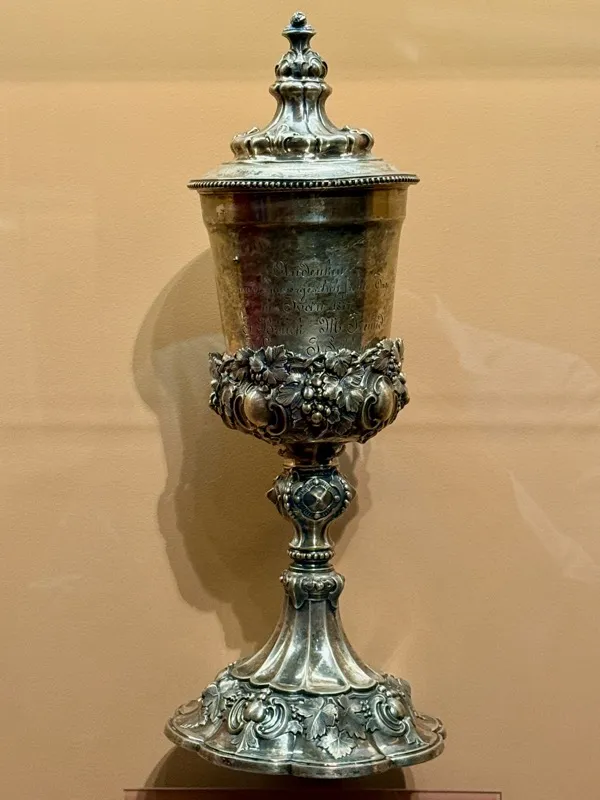
| Borei p’ri ha-gafen | בּוֹרֵא פְּרִי הַגָּפֶן | Before drinking wine or grape juice |
| Borei p’ri ha-etz | בּוֹרֵא פְּרִי הָעֵץ | Before eating fruit from trees |
| Borei p’ri ha-adamah | בּוֹרֵא פְּרִי הָאֲדָמָה | Before eating vegetables and ground-growing produce |
| Borei minei m’zonot | בּוֹרֵא מִינֵי מְזוֹנוֹת | Before eating grain-based foods (cakes, cookies, pasta) |
| She-hakol nihyeh bid’varo | שֶׁהַכֹּל נִהְיָה בִּדְבָרוֹ | Before eating meat, fish, eggs, dairy, drinks, and anything not covered above |
After meals, there are corresponding blessings of gratitude. The most elaborate is Birkat HaMazon (Grace After Meals), recited after eating bread — a multi-paragraph prayer of thanksgiving that includes prayers for Jerusalem, the land of Israel, and God’s sustaining kindness.
Blessings over Commandments (Birkot HaMitzvot)
Before performing a mitzvah, a bracha is recited that includes the phrase “asher kidshanu b’mitzvotav v’tzivanu…” (“who has sanctified us with His commandments and commanded us to…”). Examples include blessings before lighting Shabbat or Hanukkah candles, putting on a tallit, affixing a mezuzah, or washing hands before a meal.
Blessings of Praise and Gratitude (Birkot HaShevach)
These are blessings recited upon experiencing something remarkable in the natural world or in life:
- Seeing lightning: “…oseh ma’aseh v’reishit” (“…who makes the works of creation”)
- Hearing thunder: “…she-kocho u-g’vurato malei olam” (“…whose power and might fill the world”)
- Seeing a rainbow: “…zocher ha-brit” (“…who remembers the covenant”)
- Seeing the ocean: “…she-asah et ha-yam ha-gadol” (“…who made the great sea”)
One Hundred Blessings a Day
The Talmud (Menachot 43b) records that a person should recite at least one hundred blessings every day. This teaching is attributed to Rabbi Meir, and the practice has been codified in Jewish law. How does one reach a hundred? The three daily prayer services contain the Amidah, which includes nineteen blessings each time — that is fifty-seven right there. Add blessings before and after meals, morning blessings (Birkot HaShachar) recited upon waking, blessings for Torah study, and the blessings surrounding the Shema, and the count reaches one hundred without difficulty.
The number is not arbitrary. The rabbis connected it to a passage in Deuteronomy (10:12): “What (mah) does the Lord your God ask of you?” The word mah (what) sounds like me’ah (one hundred). The verse is thus read as: “One hundred [blessings] does the Lord your God ask of you.” This is typical rabbinic wordplay — playful on the surface, serious underneath. The message is that God does not demand grand gestures. God asks for attention. One hundred moments of awareness per day.
The Shehecheyanu: Blessing the Moment
Among all the brachot, the Shehecheyanu holds a special place in Jewish affection. It is the blessing of “firsts” — recited whenever something happens for the first time or the first time in a long while:
Baruch Atah Adonai, Eloheinu Melech ha-olam, she-hecheyanu, v’kiy’manu, v’higianu la-z’man ha-zeh.
“Blessed are You, Lord our God, King of the universe, who has given us life, sustained us, and brought us to this moment.”
You say it when you eat the first strawberry of the season. When you light Hanukkah candles for the first time that year. When you hold your newborn child. When you put on a new piece of clothing. When you reach a holiday you have not celebrated since last year.
The Shehecheyanu is a blessing of survival and gratitude — an acknowledgment that reaching this moment was not guaranteed. It carries within it an awareness of time’s passage and life’s fragility, expressed not in grief but in joy.
Why Blessings Matter
Rabbi Abraham Joshua Heschel wrote that the purpose of prayer is not to make God aware of our needs, but to make us aware of God. Brachot embody this idea perfectly. When you pause before biting into an apple to say “Borei p’ri ha-etz” — “who creates the fruit of the tree” — you are not informing God about the apple. You are reminding yourself that this apple, this moment, this ordinary act of eating, is connected to something larger.
The kashrut laws teach Jews what to eat. Brachot teach them how to eat — with attention, with gratitude, with the understanding that nourishment is a gift, not an entitlement. Extend this principle to the rest of life, and you have a system for living fully awake. Every morning, observant Jews recite blessings for the ability to see, to stand upright, to walk, to get dressed. None of these are taken for granted. Each one is noticed, named, and thanked for.
In a world that encourages speed and distraction, the ancient practice of brachot offers a radical alternative: slow down. Notice. Say thank you. One hundred times a day.
Frequently Asked Questions
What is a bracha (Jewish blessing)?
A bracha is a short prayer formula that begins with 'Baruch Atah Adonai, Eloheinu Melech ha-olam...' ('Blessed are You, Lord our God, King of the universe...'). Brachot are recited before eating, performing commandments, experiencing natural phenomena, and at significant life moments. They are designed to cultivate gratitude and awareness of the sacred in everyday life.
Why do Jews say 100 blessings a day?
The Talmud attributes to Rabbi Meir the teaching that a person should recite at least 100 blessings every day. Through the three daily prayer services, blessings before and after meals, and blessings for various experiences, an observant Jew can reach this number. The practice trains a person to notice and give thanks for the details of life that might otherwise pass unnoticed.
What is the Shehecheyanu blessing?
The Shehecheyanu ('Who has given us life') is a blessing of gratitude recited at moments of renewal and joy — when eating a seasonal fruit for the first time that year, lighting holiday candles, wearing new clothing, or reaching a milestone. The full text is: 'Blessed are You, Lord our God, King of the universe, who has given us life, sustained us, and brought us to this moment.'
Sources & Further Reading
Related Articles
Kashrut: The Jewish Dietary Laws
More than just 'no pork' — kashrut is a comprehensive system that transforms eating into a sacred act.
Jewish Prayer: Connecting with the Divine
From the three daily prayer services to personal meditation, discover how Jewish prayer works and what it means.
Shabbat: The Weekly Day of Rest
Every week, Jewish life pauses for 25 hours of rest, reflection, and togetherness — discover the beauty of Shabbat.