The Shema: Judaism's Most Essential Prayer
Six Hebrew words — 'Hear, O Israel, the Lord our God, the Lord is One' — form the bedrock of Jewish faith, recited morning and evening, in joy and on the deathbed.
The First Words, the Last Words
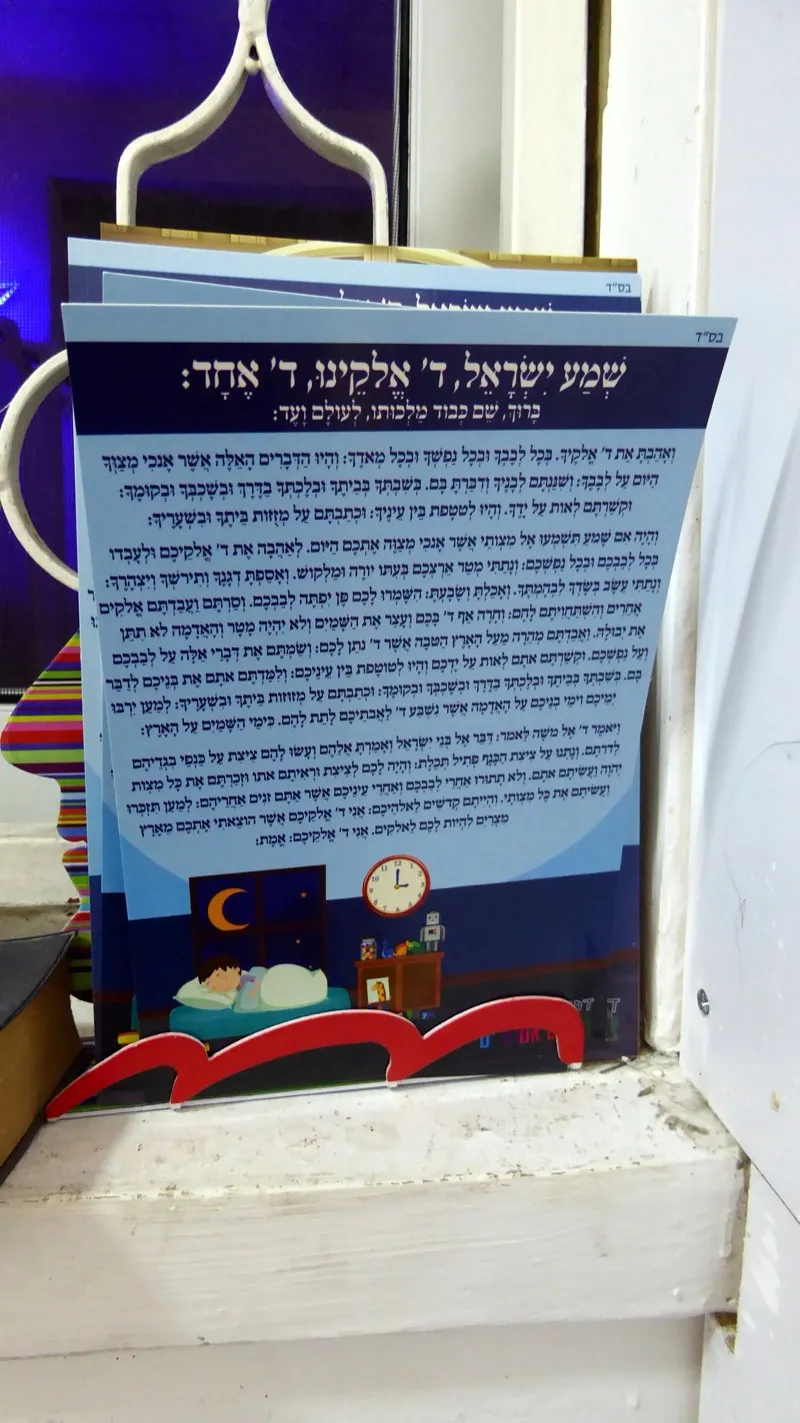
There is a prayer that Jewish parents whisper to their children at bedtime, the same prayer that elderly Jews murmur as they take their final breath. It is the first piece of Torah a child learns and the last declaration a dying person makes. Six words in Hebrew, simple enough for a toddler to memorize, profound enough to occupy a lifetime of reflection:
Shema Yisrael, Adonai Eloheinu, Adonai Echad.
“Hear, O Israel: the Lord is our God, the Lord is One.”
This is the Shema — not exactly a prayer, though it is recited during prayer. It is a declaration, a statement of faith, a theological claim compressed into a single sentence. If Judaism could be reduced to one line, this would be it. And for thousands of years, through exile and persecution, in moments of joy and moments of terror, Jews have clung to these words as the irreducible core of what they believe.
The Full Text
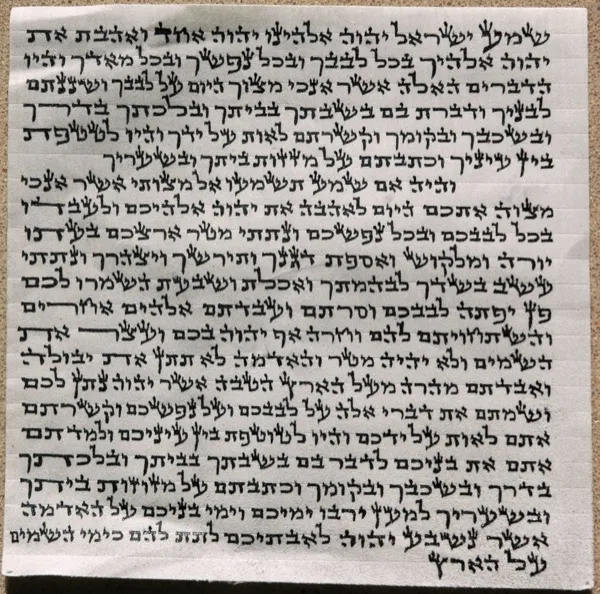
The Shema is not just one verse. It consists of three biblical paragraphs, each drawn from the Torah, recited together as a unit during morning and evening services.
First Paragraph — V’ahavta (Deuteronomy 6:4-9)
Hebrew: שְׁמַע יִשְׂרָאֵל יְהוָה אֱלֹהֵינוּ יְהוָה אֶחָד
Transliteration: Shema Yisrael, Adonai Eloheinu, Adonai Echad.
Translation: “Hear, O Israel: the Lord is our God, the Lord is One.”
The paragraph continues: “You shall love the Lord your God with all your heart, with all your soul, and with all your might. And these words which I command you today shall be upon your heart. You shall teach them diligently to your children, and you shall speak of them when you sit in your house and when you walk on the road, when you lie down and when you rise up. You shall bind them as a sign upon your hand, and they shall be as frontlets between your eyes. You shall write them on the doorposts of your house and upon your gates.”
This paragraph establishes the love of God as the primary obligation, commands the teaching of Torah to children, and provides the basis for three physical ritual objects: tefillin (bound on hand and head), and the mezuzah (affixed to the doorpost).
Second Paragraph — V’haya im Shamoa (Deuteronomy 11:13-21)
The second paragraph introduces the concept of reward and consequence. If Israel follows God’s commandments, the land will yield rain and harvest. If not, drought and exile will follow. This paragraph repeats the commands about tefillin and mezuzah, reinforcing their importance.
Third Paragraph — Vayomer (Numbers 15:37-41)
The final paragraph commands the wearing of tzitzit — fringes on the corners of garments — as a visual reminder of God’s commandments. It concludes with the declaration: “I am the Lord your God, who brought you out of the land of Egypt to be your God.”
When the Shema Is Recited
The Shema is recited at specific times that structure the rhythm of Jewish life:
Morning and Evening Services: The Torah itself commands the Shema “when you lie down and when you rise up,” which the rabbis interpreted as the evening and morning prayer services. The morning Shema should be recited before the end of the third hour of the day (roughly 9-10 AM, depending on season). The evening Shema is recited after nightfall.
Bedtime: The Kriat Shema al HaMitah (Recitation of the Shema upon the Bed) is a beloved practice, particularly for children. Many Jewish families recite the first paragraph of the Shema as part of the bedtime routine — a child’s earliest encounter with formal prayer.
On the Deathbed: Jewish tradition holds that a dying person should recite the Shema as their last words, affirming faith in God at the threshold of death. Throughout history, Jewish martyrs have died with the Shema on their lips — Rabbi Akiva, tortured by the Romans, famously prolonged the word Echad (“One”) as his soul departed, explaining to his students that he had waited his whole life to fulfill the commandment to love God “with all your soul,” which the rabbis interpreted as “even if He takes your soul.”
Eyes Covered, Hearts Open
Walk into a synagogue during Shacharit (morning prayers) and watch the congregation reach the Shema. At the first words, something shifts. People straighten. Many close their eyes or cover them with their right hand. The room, which may have been buzzing with the murmur of individual prayer, suddenly coheres into a single collective statement.
This custom of covering the eyes is ancient. The idea is simple: when you declare the oneness of God, you should not be distracted by the visible world. For a moment, you close your eyes to the multiplicity of things and focus on the unity behind them. The alef in the word Shema and the dalet in the word Echad are traditionally written larger than the surrounding letters in Torah scrolls. Together, they spell ed — “witness.” Each person who recites the Shema becomes a witness to God’s oneness.
Mezuzah and Tefillin: The Shema Made Physical
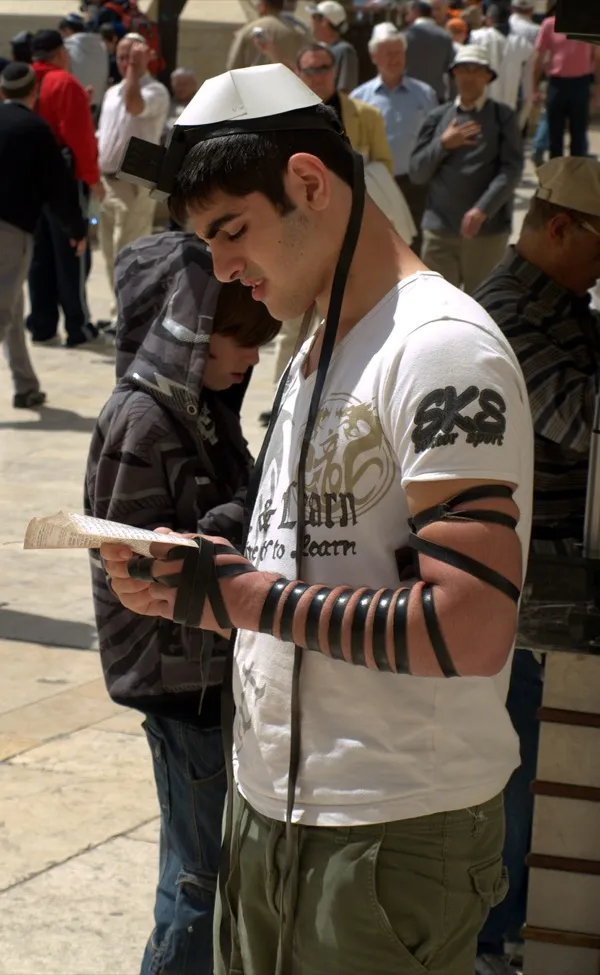
The Shema does something unusual for a declaration of faith: it commands physical action. “Bind them as a sign upon your hand” became the basis for tefillin — small leather boxes containing parchment scrolls of the Shema, strapped to the arm and head during weekday morning prayers. “Write them on the doorposts of your house” became the mezuzah — a small case affixed to the doorframe of Jewish homes, containing a handwritten scroll with the first two paragraphs of the Shema.
These are not decorations. They are the Shema made tangible. When you walk through a doorway and touch the mezuzah, you are touching the words “the Lord is One.” When you wrap tefillin on your arm, you are literally binding the Shema to your body. Judaism has always insisted that faith is not merely a matter of the heart — it must be enacted, embodied, made present in the physical world.
Teaching Children
“You shall teach them diligently to your children.” This command, embedded in the first paragraph of the Shema, has shaped Jewish education for millennia. The Hebrew verb v’shinantam suggests sharpening, repeating, drilling — not passive instruction but active, persistent teaching.
In traditional households, the Shema is the first prayer a child learns, often before the child fully understands the words. There is wisdom in this. The sounds become familiar — the cadence of Shema Yisrael becomes as natural as a lullaby. By the time a child is old enough to ask what the words mean, they already feel like home.
This emphasis on teaching children is not about indoctrination but about transmission. Judaism has survived not because of armies or empires but because parents taught their children these six words, and their children taught their children, generation after generation, in every corner of the world.
One God, Many Interpretations
What does it mean to say God is “One”? The simplest reading is a rejection of polytheism: there is one God, not many. But Jewish thinkers across the centuries have found far deeper meanings.
Maimonides understood “One” as absolute unity — God is not merely the only god, but is utterly unique, incomparable to anything in creation. The Kabbalists read “One” as a statement about the hidden unity behind the apparent multiplicity of the world — everything that exists is a manifestation of the divine. Hasidic masters emphasized that “Hear, O Israel” is addressed to each individual Jew: you, right now, in this moment, are called upon to recognize the oneness beneath all diversity.
Some modern thinkers have read the Shema as a call to ethical monotheism — if there is one God, then all human beings share one source, and justice and compassion are universal obligations, not tribal preferences.
The Shema does not explain. It declares. And in that declaration, it leaves room for every generation to hear something new.
Frequently Asked Questions
What does the Shema say?
The core verse of the Shema is: 'Hear, O Israel, the Lord is our God, the Lord is One' (Shema Yisrael, Adonai Eloheinu, Adonai Echad). The full Shema consists of three biblical paragraphs from Deuteronomy 6:4-9, Deuteronomy 11:13-21, and Numbers 15:37-41, covering love of God, reward and consequence, and the commandment of tzitzit.
When do Jews recite the Shema?
Jews recite the Shema at least twice daily — during the morning (Shacharit) and evening (Ma'ariv) prayer services. Many also recite it at bedtime (Kriat Shema al HaMitah). Traditionally, it is the last prayer spoken before death and the first prayer taught to young children.
Why do Jews cover their eyes during the Shema?
Jews traditionally cover their eyes with their right hand while reciting the first verse of the Shema to block out visual distractions and focus entirely on accepting God's sovereignty. This gesture reflects the idea that the declaration demands complete, undivided concentration — a moment of total spiritual attention.
Sources & Further Reading
Related Articles
The Mezuzah: What's Inside, How to Hang It, and Why It Matters
A small scroll on the doorpost, containing the most important words in Judaism. The mezuzah marks every Jewish home as sacred space — and the rules for writing, placing, and caring for it are as precise as they are meaningful.
Jewish Prayer: Connecting with the Divine
From the three daily prayer services to personal meditation, discover how Jewish prayer works and what it means.
Tefillin: The Sacred Boxes of Jewish Prayer
Two small black leather boxes containing Torah verses, bound to the arm and head each morning — tefillin are among the most ancient and powerful symbols of Jewish devotion.