Jewish Holiday Foods: What We Eat and Why
Every Jewish holiday has its signature foods — and each dish tells a story of history, symbolism, and tradition.

A Calendar You Can Taste
There is a sound and a smell that belong to Hanukkah and nothing else: the sizzle of grated potato hitting hot oil, the golden crust forming on a latke, the kitchen fogged with the sweet, heavy scent of frying. And then there are the sufganiyot — deep-fried doughnuts dusted with powdered sugar that gets everywhere, on fingers, on shirts, on the floor. At Passover, it is the sharp burn of fresh horseradish that makes the eyes water before the first bite. At Purim, it is the sight of triangular hamantaschen cooling on a rack, their fillings bubbling at the edges. Every Jewish holiday arrives with its own sensory signature — and for many people, the taste of a holiday food is what brings the memory flooding back faster than any prayer or story.
The Jewish year is a cycle of holidays, and each one comes with its own distinctive foods. These are not arbitrary traditions. In Judaism, eating is a form of storytelling — every dish on the holiday table carries meaning, connecting the person who eats it to a historical event, a theological idea, or a hope for the future.
To eat Jewish holiday food is to taste the calendar itself.
Rosh Hashanah: Sweetness for the New Year
The Jewish New Year is all about beginnings, hopes, and prayers for a good year. The foods reflect this:
- Apples dipped in honey: The most iconic Rosh Hashanah food. Before eating, one recites: “May it be Your will to renew for us a good and sweet year.” The combination of the apple’s crispness and honey’s sweetness embodies the wish perfectly.
- Round challah with raisins: The bread is shaped in a round spiral (instead of the usual braid) to symbolize the cyclical nature of the year. Raisins or other dried fruit add sweetness.
- Pomegranates: Said to contain 613 seeds — one for each of the Torah’s commandments. Whether or not that count is accurate, the pomegranate’s abundance of jewel-like seeds symbolizes the hope for a year filled with merit.
- Honey cake (lekach): A dense, moist cake flavored with honey, coffee, and warm spices — the quintessential Ashkenazi Rosh Hashanah dessert.
- Symbolic foods (simanim): Sephardi communities conduct an elaborate ceremony with symbolic foods — dates, black-eyed peas, leeks, beets, squash, and a fish head — each accompanied by a pun-based prayer. For example, dates (tamar in Hebrew) accompany the prayer “May it be Your will that our enemies come to an end (yitamu).”
Yom Kippur: The Fast and the Feast
Yom Kippur is a twenty-five-hour fast, so the foods that matter are those eaten before and after.
- The pre-fast meal (seudah hamafseket): A substantial but bland meal — chicken soup, plain chicken, rice or potatoes. Spicy and salty foods are avoided because they increase thirst. The meal must be finished before sunset.
- Breaking the fast: After the final shofar blast, families gather for a spread that typically includes bagels, cream cheese, smoked fish, egg dishes, salads, and sweets. It is a meal of relief and celebration — the serious work of repentance is done, and now it is time to eat.
Sukkot: The Harvest Bounty
Sukkot, the autumn harvest festival, calls for abundant seasonal food eaten in the sukkah (temporary outdoor booth):
- Stuffed foods are traditional in many communities — stuffed grape leaves, stuffed peppers, stuffed cabbage (holishkes) — symbolizing abundance and fullness.
- Sephardi Jews prepare couscous with vegetables and meat, or richly spiced stews.
- The sukkah itself, with its leafy roof open to the stars, makes every meal feel like a picnic — casual, joyful, and connected to the natural world.
Hanukkah: Fried in Oil
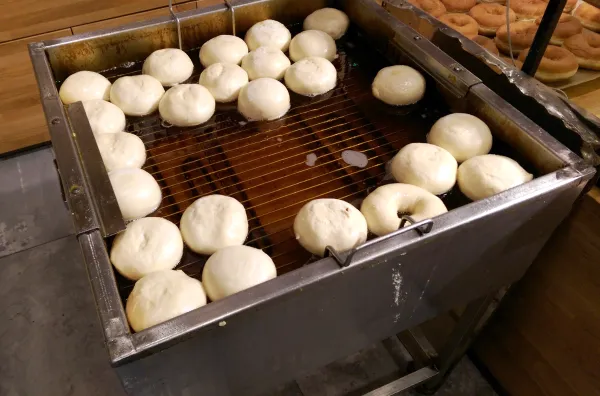
Hanukkah commemorates the miracle of a small jug of oil that burned for eight days in the rededicated Temple. Naturally, the foods celebrate oil:
- Latkes (potato pancakes): The Ashkenazi classic. Grated potatoes and onions, bound with egg and a bit of flour, fried until golden and crispy. Served with applesauce or sour cream (a debate that has divided families for generations). Some modern variations use sweet potato, zucchini, or beet.
- Sufganiyot (jelly doughnuts): The Israeli Hanukkah staple. Deep-fried, filled with strawberry jam, and dusted with powdered sugar. In recent years, Israeli bakeries have elevated sufganiyot into an art form, filling them with everything from dulce de leche to halva cream.
- Sephardi fried foods: Moroccan Jews make sfenj (yeasted doughnut rings), while other communities fry loukoumades (honey-drenched doughnut balls) or bimuelos (fried dough fritters).
Purim: Sweet Treats and Festive Feasting
Purim is the most festive, carnival-like holiday, and the food reflects the celebration:
- Hamantaschen: Triangular filled cookies, said to resemble the three-cornered hat (or ears) of the villain Haman. Classic fillings include poppy seed (mohn), prune (lekvar), and apricot jam, though modern bakers have pushed into chocolate, halva, lotus, and countless other variations.
- Mishloach manot (gift baskets): The mitzvah of sending food gifts to friends means that on Purim, plates of cookies, candy, fruit, and treats circulate through the community all day long.
- The Purim seudah (feast): A festive meal in the late afternoon, often featuring wine (the Talmud says one should drink until unable to distinguish between “blessed is Mordechai” and “cursed is Haman” — though most authorities suggest moderation).
Passover: The Foods of Freedom
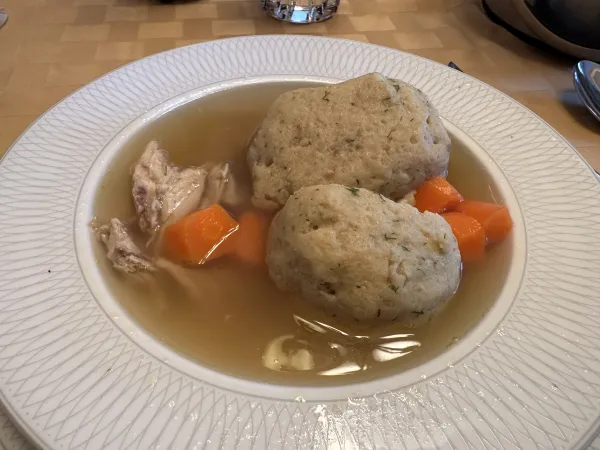
Passover has the most elaborate food requirements of any Jewish holiday:
- Matzah: Unleavened flatbread, the central symbol of the Exodus. For eight days (seven in Israel), Jews eat no chametz (leavened grain products), and matzah replaces bread. Despite its simplicity — or because of it — matzah is one of the most evocative foods in the Jewish tradition. It is called both the “bread of affliction” and the “bread of freedom.”
- The Seder plate: A symbolic arrangement of foods, each telling part of the Exodus story:
- Maror (bitter herbs, usually horseradish): The bitterness of slavery.
- Charoset (a paste of fruit, nuts, and wine): Representing the mortar used by Israelite slaves. Ashkenazi charoset is made with apples, walnuts, and wine; Sephardi versions may include dates, figs, and exotic spices.
- Zeroa (roasted shank bone): Recalling the Passover sacrifice.
- Beitzah (roasted egg): Symbolizing mourning for the destroyed Temple and the cycle of life.
- Karpas (green vegetable, dipped in saltwater): Spring renewal and the tears of slavery.
- Matzah ball soup: The Passover version of chicken soup — for many families, the highlight of the Seder meal.
- Brisket, roast chicken, and tsimmes: Classic main course options.
Shavuot: A Dairy Celebration
Shavuot, which celebrates the giving of the Torah at Mount Sinai, is associated with dairy foods:
- Cheesecake and blintzes: The Ashkenazi classics. Blintzes — thin crepes filled with sweet cheese and fried until golden — are a Shavuot staple.
- Bourekas: Sephardi flaky pastries filled with cheese and spinach.
- Various explanations exist for the dairy tradition: the Israelites, having just received the laws of kashrut, did not yet have kosher meat dishes prepared, so they ate dairy. Others point to the biblical description of Israel as a land “flowing with milk and honey.”
Tu B’Shvat: The New Year of the Trees
This minor holiday celebrates trees and nature. It is customary to eat dried fruits and nuts, especially those associated with the Land of Israel — dates, figs, pomegranates, olives, and grapes. Some communities hold a Tu B’Shvat seder, a structured tasting of fruits and wines.
Food as Memory
Jewish holiday foods do more than satisfy hunger. They are mnemonic devices — physical, sensory reminders of stories that might otherwise remain abstract. You can read about the bitterness of slavery, but when you bite into raw horseradish and feel tears spring to your eyes, you know it. You can study the miracle of the oil, but when you bite through the crispy shell of a latke and taste the soft potato inside, the story lives.
Every Jewish holiday asks the same question: how do we make the past present? And the answer, as often as not, is found on the plate.
Frequently Asked Questions
Why does every Jewish holiday have special foods?
Holiday foods carry symbolic meaning — apples and honey for a sweet new year at Rosh Hashanah, matzah recalling the haste of the Exodus, latkes and sufganiyot fried in oil to celebrate the Chanukah miracle. The food tells the story.
What are the most iconic Jewish holiday foods?
Latkes and sufganiyot for Chanukah, hamantaschen for Purim, matzah and charoset for Passover, cheesecake for Shavuot, apples dipped in honey for Rosh Hashanah, and challah in various shapes for Shabbat and holidays.
Do Sephardi and Ashkenazi Jews eat different holiday foods?
Yes. Ashkenazi Jews eat latkes on Chanukah while Sephardi Jews may prefer sufganiyot or bumuelos. At Passover, Ashkenazi Jews avoid rice and legumes (kitniyot) while most Sephardi communities eat them freely. Each tradition has its own rich culinary heritage.
Sources & Further Reading
- Sefaria — Jewish Texts ↗
- The Nosher (JTA) ↗
- Joan Nathan's Jewish Cooking
Related Articles
Classic Challah Recipe: How to Bake the Perfect Shabbat Bread
Golden, braided, and impossibly fragrant — learn to bake the perfect challah with this traditional recipe, plus variations for holidays and special occasions.
Hanukkah: The Festival of Lights
Eight nights of candles, latkes, and dreidels — the story and customs of the beloved winter holiday.
Kashrut: The Jewish Dietary Laws
More than just 'no pork' — kashrut is a comprehensive system that transforms eating into a sacred act.
Classic Latkes Recipe: Crispy Hanukkah Potato Pancakes
Crispy on the outside, tender inside — master the art of perfect latkes with this traditional recipe, served with applesauce and sour cream for the ultimate Hanukkah treat.
Matzo Ball Soup: The Jewish Comfort Food
Called 'Jewish penicillin' for good reason — matzo ball soup is the ultimate comfort food, a golden chicken broth with fluffy (or dense) dumplings that warm the soul.
Passover (Pesach): The Festival of Freedom
The story of the Exodus comes alive each spring as Jewish families gather for the Seder — the most widely observed Jewish ritual.
Sephardic Cuisine: The Mediterranean Flavors of Jewish Cooking
Spiced, vibrant, and sun-drenched — Sephardic cuisine draws from the kitchens of Spain, Turkey, Morocco, and the Middle East, creating a Jewish food tradition that rivals any in the world.