Matzo Ball Soup: The Jewish Comfort Food
Called 'Jewish penicillin' for good reason — matzo ball soup is the ultimate comfort food, a golden chicken broth with fluffy (or dense) dumplings that warm the soul.
The Smell of Friday
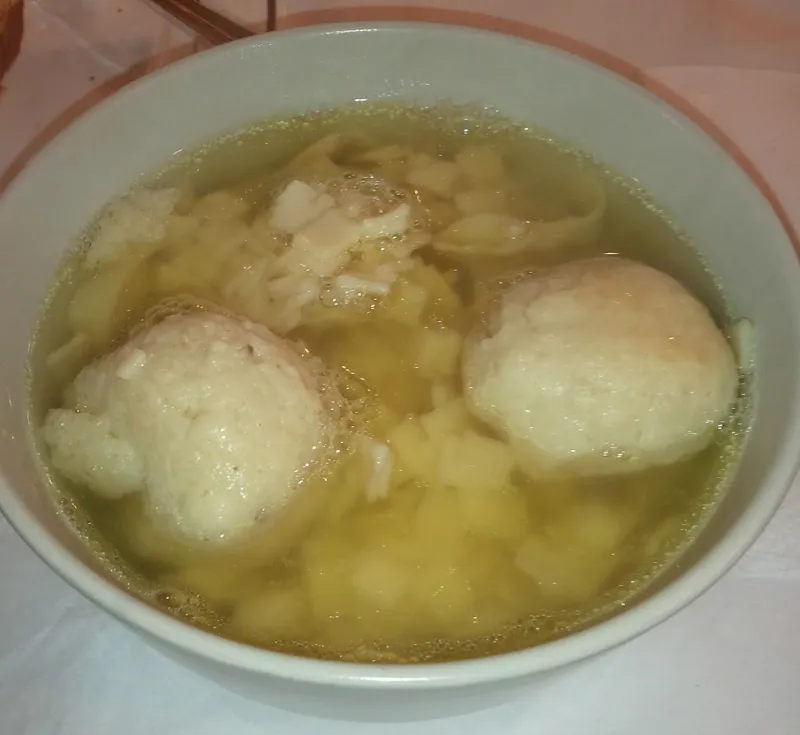
It starts on Thursday night, sometimes, when someone pulls a whole chicken from the refrigerator and sets it on the counter. Or it starts Friday morning, when the pot goes on the stove — the big pot, the one that only comes out for this — and the kitchen slowly fills with a scent that is impossible to describe to anyone who did not grow up with it but instantly recognizable to anyone who did. Onions turning translucent in the broth. Carrots softening. Dill floating on the surface like tiny green feathers. The house warms from the inside out, and before the first spoonful is served, the soup has already done its work. It has made the place feel like home.
Matzo ball soup is not complicated food. It is not fancy food. It is a bowl of golden chicken broth with dumplings made from matzo meal, eggs, and fat. But it may be the single most beloved dish in the entire Jewish culinary tradition — the food that grandmothers are remembered by, the food that appears at every Passover Seder, every Shabbat dinner where someone is trying hard, every sick day when someone needs to feel cared for. There is a reason people call it Jewish penicillin, and the reason is not ironic.
A Brief History of the Bowl
Chicken soup has been part of Jewish life for centuries. Maimonides — the great 12th-century rabbi, philosopher, and physician — recommended chicken broth as a remedy for the weak and the ill in his medical writings. Long before modern science had anything to say about it, Jewish mothers and grandmothers knew: when someone is sick, you make soup.
The matzo ball itself — kneidlach in Yiddish — is a more recent addition, likely emerging in Ashkenazi communities in the 17th or 18th century. Matzo meal was a pantry staple, especially around Passover, and dumplings were a common feature of Eastern European cooking. Combining matzo meal with eggs and fat to form dumplings that floated (or sank, depending on the family) in chicken broth was a natural invention — the kind of dish that probably emerged in thousands of kitchens independently.
The soup traveled with Jewish immigrants to America, where it became one of the defining foods of the Jewish deli. By the mid-20th century, matzo ball soup had transcended its origins — it was no longer just Jewish food but American comfort food, appearing on diner menus and in cookbooks across the country. The brand Manischewitz began selling boxed matzo ball mix, making the dish accessible to anyone with a pot and a stove.
But the best matzo ball soup — the kind people remember — is still made from scratch. And it is still worth the effort.
The Golden Broth
A great bowl of matzo ball soup starts with the broth. Everything else is secondary. If the broth is thin, watery, or bland, no amount of perfect matzo balls will save it. If the broth is rich, golden, and deeply flavored, even mediocre matzo balls will taste wonderful.
Classic Chicken Broth
The foundation is simple:
- 1 whole chicken (about 4 pounds), or a mix of backs, necks, wings, and thighs — bones and skin included
- 3 large carrots, peeled and cut into chunks
- 3 celery stalks with leaves, cut into chunks
- 2 large onions, quartered (some cooks leave the skin on for golden color)
- 1 parsnip, peeled and cut into chunks
- Fresh dill — a generous handful
- Fresh parsley — a generous handful
- 10-12 whole black peppercorns
- 1 tablespoon salt (adjust to taste)
- Cold water — enough to cover everything by about 2 inches
Place the chicken and vegetables in a large stockpot. Cover with cold water. Bring to a boil slowly, then immediately reduce to a gentle simmer. Skim any foam or impurities that rise to the surface in the first 20 minutes. Add the herbs and peppercorns. Simmer, partially covered, for 2 to 3 hours — low and slow, never a rolling boil.
Strain the broth through a fine-mesh sieve. The vegetables and chicken have given everything they have; the broth is where the flavor lives now. Let it cool, then refrigerate. The fat will solidify on top — you can remove it for a cleaner broth, or leave some for richness. (Save the fat — it is schmaltz, and it is liquid gold for cooking.)
The result should be a broth that is deeply golden, clear but not transparent, and so flavorful that you could drink it from a mug and feel like you had eaten a meal.
The Matzo Balls
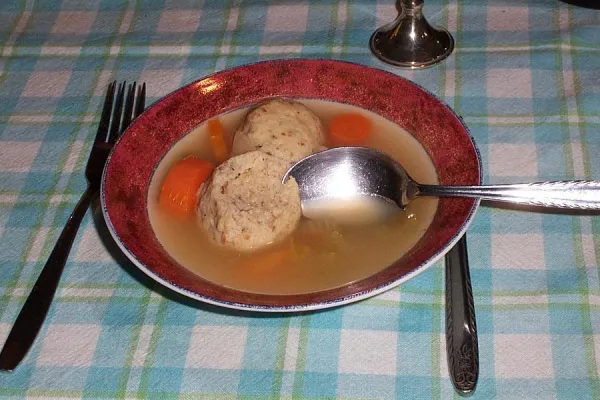
Here is where families diverge, where arguments start, where people get passionate. The matzo ball itself is deceptively simple — matzo meal, eggs, fat, salt — but the technique and proportions produce wildly different results. And everyone believes their version is the correct one.
The Floater (Fluffy Style)
Fluffy matzo balls are light, airy, and cloud-like. They absorb the broth and practically dissolve on the tongue. Making them requires a gentle touch.
- 1 cup matzo meal
- 4 eggs, separated
- 1/4 cup schmaltz or vegetable oil
- 2 tablespoons seltzer water (the secret weapon)
- 1 teaspoon salt
- Pinch of white pepper
Beat the egg yolks with the fat, seltzer, salt, and pepper. Stir in the matzo meal until just combined — do not overmix. In a separate bowl, whip the egg whites to soft peaks, then gently fold them into the matzo mixture. Refrigerate for at least 30 minutes (an hour is better). The cold firms the mixture and helps the balls hold their shape.
With wet hands, form the mixture into balls about 1.5 inches in diameter. Drop them into a large pot of boiling salted water (not the broth — you do not want to cloud your beautiful golden broth). Cover tightly and simmer for 30-40 minutes. Do not lift the lid. The steam is what makes them fluffy.
The Sinker (Dense Style)
Dense matzo balls are firm, compact, and satisfyingly chewy. They hold their shape, sit at the bottom of the bowl, and deliver a concentrated matzo flavor with every bite.
- 1 cup matzo meal
- 4 eggs, lightly beaten (do not separate)
- 3 tablespoons schmaltz or vegetable oil
- 1 teaspoon salt
- 2-3 tablespoons chicken broth or water
Mix everything together firmly. The dough should be dense and cohesive. Refrigerate for 30 minutes. Form into balls and cook the same way — boiling salted water, covered, 30-40 minutes.
The difference between the two styles comes down to three things: how much fat, whether you fold in whipped egg whites, and how much you handle the dough. More fat and less mixing means lighter. Less fat and more mixing means denser.
The Great Debate: Sinkers vs. Floaters
This is one of the great divides in Jewish cooking — right up there with the latke vs. hamantaschen debate. Families are firmly in one camp or the other, and interfaith marriages have reportedly been tested by this question more than by any theological disagreement.
The case for floaters: They are delicate, elegant, and soak up the broth beautifully. They melt in the mouth. They are what matzo balls aspire to be.
The case for sinkers: They are substantial, satisfying, and have real texture. You know you have eaten something. A fluffy matzo ball, the sinker partisans argue, is just hot air with pretensions.
The truth — if there is a truth — is that both are wonderful, both are traditional, and the “right” matzo ball is the one your grandmother made. There is no higher authority in Jewish cooking than that.
Variations and Additions
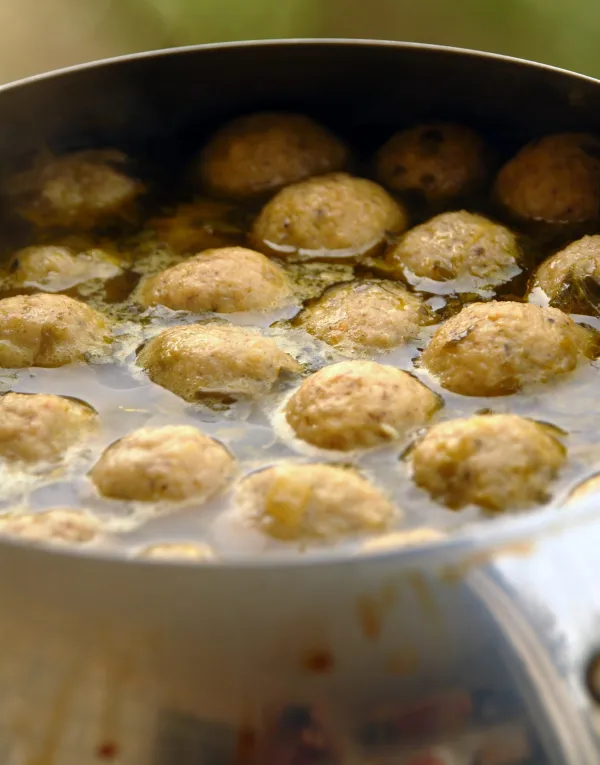
While purists insist on the classic preparation, matzo ball soup is a living tradition, and cooks have been experimenting with it for generations:
Herbs and Spices
- Fresh dill mixed into the matzo ball dough — perhaps the most popular variation, adding a bright, herbal note
- Nutmeg — a tiny grating adds warmth and depth
- Garlic powder or minced fresh garlic in the dough
- Ground ginger — a whisper of it transforms the flavor
Vegetables in the Bowl
- Thinly sliced carrots — the classic accompaniment
- Fresh dill fronds floating on top
- Shredded chicken from the broth-making process, returned to the bowl
- Fine egg noodles — some families add both noodles and matzo balls (controversial but delicious)
Modern Twists
- Turmeric in the broth for extra golden color and an earthy undertone
- Lemongrass and ginger for an Asian-Jewish fusion version
- Crispy shallots on top for texture contrast
- Mini matzo balls — smaller and faster to cook, with more surface area for broth absorption
Across Communities: Beyond the Ashkenazi Bowl
Matzo ball soup is primarily an Ashkenazi tradition, but the concept of dumplings in broth exists across the Jewish world. Sephardic and Mizrahi communities have their own beloved soup traditions:
Gondi (Persian Jewish Dumplings)
Persian Jews make gondi — large, tender dumplings made from ground chickpeas and ground chicken or turkey, flavored with cardamom and turmeric. They are served in a fragrant chicken broth and are a staple of Persian Jewish Shabbat tables. Gondi are denser than matzo balls but incredibly flavorful.
Kubbeh Soup (Iraqi/Kurdish Jewish)
Kubbeh are semolina-shelled dumplings filled with spiced ground meat, served in a tart, beet-red broth. Kubbeh soup is one of the great dishes of Iraqi and Kurdish Jewish cuisine, and its popularity in Israel has spread far beyond the Mizrahi community. Restaurants in Jerusalem and Tel Aviv specialize in it.
Harira (Moroccan Jewish Soup)
Moroccan Jews break the Yom Kippur fast with harira, a thick, warming soup made with chickpeas, lentils, tomatoes, and spices. It does not have dumplings, but it fills the same soul-warming role that matzo ball soup fills in Ashkenazi homes.
Serving: The Final Act
Matzo ball soup is best served hot, in deep bowls, with the broth ladled generously over the matzo balls. A few sliced carrots, a scattering of fresh dill, and perhaps a grind of black pepper on top. Some families serve it as a first course before the Shabbat dinner main course. Others treat it as the main event, filling the bowl to the brim.
At the Passover Seder, matzo ball soup traditionally follows the first part of the Haggadah reading. After the Four Questions, the ten plagues, and the songs, the soup arrives — and the table exhales. This is the moment everyone has been waiting for. The soup is hot, the matzo balls are just right (or at least your grandmother’s version of “just right”), and for a few minutes, the Seder pauses while everyone eats and sighs and asks for seconds.
It is, in the end, a humble dish. Broth and dumplings. But it carries within it something larger — the memory of kitchens and grandmothers, the rhythm of Friday preparation, the warmth of being cared for when you are sick or cold or just in need of something good. Jewish penicillin does not cure everything. But it comes close.
The laws of kashrut apply, of course — the soup must be made with kosher ingredients, and since it contains chicken, it is a meat dish and cannot include dairy. But within those boundaries, the possibilities are as wide as the tradition itself.
Frequently Asked Questions
What makes matzo balls fluffy vs dense?
Fluffy matzo balls ('floaters') use more fat (oil or schmaltz), beaten egg whites folded in, and seltzer water. Dense matzo balls ('sinkers') use less fat and are mixed more firmly. The debate between fluffy and dense is one of the great divides in Jewish cooking — both sides are passionate.
Can you make matzo ball soup for Passover?
Yes — matzo ball soup is one of the quintessential Passover dishes. Use matzo meal that is certified kosher for Passover. Some families use schmaltz (chicken fat) instead of oil during Passover. The soup itself must be made with Passover-approved ingredients.
Why is chicken soup called Jewish penicillin?
The nickname comes from the widespread belief in chicken soup's healing properties. Maimonides (12th century) recommended chicken soup for illness. Modern research has found that chicken soup may have mild anti-inflammatory properties. In Jewish families, it's the first response to any cold or flu.
Sources & Further Reading
- My Jewish Learning — Matzo Ball Soup ↗
- The Nosher — Soup Recipes ↗
- Joan Nathan's Jewish Cooking in America
Related Articles
Jewish Holiday Foods: What We Eat and Why
Every Jewish holiday has its signature foods — and each dish tells a story of history, symbolism, and tradition.
Passover (Pesach): The Festival of Freedom
The story of the Exodus comes alive each spring as Jewish families gather for the Seder — the most widely observed Jewish ritual.
Shabbat Foods: A Culinary Journey Through the Day of Rest
From Friday night chicken soup to Saturday afternoon cholent — discover the beloved dishes that make Shabbat the most delicious day of the week.