Classic Challah Recipe: How to Bake the Perfect Shabbat Bread
Golden, braided, and impossibly fragrant — learn to bake the perfect challah with this traditional recipe, plus variations for holidays and special occasions.
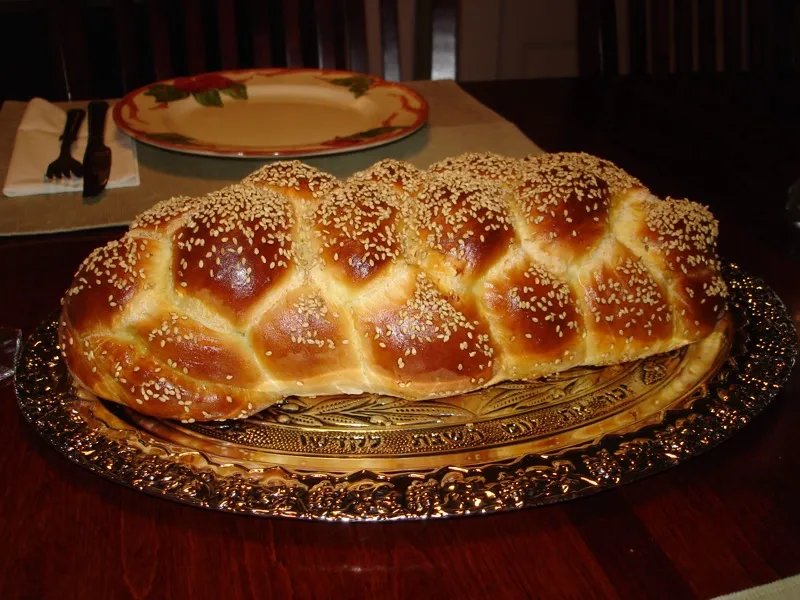
Friday Afternoon in a Jewish Kitchen
There is a moment on Friday afternoon — flour dusted across the counter, dough rising under a towel, the oven preheating — when the week starts to let go. The kitchen smells like yeast and warmth and anticipation. If you grew up in a Jewish home, you know this moment. If you did not, you are about to.
Baking challah is one of the most accessible and deeply satisfying Jewish traditions a person can take on. You do not need years of baking experience or fancy equipment. You need flour, eggs, water, yeast, a pair of hands, and a willingness to get them sticky. The reward is a bread so golden, so fragrant, so impossibly beautiful that people will assume you have been doing this your whole life.
This recipe is the one that works. It has been adjusted and tested over years in home kitchens, not restaurant laboratories. It makes two generous loaves — enough for Shabbat dinner with extra for Saturday morning French toast.
Why Challah Matters
Challah is more than bread. The word itself originally refers not to the loaf but to a portion of dough — the piece separated and given to the priests during the Temple period. When you bake a large batch of challah today, you still perform this mitzvah: pinching off a small piece of dough, reciting a blessing, and burning it. It is a quiet, powerful act that connects a twenty-first-century kitchen to an ancient practice.
On Shabbat, two loaves of challah are placed on the table, recalling the double portion of manna that sustained the Israelites in the desert so they would not need to gather food on the day of rest. The loaves are covered with a cloth before the blessing — protecting the bread’s “dignity,” as the Talmud puts it, since the wine is blessed first.
None of this theology is required to bake good challah. But knowing it makes the baking feel different. When you pull apart warm challah on Friday night, you are participating in something that stretches back thousands of years.
The Recipe
Yield: 2 large loaves Prep time: 30 minutes Rise time: 2 hours total Bake time: 30–35 minutes
Ingredients
- 1½ cups (355 ml) warm water — bathwater temperature, not hot
- 2 teaspoons active dry yeast
- ½ cup (100 g) granulated sugar
- ½ cup (120 ml) vegetable or canola oil
- 4 large eggs (3 for the dough, 1 for egg wash)
- 1 tablespoon salt
- 7–8 cups (875 g–1 kg) all-purpose flour
- Optional toppings: sesame seeds, poppy seeds, everything bagel seasoning
Instructions
1. Activate the yeast. Pour the warm water into a large mixing bowl. Sprinkle the yeast and a pinch of sugar over the surface. Let it sit for about 10 minutes until the mixture is foamy and smells like bread. If nothing happens, your yeast is dead — get new yeast and start over.
2. Mix the wet ingredients. Add the sugar, oil, 3 eggs, and salt to the yeast mixture. Whisk until everything is well combined.
3. Add the flour gradually. Add the flour one cup at a time, stirring with a wooden spoon or dough hook. Start with 7 cups. The dough should come together into a shaggy mass that pulls away from the sides of the bowl. It should be slightly tacky but not stick to your fingers. If it is too sticky, add flour a tablespoon at a time.
4. Knead the dough. Turn the dough out onto a lightly floured surface and knead for 8–10 minutes. Push the dough away with the heel of your hand, fold it back, turn it a quarter, and repeat. The dough is ready when it is smooth, elastic, and springs back when you poke it with a finger. It should feel like an earlobe — soft but with structure.
5. First rise. Place the dough in a large oiled bowl, turning it once so the top is coated. Cover with a damp towel or plastic wrap. Let it rise in a warm, draft-free spot for 1½ hours, or until it has doubled in size. A turned-off oven with just the light on works well.
6. Shape the loaves. Punch down the risen dough (this is as satisfying as it sounds). Divide it into two equal portions. For each loaf, divide the portion into strands and braid as described below. Place the braided loaves on a parchment-lined baking sheet.
7. Second rise. Cover the shaped loaves loosely and let them rise for 30 minutes. They should look puffy but not doubled.
8. Egg wash and bake. Preheat the oven to 350°F (175°C). Beat the remaining egg and brush it generously over the loaves. Sprinkle with sesame or poppy seeds if desired. Bake for 30–35 minutes, until the challah is deep golden brown and sounds hollow when you tap the bottom. Let cool on a wire rack for at least 15 minutes before slicing — if you can wait that long.
How to Braid Challah
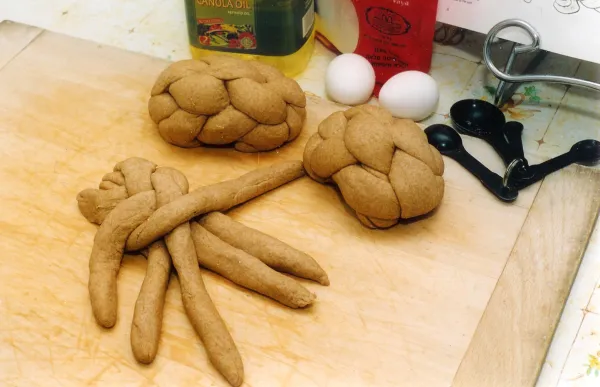
Three-Strand Braid (Easiest)
Roll each portion into three equal ropes, about 12 inches long. Pinch the tops together, then braid: right strand over middle, left strand over middle, repeat. Pinch and tuck the ends under. This is where most beginners should start.
Six-Strand Braid (Traditional)
Divide each portion into six equal ropes. Fan them out and pinch the tops together. The pattern goes like this: always move the far-right strand over two, under one, then over two. Rotate the whole braid slightly and repeat from the new far-right strand. It sounds complicated, but after two or three tries it becomes automatic. The six-strand braid produces the classic tall, full challah you see at bakeries.
Round Challah for Rosh Hashanah
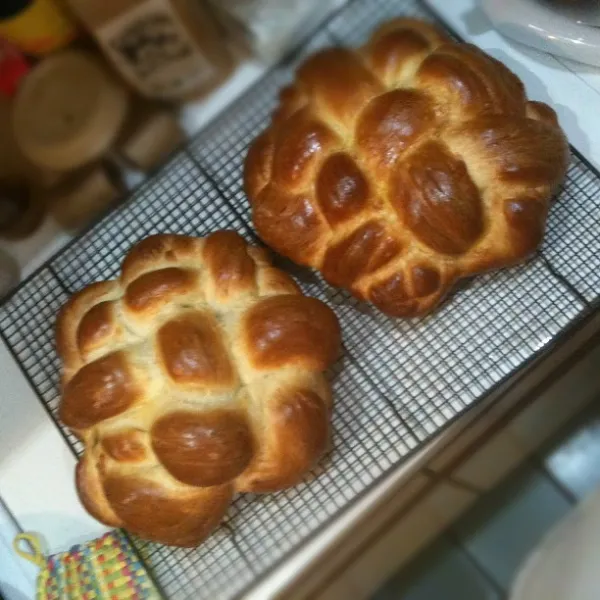
For Rosh Hashanah, challah is shaped into a round spiral instead of a braid. Roll the dough into one long rope — about 24 inches — and coil it into a tight spiral, tucking the end underneath. Some bakers add raisins to the dough for Rosh Hashanah, and the bread is dipped in honey rather than salt, symbolizing the wish for a sweet new year.
Variations Worth Trying
Raisin challah: Fold 1 cup of raisins into the dough after the first rise. Classic for Rosh Hashanah, delicious any time.
Chocolate chip challah: Add 1 cup of chocolate chips the same way. Children and adults will fight over this one. It makes extraordinary French toast.
Za’atar challah: After the egg wash, sprinkle the top generously with za’atar (a Middle Eastern spice blend of thyme, sumac, and sesame). The herbaceous, tangy crust is outstanding.
Whole wheat challah: Replace up to half the all-purpose flour with whole wheat flour. The challah will be denser and nuttier. Add an extra tablespoon of honey to offset the bitterness.
Apple-honey challah: Fold in 1 cup of diced apples and 2 tablespoons of honey. Perfect for the fall holidays.
Tips from Years of Friday Afternoons
Keep the dough soft. The number one mistake is adding too much flour. Slightly tacky dough produces a soft, tender challah. Dry dough makes dry bread.
Warm, not hot. Water that is too hot kills the yeast. If you cannot comfortably hold your finger in the water, it is too hot.
How to know it is done. The challah should be deeply golden — not pale gold, not light brown, but the color of a sunset. Tap the bottom; if it sounds hollow, it is done. If it sounds dense, give it five more minutes.
Freezing. Challah freezes beautifully. Wrap cooled loaves tightly in plastic wrap, then foil. Freeze for up to three months. Thaw at room temperature and warm in a 300°F oven for 10 minutes. It will taste freshly baked.
The blessing. If you are using more than about 3.5 pounds of flour (this recipe uses roughly 2 pounds, so a double batch qualifies), separate a small piece of dough and recite: “Baruch atah Adonai, Eloheinu Melech ha-olam, asher kideshanu b’mitzvotav v’tzivanu l’hafrish challah.” Wrap the piece in foil and burn it in the oven. This ancient mitzvah turns your kitchen into sacred space.
There is no shortcut to the feeling of pulling two golden loaves from the oven on Friday afternoon, the house fragrant, Shabbat almost here. But this recipe comes close to a guarantee.
Frequently Asked Questions
How many strands do you need to braid challah?
The most common braid uses 3 or 6 strands. A 3-strand braid is easiest for beginners. A 6-strand braid creates the classic tall, full look. For Rosh Hashanah, challah is shaped into a round spiral rather than braided, symbolizing the cyclical nature of the year.
Can you make challah without eggs?
Yes. Vegan challah substitutes eggs with alternatives like flaxseed meal mixed with water, aquafaba, or commercial egg replacers. The texture is slightly different but still produces a soft, tender bread. Some traditional water challah recipes use no eggs at all.
Why do you separate challah dough?
When making a large batch of dough (using more than about 3.5 pounds of flour), there is a mitzvah to separate a small piece and burn it. This recalls the portion given to the priests (Kohanim) in Temple times. A blessing is recited: 'Blessed are You... who has commanded us to separate challah.'
Sources & Further Reading
- The Nosher — Challah Recipes ↗
- My Jewish Learning — Baking Challah ↗
- Joan Nathan's Jewish Cooking in America
Related Articles
Challah: The Bread of Shabbat
Golden, braided, and fragrant — challah is the crown jewel of the Shabbat table and a beloved symbol of Jewish life.
Shabbat: The Weekly Day of Rest
Every week, Jewish life pauses for 25 hours of rest, reflection, and togetherness — discover the beauty of Shabbat.
Shabbat Foods: A Culinary Journey Through the Day of Rest
From Friday night chicken soup to Saturday afternoon cholent — discover the beloved dishes that make Shabbat the most delicious day of the week.