Classic Latkes Recipe: Crispy Hanukkah Potato Pancakes
Crispy on the outside, tender inside — master the art of perfect latkes with this traditional recipe, served with applesauce and sour cream for the ultimate Hanukkah treat.
The Sound of Hanukkah
Before the candles are lit, before the dreidels spin, before the gifts are opened — there is the sound. The sizzle of grated potato hitting hot oil. The hiss and pop of moisture meeting fat. The rhythmic scrape of a spatula checking the underside for that perfect shade of gold. If Hanukkah has a soundtrack, it is not a song. It is the sound of latkes frying.
Every Hanukkah, Jewish kitchens transform into something between a celebration and a controlled disaster. The counters are covered in shredded potato. There is oil on the stove, oil on the floor, oil on your shirt. The house smells like frying, and it will smell like frying for days. Nobody minds. This is what the holiday is supposed to taste like.
Latkes — crispy potato pancakes fried in oil — are the signature food of Hanukkah in Ashkenazi Jewish tradition. They are simple, humble, and perfect: nothing more than potatoes, onion, egg, and a little flour, transformed by hot oil into something golden and extraordinary.
Why Oil Matters
The reason Jews eat fried foods on Hanukkah goes back to the story at the heart of the holiday. In 164 BCE, the Maccabees recaptured the Temple in Jerusalem from the Seleucid Greeks. When they went to relight the Temple’s menorah — the eternal lamp — they found only a single jar of consecrated olive oil, enough to burn for one day. Miraculously, the oil lasted eight days, buying time to prepare a fresh supply.
Frying food in oil is a way of remembering that miracle. The oil in the pan is not just cooking fat — it is a symbol. Every latke that comes out of that bubbling skillet is a small, crispy act of remembrance.
While Ashkenazi Jews landed on the potato pancake (potatoes arrived in Eastern Europe in the seventeenth and eighteenth centuries), the principle — food fried in oil — is universal across Jewish communities. Sephardi and Israeli Jews lean toward sufganiyot (jelly-filled donuts), and other communities have their own oily Hanukkah traditions. But in North America and much of Europe, the latke reigns supreme.
The Recipe
Yield: About 20 latkes Prep time: 20 minutes Cook time: 30 minutes
Ingredients
- 2 pounds (about 5 medium) russet potatoes, peeled
- 1 large onion
- 2 large eggs, lightly beaten
- 3 tablespoons all-purpose flour or matzah meal
- 1 teaspoon salt
- ½ teaspoon black pepper
- Vegetable oil for frying (about 1 cup)
For Serving
- Sour cream
- Applesauce
- Optional: chives, smoked salmon, or a sprinkle of flaky salt
Instructions
1. Grate the potatoes and onion. Using the large holes of a box grater (or the grating disc of a food processor), grate the potatoes and onion. Speed matters here — potatoes oxidize quickly and will turn gray if you wait too long.
2. Squeeze out the liquid. (This is the most important step.) Transfer the grated potato and onion mixture to a clean kitchen towel or several layers of cheesecloth. Gather the edges and squeeze — hard. Wring out as much liquid as you possibly can. Then squeeze again. The drier the mixture, the crispier the latkes. This is where most people go wrong: they skip or rush the squeezing, and their latkes come out soggy.
Let the liquid sit in the bowl for a minute. You will see white potato starch settle to the bottom. Pour off the water carefully and keep that starch — it is free binding power.
3. Mix the batter. Combine the squeezed potato-onion mixture with the reserved starch, beaten eggs, flour (or matzah meal), salt, and pepper. Stir until everything is just combined. Do not overmix.
4. Heat the oil. Pour about ¼ inch of vegetable oil into a large, heavy skillet — cast iron is ideal. Heat over medium-high until the oil reaches 350°F (175°C). If you do not have a thermometer, drop a small bit of batter into the oil. If it sizzles immediately, you are ready.
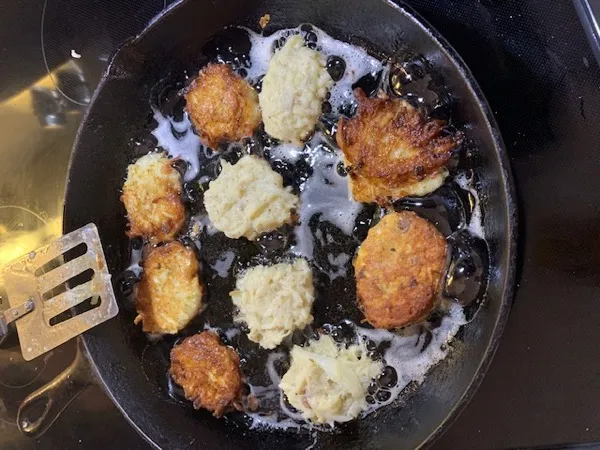
5. Fry the latkes. Drop heaping tablespoons of the mixture into the hot oil, flattening each one gently with the back of the spoon. Do not crowd the pan — leave at least an inch between latkes, and fry in batches. Cook for 3–4 minutes per side, until deep golden brown and crispy at the edges. Flip once, and only once.
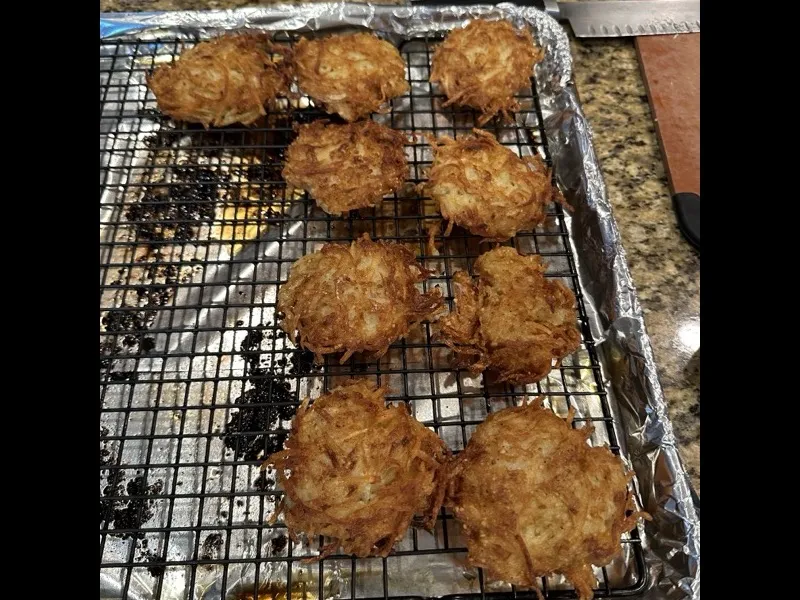
6. Drain properly. Transfer finished latkes to a wire rack set over a baking sheet — not paper towels, which trap steam and make the bottoms soggy. The wire rack lets air circulate and keeps the latkes crispy. Sprinkle with a little extra salt while they are still hot.
7. Keep warm and serve. If frying in batches, keep finished latkes warm in a 200°F (95°C) oven on the wire rack. Serve hot with sour cream, applesauce, or both.
The Great Debate: Applesauce or Sour Cream?
No article about latkes is complete without addressing the question that has divided Jewish families for generations: do you eat your latkes with applesauce or sour cream?
The applesauce camp argues that the sweet-tart contrast with the savory, salty latke is perfect — a balance of flavors that makes each bite interesting. The sour cream camp counters that the cool, tangy richness of sour cream is the ideal complement to the hot, crispy potato.
The correct answer, of course, is both. One dollop of each, side by side, is the only civilized approach. Anyone who claims otherwise is not to be trusted at the Hanukkah table.
(For those keeping kosher: if your meal includes meat, sour cream is off the table. Applesauce wins by default — and by deliciousness.)
Variations Worth Trying
Sweet potato latkes: Replace half the russet potatoes with peeled sweet potatoes. The natural sweetness caramelizes beautifully, and the orange color is stunning. A touch of cinnamon in the batter does not hurt.
Zucchini latkes: Grate zucchini in place of some or all of the potato. Salt the zucchini first and let it sit for 10 minutes, then squeeze out the liquid. These are lighter and have a lovely green-flecked appearance.
Cheese latkes: Fold ½ cup of shredded cheddar, Gruyere, or Parmesan into the batter. Rich, savory, and absolutely irresistible. (Dairy meal only, of course.)
Everything latkes: Top the latkes with everything bagel seasoning — sesame seeds, poppy seeds, dried garlic, dried onion, and flaky salt — right after frying. The New York deli crossover nobody asked for but everyone loves.
The Sephardi Alternative
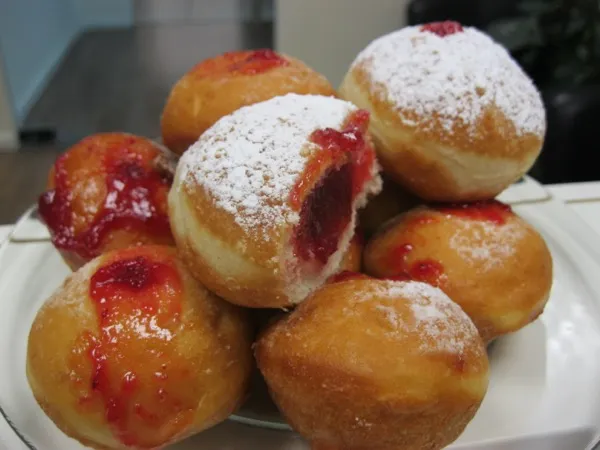
In Israel and Sephardi communities worldwide, the fried food of choice for Hanukkah is sufganiyot — deep-fried yeast donuts filled with jelly and dusted with powdered sugar. Israeli bakeries produce millions of them each Hanukkah season, in flavors that range from classic strawberry jam to dulce de leche, Nutella, halva, and pistachio cream.
Other Sephardi Hanukkah fried foods include bimuelos (fried dough puffs drizzled with honey or sugar syrup, popular among Turkish and Greek Jews) and sfenj (Moroccan fried dough rings, chewy and golden, served warm with sugar). Each community found its own way to celebrate the miracle of oil — but the principle is always the same: if it is fried, it belongs on the Hanukkah table.
Tips for the Crispiest Latkes
Use russet potatoes. High-starch potatoes crisp better. Waxy potatoes (red, fingerling) will leave you disappointed.
Squeeze. Then squeeze again. Excess moisture is the enemy of crispiness. Your forearms may ache. It is worth it.
Hot oil, not smoking oil. The oil should shimmer and sizzle when batter hits it, but it should not be smoking. If it smokes, it is too hot — pull the pan off the heat for a minute.
Do not crowd the pan. Overcrowding drops the oil temperature, and latkes will steam instead of fry. Three or four at a time is plenty.
Wire rack, not paper towels. This is the secret most recipes leave out. Paper towels trap steam underneath, turning your crispy bottom into a soggy one.
Eat them immediately. Latkes are best within minutes of frying. They wait for nobody. Invite your guests into the kitchen and serve them straight from the pan. This is not bad manners — it is the only way.
The truth about latkes is that they are not fussy food. They are peasant food, born of poverty and potatoes, elevated by oil and memory into something sacred. Every Hanukkah, when the oil heats and the first latke hits the pan, you are not just cooking. You are lighting a small, edible flame — a reminder that sometimes the simplest things last longer than anyone expected.
Frequently Asked Questions
What kind of potatoes are best for latkes?
Russet (Idaho) potatoes are best because of their high starch content, which helps latkes hold together and get crispy. Yukon Gold potatoes also work well for a creamier texture. Avoid waxy potatoes like red potatoes, as they don't crisp as well.
How do you keep latkes crispy?
Three keys: squeeze out as much liquid as possible from the grated potatoes (use a clean towel or cheesecloth), fry in hot oil (350°F/175°C), and don't overcrowd the pan. Place finished latkes on a wire rack over a baking sheet rather than paper towels, which can make them soggy.
Why do Jews eat fried foods on Hanukkah?
Fried foods commemorate the miracle of the oil — when the Maccabees rededicated the Temple, a small jar of oil that should have lasted one day miraculously burned for eight. Latkes (potato pancakes) are traditional in Ashkenazi communities, while Sephardi and Israeli Jews prefer sufganiyot (jelly donuts).
Sources & Further Reading
- The Nosher — Latke Recipes ↗
- My Jewish Learning — Hanukkah Foods ↗
- Joan Nathan's Jewish Cooking in America
Related Articles
Hanukkah: The Festival of Lights
Eight nights of candles, latkes, and dreidels — the story and customs of the beloved winter holiday.
Jewish Holiday Foods: What We Eat and Why
Every Jewish holiday has its signature foods — and each dish tells a story of history, symbolism, and tradition.
Kashrut: The Jewish Dietary Laws
More than just 'no pork' — kashrut is a comprehensive system that transforms eating into a sacred act.