Hanukkah: The Festival of Lights
Eight nights of candles, latkes, and dreidels — the story and customs of the beloved winter holiday.
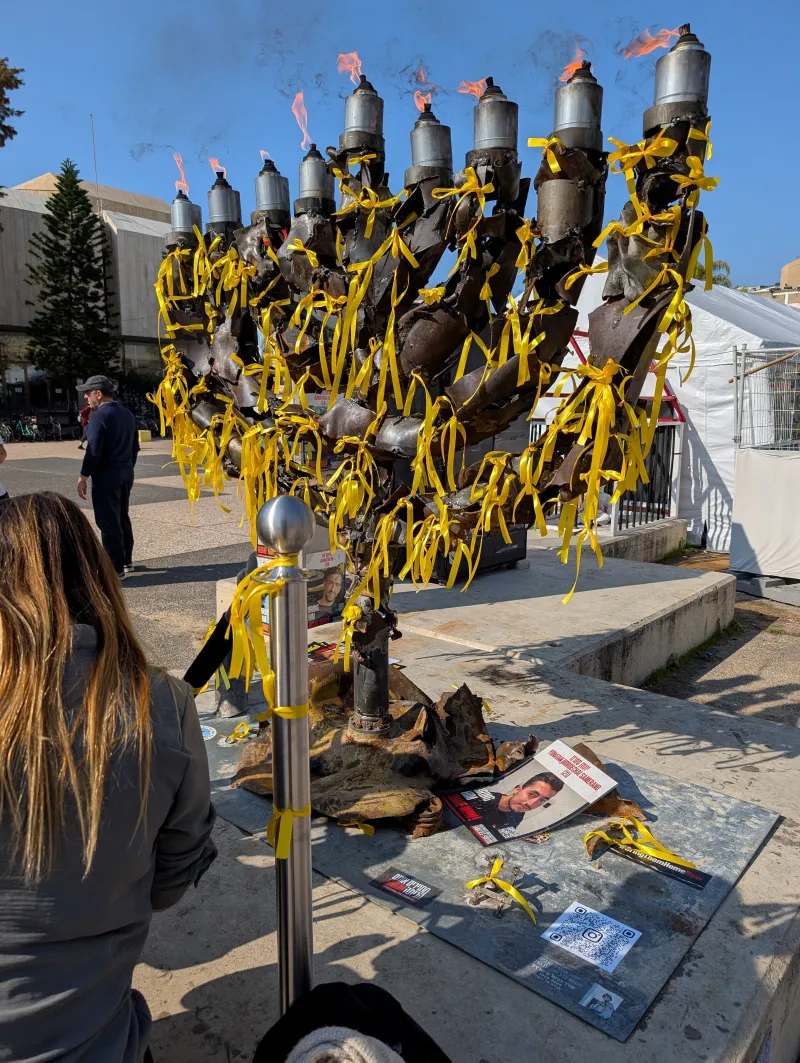
A Light in the Darkness
There is something magical about a menorah in a window on a dark winter night. Walking down a street in December, you might catch the glow of candles flickering behind frosted glass — one flame on the first night, then two, then three, building quietly until the final evening when all eight blaze together. The light is small, almost fragile, but it is meant to be seen. That is the whole point.
Every year in late November or December, Jewish homes around the world glow with the light of the hanukkiah (the nine-branched Hanukkah menorah). For eight nights, families gather to kindle candles, sing songs, eat fried foods, and celebrate one of the most beloved holidays in the Jewish calendar.
Hanukkah (also spelled Chanukah) means “dedication,” and it commemorates the rededication of the Second Temple in Jerusalem after a small band of Jewish fighters achieved one of the most improbable military victories in ancient history.
The Historical Story
The Seleucid Oppression
In the second century BCE, the Land of Israel was under the control of the Seleucid Empire, a Greek-Syrian kingdom that ruled much of the ancient Near East. The Seleucid king Antiochus IV Epiphanes launched a campaign to forcibly Hellenize the Jewish population. He:
- Banned the observance of Shabbat and circumcision
- Ordered the worship of Greek gods
- Desecrated the Temple in Jerusalem by erecting an altar to Zeus and sacrificing pigs within its walls
For many Jews, this was an existential crisis — a threat not just to their political autonomy but to the very survival of their faith.
The Maccabean Revolt
In the village of Modiin, a priest named Mattathias refused to worship Greek gods and killed a Seleucid official who tried to enforce the decree. Mattathias and his five sons — most notably Judah Maccabee (“Judah the Hammer”) — launched a guerrilla war against the Seleucid forces.
Against overwhelming odds, the Maccabees defeated the Seleucid army. In 164 BCE, they recaptured Jerusalem and cleansed the Temple of its pagan defilement. The rededication of the Temple is the event that Hanukkah celebrates.
The Miracle of the Oil
According to the Talmud, when the Maccabees sought to relight the menorah (the seven-branched candelabrum that burned perpetually in the Temple), they found only one small jug of ritually pure olive oil — enough to burn for a single day. Miraculously, the oil burned for eight days, until new oil could be prepared.
This is why Hanukkah is celebrated for eight nights, and why oil plays such a central role in the holiday’s customs.
Historians debate whether the miracle of the oil is historical or legendary. What is undisputed is that the Maccabean victory was real, and it preserved Jewish worship and identity at a critical moment. Without it, Judaism as we know it might not exist.
How Hanukkah Is Celebrated
Lighting the Hanukkiah
The central ritual of Hanukkah is the nightly lighting of the hanukkiah, a special menorah with nine branches — eight for the nights of the holiday, plus one shamash (“helper” candle) used to light the others.
- On the first night, one candle is lit (plus the shamash).
- On the second night, two candles are lit.
- And so on, until all eight candles blaze on the final night.
Candles are added from right to left but lit from left to right — the newest candle is lit first. The hanukkiah is traditionally placed in a window or doorway to publicize the miracle (pirsumei nisa), a key principle of the holiday.
Two blessings are recited each night, with a third (Shehecheyanu, thanking God for sustaining us to this season) added on the first night.
Singing
After lighting, families sing Maoz Tzur (“Rock of Ages”), a medieval hymn recounting God’s deliverance of the Jewish people throughout history. Sephardi communities often sing different melodies and additional liturgical poems.
Foods Fried in Oil
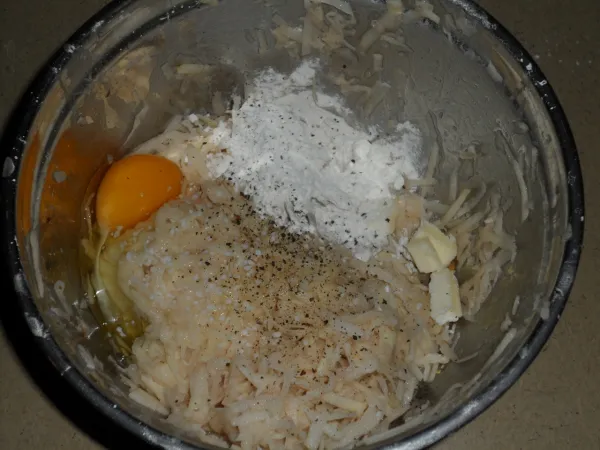
To commemorate the miracle of the oil, Hanukkah foods are traditionally fried:
- Latkes (potato pancakes): The quintessential Ashkenazi Hanukkah food, served with applesauce or sour cream. The debate over which topping is superior is one of the great unresolved controversies of Jewish life.
- Sufganiyot (jelly doughnuts): Wildly popular in Israel, where bakeries compete to create ever more elaborate filled doughnuts during the holiday.
- Bumuelos/Loukoumades: Sephardi and Mizrahi fried dough balls, often soaked in honey or sugar syrup.
- Sfenj: Moroccan fried doughnuts, simple and delicious.
The Dreidel (Sevivon)
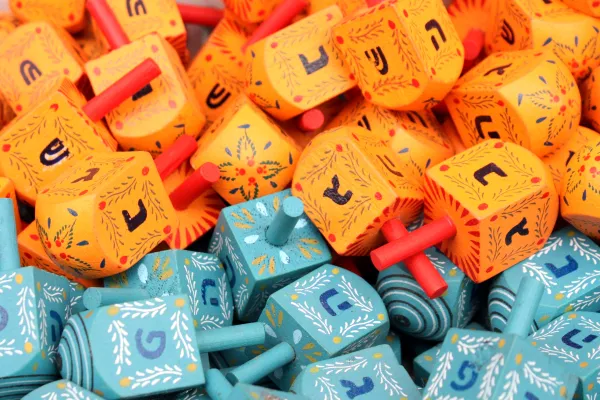
The dreidel is a four-sided spinning top with Hebrew letters on each side: Nun, Gimel, Hey, Shin — standing for “Nes Gadol Haya Sham” (“A great miracle happened there”). In Israel, the shin is replaced with a peh, making it “Nes Gadol Haya Po” (“A great miracle happened here”).
Children play dreidel for chocolate coins (gelt) or nuts. According to legend, the game originated when Jews studied Torah in secret during the Seleucid persecution — if soldiers approached, they would hide their books and pull out spinning tops to appear as if they were just playing games.
Hanukkah Gelt and Gifts
The tradition of giving Hanukkah gelt (money) to children dates back centuries. In America, the proximity of Hanukkah to Christmas led to an expansion of gift-giving, with many families now exchanging presents on each of the eight nights. Some families use this as an opportunity for charitable giving as well, donating to a different cause each night.
Deeper Meanings
Hanukkah carries several layers of significance:
Religious Freedom
At its most basic, Hanukkah celebrates the right to practice one’s religion freely. The Maccabees fought not for territory or wealth but for the freedom to worship as Jews. This makes Hanukkah a universal story of resistance against religious persecution.
The Power of the Few Against the Many
The Maccabean victory — a small, poorly equipped force defeating a professional army — resonates with anyone who has ever faced overwhelming odds. The Hanukkah liturgy emphasizes that the victory came not through human power alone but through divine intervention: “You delivered the strong into the hands of the weak, the many into the hands of the few.”
Light Over Darkness
The symbolism of increasing light — adding one candle each night rather than starting with eight and diminishing — follows the opinion of the great sage Hillel, who argued that “we increase in holiness and do not decrease.” In the darkest time of the year, Hanukkah insists on adding light.
Hanukkah in Context
Hanukkah was historically considered a minor holiday in the Jewish calendar — far less significant religiously than Shabbat, Passover, Yom Kippur, or Sukkot. Unlike major holidays, there are no restrictions on work during Hanukkah.
Its prominence in modern culture, particularly in America, owes much to its proximity to Christmas. While some view this elevation with ambivalence, others see it as a natural evolution — a way for Jewish families to celebrate their own tradition during a season dominated by another faith’s holiday.
If you have ever stood in a room where a family gathers around the hanukkiah — children jostling for position, the shamash flame passing from wick to wick, the glow steadily growing as the blessings are sung — you know that Hanukkah is not an idea. It is an experience. The smell of oil sizzling in the kitchen, the clatter of dreidels on the table, the chocolate gelt smeared on small fingers — these are the textures of a holiday that lives in the senses as much as in the history books.
Regardless of its relative rank in the liturgical calendar, Hanukkah’s core message — that a small light can push back a great darkness, that faith and courage can prevail against tyranny — continues to inspire Jews and non-Jews alike around the world.
Frequently Asked Questions
How many candles are lit on Hanukkah?
A total of 44 candles are lit over the eight nights. One candle is added each night (1+2+3...+8=36) plus the shamash (helper candle) each night (8), totaling 44.
What is a dreidel?
A dreidel is a four-sided spinning top with Hebrew letters: Nun, Gimel, Hei, Shin — standing for 'Nes Gadol Hayah Sham' (A Great Miracle Happened There). In Israel, the Shin is replaced with Pei for 'Po' (Here).
Why do we eat fried foods on Hanukkah?
Foods fried in oil — like latkes (potato pancakes) and sufganiyot (jelly donuts) — commemorate the miracle of the oil that burned for eight days in the rededicated Temple.
Test Your Knowledge
Think you know this topic? Try our quiz!
Take the Jewish Holidays: Advanced Quiz →Sources & Further Reading
Related Articles
Hanukkah Songs: A Complete Guide to the Music of the Festival of Lights
From the ancient hymn Maoz Tzur to the children's favorite Dreidel Song — discover the melodies that make Hanukkah one of the most musical Jewish holidays.
Classic Latkes Recipe: Crispy Hanukkah Potato Pancakes
Crispy on the outside, tender inside — master the art of perfect latkes with this traditional recipe, served with applesauce and sour cream for the ultimate Hanukkah treat.
The Maccabees and the Hasmonean Era
The dramatic story of the Maccabean revolt against Greek oppression — from Mattathias's defiance to Judah Maccabee's victories, the Temple rededication, and the rise and fall of the Hasmonean dynasty.
The Menorah: Judaism's Oldest Symbol, from the Temple to the State of Israel
The seven-branched menorah is Judaism's most ancient symbol — described in Exodus, crafted for the Temple, carved on the Arch of Titus, and chosen as the emblem of the modern State of Israel. Its light has never gone out.
Passover (Pesach): The Festival of Freedom
The story of the Exodus comes alive each spring as Jewish families gather for the Seder — the most widely observed Jewish ritual.
Shabbat: The Weekly Day of Rest
Every week, Jewish life pauses for 25 hours of rest, reflection, and togetherness — discover the beauty of Shabbat.