Women Rabbis: From Regina Jonas to Today's Leaders
The story of women in the rabbinate — from Regina Jonas, murdered in the Holocaust, to Sally Priesand, Sandy Eisenberg Sasso, Amy Eilberg, and today's Orthodox Maharats.
A Name Almost Lost
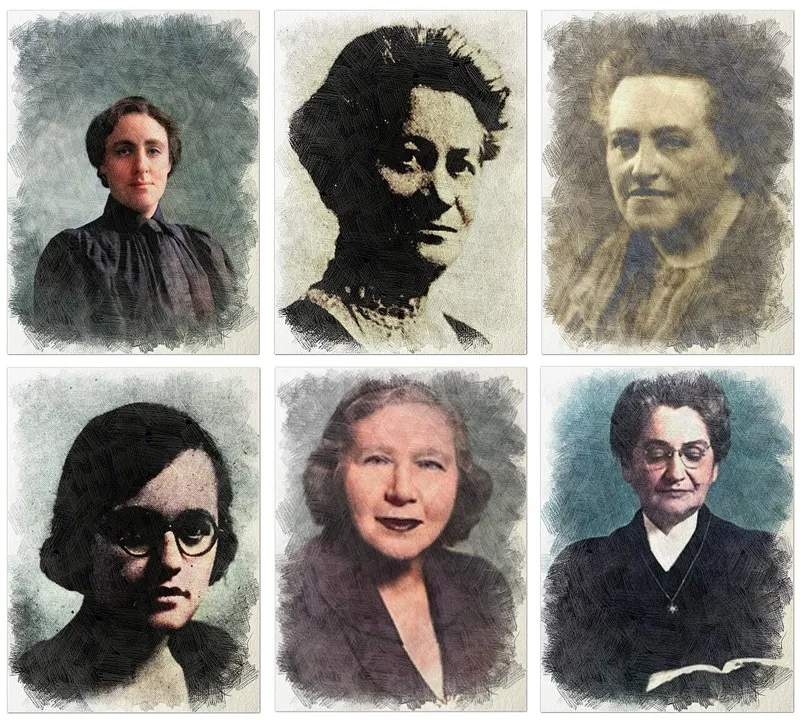
There is a photograph — grainy, black and white, the kind that feels like it belongs to another century because it does — of a young woman in Berlin, standing with a quiet confidence that belies the catastrophe closing in around her. Her name is Regina Jonas, and in 1935, she became the first woman in history to be ordained as a rabbi.
This is not a footnote. This is one of the most extraordinary stories in Jewish history, and for decades, almost nobody knew it happened.
Jonas wrote her rabbinic thesis on the question of whether a woman could serve as a rabbi under Jewish law. Her conclusion, supported by careful Talmudic analysis, was yes. She found a rabbi willing to ordain her — Rabbi Max Dienemann — and she began serving Jewish communities in Berlin during the most dangerous time imaginable. As the Nazi regime tightened its grip, as synagogues burned and Jews were stripped of their rights, Regina Jonas continued to preach, teach, counsel, and lead. She visited the sick. She comforted the dying. She did what rabbis do.
In 1942, she was deported to Theresienstadt. In 1944, she was transferred to Auschwitz, where she was murdered. She was 42 years old.
Her story might have been lost forever. When the Berlin Jewish community was destroyed, its records were scattered. For decades, scholars of women in Judaism wrote about the first women rabbis without mentioning Jonas — because they didn’t know she existed. It was not until the 1990s, when researcher Katharina von Kellenbach discovered Jonas’s ordination documents in a formerly East German archive, that the world learned the truth.
Sally Priesand: Breaking Through in America
If Jonas opened a door that history slammed shut, Sally Priesand opened it again — and this time, it stayed open.
On June 3, 1972, Priesand was ordained at Hebrew Union College-Jewish Institute of Religion in Cincinnati, becoming the first woman rabbi in the Reform movement and the first to be ordained by a mainstream Jewish seminary anywhere in the world. She was 25 years old.
The path was not easy. Priesand entered rabbinical school in 1964, at a time when the idea of a woman rabbi was still considered radical — even within the relatively liberal Reform movement. She has spoken about the isolation of being the only woman in her class, the subtle and not-so-subtle doubts from some professors and fellow students, and the constant awareness that she was being watched as a test case.
After ordination, Priesand served as an assistant rabbi at Stephen Wise Free Synagogue in New York before becoming the rabbi of Monmouth Reform Temple in Tinton Falls, New Jersey, where she served for over 25 years. She approached her role with a characteristic directness: she was not trying to be a symbol. She was trying to be a rabbi.
“I didn’t want to be the first woman rabbi,” she once said. “I just wanted to be a rabbi.”
Sandy Eisenberg Sasso and the Reconstructionist Path
Two years after Priesand’s ordination, in 1974, Sandy Eisenberg Sasso became the first woman ordained as a rabbi in the Reconstructionist movement. The Reconstructionist Rabbinical College, founded by followers of Mordecai Kaplan’s vision of Judaism as an evolving civilization, had accepted women from its inception — reflecting Kaplan’s own progressive views on gender equality.
Sasso went on to serve Beth-El Zedeck congregation in Indianapolis for over 36 years, becoming one of the longest-serving rabbis in American history — not the longest-serving woman rabbi, but one of the longest-serving rabbis, period. She also became a celebrated author of children’s books on spirituality, including God’s Paintbrush and In God’s Name, which have been translated into numerous languages.
The Reconstructionist movement’s early embrace of women’s ordination was consistent with its broader philosophy. Kaplan himself had organized the first bat mitzvah ceremony in 1922 for his daughter Judith — a decision that was also considered revolutionary at the time. The movement saw gender equality not as a break with tradition but as the natural evolution of Jewish values.
Amy Eilberg: The Conservative Breakthrough
The Conservative movement’s decision to ordain women took longer and was far more contentious. For over a decade, the question was debated, studied, and argued within the movement’s institutions. The Jewish Theological Seminary (JTS), the Conservative movement’s flagship rabbinical school, voted repeatedly on the question before finally approving women’s ordination in 1983.
In 1985, Amy Eilberg became the first woman ordained as a Conservative rabbi. Her path was unusual — she had already completed most of her rabbinical studies at JTS before the vote, and she finished her training at a moment of institutional transformation.
Eilberg’s career took her in directions that expanded the definition of what a rabbi could do. She became a hospital chaplain, a specialist in interfaith dialogue, and a leader in Jewish conflict resolution. She co-founded the Pardes Rodef Shalom program, bringing Jewish wisdom to the practice of peacemaking.
The impact of the Conservative movement’s decision cannot be overstated. Conservative Judaism occupies the center of the American Jewish spectrum, and its acceptance of women rabbis sent a powerful signal that women’s religious leadership was not merely a Reform innovation but a mainstream Jewish reality.
The Orthodox Debate: Maharats and the Boundaries
The Orthodox world has grappled with the question of women’s religious leadership differently — and the conversation is far from settled.
In 2009, Rabbi Avi Weiss founded Yeshivat Maharat in New York, the first institution to ordain Orthodox women for religious leadership. The title Maharat — an acronym for Manhigah Hilkhatit Rukhanit Toranit (a female leader of Jewish law, spirituality, and Torah) — was chosen carefully. It did not use the word “rabbi,” a strategic decision intended to signal that these women were operating within Orthodox norms while expanding the boundaries of women’s roles.
Rabba Sara Hurwitz, the first graduate, was initially given the title “Maharat” but was later designated “Rabba” by Weiss — a feminine form of rabbi. This provoked fierce opposition from mainstream Orthodox organizations, including the Rabbinical Council of America (RCA) and the Orthodox Union (OU), which issued statements opposing the ordination of women in any form.
The debate touches on fundamental questions in Orthodox halakha. Opponents argue that certain rabbinic functions — particularly serving as a legal decisor (posek) or leading communal prayer — are roles that Jewish law restricts to men. Supporters counter that many rabbinic functions — teaching, counseling, providing pastoral care, answering halakhic questions — have no inherent gender restriction and that women have performed these roles informally for centuries.
As of today, dozens of Maharat graduates serve in Orthodox communities across North America and beyond. Some congregations have embraced them wholeheartedly. Others have faced backlash. The conversation continues, and its outcome will shape the future of Orthodox Judaism.
What Women Rabbis Have Changed
The presence of women in the rabbinate has transformed Jewish life in ways both obvious and subtle. Women rabbis have expanded the liturgical language of Judaism, introduced new rituals for experiences like pregnancy loss and menopause, and brought different perspectives to ancient texts. They have served as military chaplains, hospital chaplains, university professors, and heads of major Jewish organizations.
Perhaps most significantly, they have changed what young Jewish girls imagine when they think about religious leadership. A generation ago, a Jewish girl who wanted to lead her community in prayer and study had few models. Today, she has hundreds.
But women rabbis also face challenges that their male colleagues do not. Studies consistently show that women rabbis earn less than men in comparable positions, are less likely to lead large congregations, and face a “stained glass ceiling” in their career advancement. The intersection of professional demands and family responsibilities — especially in a role that requires availability on Shabbat and holidays — creates pressures that the rabbinate has only begun to address.
The Global Picture
The story of women rabbis is not only an American one. Women serve as rabbis in the United Kingdom, Germany, France, Israel, Australia, South America, and beyond. In Germany, where Regina Jonas began her journey, women rabbis now lead congregations in the very cities where the Jewish community was once destroyed. There is something deeply moving about that continuity — about the thread that connects Jonas’s solitary courage to the hundreds of women who followed.
In Israel, the picture is more complicated. The Orthodox rabbinate controls marriage, divorce, and conversion in the Jewish state, and it does not recognize women rabbis. But women serve as spiritual leaders in Reform and Conservative communities, and organizations like Beit Hillel and Kolech advocate for expanded women’s roles within Israeli Orthodoxy.
Looking Forward
The question is no longer whether women can be rabbis. That question was answered — by Regina Jonas in 1935, by Sally Priesand in 1972, by every woman who has stood at the bimah and opened the Torah since. The question now is what kind of rabbinate — and what kind of Judaism — will emerge as women’s leadership becomes not the exception but the norm.
The answer is still being written, in every sermon delivered, every student taught, every mourner comforted, every community built. And somewhere in that unfolding story, Regina Jonas is finally being remembered — not as a footnote, but as the beginning.
Frequently Asked Questions
Who was the first woman rabbi in history?
Regina Jonas was ordained in Berlin in 1935, making her the first woman rabbi. She continued serving the Jewish community during the Nazi era before being deported and murdered at Auschwitz in 1944. Her story was largely forgotten until documents were discovered in East German archives in the 1990s.
Can women be Orthodox rabbis?
Traditional Orthodox authorities do not ordain women as rabbis. However, Yeshivat Maharat in New York, founded by Rabbi Avi Weiss in 2009, ordains women as Maharats (an acronym for 'Manhigah Hilkhatit Rukhanit Toranit' — a female leader of Jewish law, spirituality, and Torah). This remains controversial within Orthodoxy, with some communities embracing these leaders and others rejecting the title.
How many women rabbis are there today?
There are over 1,000 women rabbis serving worldwide across Reform, Conservative, Reconstructionist, and liberal Orthodox movements. The Hebrew Union College (Reform) has ordained women since 1972, the Reconstructionist Rabbinical College since 1974, and the Jewish Theological Seminary (Conservative) since 1985.
Sources & Further Reading
Related Articles
Orthodox, Conservative, and Reform: Understanding Jewish Denominations
Judaism is not monolithic — it encompasses diverse movements from Ultra-Orthodox to Reform, each with its own approach to tradition, law, and modern life.
Jewish Feminism: A History
From the Talmudic sage Beruriah to Sally Priesand's historic ordination, Jewish feminism has transformed religious life — reshaping prayer, leadership, and the fight for women's rights within halakha.
What Is a Rabbi? Teacher, Leader, and Guide
The word 'rabbi' means 'my teacher' — but the role has evolved from ancient legal authority to modern spiritual leader, counselor, and community guide across every denomination.