Bat Mitzvah History: From Judith Kaplan to a Global Tradition
How the bat mitzvah went from one rabbi's radical experiment in 1922 to a near-universal Jewish rite of passage — and why it took decades for the rest of the world to catch up.
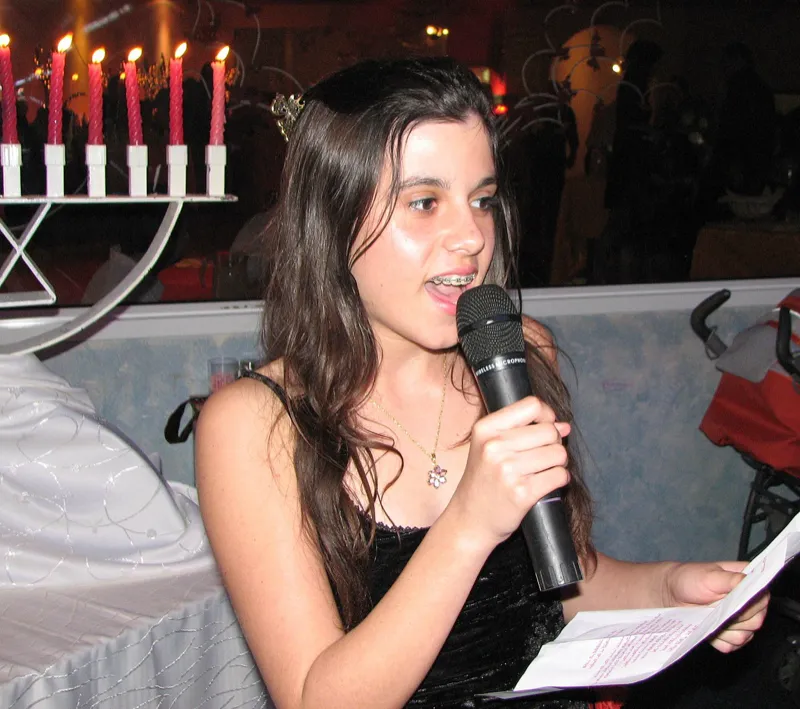
A Saturday Morning in 1922
On a Saturday morning in March 1922, in a small synagogue on the Upper West Side of Manhattan, something happened that had never happened before in the roughly 3,300-year history of the Jewish people. A twelve-year-old girl stood before a congregation and publicly marked her coming of age as a Jew.
Her name was Judith Kaplan. Her father was Rabbi Mordecai Kaplan, one of the most original and controversial thinkers in modern Jewish history. And the ceremony he arranged for his daughter — modest, brief, and by some accounts somewhat awkward — would eventually change the landscape of Jewish life in ways that neither of them could have imagined.
Judith later recalled the event with characteristic honesty. She stood at the bimah, recited a preliminary blessing, and read the Torah portion of the week — not from the scroll itself, but from a printed Chumash (a bound book of the Five Books of Moses). Then she recited a closing blessing and sat down. That was it. No fanfare, no party with a DJ and a photo booth. Just a girl, a blessing, and a quiet revolution.
“No thunder sounded,” Judith Kaplan Eisenstein later wrote. “No lightning struck.”
But the ground had shifted.
Why Mordecai Kaplan Did It
To understand why this moment mattered, you have to understand Mordecai Kaplan. He was a rabbi, a philosopher, and the founder of Reconstructionist Judaism — a movement built on the idea that Judaism is not merely a religion but an evolving civilization. Kaplan believed that Jewish tradition was not static, that it had always adapted to new circumstances, and that it needed to keep adapting or risk irrelevance.
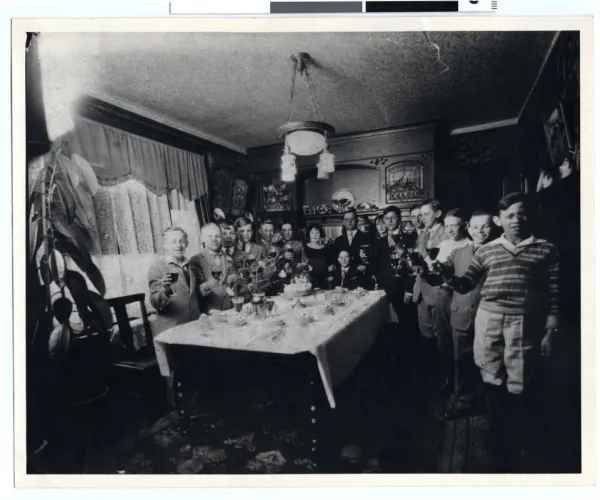
The absence of any coming-of-age ceremony for girls struck Kaplan as a glaring injustice. The bar mitzvah had existed for centuries — by the time a boy turned thirteen, he was counted as a full member of the community, called to the Torah, expected to observe the commandments. Girls, meanwhile, had no equivalent public recognition. They turned twelve (the age of legal maturity for women in Jewish law), and nothing happened. No ceremony, no community acknowledgment, no symbolic moment of stepping into responsibility.
Kaplan saw this as inconsistent with Judaism’s own values. If the Torah was the inheritance of every Jew, as the tradition taught, then why were half the Jewish people excluded from its public celebration?
So he created the bat mitzvah for Judith. It was an experiment — and like many experiments, it was met with mixed reactions. Some congregants were supportive. Others were uncomfortable. Kaplan’s own wife was reportedly not entirely enthusiastic. But Kaplan pressed forward, because he believed it was right.
The Slow Spread
The bat mitzvah did not catch fire immediately. For decades after Judith Kaplan’s ceremony, it remained a novelty — something practiced in a handful of progressive communities but far from mainstream. The Reform movement, ironically, was slow to adopt it, partly because many Reform congregations had already replaced the bar mitzvah with a group confirmation ceremony at age sixteen and saw no need for an individual rite at twelve or thirteen.
The Reconstructionist movement, naturally, embraced the bat mitzvah from early on — it was, after all, a Kaplan innovation. But the movement was small, and its influence was limited in those early decades.
It was the Conservative movement that ultimately did the most to normalize the bat mitzvah. By the 1950s and 1960s, Conservative congregations across America were adopting bat mitzvah ceremonies, often modeled closely on the bar mitzvah — including Torah reading and Haftarah chanting. This was significant because the Conservative movement was the largest denomination in American Judaism during those decades, and its embrace of the practice gave it mainstream legitimacy.
The Reform movement followed, eventually making the bat mitzvah standard practice alongside — and ultimately more common than — the group confirmation ceremony. By the 1970s, the bat mitzvah was established across the liberal Jewish world.
The Orthodox Bat Mitzvah
The Orthodox world’s relationship with bat mitzvah has been more complex — but the ceremony has, in its own way, been adopted there too.
The first major Orthodox figure to advocate for a bat mitzvah celebration was Rabbi Joseph B. Soloveitchik, the towering intellectual leader of Modern Orthodoxy in America. In the 1950s, Soloveitchik approved bat mitzvah celebrations in the form of festive meals with the girl delivering a D’var Torah — a speech analyzing a Jewish text or topic. This format avoided the halakhic questions surrounding women reading from the Torah in a mixed congregation while still providing girls with a meaningful public ceremony.
Today, virtually all Orthodox communities celebrate bat mitzvah in some form. The typical Orthodox bat mitzvah includes:
- A D’var Torah delivered by the girl, often demonstrating impressive textual knowledge
- A festive meal (seudah) with family and friends
- Sometimes a special women’s prayer service where the girl may read from the Torah
In some Modern Orthodox communities, the bat mitzvah has expanded further. Women’s tefillah (prayer) groups may hold Torah readings specifically for the occasion, and some communities have created entirely new ceremonies that give girls a more active ritual role while remaining within Orthodox halakhic boundaries.
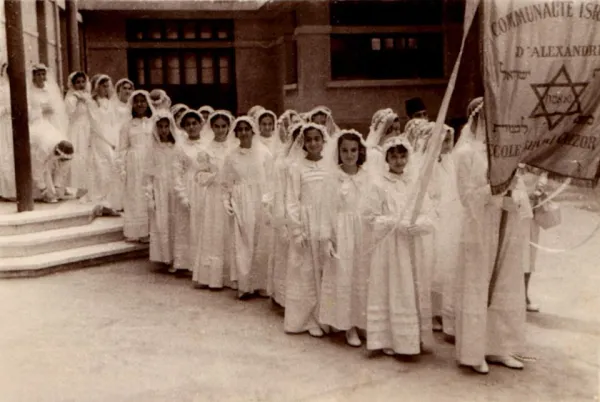
Adult Bat Mitzvahs: Reclaiming the Moment
One of the most moving developments in the bat mitzvah’s history is the phenomenon of adult bat mitzvahs. Thousands of women who grew up before the practice became widespread — or who grew up in communities that didn’t offer it — have chosen to celebrate their bat mitzvahs as adults, sometimes in their fifties, sixties, seventies, or even older.
These ceremonies are often deeply emotional. A woman who watched her brothers celebrate their bar mitzvahs while she sat in the audience finally gets to stand at the bimah herself. A grandmother who never learned to read Hebrew spends months studying trope and chanting. A woman who was told her whole life that Torah was not for her opens the scroll and reads.
These adult celebrations are a testament to what the bat mitzvah has come to mean — not just a childhood milestone, but a statement about belonging, about access, about the refusal to accept exclusion as permanent.
The Global Picture
The bat mitzvah has spread far beyond America. In Israel, bat mitzvah celebrations are common across all denominations, with the Western Wall becoming a popular (and sometimes contested) site for the ceremony. In Europe, Australia, South America, and beyond, the practice has taken root in every Jewish community with enough members to sustain it.
Each culture has added its own flavor. Israeli bat mitzvahs often include trips to historically significant sites. South American bat mitzvahs can rival weddings in their scale and festivity. European communities, many of which were rebuilt after the Holocaust, invest bat mitzvah celebrations with a particular poignancy — each one representing not just a girl’s coming of age but a community’s survival.
What Judith Kaplan Started
Judith Kaplan grew up to become Judith Kaplan Eisenstein — a musicologist, a scholar of Jewish music, and a professor. She lived to be 86, long enough to see the bat mitzvah transform from her father’s experiment into a global institution.
In later years, she was modest about her role. She hadn’t set out to change Jewish history — she was twelve years old, and her father told her she was going to do something new. She did it. And then she lived her life.
But what she started — or rather, what her father started through her — reshaped the Jewish world. The bat mitzvah told a generation of girls, and then another, and then another, that they were not spectators in their own tradition. They were participants. They had voices, and those voices belonged at the bimah.
That is not a small thing. In the long arc of Jewish history, it may turn out to be one of the most important things that happened in the twentieth century.
Frequently Asked Questions
Who had the first bat mitzvah?
Judith Kaplan, daughter of Rabbi Mordecai Kaplan, had the first public bat mitzvah ceremony on March 18, 1922, at the Society for the Advancement of Judaism in New York City. She was 12 years old. She recited a blessing and read from the Torah in Hebrew and English, though she read from a printed book rather than the Torah scroll itself.
Do Orthodox Jews have bat mitzvahs?
Yes, though the format differs from other movements. Most Orthodox communities celebrate bat mitzvah with a D'var Torah (speech on a Torah topic), a festive meal, and sometimes a special prayer service — but typically not with Torah reading during the main Shabbat service. Some Modern Orthodox communities have expanded the ceremony to include women's Torah readings in separate prayer groups.
When did bat mitzvah become common?
The bat mitzvah spread slowly after 1922. The Reconstructionist and Reform movements adopted it widely in the 1950s-1960s. The Conservative movement made it standard by the 1960s-1970s. Orthodox communities began celebrating bat mitzvahs (in their own format) mainly from the 1970s onward. Today it is practiced across virtually all Jewish denominations worldwide.
Key Terms
Sources & Further Reading
Related Articles
Bar and Bat Mitzvah: Coming of Age
At age 12 or 13, a Jewish child becomes responsible for the commandments — a milestone celebrated with joy and meaning.
Orthodox, Conservative, and Reform: Understanding Jewish Denominations
Judaism is not monolithic — it encompasses diverse movements from Ultra-Orthodox to Reform, each with its own approach to tradition, law, and modern life.
Jewish Feminism: A History
From the Talmudic sage Beruriah to Sally Priesand's historic ordination, Jewish feminism has transformed religious life — reshaping prayer, leadership, and the fight for women's rights within halakha.