Jewish Feminism: A History
From the Talmudic sage Beruriah to Sally Priesand's historic ordination, Jewish feminism has transformed religious life — reshaping prayer, leadership, and the fight for women's rights within halakha.
Women and the Tradition
Judaism has always had a complicated relationship with women’s roles. On one hand, the tradition honors the matriarchs — Sarah, Rebecca, Rachel, and Leah — as foundational figures. The prophetesses Miriam, Deborah, and Huldah are celebrated. The woman of valor (eshet chayil) in Proverbs 31 is praised every Friday night.
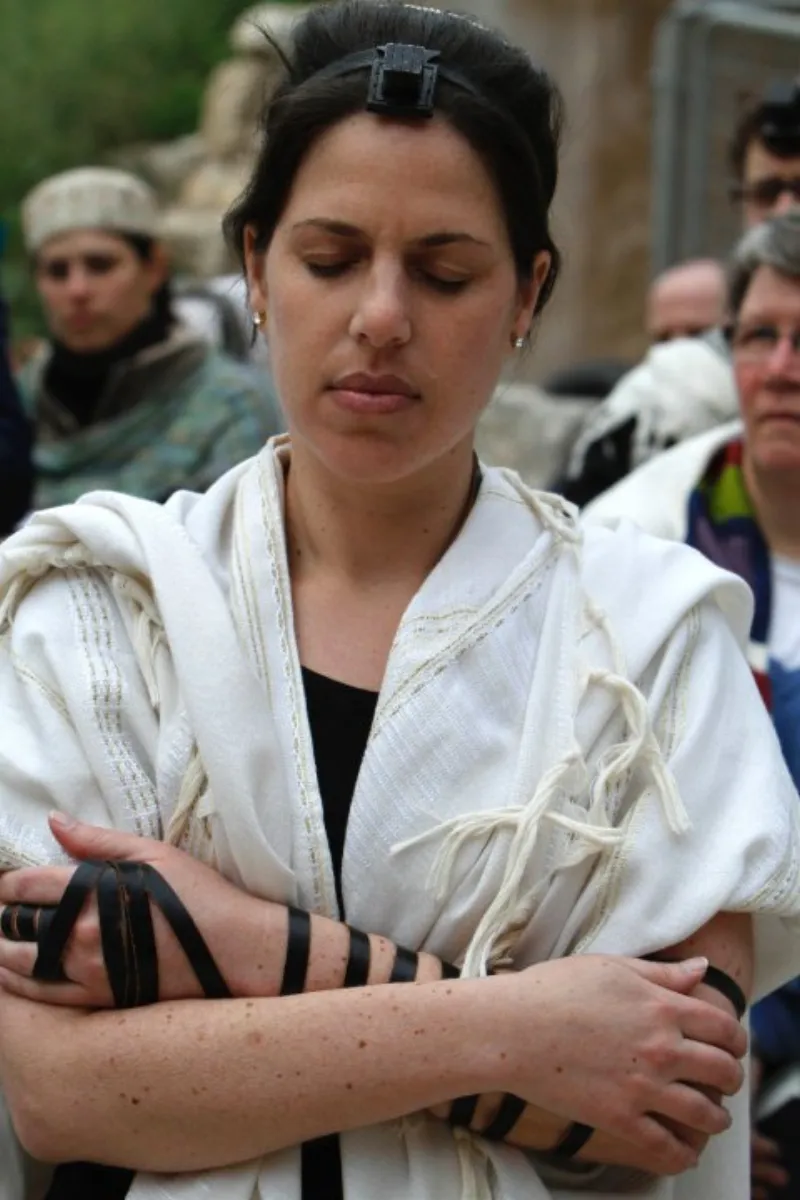
On the other hand, traditional Jewish law exempts women from time-bound positive commandments — which in practice excluded them from many of the most visible aspects of religious life: leading prayers, reading Torah, wearing tefillin, and counting in a minyan. Women sat behind a mechitza (partition) in the synagogue. A woman could not serve as a witness in a Jewish court. And in marriage law, the power dynamic was stark: only a husband could initiate a divorce.
Jewish feminism didn’t begin in the 1970s — though that’s when it became a movement. It began whenever the first woman looked at these structures and asked: Is this what God wants?
Ancient Voices
The Talmud records a remarkable figure: Beruriah, wife of the 2nd-century sage Rabbi Meir. Beruriah is the only woman in the Talmud whose legal opinions are cited with the same authority as her male colleagues. She corrected other scholars, offered incisive interpretations of scripture, and was renowned for her brilliance.
In one famous story, when their two sons died on Shabbat, Beruriah waited until the end of Shabbat to tell Rabbi Meir. She broke the news by asking: “If someone entrusted a treasure to us, and now the owner wants it back, should we not return it?” Only when Meir agreed did she reveal the children had died. Her wisdom in that moment has been cited for nearly two thousand years.
Yet Beruriah’s story also illustrates the limits women faced. Despite her learning, she held no formal position. Later traditions added a disturbing, almost certainly fictional story about her seduction and suicide — as if the tradition couldn’t allow a brilliant woman to remain simply brilliant.
Other ancient voices include Gluckel of Hameln (1646-1724), whose memoirs provide an extraordinary window into early modern Jewish life, and the Maid of Ludmir (Hannah Rachel Werbermacher, 1805-1892), a Hasidic woman who led a prayer house and attracted followers — until communal pressure forced her to marry and cease her public religious role.
The Modern Movement Begins
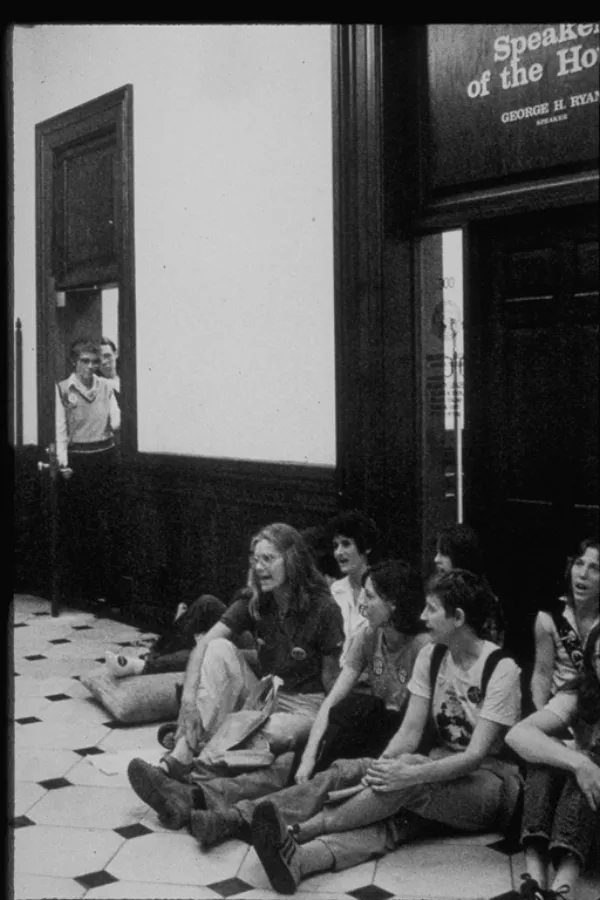
The modern Jewish feminist movement emerged in the late 1960s and early 1970s, alongside the broader American feminist movement but with distinctly Jewish concerns.
Trude Weiss-Rosmarin, editor of the Jewish Spectator, had been writing about women’s inequality in Judaism since the 1940s. But the galvanizing moment came in 1971, when a group of Jewish feminists — including Blu Greenberg, Arlene Agus, and Judith Plaskow — organized the first National Jewish Women’s Conference in New York.
In a landmark 1972 essay, Rachel Adler published “The Jew Who Wasn’t There,” arguing that halakha treated women as peripheral to Jewish religious life. The essay sent shockwaves through the Jewish intellectual world.
That same year, Ezrat Nashim (a feminist group whose name playfully referenced both the women’s section of the Temple and the phrase “help for women”) presented demands to the Conservative movement’s Rabbinical Assembly: count women in the minyan, allow them to lead services, call them to the Torah, train them as rabbis and cantors, and make them equal witnesses in Jewish law.
Sally Priesand and the Ordination Breakthrough
On June 3, 1972, Sally Priesand was ordained at Hebrew Union College–Jewish Institute of Religion in Cincinnati, becoming the first woman ordained as a rabbi in any mainstream Jewish denomination.
Priesand later reflected that her journey was lonely. She was the only woman in her seminary class. Some professors were supportive; others were hostile. She received hate mail. But she persevered, and her ordination opened the door for thousands of women who followed.
The timeline of women’s ordination across denominations tells the story:
- 1972: Reform — Sally Priesand
- 1974: Reconstructionist — Sandy Eisenberg Sasso
- 1985: Conservative — Amy Eilberg
- 2009: Orthodox-adjacent — Rabba Sara Hurwitz (ordained by Rabbi Avi Weiss, using the title “Rabba”; later renamed “Maharat”)
Today, women comprise roughly half of rabbinical students in Reform, Conservative, and Reconstructionist seminaries. The transformation has been breathtaking in its speed. Within a single generation, the landscape of Jewish leadership changed completely in non-Orthodox movements.
The Agunah Crisis
One area where feminist activism meets urgent human need is the agunah crisis. Under traditional Jewish law, a marriage is dissolved only when the husband gives the wife a get (bill of divorce). If he refuses — out of spite, as leverage in civil divorce proceedings, or simply because he has disappeared — the woman is “chained” (agunah): unable to remarry in a Jewish ceremony, and any children from a subsequent relationship considered mamzerim (of compromised status) under halakha.
The problem affects thousands of women worldwide. Some men have demanded enormous sums of money — essentially ransom — for a get. Others have disappeared entirely. Civil divorce provides no remedy because Jewish law requires a separate religious divorce.
Feminist organizations have fought the agunah crisis on multiple fronts:
- Prenuptial agreements — The Beth Din of America developed a halakhic prenuptial agreement in which both parties commit to cooperate in the get process.
- Social pressure — Organizations like ORA (Organization for the Resolution of Agunot) publicize the names of recalcitrant husbands and organize community pressure campaigns.
- Legal creativity — Some rabbinical courts have explored halakhic mechanisms to annul marriages retroactively or appoint agents to deliver a get.
- Civil legislation — New York State passed a “get law” in 1992 requiring courts to consider religious divorce barriers in civil proceedings.
Despite these efforts, the agunah problem persists. For many Jewish feminists, it represents the starkest example of how traditional gender dynamics in Jewish law can cause real suffering.
Partnership Minyanim and Orthodox Feminism
Within Orthodoxy, feminism has taken a distinctive form. Blu Greenberg, often called the mother of Orthodox feminism, famously declared: “Where there is a rabbinic will, there is a halakhic way.”
The most visible expression of Orthodox feminism has been the partnership minyan movement, inspired by Jerusalem’s Shira Chadasha congregation (founded 2002). These prayer communities operate within halakhic boundaries while maximizing women’s participation: women lead Kabbalat Shabbat and Pesukei d’Zimra, read from the Torah, and deliver divrei Torah.
The movement has sparked fierce debate. Critics argue that partnership minyanim distort halakha and represent a slippery slope. Supporters counter that they represent a legitimate reading of Jewish law that honors both tradition and women’s spiritual needs.
Other Orthodox feminist developments include JOFA (Jewish Orthodox Feminist Alliance), women’s Talmud study programs like Drisha and the Matan Institute, and the training of female halakhic advisors (yoatzot halakha) who answer questions about family purity and other areas of Jewish law.
Theology and Text
Jewish feminism has also transformed how Jews read their own texts. Judith Plaskow’s groundbreaking 1990 book Standing Again at Sinai argued that women needed not just legal equality but theological reimagining — a Judaism that placed women at the center of the revelation at Sinai rather than on its margins.
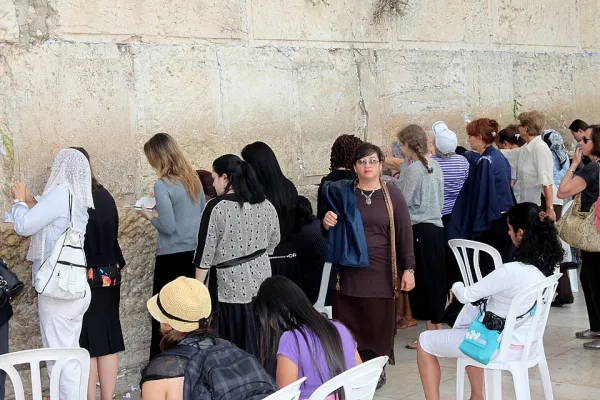
Feminist scholars have recovered lost voices, reread familiar texts with new eyes, and created new liturgy. The Women of the Wall movement has fought for women’s right to pray aloud, wear tallitot, and read from the Torah at the Western Wall in Jerusalem — facing intense opposition from ultra-Orthodox authorities.
The Work Continues
Jewish feminism has achieved extraordinary changes in barely fifty years. Women lead congregations, run Jewish organizations, teach Talmud, and serve as presidents of rabbinical seminaries. The changes would have been inconceivable to previous generations.
But the work continues. The agunah crisis persists. Pay equity in rabbinic positions remains an issue. Sexual harassment in Jewish institutions has been confronted through the #MeToo movement. And in Orthodox communities, the boundaries of women’s participation remain hotly debated.
What Jewish feminism has demonstrated, above all, is that a tradition can change profoundly without losing its soul. The Torah that Sally Priesand reads from is the same Torah that Beruriah studied. The arguments are new, but the method — passionate engagement with text, law, and community — is as old as Judaism itself.
Frequently Asked Questions
Who was the first female rabbi?
Sally Priesand became the first woman ordained as a rabbi in America — and in any mainstream Jewish denomination — when she was ordained by Hebrew Union College in 1972. However, Regina Jonas was privately ordained in Germany in 1935 and served as a rabbi until her deportation to Theresienstadt in 1942. She was murdered at Auschwitz in 1944. Her story was largely unknown until documents were discovered in archives after German reunification.
What is an agunah?
An agunah (literally 'chained woman') is a Jewish woman who is unable to obtain a religious divorce (get) from her husband. Under traditional Jewish law, only the husband can grant a get. If he refuses, disappears, or becomes incapacitated, the wife remains legally married and cannot remarry within Jewish law. The agunah crisis affects thousands of women worldwide and remains one of the most urgent issues in Jewish feminism.
What is a partnership minyan?
A partnership minyan (also called a shira chadasha-style minyan, named after the Jerusalem congregation Shira Chadasha) is a prayer community that operates within the bounds of Orthodox halakha while maximizing women's participation. Women may lead certain prayers, read from the Torah, and receive aliyot in sections of the service that some halakhic authorities deem permissible. These minyanim are controversial within Orthodoxy but represent an important middle ground.
Sources & Further Reading
Related Articles
Orthodox, Conservative, and Reform: Understanding Jewish Denominations
Judaism is not monolithic — it encompasses diverse movements from Ultra-Orthodox to Reform, each with its own approach to tradition, law, and modern life.
Jewish Prayer: Connecting with the Divine
From the three daily prayer services to personal meditation, discover how Jewish prayer works and what it means.
What Is a Rabbi? Teacher, Leader, and Guide
The word 'rabbi' means 'my teacher' — but the role has evolved from ancient legal authority to modern spiritual leader, counselor, and community guide across every denomination.