Tikkun Olam: Repairing the World
From a mystical Kabbalistic concept about gathering divine sparks to a modern rallying cry for social justice, tikkun olam — repairing the world — is one of Judaism's most powerful ideas.

Broken Vessels, Scattered Light
There is a story at the heart of Jewish mysticism that sounds like it could be a creation myth from another universe — and in a sense, it is. According to Rabbi Isaac Luria, the great 16th-century Kabbalist of Safed, the creation of the world began with an act of divine contraction. God — infinite, filling all reality — withdrew into Himself to make room for a finite world. Into the empty space, God sent beams of divine light, contained in cosmic vessels. But the vessels could not hold the light. They shattered. And the sparks of divine light scattered everywhere — into rocks and trees, animals and human beings, into every corner of creation.
This is the myth of shevirat ha-kelim — the shattering of the vessels. And the response to it, the great project assigned to humanity, is tikkun olam — the repair of the world. Each time a person performs a mitzvah, acts with kindness, or pursues justice, they gather a scattered spark and restore it to its source. Slowly, act by act, generation by generation, the world is repaired.
It is one of the most beautiful and enduring ideas in all of Jewish thought. And in the past century, it has migrated from the rarefied world of mystical speculation into the everyday vocabulary of Jewish life — becoming, for many Jews, the defining purpose of Jewish existence.
The Mishnaic Origins
Before Luria, before the Kabbalists, the phrase tikkun olam had a more modest meaning. It appears in the Mishnah (the earliest code of rabbinic law, c. 200 CE), specifically in Tractate Gittin, where several legal reforms are described as enacted mipnei tikkun ha-olam — “for the sake of the order of the world.”
These reforms were practical, not mystical. Rabbi Gamaliel decreed that a man could not secretly cancel a bill of divorce — mipnei tikkun ha-olam. Hillel established the prozbul, a legal mechanism allowing loans to be collected after the sabbatical year — mipnei tikkun ha-olam. In this context, tikkun olam meant something like “for the proper functioning of society” or “to prevent injustice.”
This legal usage is important because it shows that even before the mystical dimension, Judaism recognized a principle of adjusting the law to serve human welfare. The system was not rigid; it could be repaired when it produced unjust results.
The Lurianic Revolution
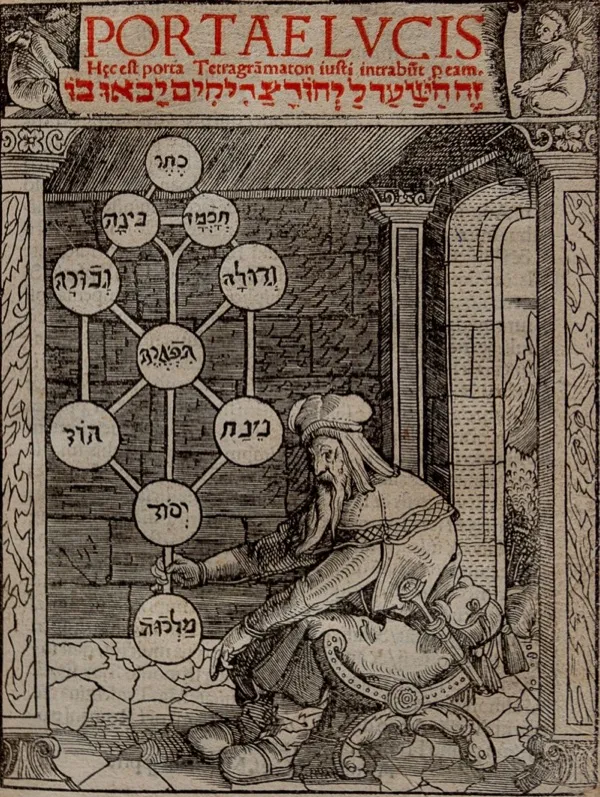
The concept was transformed in the 16th century by Rabbi Isaac Luria (the Ari, 1534-1572), who lived and taught in Safed, a small hilltop town in the Galilee that became the epicenter of Jewish mysticism. Luria’s cosmology — elaborated by his student Rabbi Chaim Vital — offered a radically new creation narrative.
In Luria’s vision, creation was not a smooth, unbroken act of divine generosity. It was traumatic. God’s self-contraction (tzimtzum), the shattering of the vessels, and the scattering of the sparks meant that the world was born broken. Evil exists not as an independent force but as the result of displacement — divine sparks trapped in husks (klipot) of impurity.
Human beings — specifically, Jews performing the commandments with the right intention (kavanah) — have the power to release these sparks and restore them to the divine. Every act of kindness, every prayer said with concentration, every Shabbat candle lit with joy, participates in the cosmic repair. When all the sparks are gathered, the world will be whole, and the messianic era will arrive.
This is a staggering idea. It places the fate of creation in human hands. God began the work; we must finish it.
The Aleinu Prayer
Many Jews encounter the phrase tikkun olam without realizing it. The Aleinu prayer, recited at the conclusion of every Jewish prayer service, contains the line: “l’taken olam b’malkhut Shaddai” — “to repair the world under the sovereignty of the Almighty.” Here, tikkun olam is not social justice in the modern sense but a theological hope: that all peoples will eventually recognize the one God, and the world will be perfected under divine rule.
This liturgical usage predates the Kabbalistic one. It shows that the aspiration for a repaired world has been part of Jewish daily prayer for centuries — spoken three times a day by Jews across the globe.
The Modern Meaning: Social Justice
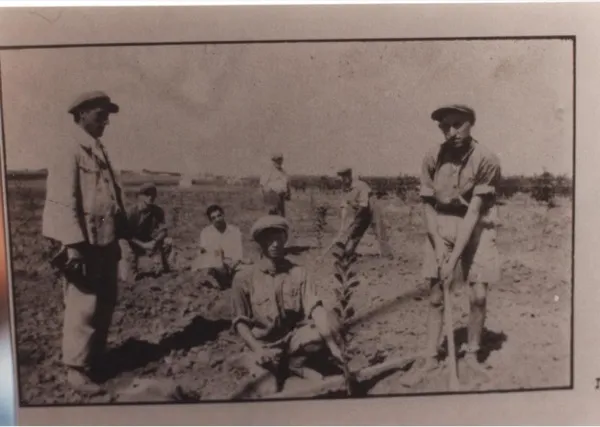
In the 20th century, tikkun olam underwent yet another transformation. American Jews, particularly in the Reform and Conservative movements, adopted the phrase as a framework for social action. The theological and mystical dimensions receded; the ethical imperative advanced. Tikkun olam became synonymous with the pursuit of justice, the obligation to help the vulnerable, and the responsibility to leave the world better than you found it.
This shift was not arbitrary. It drew on deep currents in Jewish tradition. The prophets — Isaiah, Amos, Micah — thundered against injustice and demanded care for the poor, the widow, the orphan, and the stranger. The Torah commands leaving the corners of the field for the needy. The concept of tzedakah — not charity but justice — makes caring for others an obligation, not an option.
Tzedakah and Tikkun Olam
The connection between tikkun olam and tzedakah is natural. If the world is broken — if poverty, hunger, and injustice exist — then giving to those in need is an act of repair. Maimonides’ famous eight levels of charity (from giving reluctantly to helping someone become self-sufficient) can be read as a ladder of tikkun olam: each level represents a more complete repair.
But tikkun olam extends beyond financial giving. It includes:
- Advocacy — working to change unjust laws and policies
- Education — teaching and mentoring the next generation
- Environmental stewardship — protecting the natural world (the rabbinic concept of bal tashchit, “do not destroy,” aligns with modern environmentalism)
- Interfaith cooperation — building bridges between communities
- Personal ethics — treating every person with dignity and respect
Jewish Organizations Doing Tikkun Olam
Numerous Jewish organizations frame their missions in terms of tikkun olam:
- American Jewish World Service (AJWS) — fights poverty and promotes human rights in the developing world
- HIAS (originally the Hebrew Immigrant Aid Society) — supports refugees worldwide, drawing on the Jewish experience of displacement
- Repair the World — mobilizes young Jews for community service
- Hazon — focuses on environmental sustainability through a Jewish lens
- Mazon: A Jewish Response to Hunger — combats hunger in the United States and Israel
These organizations represent the practical application of an ancient idea: that the world is not yet what it should be, and that human beings — armed with compassion, resources, and determination — can help close the gap.
Criticism and Complexity
Not everyone is comfortable with how tikkun olam has been used. Some Orthodox scholars argue that the concept has been stripped of its religious content — that “repairing the world” has become a vague slogan for secular liberalism rather than a summons to observe the commandments with spiritual intention. Rabbi Meir Soloveichik has written that tikkun olam, properly understood, is about sanctifying the world through Torah and mitzvot, not about a generic commitment to social good.
Others counter that the prophetic tradition of justice is the Torah’s commandment — that feeding the hungry and defending the oppressed is not a dilution of Judaism but its very essence. Isaiah 58, read on Yom Kippur, declares: “Is this not the fast I have chosen? To loose the bonds of wickedness, to undo the straps of the yoke, to let the oppressed go free… to share your bread with the hungry.”
The tension is real, and it is productive. It keeps the concept honest — preventing tikkun olam from becoming either an empty slogan or a narrowly ritualistic idea. At its best, tikkun olam holds both dimensions together: the mystical and the practical, the divine and the human, the spark and the deed.
The Unfinished Work
The great insight of tikkun olam is that the world is not yet complete. Creation is a project, not a finished product. And human beings are not passive residents of a pre-built world but active partners in its construction. Every act of justice, every moment of compassion, every effort to build a more equitable society, participates in the ongoing work of creation.
The sparks are still scattered. The vessels are still broken. But every hand that reaches out to help gathers one more fragment of light.
Frequently Asked Questions
What does tikkun olam mean?
Tikkun olam literally means 'repair of the world' in Hebrew. In its original Kabbalistic context, it refers to the mystical process of restoring divine sparks scattered during creation. In modern usage, it has become a broad term for social action, philanthropy, and working toward justice — the idea that human beings have a responsibility to make the world a better place.
Is tikkun olam in the Torah?
The exact phrase 'tikkun olam' does not appear in the Torah. It first appears in the Mishnah (Gittin 4:2-9), where it refers to legal reforms enacted 'for the sake of the order of the world.' The concept gained its mystical dimension through Lurianic Kabbalah in 16th-century Safed. Its modern social justice usage developed primarily in the 20th century.
How is tikkun olam practiced today?
Modern tikkun olam takes many forms: volunteering at food banks, advocating for civil rights, supporting environmental causes, fighting poverty, and working for peace. Jewish organizations like American Jewish World Service, HIAS, and Repair the World explicitly frame their social action programs in terms of tikkun olam. Many synagogues and Jewish schools organize tikkun olam projects as central community activities.
Sources & Further Reading
Related Articles
Kabbalah: An Introduction to Jewish Mysticism
Beyond the law and the stories lies a hidden dimension of Judaism — Kabbalah, the mystical tradition that seeks to understand the nature of God, creation, and the human soul.
Tzedakah: The Jewish Obligation of Justice and Giving
Tzedakah is not charity — it's justice. From Maimonides' eight levels to the humble pushke on the kitchen counter, Jewish giving is an obligation, not an option.
What Do Jews Believe? Core Beliefs, Values, and the Spirit of Debate
Jewish belief centers on one God, Torah, ethical action, and humanity's role in repairing the world — but within that framework, debate and diversity of opinion are not just tolerated but sacred.