Passover: The Complete Guide to Pesach
A comprehensive guide to Passover — the Exodus story, the seder, the Haggadah, the four cups, matzah, the seder plate, preparation, and the deeper meaning of freedom.
The Story That Never Ends
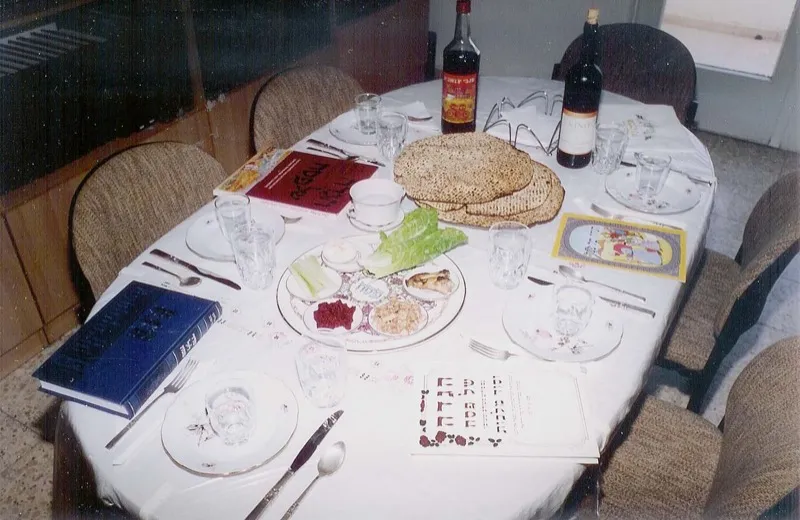
More Jews observe Passover than any other Jewish practice. More than fasting on Yom Kippur. More than lighting Shabbat candles. More than attending synagogue on any day of the year. The Passover seder is the most widely observed Jewish ritual in the world — and it has been, essentially unchanged in structure, for nearly two thousand years.
Why? Because Passover tells the foundational story: slavery and liberation, oppression and redemption, the journey from what was to what could be. It is the story that makes the Jewish people a people. And it is told not as ancient history but as personal experience. The Haggadah instructs: “In every generation, each person is obligated to see themselves as though they personally came out of Egypt.”
This is not a holiday you observe. It is a story you inhabit.
The Exodus: The Story
The narrative begins in the book of Exodus. The Israelites, descendants of Jacob, have been enslaved in Egypt for generations. They build cities under the whip, their male children are drowned in the Nile, and their cries rise to heaven.
God hears. God remembers the covenant with Abraham. God sends Moses — a reluctant prophet raised in Pharaoh’s palace — to demand liberation. Pharaoh refuses. Ten plagues follow: blood, frogs, lice, wild beasts, pestilence, boils, hail, locusts, darkness, and the death of the firstborn.
On the night of the tenth plague, the Israelites are commanded to slaughter a lamb, mark their doorposts with its blood, and eat the roasted meat with matzah and bitter herbs — in haste, with sandals on their feet and staffs in their hands, ready to leave. The angel of death passes over (pasach) the marked homes — hence the name Passover.
Pharaoh relents. The Israelites leave. The sea splits. And a nation of slaves begins the journey to becoming a free people.
Preparing for Passover
Cleaning for Chametz
The most labor-intensive aspect of Passover preparation is the removal of chametz — leavened grain products — from the home. The Torah prohibits not just eating chametz but owning it or even having it in your possession during Passover.
This leads to the famous Passover cleaning: every cabinet emptied, every crumb hunted, every surface scrubbed. The kitchen is kashered (purified for Passover use), and many families use separate Passover dishes, pots, and utensils.
Bedikat Chametz and Biur Chametz
On the night before the seder, the formal search for chametz (bedikat chametz) is conducted — traditionally by candlelight, with a feather and wooden spoon. Ten pieces of bread are hidden and found. The next morning, all remaining chametz is burned (biur chametz).
The Seder: Step by Step
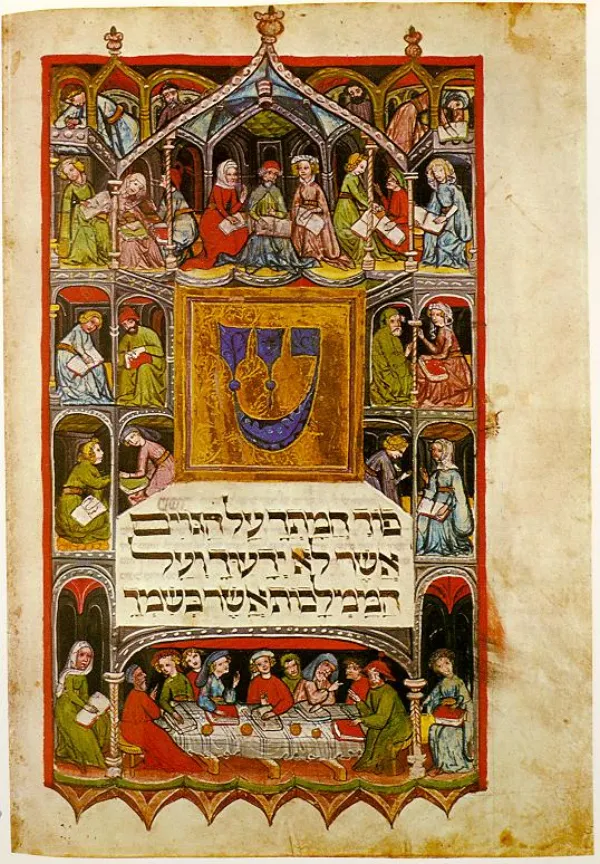
The word seder means “order” — and the meal follows a precise sequence of fifteen steps:
1. Kadesh — Kiddush (First Cup)
The seder opens with the kiddush over wine, sanctifying the holiday. This is the first of four cups.
2. Urchatz — Washing Hands
A ritual handwashing without a blessing — a purification before eating the vegetable.
3. Karpas — Green Vegetable
A green vegetable (usually parsley or celery) is dipped in salt water and eaten. The vegetable represents spring and renewal; the salt water represents the tears of slavery.
4. Yachatz — Breaking the Middle Matzah
Three matzot are stacked on the table. The middle one is broken in half. The larger piece becomes the afikoman — hidden for children to find later. The smaller piece remains on the table.
5. Maggid — Telling the Story
This is the heart of the seder: the retelling of the Exodus story from the Haggadah. It includes the Four Questions (Ma Nishtanah), traditionally asked by the youngest child; the story of the Four Sons (wise, wicked, simple, and the one who does not know how to ask); the ten plagues (a drop of wine is removed for each plague, diminishing our joy because of Egyptian suffering); and the declaration: “We were slaves to Pharaoh in Egypt, and God brought us out with a mighty hand.”
The Maggid section ends with the second cup of wine.
6. Rachtzah — Washing Hands (with Blessing)
Ritual handwashing before eating matzah, this time with a blessing.
7. Motzi / Matzah — Blessing and Eating Matzah
Two blessings are recited — one for bread in general (hamotzi) and one specifically for the commandment to eat matzah. The matzah is eaten while reclining to the left — a symbol of freedom (in the ancient world, free people reclined at meals; slaves stood).
8. Maror — Bitter Herbs
Bitter herbs (typically horseradish or romaine lettuce) are eaten, dipped in charoset (a paste of apples, nuts, wine, and cinnamon). The bitterness represents slavery; the charoset represents the mortar used by the slaves.
9. Korech — Hillel Sandwich
Matzah, maror, and charoset are combined in a sandwich, following the practice of the ancient sage Hillel.
10. Shulchan Orech — The Festive Meal
The meal itself. Traditional dishes vary by community: Ashkenazi seders often feature gefilte fish, matzah ball soup, brisket, and roasted chicken. Sephardi seders may include lamb, rice (if kitniyot are permitted), and spiced vegetable dishes.
11. Tzafun — Finding the Afikoman
The hidden afikoman is found (usually by children, who “ransom” it for a prize) and eaten as the last food of the evening. The afikoman represents the Passover sacrifice.
12. Barech — Grace After Meals (Third Cup)
Grace is recited, followed by the third cup of wine.
13. Hallel — Songs of Praise (Fourth Cup)
Psalms of praise (Hallel) are recited, followed by the fourth and final cup of wine.
14. Nirtzah — Conclusion
The seder concludes with songs and the declaration: “Next year in Jerusalem!” (L’shanah ha’ba’ah b’Yerushalayim!)
Traditional songs include Chad Gadya (an Aramaic cumulative song about a goat) and Echad Mi Yodea (“Who Knows One?”).
The Seder Plate
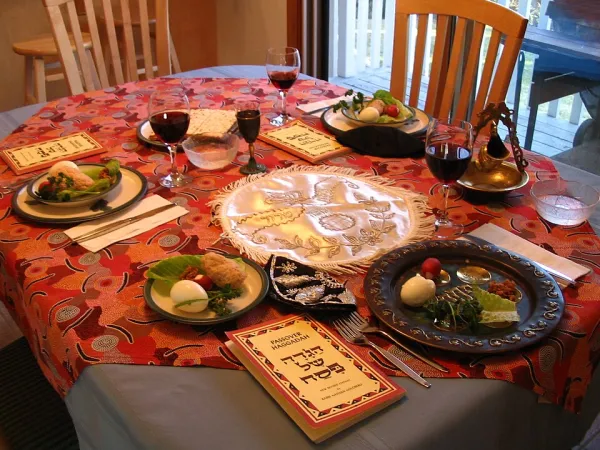
The seder plate (ke’arah) holds six symbolic items:
- Zeroa — a roasted shank bone, representing the Passover sacrifice
- Beitzah — a roasted egg, representing the festival sacrifice and mourning for the destroyed Temple
- Maror — bitter herbs (horseradish), representing the bitterness of slavery
- Charoset — apple-nut-wine paste, representing the mortar of the slaves
- Karpas — a green vegetable (parsley), representing spring
- Chazeret — a second bitter herb (romaine lettuce), used for the Korech sandwich
Some families add modern items to the seder plate: an orange (supporting inclusion), olives (representing peace), or fair-trade chocolate (representing modern slavery).
The Week of Passover
After the seder (or two seders, in the diaspora), Passover continues for seven or eight days. During this time:
- No chametz is eaten, owned, or present in the home
- Matzah replaces bread
- Special Passover prayers are recited
- The intermediate days (Chol HaMoed) are semi-festive — some work is permitted
- The final day(s) commemorate the splitting of the sea
Many families develop their own Passover traditions: matzah pizza, matzah lasagna, creative Passover cooking that works within the constraints. By the eighth day, most people are ready for bread — and the first bite of chametz after Passover is, by tradition, one of the most satisfying moments of the Jewish year.
The Meaning of Freedom
Passover is not merely a commemoration of an ancient event. It is a living meditation on freedom — what it means, what it costs, and how easily it can be lost. The Haggadah’s instruction to see yourself as if you personally left Egypt is not metaphorical — it is a moral demand.
Because if you experienced slavery, you know what it feels like. And if you know what it feels like, you are obligated — deeply, personally, inescapably — to fight slavery wherever it exists.
“You shall not oppress the stranger,” the Torah commands, “for you know the heart of the stranger — you were strangers in the land of Egypt.”
That is the ultimate message of Passover: freedom is not a gift you keep. It is a responsibility you carry.
Frequently Asked Questions
What is the seder?
The seder (meaning 'order') is the ritual meal held on the first night of Passover (first two nights outside Israel). Families and communities gather around a table to retell the story of the Exodus from Egypt, following a specific order outlined in the Haggadah. The seder includes four cups of wine, symbolic foods, songs, and discussion — and typically lasts two to four hours.
How long is Passover?
Passover lasts seven days in Israel and eight days in the diaspora (a historical difference related to calendar uncertainty). The first and last days (or first two and last two, in the diaspora) are 'holy days' when work is prohibited, similar to Shabbat. The intermediate days (Chol HaMoed) have fewer restrictions.
Why do Jews eat matzah on Passover?
Matzah commemorates the Israelites' hasty departure from Egypt — they left so quickly that their bread did not have time to rise. The Torah calls matzah 'the bread of affliction,' connecting it to slavery, but also 'the bread of freedom,' since it was the food they ate when they were finally liberated. Matzah is both a symbol of suffering and a symbol of redemption.
Test Your Knowledge
Think you know this topic? Try our quiz!
Take the Jewish Holidays: Advanced Quiz →Sources & Further Reading
Related Articles
How to Run a Passover Seder: The Complete Host Guide
Everything a first-time host needs: shopping list, table setup, the 15 steps of the seder, timing tips, keeping kids engaged, and getting from 'Kadeish' to 'Nirtzah' without losing anyone.
Passover (Pesach): The Festival of Freedom
The story of the Exodus comes alive each spring as Jewish families gather for the Seder — the most widely observed Jewish ritual.
Passover Cooking: A Complete Guide to Pesach in the Kitchen
Everything you need to know about cooking for Passover — chametz rules, the kitniyot debate, Seder plate preparation, matzah-based recipes, Sephardi Passover foods, and practical meal planning.