Sukkot: The Festival of Booths
For seven days each autumn, Jewish families build and eat in temporary huts — celebrating the harvest, remembering the desert journey, and embracing the fragility and beauty of life.
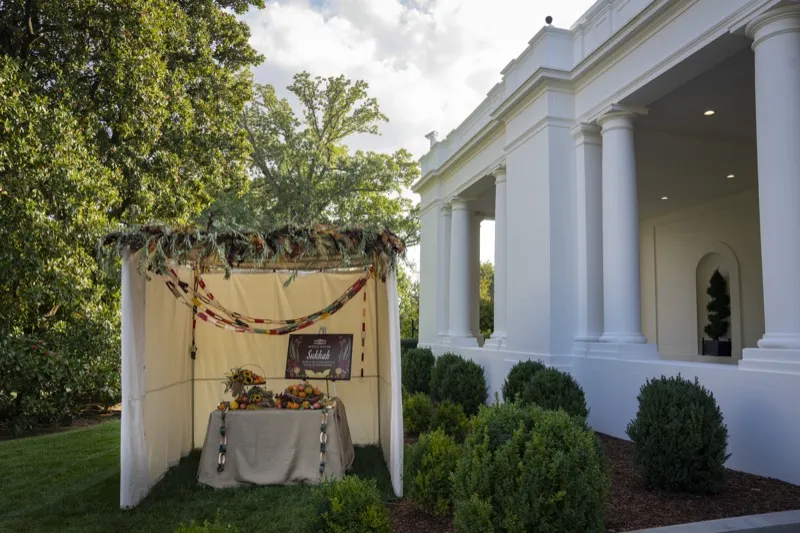
Under the Stars
There is a moment on the first night of Sukkot that stays with you. You step outside into the cool autumn air, duck through the doorway of a small wooden structure draped in fabric and garlands, and sit down at a table set with your best dishes. Above you, instead of a ceiling, there is only a lattice of branches and leaves — the schach — and through its gaps, the stars are visible. Paper chains sway gently. Plastic fruits and handmade drawings by the children hang from the walls. The candles flicker. For a brief, almost surreal moment, your dining room is the sky.
This is Sukkot — one of the most joyful and tactile holidays in the Jewish calendar. For seven days each autumn, families leave the comfort of their homes and eat, celebrate, and sometimes sleep in these fragile, open-roofed huts. It is a holiday that asks you to hold two truths at once: life is temporary, and life is beautiful.
What Is Sukkot?
Sukkot (pronounced soo-COAT) falls on the 15th of the Hebrew month of Tishrei, just five days after the solemn fast of Yom Kippur. Where Yom Kippur is inward and austere, Sukkot bursts outward with color, activity, and celebration. The Torah calls it zman simchateinu — “the season of our joy.”
The holiday carries three layers of meaning. First, it is an agricultural harvest festival. In ancient Israel, Sukkot marked the final ingathering of crops before winter — a time of abundance and gratitude. Farmers would build temporary shelters in the fields during the harvest, and the holiday preserves that connection to the land.
Second, Sukkot is a historical remembrance. The Torah commands: “You shall dwell in booths for seven days… so that your generations may know that I made the people of Israel dwell in booths when I brought them out of the land of Egypt” (Leviticus 23:42-43). The sukkah recalls the forty years of desert wandering after the Exodus, when the Israelites lived under God’s protection in temporary shelters.
Third, and perhaps most profoundly, Sukkot is a meditation on fragility and trust. By leaving the solid walls of our homes and sitting beneath a roof through which rain can fall and wind can blow, we acknowledge that true security comes not from brick and mortar but from something deeper — faith, community, and gratitude for what we have right now.
The Talmud teaches that the sukkah should be a dirat arai — a temporary dwelling. Its very impermanence is the point.
Building the Sukkah
The weeks between Rosh Hashanah and Sukkot are busy ones. In backyards, balconies, driveways, and courtyards, families begin constructing their sukkahs — often starting the night after Yom Kippur ends.
The rules are specific but flexible. A sukkah must have at least three walls, which can be made of wood, canvas, metal, or any sturdy material. The walls need not reach the ground or the roof, and creative solutions abound — from elaborate wooden structures that stand year after year to simple pop-up frames draped in fabric.
The most important element is the schach — the roof covering. It must be made of natural, detached plant material: branches, bamboo poles, palm fronds, cornstalks, or wooden slats. The schach should provide more shade than sunlight during the day, yet be open enough that you can see the stars at night. This balance — shelter but not enclosure, protection but not permanence — is the heart of the sukkah.
Then comes the decorating, which is often the most beloved part. Children hang paper chains, drawings, and tinsel. Families drape strings of lights, hang real or plastic fruits, pin up tapestries, and arrange flowers. Some communities have elaborate decorating traditions — Moroccan Jews, for example, are known for lavishly adorned sukkahs with rich fabrics and ornate hangings.
During the seven days of Sukkot, the mitzvah is to eat meals in the sukkah. Many families eat all their meals there, and in warm climates or among the especially devoted, some sleep in the sukkah as well. If it rains, you are exempt — the sukkah is meant to bring joy, not misery.
The Four Species
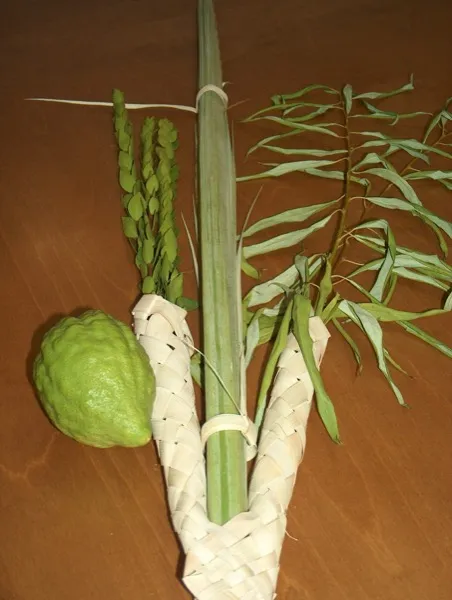
Alongside the sukkah, the other central observance of Sukkot involves the arba minim — the four species. The Torah commands: “On the first day you shall take the fruit of a beautiful tree, branches of palm trees, boughs of leafy trees, and willows of the brook, and you shall rejoice before the Lord your God seven days” (Leviticus 23:40).
The four species are:
- Etrog (citron) — a fragrant, lemon-like fruit held in the left hand. Selecting the perfect etrog — unblemished, with an intact pitom (tip) — is a serious and sometimes expensive pursuit.
- Lulav (palm branch) — a tall, closed frond of the date palm, held in the right hand.
- Hadassim (myrtle branches) — three small, fragrant branches bound to the lulav.
- Aravot (willow branches) — two slender branches bound alongside the myrtle.
During morning prayers each day of Sukkot, worshippers hold the lulav bundle in one hand and the etrog in the other, bring them together, and wave them in six directions — right, left, forward, up, down, and backward — symbolizing God’s presence everywhere.
The rabbis offered rich symbolic interpretations. One famous teaching compares the four species to four types of people: the etrog, which has both taste and fragrance, represents those with both Torah learning and good deeds; the lulav has taste but no fragrance; the myrtle has fragrance but no taste; and the willow has neither. Bound together, they represent the unity of the Jewish people — every person matters, and the community is incomplete without each one.
Ushpizin: Welcoming Spiritual Guests
A beautiful Sukkot custom, rooted in the Zohar (the central text of Jewish mysticism), is the tradition of ushpizin — inviting spiritual guests into the sukkah each night. On each of the seven nights, a different biblical figure is symbolically welcomed: Abraham, Isaac, Jacob, Moses, Aaron, Joseph, and David.
Some families set an extra chair or place setting for the honored guest of the evening. Many Sephardi communities have elaborate ushpizin rituals with special recitations and songs. In recent decades, some communities have added a parallel tradition of seven female ushpizot — Sarah, Rebecca, Rachel, Leah, Miriam, Deborah, and Hannah — honoring the matriarchs and heroines of the Bible.
The custom of ushpizin also carries an ethical dimension: you cannot truly welcome the spiritual guests unless you also welcome real guests — especially the poor and the lonely. Hospitality is woven into the very fabric of Sukkot.
Sukkot Prayers and Rituals
The synagogue services during Sukkot are vibrant and distinctive. Each morning, the congregation recites Hallel — a collection of joyful psalms of praise — while holding and waving the four species. The lulav procession through the synagogue is one of the most visually striking moments in the Jewish liturgical year.
A special ritual called Hoshanot takes place each day: worshippers circle the bimah (the central reading platform) carrying their four species while reciting prayers for salvation and divine mercy. On the seventh day of Sukkot, known as Hoshana Rabbah, the congregation circles the bimah seven times — an echo of the ancient procession around the altar in the Temple in Jerusalem. Willow branches are then beaten on the ground until the leaves fall off, a dramatic ritual symbolizing the casting away of sins and prayers for rain.
In the time of the ancient Temple, Sukkot featured a spectacular water libation ceremony (nisuch hamayim), in which water was drawn from the Pool of Siloam and poured on the altar alongside the usual wine offering. This was accompanied by all-night celebrations of music, dance, and torch juggling so joyous that the Talmud declares: “Whoever has not seen the rejoicing of the water drawing has never seen true joy.”
Food and the Harvest Table
Sukkot meals lean into the themes of harvest and abundance. Stuffed foods are a beloved tradition across many communities — the idea of enclosure and filling echoing the sukkah itself. Ashkenazi families serve kreplach (meat-filled dumplings in soup) and stuffed cabbage. Sephardi and Mizrahi households prepare stuffed peppers, grape leaves (dolma), and stuffed zucchini, often in rich tomato sauces fragrant with cumin and cinnamon.
Seasonal produce features prominently: squash, root vegetables, pomegranates, and apples. Round challah, carried over from the Rosh Hashanah season, may still appear on the table. In some communities, a special emphasis is placed on eating the seven species of the Land of Israel mentioned in the Torah: wheat, barley, grapes, figs, pomegranates, olives, and dates.
And because you are eating outside in autumn, there is always something memorable about the experience — the cool breeze, the rustling schach overhead, the warmth of soup in your hands on a chilly evening.
Shemini Atzeret and Simchat Torah
Immediately following Sukkot comes Shemini Atzeret (“the Eighth Day of Assembly”), a separate but connected holiday. On this day, the prayer for rain (Tefilat Geshem) is recited — a fitting conclusion to a harvest festival, turning attention to the coming agricultural season.
In Israel, Shemini Atzeret coincides with Simchat Torah (“Rejoicing of the Torah”). In the diaspora, Simchat Torah falls the following day. This is the day the annual cycle of Torah reading is completed and immediately begun again — the last verses of Deuteronomy are read, followed without pause by the first verses of Genesis. The message is clear: the Torah has no end.
Simchat Torah is among the most exuberant celebrations in Jewish life. Torah scrolls are carried out of the ark and paraded around the synagogue in joyful processions called hakafot. Congregants sing, dance, clap, and stomp. Children wave flags. The dancing often spills out into the streets. It is a night when even the most reserved communities let loose, and the joy is infectious.
Sukkot Across Communities
Like all Jewish holidays, Sukkot is celebrated with distinctive flavors across the world’s diverse communities:
- Ashkenazi communities in Europe and America emphasize the sukkah decorations, kreplach, and the careful selection of a flawless etrog. German-Jewish communities historically had elaborate, sometimes painted, sukkah wall panels passed down through generations.
- Sephardi communities often build larger, more communal sukkahs. Moroccan Jews are famous for their richly decorated booths and elaborate ushpizin recitations. Iraqi Jews traditionally hang a special cloth embroidered with the names of the ushpizin.
- Yemenite Jews have a distinctive custom of building the sukkah schach from specific local plants and reciting unique liturgical poems (piyyutim) throughout the holiday. Their four species practice includes specific traditions about the binding of the lulav.
- Ethiopian (Beta Israel) Jews historically observed a holiday called Astasreyo, with prayers for harvest and purification that parallel many Sukkot themes.
What unites all these communities is the same elemental experience: stepping outside, sitting beneath an open sky, holding ancient plants in your hands, and giving thanks. In a world that prizes permanence and control, Sukkot asks us to find joy in what is temporary — and in doing so, to discover what truly endures.
As Shabbat reminds us each week that rest is sacred, Sukkot reminds us each year that the most meaningful moments often happen not behind solid walls but under open skies, surrounded by family, with stars visible through the branches above.
Frequently Asked Questions
What is a sukkah?
A sukkah is a temporary hut or booth built outdoors for the holiday of Sukkot. It must have at least three walls and a roof of natural materials (schach) like branches or bamboo, through which you can see the stars. Families eat meals and sometimes sleep in the sukkah for seven days.
What are the four species (arba minim)?
The four species are: etrog (citron fruit), lulav (palm branch), hadassim (myrtle branches), and aravot (willow branches). They are held together and waved in six directions during Sukkot prayers, symbolizing God's presence everywhere.
When is Sukkot celebrated?
Sukkot begins on the 15th of Tishrei, five days after Yom Kippur, and lasts seven days (eight in the diaspora). It is followed immediately by Shemini Atzeret and Simchat Torah.
Test Your Knowledge
Think you know this topic? Try our quiz!
Take the Jewish Holidays: Advanced Quiz →Sources & Further Reading
Related Articles
Passover (Pesach): The Festival of Freedom
The story of the Exodus comes alive each spring as Jewish families gather for the Seder — the most widely observed Jewish ritual.
Rosh Hashanah: The Jewish New Year
The sound of the shofar marks the beginning of the Jewish New Year — a time of reflection, prayer, and hope for the year ahead.
Shabbat: The Weekly Day of Rest
Every week, Jewish life pauses for 25 hours of rest, reflection, and togetherness — discover the beauty of Shabbat.
Shmini Atzeret: The Eighth Day of Assembly
Shmini Atzeret — the intimate eighth day after Sukkot — features the prayer for rain, Yizkor memorial prayers, and a theological mystery: is it part of Sukkot or something entirely its own?
Simchat Torah: The Joy of Completing the Torah
On Simchat Torah, the final words of Deuteronomy are read and Genesis begins again — and the synagogue erupts in singing, dancing, and unrestrained joy with the Torah scrolls.