Shmini Atzeret: The Eighth Day of Assembly
Shmini Atzeret — the intimate eighth day after Sukkot — features the prayer for rain, Yizkor memorial prayers, and a theological mystery: is it part of Sukkot or something entirely its own?
The Holiday Nobody Knows
Ask most Jews to name the Jewish holidays, and they will rattle off Rosh Hashanah, Yom Kippur, Passover, Hanukkah. Maybe Sukkot and Shavuot. Ask about Shmini Atzeret, and you will likely get a blank stare — or, at best, a vague wave in the direction of “something after Sukkot.”
This is a shame, because Shmini Atzeret is one of the most beautiful and theologically intriguing days on the Jewish calendar. It is a holiday that does not quite fit anywhere, that nobody can fully explain, and that carries a message of quiet intimacy between God and the Jewish people.
It also sparks one of the most entertaining debates in Jewish law: whether or not you sit in the sukkah. But we will get to that.
What Is Shmini Atzeret?
The name means “the eighth [day of] assembly” — or possibly “the eighth [day of] holding back.” It falls on the 22nd of Tishrei, immediately after the seven days of Sukkot. The Torah commands:
“On the eighth day you shall hold a solemn assembly (atzeret); you shall not work at your occupations.” — Numbers 29:35
That is almost the entire biblical instruction. No sukkah is mentioned. No lulav and etrog. No specific ritual is commanded beyond the assembly itself and the Temple sacrifices. For a Torah that is usually quite detailed about holiday observances, this is remarkably sparse.
What is this day? Why does it exist? The rabbis of the Talmud and Midrash offered an answer that has resonated for two thousand years.
The Parable of the King
The Midrash (Bamidbar Rabbah 21:24) offers a parable: A king invited his servants to a feast lasting seven days. When it was time for them to leave, he said to the one closest to him: “Stay one more day. Your departure is difficult for me.”
The seven days are Sukkot. The departing servants represent the nations of the world — during Sukkot, seventy bulls were sacrificed in the Temple corresponding to the seventy nations. But on the eighth day, the number drops to one bull. This day, the rabbis explain, is God’s intimate request to Israel: the party is over, the other guests have gone home. Stay a little longer. Just you and Me.
This interpretation transforms Shmini Atzeret from a puzzling postscript into something profoundly moving — a day of closeness, of quiet connection, of a relationship too precious to rush away from. It is the hug at the door when the visit is ending.
Geshem: The Prayer for Rain
The most dramatic liturgical moment of Shmini Atzeret is the recitation of Geshem — the prayer for rain. Chanted during the Musaf (additional) service, Geshem is one of only two occasions during the year when a special prayer for weather is recited (the other is Tal, the prayer for dew, on Passover).
The prayer is solemn and beautiful, set to a melody that evokes both gravity and hope. It invokes the merit of the patriarchs and matriarchs through their association with water:
- Abraham — “his heart poured out to You like water”
- Isaac — whose binding took place on a mountain where “water was prophesied”
- Jacob — who rolled the stone from the well
- Moses — drawn from water, who struck the rock
- Aaron — the high priest who performed water rituals on Sukkot
- The twelve tribes — who crossed the Jordan into the Promised Land
Beginning with Geshem, the phrase “mashiv haruach umorid hagashem” (“who causes the wind to blow and the rain to fall”) is inserted into the daily Amidah prayer for the entire winter season. Forgetting to add this phrase — or adding it at the wrong time of year — is one of the more common liturgical anxieties for observant Jews.
In the land of Israel, where rain is genuinely scarce and the agricultural year depends on winter rainfall, the Geshem prayer carries real urgency. Praying for rain in October in the Mediterranean climate is not metaphorical — it is survival.
The Sukkah Debate
Here is where things get wonderfully complicated. If Shmini Atzeret is a separate holiday from Sukkot, then you should not sit in the sukkah — that would be treating Shmini Atzeret as if it were still Sukkot. But in the diaspora, where an extra day of holidays is observed due to ancient calendar uncertainties, what if the “eighth day” is actually still the seventh day? Should you sit in the sukkah just in case?
The Shulchan Aruch (the authoritative code of Jewish law) rules that in the diaspora, Jews should eat in the sukkah on Shmini Atzeret — but without reciting the blessing for sitting in the sukkah. This creates the delightfully paradoxical situation of sitting in a sukkah while officially not observing Sukkot.
In Israel, where Shmini Atzeret is one day, the question is simpler: no sukkah. The holiday is its own thing.
Yizkor: Remembering the Dead
Shmini Atzeret is one of four occasions during the year when Yizkor — the memorial prayer for the deceased — is recited in synagogue. (The others are Yom Kippur, the last day of Passover, and the second day of Shavuot.)
The connection between Shmini Atzeret and Yizkor is not immediately obvious, but it deepens the day’s theme of intimacy. If Shmini Atzeret is about lingering — about not wanting to let go — then remembering the dead fits perfectly. Yizkor is a moment of holding on to those we have lost, of refusing to let their memory dissolve into the passage of time.
The custom of pledging tzedakah (charitable donations) during Yizkor — “in memory of” the deceased — adds a practical dimension: the dead are honored not only with words but with acts of generosity in their name.
Shmini Atzeret and Simchat Torah
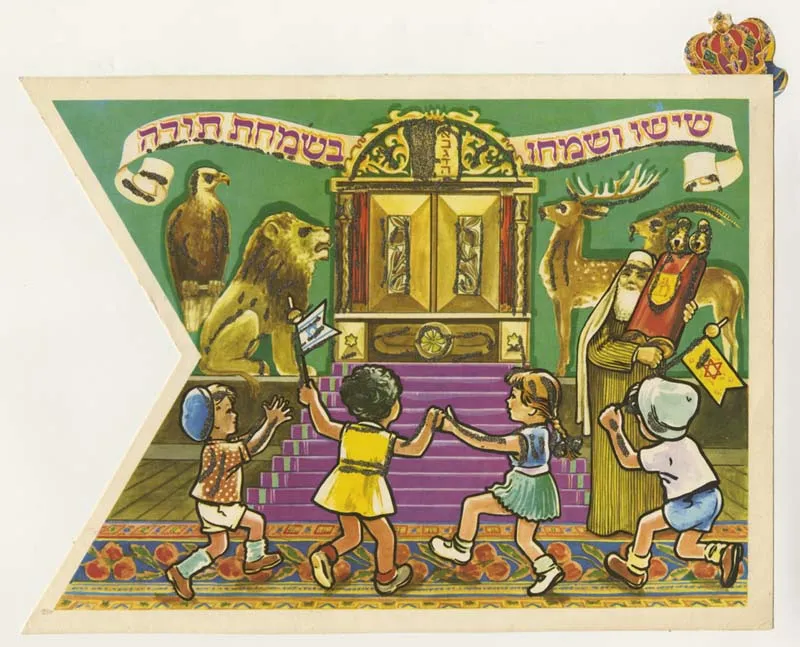
In Israel, Shmini Atzeret and Simchat Torah are combined into a single day. The solemn Geshem prayer and Yizkor memorial are followed by the ecstatic celebration of completing the annual Torah reading cycle — dancing with Torah scrolls, singing, and general joyousness. The emotional range of this single day — from weeping for the dead to dancing with the living — is extraordinary.
In the diaspora, where two days of holiday are observed, Shmini Atzeret and Simchat Torah are separate: Shmini Atzeret on the first day (22 Tishrei) and Simchat Torah on the second (23 Tishrei). This separation gives each celebration its own space but also means that diaspora Jews experience the holiday season differently from their Israeli counterparts.
The Quiet Power
Shmini Atzeret does not have the drama of Yom Kippur or the spectacle of Sukkot. It does not have a signature ritual — no shofar, no fasting, no sukkah, no four species. What it has is something subtler: the suggestion that the most important moments are not the grand ones but the quiet ones. Not the feast but the conversation after the guests have left. Not the performance but the lingering silence.
In a Jewish calendar packed with holidays, observances, and rituals, Shmini Atzeret offers something rare: a day with almost no agenda. Just be here. Just stay a little longer. Just let the connection between heaven and earth hold for one more day before the long walk back into ordinary time.
“Your departure is difficult for me.” — God to Israel, according to the Midrash
That sentence — spoken, according to tradition, by the Creator of the universe — may be the most tender thing in all of Jewish literature. It is the heart of Shmini Atzeret, and it is enough.
Frequently Asked Questions
Is Shmini Atzeret part of Sukkot?
This is one of the great debates in Jewish law. The Torah lists Shmini Atzeret as the 'eighth day' after Sukkot, suggesting a connection, but also calls it 'atzeret' (assembly), implying an independent holiday. The Talmud says it is separate in six ways — including having its own blessing (Shehecheyanu), its own sacrifices, and its own identity. Most authorities treat it as a distinct holiday that happens to follow Sukkot.
Do you sit in the sukkah on Shmini Atzeret?
This depends on where you live and your tradition. In Israel, Shmini Atzeret is one day and people do NOT sit in the sukkah. In the diaspora, where Shmini Atzeret is observed for two days, Ashkenazi Jews typically eat in the sukkah on the first day (without the sukkah blessing) but not on the second. The paradox of sitting in a Sukkot structure on a non-Sukkot holiday has generated centuries of rabbinic discussion.
What is the Geshem prayer?
Geshem ('rain') is a solemn prayer for rain recited during the Musaf service on Shmini Atzeret. It marks the beginning of the rainy season in Israel and the start of adding 'mashiv haruach umorid hagashem' (who causes the wind to blow and the rain to fall) in the daily Amidah prayer. The prayer invokes the merit of biblical figures associated with water — Abraham, Isaac, Jacob, Moses, Aaron, and the twelve tribes.
Test Your Knowledge
Think you know this topic? Try our quiz!
Take the Jewish Holidays: Advanced Quiz →Sources & Further Reading
Related Articles
The Jewish Calendar: How an Ancient Lunar-Solar System Shapes Jewish Life
The Jewish calendar is a sophisticated lunar-solar system that has kept Jewish holidays, Shabbat, and lifecycle events anchored in their proper seasons for over two thousand years.
Simchat Torah: The Joy of Completing the Torah
On Simchat Torah, the final words of Deuteronomy are read and Genesis begins again — and the synagogue erupts in singing, dancing, and unrestrained joy with the Torah scrolls.
Sukkot: The Festival of Booths
For seven days each autumn, Jewish families build and eat in temporary huts — celebrating the harvest, remembering the desert journey, and embracing the fragility and beauty of life.