Mikveh: The Sacred Waters of Jewish Ritual Life
The mikveh — a ritual immersion pool fed by natural water — is one of Judaism's most ancient and intimate institutions. From conversion to monthly renewal, discover its meaning, laws, and modern revival.
Water and Transformation
There is something elemental about water. We are born from it, sustained by it, cleansed by it. Every culture on earth has recognized water’s transformative power, but Judaism gave it a specific ritual architecture: the mikveh.
A mikveh is a pool of natural water used for spiritual immersion. Not bathing — the mikveh is not about physical cleanliness. (In fact, Jewish law requires you to be thoroughly clean before entering.) The mikveh is about transition: from one spiritual state to another, from outsider to insider, from the ordinary to the sacred.
The concept is as old as the Torah itself. When God creates the world in Genesis, the waters are the primordial element — and when the Israelites pass through the Red Sea, they emerge as a new people. Every mikveh immersion recapitulates that passage: you go under, the water closes over you, and you come up changed.
The Laws of the Mikveh
The requirements for a kosher mikveh are precise, codified in the Mishnaic tractate Mikvaot and elaborated in centuries of halakhic literature:
- Natural water source: The water must ultimately derive from a natural source — rainwater, spring water, melted snow or ice. Ordinary tap water, drawn by human effort through pipes, does not qualify on its own.
- Minimum volume: The mikveh must hold at least 40 se’ah of natural water — roughly 200 gallons (750 liters). This is enough to cover the entire body of an average adult.
- Gathered naturally: The water must flow or gather on its own, not be carried or poured into the pool by hand (with certain exceptions).
- Connected to the ground: The mikveh must be built into the ground or a structure attached to it — not a portable vessel.
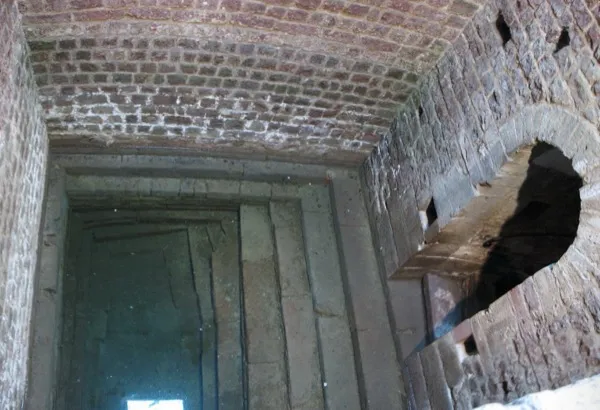
Modern mikvaot use an ingenious system to satisfy these requirements while providing comfort: a reservoir (bor) of collected rainwater is connected through a small opening (hashakah) to a larger pool filled with filtered, heated tap water. The connection makes the tap water halakhically valid.
When Jews Immerse
Conversion
The mikveh is indispensable for conversion to Judaism. Regardless of denomination, immersion in a mikveh is the act that formally completes the conversion process. The convert submerges entirely — no part of the body may remain above the surface — and recites a blessing. When they emerge, they are Jewish. It is, in every sense, a rebirth.
A bet din (rabbinic court) of three witnesses stands nearby (typically behind a screen for modesty). For male converts, circumcision (brit milah) precedes the mikveh; if already circumcised, a symbolic drop of blood (hatafat dam brit) is drawn.
Niddah and Family Purity
The most frequent use of the mikveh in traditional Jewish life relates to niddah — the laws of family purity. During menstruation and for seven “clean days” afterward, a married couple refrains from physical intimacy. At the end of this period, the woman immerses in the mikveh, and the couple reunites.
This practice is deeply personal and, in traditional communities, intensely private. Women who keep taharat hamishpachah (family purity) describe the monthly cycle as creating a rhythm of longing and renewal in marriage — a honeymoon that returns every month. Critics, including some feminists, have questioned whether the laws imply that menstruation is inherently impure. Defenders respond that tumah (ritual impurity) is not about dirtiness but about contact with life-and-death transitions — the same concept applies to contact with a dead body, which carries the highest level of tumah.
Before Holidays and Shabbat
Many observant men immerse in the mikveh before Yom Kippur as an act of purification before the holiest day of the year. Some immerse before every Shabbat and holiday. In Hasidic communities, daily mikveh immersion before morning prayers is standard practice — the Baal Shem Tov, founder of Hasidism, emphasized the mikveh’s spiritual power, and his followers maintained the custom.
Dishes and Utensils
Jewish law requires that new metal and glass dishes and utensils purchased from a non-Jewish manufacturer be immersed in a mikveh before use. Many communities maintain a separate, smaller mikveh specifically for this purpose, often accessible at all hours.
Before Weddings
Brides immerse in the mikveh before the wedding — traditionally the night before — in a ceremony that often includes the bride’s mother and close female relatives. Some grooms also immerse.
The Archaeology of Mikvaot
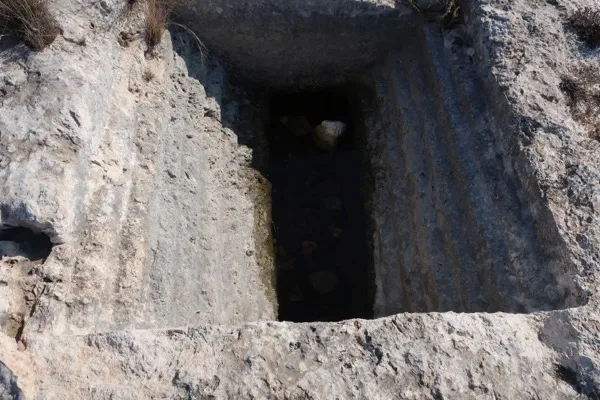
Archaeological evidence confirms the mikveh’s antiquity. Over 850 ancient mikvaot have been discovered in Israel, dating from the Second Temple period onward. They appear at Masada, Qumran (home of the Dead Sea Scrolls community), Herodium, and throughout Jerusalem — often near the Temple Mount, where priests and pilgrims purified themselves before entering the sacred precinct.
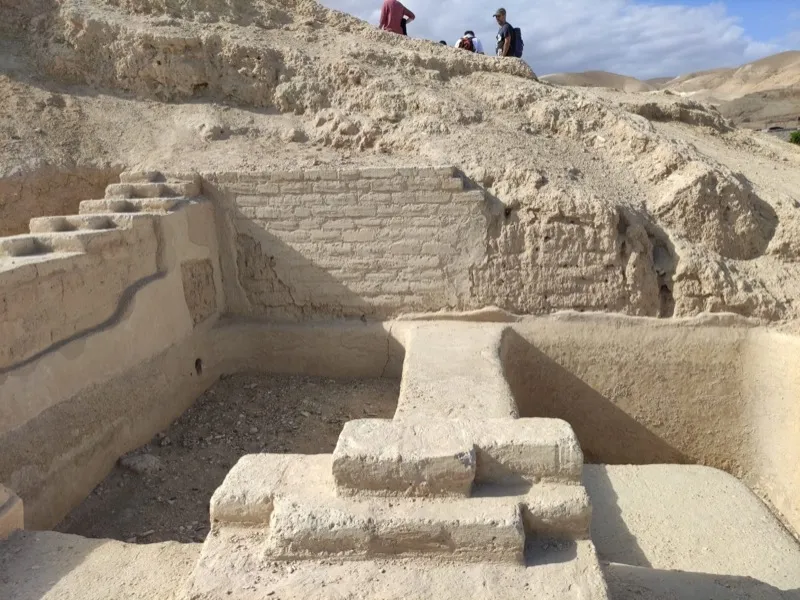
The oldest known mikveh, dating to the Hasmonean period (2nd-1st century BCE), was discovered at the royal winter palaces near Jericho. These ancient installations share the same basic design as modern mikvaot: steps leading down into a stone-lined pool.
The Talmud records that the mikveh was so essential to communal life that a community was required to build a mikveh before building a synagogue — and could even sell a Torah scroll to fund its construction.
Modern Mikveh Architecture
For much of the 20th century, the mikveh suffered from an image problem. Many were housed in basement facilities with minimal amenities, and the practice was associated primarily with ultra-Orthodox communities. That has changed dramatically.
A new generation of architects and community leaders has reimagined the mikveh as a space of beauty and dignity. Modern mikvaot often feature:
- Spa-like preparation rooms with private showers, bathtubs, and grooming supplies.
- Natural stone and wood finishes that evoke the natural world.
- Skylights and windows that connect the immersion to the sky and rain.
- Warm, filtered water at comfortable temperatures.
- Trained attendants (balaniot) who ensure the immersion is complete and provide a welcoming presence.
Notable modern mikvaot include Mayyim Hayyim in Newton, Massachusetts — a community mikveh founded by author Anita Diamant that welcomes Jews of all denominations — and the mikveh at Congregation Beth Elohim in Brooklyn, designed to be both halakhically rigorous and architecturally stunning.
Multiple Perspectives
The mikveh occupies a complex place in contemporary Jewish life. Orthodox communities consider it obligatory for the uses described above, and mikveh observance among Orthodox women approaches universality. Conservative Judaism affirms the mikveh’s importance, particularly for conversion, though observance of niddah laws varies. Reform Judaism has historically downplayed the mikveh but has experienced a significant revival, with many Reform Jews rediscovering immersion as a meaningful spiritual practice — for conversion, lifecycle events, healing, and personal transformation.
Some contemporary Jews use the mikveh in non-traditional ways: marking recovery from illness, transitioning after divorce, celebrating gender transition, or simply seeking a moment of spiritual renewal. These new applications draw on the mikveh’s ancient symbolism while extending it in directions the rabbis of the Mishnah could not have imagined.
At its heart, the mikveh is about one of the most basic human experiences: the feeling of entering the water and coming up different. Cleaner, yes — but more than that. Ready. Renewed. Reborn.
Frequently Asked Questions
What is a mikveh used for?
A mikveh is used for ritual immersion to achieve spiritual purity. The most common uses today include conversion to Judaism, the monthly immersion by married women after their menstrual cycle (niddah), immersion of new dishes and utensils, immersion before Shabbat or holidays, and preparation by a bride or groom before marriage.
What makes water kosher for a mikveh?
A mikveh must contain at least 40 se'ah (approximately 200 gallons or 750 liters) of natural water — rainwater, spring water, or melted snow/ice — that has gathered naturally, not drawn or pumped directly. Most modern mikvaot use a system where a reservoir of rainwater is connected to a larger pool of regular water through a small opening.
Do men use the mikveh?
Yes, though it is less widely practiced today. Traditionally, men immerse before Yom Kippur and other holidays. Hasidic men often immerse daily before morning prayers. Some grooms immerse before the wedding. The practice of male mikveh use varies widely across communities.
Sources & Further Reading
Related Articles
Converting to Judaism: A Thoughtful Guide to Joining the Jewish People
Converting to Judaism is a serious, transformative journey involving study, mentorship, and ritual — welcomed by tradition yet approached with care across all denominations.
Halakha: The Jewish Path of Law
Halakha — literally 'the way of walking' — is the comprehensive system of Jewish law that governs everything from prayer and diet to business ethics and family life.
Jewish Lifecycle: From Birth to Death
Judaism marks every stage of life with sacred rituals — from the brit milah eight days after birth to the traditions of mourning and remembrance.