The Mishnah: How the Oral Law Was Written Down
Around 200 CE, Rabbi Judah HaNasi did something revolutionary: he wrote down the Oral Torah. The result — the Mishnah — became the foundation of the Talmud and all subsequent Jewish law.
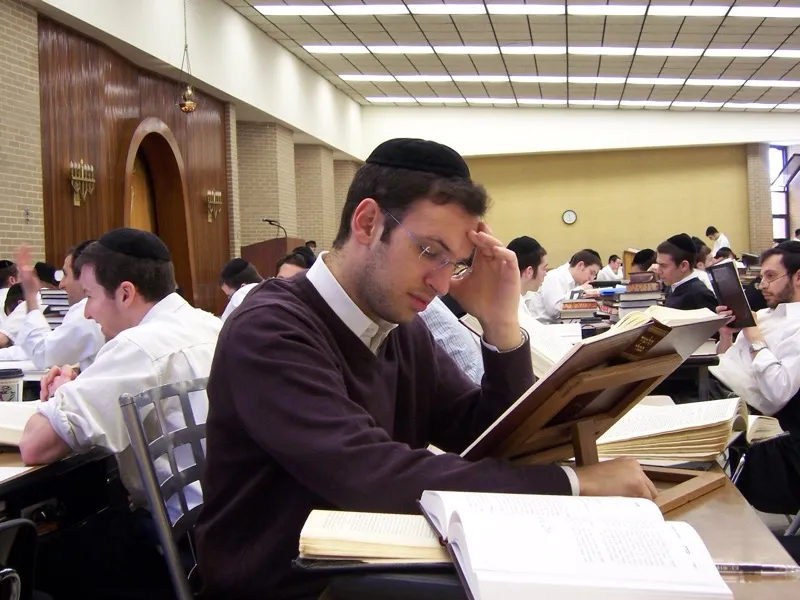
The Book That Changed Everything
For centuries, the Oral Torah was exactly that — oral. Passed from teacher to student through chains of memorization, debated in academies, refined through practice, but never written down. There was a prohibition against it: the Written Torah was written, the Oral Torah was spoken. That was the order of things.
Then, around 200 CE, a man named Rabbi Judah HaNasi — a scholar, a leader, and by most accounts the wealthiest and most politically connected rabbi of his generation — broke the rule. He compiled the traditions, organized them, edited them, and produced a document. He called it the Mishnah — from the Hebrew root shanah, meaning “to repeat” or “to study.”
It was a revolutionary act born of desperation. And it created the foundation upon which all of rabbinic Judaism would be built.
Why Write It Down?
The answer is simple and devastating: the oral tradition was dying.
The destruction of the Second Temple in 70 CE had already disrupted the institutions that sustained rabbinic learning. The Bar Kokhba revolt of 132-135 CE brought further catastrophe — entire communities of scholars were killed, academies were destroyed, the Romans banned Jewish study under penalty of death. Rabbi Akiva, one of the greatest sages, was martyred by the Romans, his flesh torn with iron combs.
Rabbi Judah HaNasi, living a generation or two later, saw the crisis clearly. The great scholars were aging. Their students were scattered. The chain of oral transmission that had carried Jewish law for centuries was fraying at every link. If nothing was done, the Oral Torah would be lost.
He justified his decision with a verse from Psalms (119:126): “It is time to act for the Lord; they have violated Your Torah.” The rabbis interpreted this to mean: when the Torah itself is at risk, you may break a lesser rule to preserve the greater one. Writing down the oral tradition violated custom, but losing it entirely would violate something far worse.
The Six Orders
Rabbi Judah organized the Mishnah into six orders (sedarim), which together cover virtually every area of Jewish life. The six orders are remembered by the mnemonic “Zeraim Moed Nashim Nezikin Kodashim Taharot” — or simply “Shas” (an abbreviation for shishah sedarim, “six orders”):
1. Zeraim (Seeds)
Agricultural laws: tithes, first fruits, the sabbatical year, and the corner of the field left for the poor. The first tractate, Berakhot (Blessings), stands somewhat apart — it deals with prayer, blessings, and the Shema, establishing the framework of daily Jewish worship.
2. Mo’ed (Festival)
Laws of Shabbat, holidays, fasting, and the calendar. Tractates include Shabbat (39 categories of prohibited work), Pesachim (Passover), Yoma (Yom Kippur), Sukkah, Rosh Hashanah, Megillah (Purim), and Chagigah (festival pilgrimage).
3. Nashim (Women)
Marriage, divorce, and vows. Tractates include Yevamot (levirate marriage), Ketubot (marriage contracts), Nedarim (vows), Sotah (the suspected adulteress), Gittin (divorce), and Kiddushin (betrothal).
4. Nezikin (Damages)
Civil and criminal law, courts, and ethics. This order includes the beloved tractate Pirkei Avot (“Ethics of the Fathers”), a collection of moral teachings that has no parallel in the Mishnah — it contains no legal rulings, only wisdom sayings from the rabbis across generations. “If I am not for myself, who will be for me? But if I am only for myself, what am I? And if not now, when?” (Hillel, Avot 1:14).
5. Kodashim (Holy Things)
Temple sacrifices, ritual slaughter, and sacred donations. Though the Temple had been destroyed over a century before the Mishnah was compiled, these laws were preserved in the expectation (or hope) that the Temple would one day be rebuilt — and also because studying these laws was considered a form of worship in itself.
6. Taharot (Purities)
Ritual purity and impurity — including the laws of the mikveh, bodily discharges, and the complex regulations surrounding contact with the dead. Of this order’s twelve tractates, only Niddah (menstrual purity) has extensive Talmudic commentary, because it remained practically relevant after the Temple’s destruction.
Famous Mishnayot
Some passages from the Mishnah have become cornerstones of Jewish consciousness:
“Whoever saves a single life, it is as if they saved an entire world” (Sanhedrin 4:5). This teaching — used in the film Schindler’s List — originates in the Mishnah’s discussion of witness testimony in capital cases.
“Who is wise? One who learns from every person. Who is mighty? One who conquers their own inclination. Who is rich? One who is content with their portion” (Avot 4:1). Ben Zoma’s definitions, which overturn conventional measures of success.
“It is not your duty to finish the work, but neither are you free to desist from it” (Avot 2:16). Rabbi Tarfon’s famous teaching about persistence and responsibility.
“On three things the world stands: on Torah, on worship, and on acts of loving-kindness” (Avot 1:2). Shimon the Righteous’s foundational statement about Jewish priorities.
The Mishnah’s Style
The Mishnah has a distinctive literary character. It is terse — almost telegraphic. Where the Torah tells stories, the Mishnah states rules. Where the Torah elaborates, the Mishnah compresses. A single mishnah (individual paragraph) might contain a legal principle that took generations to develop, distilled into a sentence or two.
The Mishnah also preserves minority opinions. Unlike a modern legal code, which states only the ruling, the Mishnah frequently records dissenting views: “Rabbi Eliezer says X. Rabbi Joshua says Y. And the Sages say Z.” This practice reflects a remarkable intellectual honesty — the losing argument is preserved because it might contain truth that a future generation will need.

From Mishnah to Talmud
The Mishnah did not end the conversation. It started one. Over the next three centuries, rabbis in both the Land of Israel and Babylonia studied the Mishnah intensively, asking questions, raising objections, proposing interpretations, and connecting its rulings to biblical sources. Their discussions were eventually compiled into the Gemara — and the Mishnah plus the Gemara together form the Talmud.
Two Talmuds emerged: the Jerusalem Talmud (Talmud Yerushalmi), completed around 400 CE in the academies of Tiberias and Caesarea, and the Babylonian Talmud (Talmud Bavli), completed around 500 CE in the great academies of Sura and Pumbedita. The Babylonian Talmud became the authoritative text for most of the Jewish world, though Sephardi and Israeli scholars have maintained strong interest in the Jerusalem Talmud.
A Living Foundation
Today, the Mishnah is studied on its own as well as within the Talmud. Many Jews follow a daily Mishnah study cycle, completing the entire text in approximately six years. The practice is particularly popular as a form of merit for the deceased — the Hebrew word mishnah contains the same letters as neshamah (soul).
Rabbi Judah HaNasi could not have known that his emergency rescue project would become one of the most studied texts in human history. He simply saw that something precious was about to be lost, and he acted. That instinct — to preserve, to transmit, to ensure that the chain of tradition holds — runs through every page of the Mishnah and through every generation of Jews who have kept it alive.
Frequently Asked Questions
What is the difference between the Mishnah and the Talmud?
The Mishnah is the foundational legal code of the Oral Torah, compiled around 200 CE. The Talmud consists of the Mishnah plus the Gemara — centuries of rabbinic commentary, debate, and elaboration on the Mishnah. There are two Talmuds: the Babylonian Talmud (compiled c. 500 CE) and the Jerusalem Talmud (compiled c. 400 CE). Both use the Mishnah as their base text.
Why was the Oral Torah written down?
Traditional sources say the Oral Torah was meant to remain oral — transmitted from teacher to student through memorization. Rabbi Judah HaNasi authorized its transcription around 200 CE because the destruction of the Temple, the dispersal of Jewish communities, and Roman persecution threatened to cause the oral traditions to be forgotten. He acted on the principle that 'it is time to act for the Lord; they have violated Your Torah' (Psalms 119:126).
What are the six orders of the Mishnah?
The Mishnah is divided into six orders (sedarim): Zeraim (Seeds) on agricultural laws and blessings; Mo'ed (Festival) on Shabbat and holidays; Nashim (Women) on marriage and divorce; Nezikin (Damages) on civil and criminal law; Kodashim (Holy Things) on Temple sacrifices; and Taharot (Purities) on ritual purity. Together they are known by the acronym 'Shas.'
Sources & Further Reading
Related Articles
Halakha: The Jewish Path of Law
Halakha — literally 'the way of walking' — is the comprehensive system of Jewish law that governs everything from prayer and diet to business ethics and family life.
The Talmud: A Beginner's Guide to Jewish Oral Law
The Talmud is the vast ocean of Jewish thought — centuries of rabbinic debate on law, ethics, storytelling, and the meaning of life, all compiled into one extraordinary work.
The Torah: The Heart of Judaism
The Torah is more than a book — it is the living constitution of Jewish life, studied and debated for over three millennia.