Jews of France: From Revolution to the Present
From medieval persecution to revolutionary emancipation, from the Dreyfus Affair to Vichy collaboration, and from North African immigration to modern challenges — French Jewry's story mirrors the tensions of modernity itself.
The First Emancipation
On September 27, 1791, the French National Assembly voted to grant full citizenship to the Jews of France. It was the first time in modern history that a European nation had declared its Jewish inhabitants to be equal citizens with the same rights as everyone else. The decree was brief, almost offhand — and it changed the world.
Before the Revolution, French Jews lived in two distinct communities. In the south, Sephardi Jews descended from those expelled from the Iberian Peninsula had achieved a measure of prosperity and integration in cities like Bordeaux and Bayonne. In the northeast, the Ashkenazi Jews of Alsace and Lorraine lived in conditions closer to the medieval pattern — restricted, taxed, and confined.
The Revolution’s promise was intoxicating: liberty, equality, fraternity — for everyone, including Jews. But the emancipation came with an implicit bargain. As Count Clermont-Tonnerre famously declared: “To the Jews as individuals, everything; to the Jews as a nation, nothing.” France would accept Jews as French citizens — but not as a separate people with distinct collective identity.
This tension — between individual equality and collective identity — has defined French Jewish life ever since.
Rashi, the Medieval Legacy, and Expulsions
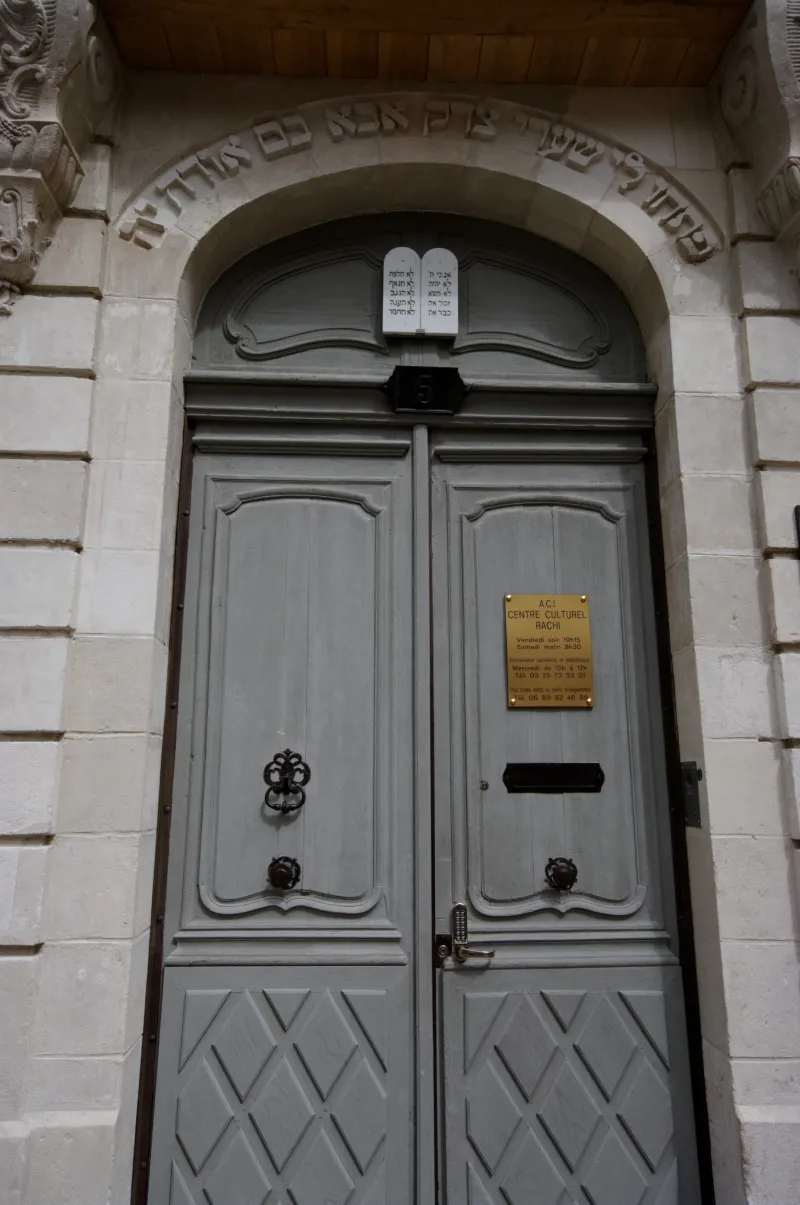
The Jewish presence in France long predates the Revolution. Jews lived in Roman Gaul, and by the medieval period, important communities had developed across the country. The greatest medieval Jewish scholar, Rabbi Shlomo Yitzchaki — known as Rashi — lived and taught in Troyes in the eleventh century. His commentaries on the Torah and Talmud remain the most widely studied in the Jewish world.
But medieval France also saw horrific persecution. The Crusades brought massacres. In 1240, the Paris Talmud Trial led to the public burning of thousands of Talmud manuscripts. Jews were expelled from France in 1306 and again in 1394 — banishments that lasted for centuries.
Napoleon, the Dreyfus Affair, and Modern France
Napoleon Bonaparte extended Jewish emancipation across his empire but also convened a “Grand Sanhedrin” in 1807 to ensure Jewish loyalty to the state above religious law. The message was clear: France would protect its Jews, but they must be French first.
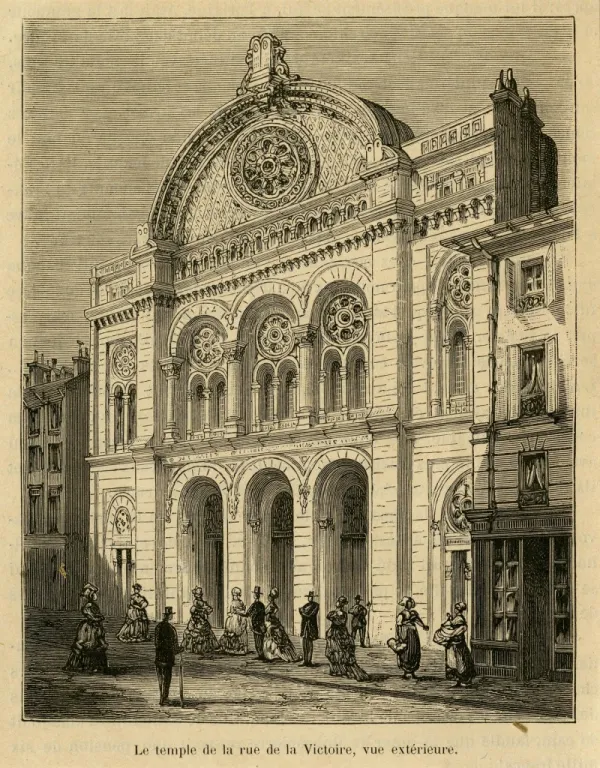
Through the nineteenth century, French Jews embraced this bargain enthusiastically. They built grand synagogues, entered the professions, served in the military, and rose to positions of influence. The Alliance Israélite Universelle, founded in Paris in 1860, became the first international Jewish organization, establishing schools across the Mediterranean.
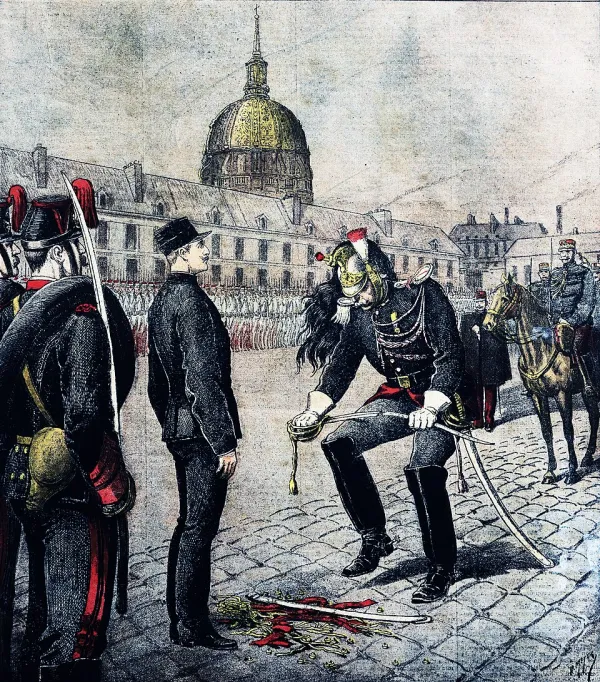
Then came the Dreyfus Affair. In 1894, Captain Alfred Dreyfus — the only Jewish officer on the French General Staff — was falsely convicted of passing military secrets to Germany. The evidence was fabricated, the trial a sham, and when the truth emerged, it split France in two. Dreyfusards fought for justice; anti-Dreyfusards rallied behind army honor and open antisemitism. Mobs in Paris and other cities chanted “Death to the Jews.”
Dreyfus was eventually exonerated in 1906, but the affair shattered the illusion that emancipation had ended antisemitism. A young Viennese journalist covering the trial — Theodor Herzl — was so shaken that he concluded Jews would never be safe in Europe and launched the Zionist movement.
Vichy: The Betrayal
The darkest chapter of French Jewish history came during World War II. After France’s defeat in 1940, the Vichy government under Marshal Pétain actively collaborated with Nazi Germany in persecuting and deporting Jews.
Without any German pressure, Vichy enacted its own antisemitic legislation — the Statut des Juifs — stripping Jews of civil rights and professional positions. In July 1942, French police conducted the infamous Vel’ d’Hiv roundup, arresting over 13,000 Jews in Paris — including more than 4,000 children — and holding them in the Vélodrome d’Hiver sports stadium before deporting them to Auschwitz.
Approximately 76,000 Jews were deported from France; fewer than 3,000 returned. About one-quarter of France’s pre-war Jewish population was murdered. At the same time, three-quarters survived — a higher survival rate than in most occupied countries — thanks in part to individual acts of courage by French citizens, religious institutions, and the resistance.
For decades, France maintained a mythology that Vichy did not represent “true” France. It was not until 1995 that President Jacques Chirac officially acknowledged French responsibility for the deportations — a watershed moment in French memory.
North African Renewal
The postwar community was transformed by an influx from an unexpected direction. In the 1950s and 1960s, as France’s North African colonies gained independence, hundreds of thousands of Sephardi Jews from Morocco, Algeria, and Tunisia emigrated to France. By the 1970s, they had become the majority of French Jewry.
These North African Jews brought a warmer, more demonstrative religious culture — Sephardi liturgy, Judeo-Arabic and Ladino traditions, vibrant cuisine, and a communal style that differed markedly from the restrained Franco-Ashkenazi establishment. The encounter between the two communities was not always smooth, but it revitalized French Jewish life and created a community of remarkable diversity.
The Largest Jewish Community in Europe
Today, France is home to approximately 450,000 Jews — the largest community in Europe. French Jews are prominent in politics, culture, business, and the arts. Jewish schools, synagogues, and community centers serve a community that spans the religious spectrum from ultra-Orthodox to secular.
But the twenty-first century has brought serious challenges. A wave of antisemitic incidents — beginning with attacks on synagogues in 2000 and escalating through the murder of Ilan Halimi in 2006, the Toulouse school shooting in 2012, and the Hyper Cacher supermarket attack in 2015 — has shaken French Jewry deeply. Thousands of French Jews have emigrated to Israel, and many report a growing sense of insecurity.
The story of French Jewry is, in many ways, the story of Jewish modernity itself. France offered the first emancipation, posed the first questions about Jewish identity in a secular state, and now confronts the first serious challenge to that model in the twenty-first century. How France addresses the safety and belonging of its Jewish citizens will say much about the future of Jewish life in the diaspora everywhere.
Frequently Asked Questions
How many Jews live in France today?
Approximately 440,000-450,000 Jews live in France, making it the largest Jewish community in Europe and the third largest in the world after Israel and the United States. The community is diverse, encompassing both long-established Ashkenazi families and the much larger population of North African Sephardi Jews who arrived in the 1950s-1960s.
What was the Dreyfus Affair?
In 1894, Captain Alfred Dreyfus, a French Jewish army officer, was falsely convicted of treason based on forged evidence. The affair, which dragged on until Dreyfus's full exoneration in 1906, split France and exposed deep antisemitism in French society. It also inspired Theodor Herzl to launch the Zionist movement.
What happened to French Jews during World War II?
The Vichy government collaborated with the Nazis in deporting approximately 76,000 Jews from France — including 11,000 children — to death camps. About one-quarter of France's Jewish population was murdered. Vichy authorities actively participated in roundups, most infamously the Vel' d'Hiv raid of July 1942.
Sources & Further Reading
Related Articles
Understanding Antisemitism: History, Forms, and the Fight Against Hatred
Antisemitism — hatred of Jews — is one of the oldest and most persistent forms of prejudice. From ancient expulsions to modern online hate, understanding its roots is the first step toward fighting it.
The Jewish Diaspora: 2,000 Years Across the Globe
How the destruction of the Second Temple scattered the Jewish people across continents, creating diverse communities united by faith.
Haskalah: The Jewish Enlightenment That Changed Everything
The Haskalah — the Jewish Enlightenment of the 18th and 19th centuries — transformed Jewish life, sparking debates about tradition, modernity, and identity that continue to this day.