Jews of Morocco: A Rich and Ancient Heritage
The story of Moroccan Jewry spans more than two thousand years — from ancient Berber roots to the mellah, royal protection during World War II, and the bittersweet exodus of the twentieth century.
An Ancient Presence
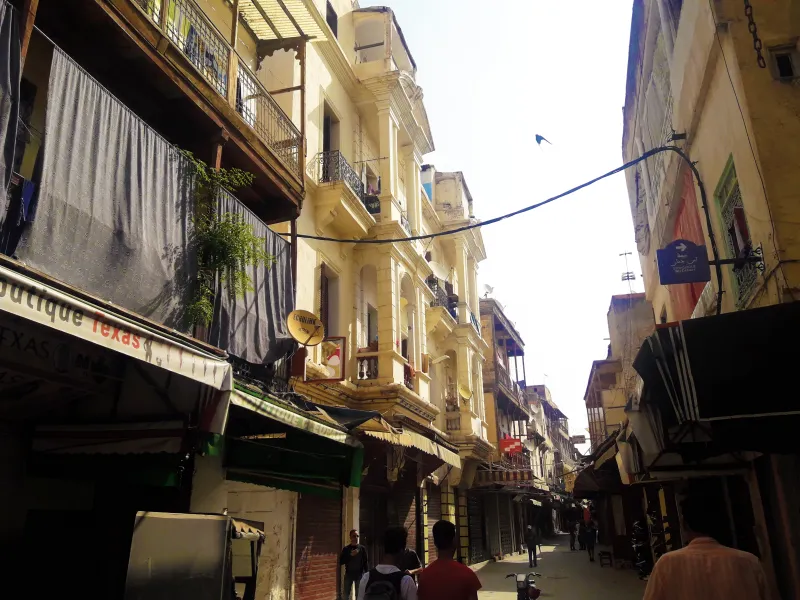
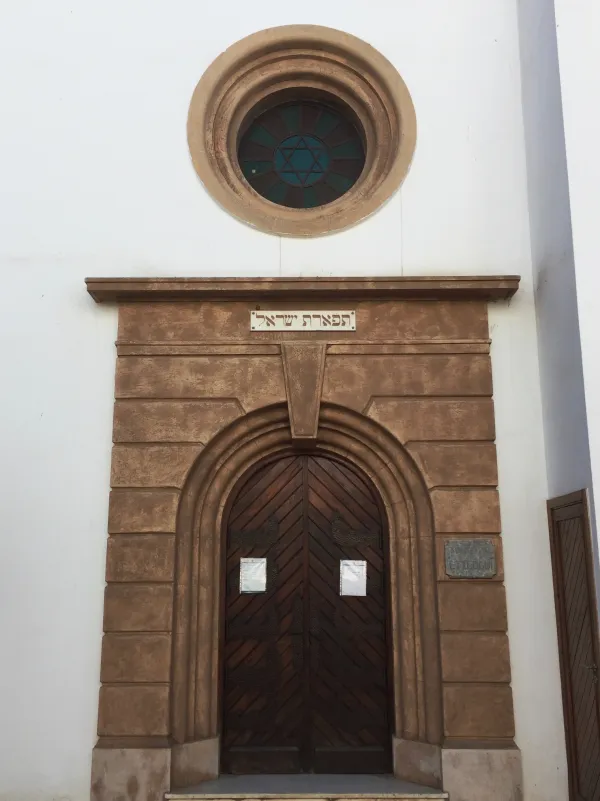
Walk through the narrow alleyways of the mellah in Marrakech and you will find something unexpected: Stars of David carved into doorways, Hebrew inscriptions worn almost smooth by centuries of Saharan wind, and synagogues that have stood since the medieval era. Morocco’s Jewish story is one of the longest and most complex in the entire diaspora — a history of coexistence, creativity, suffering, and survival that stretches back more than two thousand years.
Jewish communities in North Africa may predate the Roman destruction of the Second Temple in 70 CE. Some historians believe that Israelite traders and settlers arrived in the region as early as the time of King Solomon, establishing themselves among the indigenous Berber populations. By the Roman period, Jewish communities were well documented across what is now Morocco, Tunisia, and Algeria.
When the Spanish Inquisition drove hundreds of thousands of Jews from the Iberian Peninsula in 1492, many fled south across the Strait of Gibraltar to Morocco. These Sephardi refugees brought with them a distinct religious and cultural tradition — their own liturgy, legal rulings, cuisine, and language (Ladino). They joined the existing Jewish communities, sometimes called the Toshavim (“residents”), who had lived in Morocco for centuries before them. The encounter between the two groups was not always smooth. The newcomers often considered themselves more sophisticated; the established communities resented the intrusion. Over time, the two traditions blended into something distinctly Moroccan.
The Mellah: A World Within Walls
Beginning in the fifteenth century, Moroccan Jews were required to live in designated quarters known as mellahs. The word likely derives from the Arabic for “salt” — possibly because Jews were once tasked with salting the heads of executed criminals, though the etymology is debated.
The mellah was both a prison and a home. On one hand, it restricted Jewish movement and signaled second-class status. On the other, it created tightly knit communities where Jewish culture, learning, and religious life flourished behind high walls. Synagogues, rabbinical courts, schools, and markets all existed within the mellah. Some, like the mellah of Fez — established in 1438 and one of the oldest in the world — became centers of Jewish intellectual life.
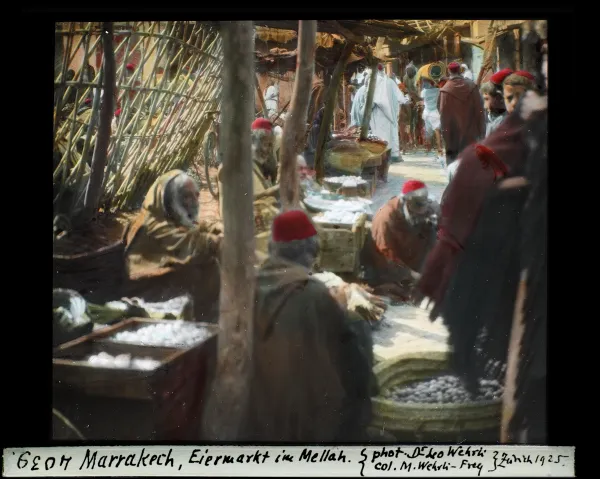
Life in the mellah was not easy. Jews faced periodic violence, heavy taxation, and legal restrictions. They were considered dhimmis — protected minorities under Islamic law — which meant they had a recognized legal status but were subordinate to Muslims. Yet within these constraints, Moroccan Jews developed a vibrant civilization. They became renowned as goldsmiths, silversmiths, textile traders, and diplomats. Some served as advisors and ambassadors to the sultans.
Sultan Mohammed V and World War II
The most celebrated chapter of Moroccan Jewish history involves Sultan Mohammed V during the Second World War. When the Vichy French administration imposed antisemitic laws in Morocco — including requirements for Jewish registration and restrictions on Jewish professions — the sultan is said to have declared: “There are no Jews in Morocco. There are only Moroccan citizens.”
Historians have debated the precise nature and extent of Mohammed V’s protection. It is true that the Vichy laws were implemented in Morocco, and some Jews suffered under them. But it is also true that the sultan resisted the most extreme measures, maintained personal relationships with Jewish leaders, and signaled that Moroccan Jews were his subjects and under his care. No Moroccan Jews were deported to Nazi death camps.
For Moroccan Jews, the story of Mohammed V is not merely a historical footnote — it is a foundational narrative, a source of pride and gratitude that shapes their identity to this day. Israel later honored him at Yad Vashem for his wartime stance.
Mimouna and the Richness of Moroccan Jewish Culture
Moroccan Jewish culture is extraordinarily rich — a fusion of Berber, Arab, Andalusian, and Hebrew traditions. Nowhere is this more evident than in the celebration of Mimouna, a festival unique to Moroccan Jewry.
Held on the evening after Passover ends, Mimouna is an explosion of hospitality. Tables are set with flowers, wheat, milk, honey, dates, and the beloved mufleta — thin, buttery crepes drizzled with honey. Doors are thrown open to neighbors, and in Morocco, it was traditional for Muslim neighbors to bring flour and butter to Jewish homes, since Jews had emptied their houses of leavened products for Passover.
The music of Moroccan Jews — Andalusian classical melodies blended with Hebrew liturgical poetry — remains hauntingly beautiful. Singers like Samy Elmaghribi and Rabbi David Buzaglo bridged the worlds of sacred and popular music, performing in Arabic, Hebrew, and Judeo-Arabic.
The Great Departure
In 1948, approximately 250,000 Jews lived in Morocco — the largest Jewish community in the Arab world. Within two decades, the vast majority had left.
The causes were multiple. The establishment of the State of Israel in 1948 inspired Zionist fervor and opened new possibilities. Periodic anti-Jewish violence — including riots in Oujda and Jerada in 1948 — shook the community’s sense of security. French decolonization and Moroccan independence in 1956 raised questions about the future. And organized emigration efforts, some clandestine, moved tens of thousands to Israel in operations that remain controversial — some families describe being pressured to leave, while others speak of fulfilling a lifelong dream.
By the 1970s, only a few thousand Jews remained. Many went to Israel, where Moroccan Jews became the largest group of Sephardi immigrants and faced significant discrimination from the European-origin establishment. Others settled in France, Canada, and Latin America.
What Remains
Today, roughly 2,000 Jews live in Morocco, mostly in Casablanca. Morocco has invested heavily in preserving Jewish heritage — restoring synagogues, opening museums, and incorporating Jewish history into the national narrative. The 2011 constitution explicitly recognized the “Hebraic” component of Moroccan identity. King Mohammed VI has continued his grandfather’s legacy of outreach to the Jewish community.
In Israel, more than a million citizens trace their roots to Morocco. Mimouna has become a national holiday of sorts, celebrated by Israelis of all backgrounds. Moroccan Jewish cuisine — from couscous with seven vegetables to dafina (the Sabbath stew) — has become a central part of Israeli food culture.
The story of Moroccan Jewry is ultimately one of belonging and loss. For two millennia, Jews were part of the fabric of Moroccan life — not always treated as equals, but never entirely strangers. When they left, something irreplaceable was lost on both sides. The mellahs stand largely empty now, their synagogues restored but quiet. But the heritage lives on — in the kitchens of Haifa, the synagogues of Paris, and the memories of a community that refuses to let its story be forgotten.
Frequently Asked Questions
How many Jews live in Morocco today?
Approximately 2,000 Jews remain in Morocco, mostly in Casablanca. Morocco is one of the few Arab countries where a visible Jewish community still exists, and the government actively preserves Jewish heritage sites.
What is Mimouna?
Mimouna is a uniquely Moroccan Jewish celebration held at the end of Passover. Families open their doors to neighbors — Jewish and Muslim alike — and serve tables laden with sweets, mufleta (thin crepes), and symbolic foods representing luck and prosperity.
Did the King of Morocco protect Jews during the Holocaust?
Yes. Sultan Mohammed V is widely credited with refusing to hand over Moroccan Jews to Vichy France during World War II. While historians debate the extent of his actions, the story is deeply meaningful to Moroccan Jews and remains a powerful symbol of Muslim-Jewish solidarity.
Sources & Further Reading
Related Articles
The Jewish Diaspora: 2,000 Years Across the Globe
How the destruction of the Second Temple scattered the Jewish people across continents, creating diverse communities united by faith.
Sephardi vs Ashkenazi: Two Streams of Jewish Life
Sephardi and Ashkenazi Jews share the same Torah but developed distinct languages, liturgies, foods, and customs across centuries of separation — two rivers from one source.
Sephardic Cuisine: The Mediterranean Flavors of Jewish Cooking
Spiced, vibrant, and sun-drenched — Sephardic cuisine draws from the kitchens of Spain, Turkey, Morocco, and the Middle East, creating a Jewish food tradition that rivals any in the world.