Understanding Antisemitism: History, Forms, and the Fight Against Hatred
Antisemitism — hatred of Jews — is one of the oldest and most persistent forms of prejudice. From ancient expulsions to modern online hate, understanding its roots is the first step toward fighting it.
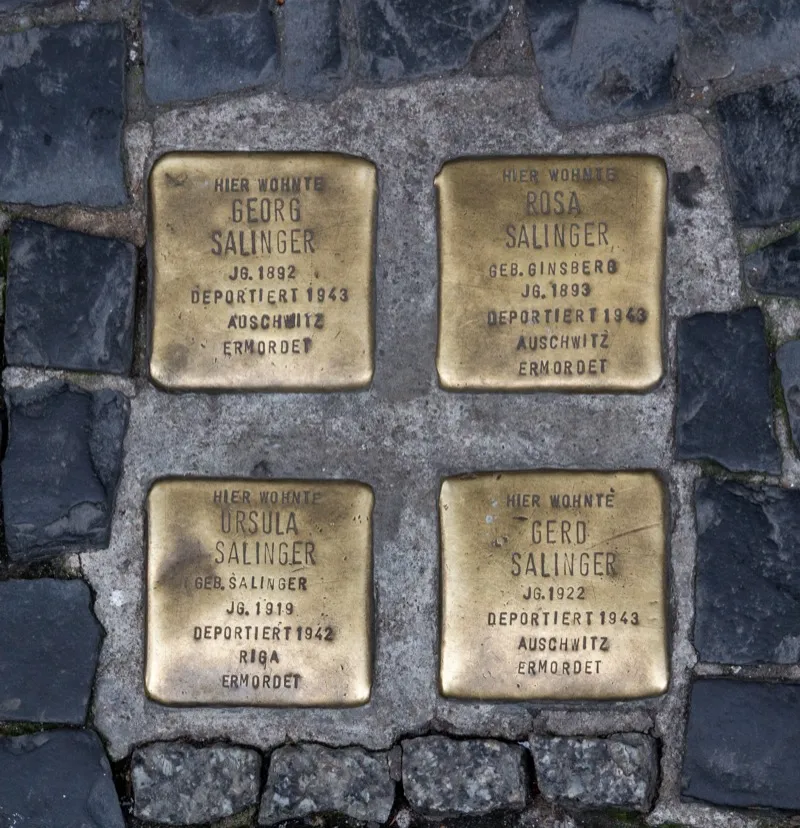
A Hatred Unlike Any Other
There is a question that haunts Jewish history, surfacing in every century and on every continent where Jews have lived: Why? Why has this particular hatred persisted for so long, adapting to each era’s prejudices, surviving the collapse of the empires that nurtured it, reinventing itself in forms that would be unrecognizable to earlier generations — and yet remaining, at its core, disturbingly the same?
Antisemitism is not merely prejudice. It is one of the oldest and most durable hatreds in human civilization — a shape-shifting hostility that has blamed Jews for being too rich and too poor, too powerful and too weak, too clannish and too assimilated. Its persistence defies easy explanation, and its consequences have been catastrophic.
To understand antisemitism, we must trace its long and painful history — not to dwell in darkness, but because recognizing hatred’s patterns is the only way to disrupt them.
What Is Antisemitism? The IHRA Definition
The most widely adopted definition comes from the International Holocaust Remembrance Alliance (IHRA), which defines antisemitism as “a certain perception of Jews, which may be expressed as hatred toward Jews.” It encompasses rhetorical and physical acts directed at Jewish or non-Jewish individuals, their property, community institutions, and religious facilities.
The IHRA definition includes examples such as calling for or justifying the killing of Jews, making stereotypical allegations about Jewish power or control, accusing Jews of dual loyalty, and denying or minimizing the Holocaust.
This definition is not without debate. Some scholars argue it is too broad, particularly regarding criticism of Israel. Others maintain it is essential for identifying and combating modern antisemitism. What is clear is that any framework must distinguish between legitimate political criticism and rhetoric that draws on centuries-old anti-Jewish tropes.
Ancient Roots: Egypt, Greece, and Rome
Anti-Jewish hostility predates Christianity. In the ancient world, Jews’ distinctive religious practices — monotheism, Sabbath observance, dietary laws, circumcision — set them apart from their neighbors.
- Egypt: The Hellenistic writer Manetho (3rd century BCE) spread hostile myths about Jewish origins. In 38 CE, a deadly pogrom erupted in Alexandria, one of the earliest recorded anti-Jewish riots.
- Greece and Rome: Greek and Roman writers like Apion and Tacitus mocked Jewish customs. The Roman destruction of the Second Temple in 70 CE and the crushing of the Bar Kokhba revolt (135 CE) scattered the Jewish people into a diaspora that would last two millennia.
These early hostilities were primarily cultural — resentment of Jewish “separateness.” But with the rise of Christianity, something far more dangerous took shape.
Christian Antisemitism: The Deicide Charge and Blood Libels
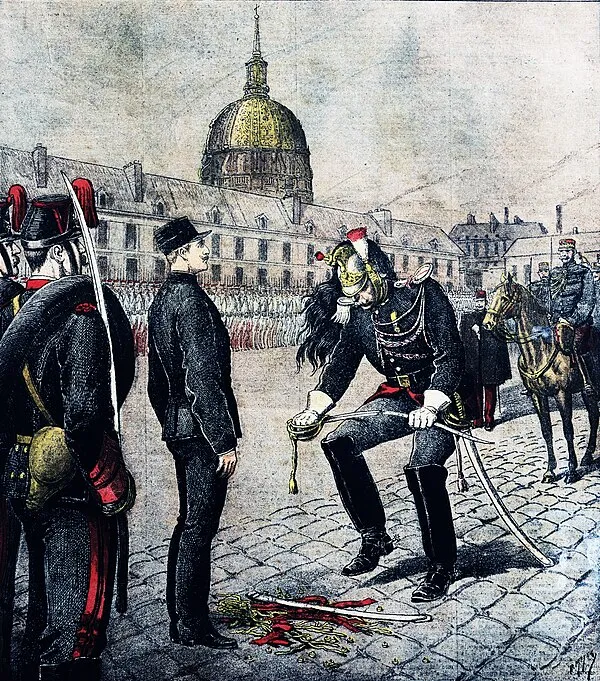
The most devastating strain of antisemitism grew from a theological accusation: that the Jewish people bore collective guilt for the crucifixion of Jesus — the so-called deicide charge. Though the Roman authorities carried out the execution, early Church writings increasingly placed blame on “the Jews” as a whole, a charge that would echo through nearly two thousand years of persecution.
This theological hostility produced real-world horrors:
- Blood libels — the false accusation that Jews murdered Christian children to use their blood in rituals — first appeared in 12th-century England and spread across Europe, sparking massacres for centuries.
- Host desecration charges — Jews were accused of stabbing communion wafers, supposedly causing them to bleed. Entire communities were burned alive on the basis of these fabrications.
- Forced conversions, expulsions, and ghettos: Jews were expelled from England (1290), France (1306, 1394), and most devastatingly from Spain (1492). Those who remained in Christian Europe were often confined to walled ghettos, forced to wear identifying badges, and barred from most professions.
The Fourth Lateran Council (1215) mandated that Jews wear distinctive clothing — a medieval forerunner of the Nazi yellow star.
It is important to note that these accusations were entirely false. The Catholic Church formally repudiated the deicide charge in 1965 with the declaration Nostra Aetate, and many Christian denominations have since worked to confront this painful legacy through interfaith dialogue.
The Protocols of the Elders of Zion
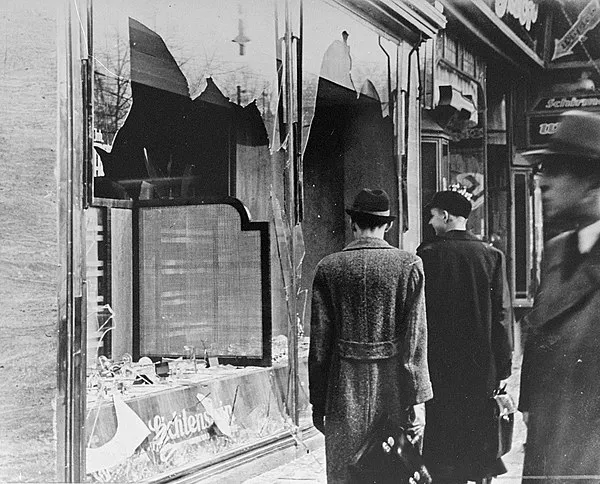
In the early 20th century, antisemitism took on a new and virulent form with the publication of The Protocols of the Elders of Zion — a fabricated document purporting to reveal a secret Jewish conspiracy for world domination. First published in Russia around 1903, the Protocols were quickly exposed as a forgery, plagiarized from earlier political satire. Yet the damage was incalculable.
The Protocols were translated into dozens of languages and distributed worldwide. Henry Ford published them in the United States. The Nazis used them as propaganda. Today, they remain widely circulated in parts of the Middle East and on extremist websites globally. The conspiracy theory they represent — that Jews secretly control governments, banks, and media — is the template for much modern antisemitism.
Racial Antisemitism and the Holocaust
The 19th century brought a critical transformation: antisemitism shifted from a religious prejudice to a racial one. Pseudoscientific racial theories classified Jews as a distinct and inferior race — not a religious group one could leave by converting, but a biological category from which there was no escape.
This racial antisemitism reached its ultimate expression in the Nazi genocide. The Holocaust — the systematic murder of six million Jews — was the culmination of centuries of hatred, enabled by modern technology and bureaucratic efficiency. One-third of the world’s Jewish population was annihilated.
The Holocaust did not emerge from nowhere. It grew from soil that had been prepared over centuries — by deicide charges, by blood libels, by the Protocols, by the casual acceptance of anti-Jewish hostility as a normal part of European life.
Modern Antisemitism: New Platforms, Old Hatred
Antisemitism did not end with the Holocaust. It has adapted to the modern world, manifesting in forms that are sometimes difficult to recognize:
- Online hate: Social media has become a primary vector for antisemitic content, from Holocaust denial to conspiracy theories about Jewish control. Algorithms can amplify this content, exposing millions to hatred.
- Campus incidents: Jewish students on university campuses have reported increases in antisemitic harassment, vandalism, and social exclusion.
- Political antisemitism: Anti-Jewish tropes appear across the political spectrum — on the far right through white supremacist ideology, and on the far left through rhetoric that conflates Jews with Israeli government policies.
- Conspiracy theories: From QAnon to COVID-era misinformation, conspiracy movements frequently recycle antisemitic tropes about secret Jewish control.
- Violent attacks: The 21st century has seen deadly attacks on synagogues and Jewish institutions worldwide, including Pittsburgh (2018), Halle (2019), and Colleyville (2022).
How to Respond: Recognition, Education, Solidarity
Fighting antisemitism requires more than awareness — it demands action:
- Learn to recognize it. Antisemitism often hides behind coded language: “globalists,” “international bankers,” or claims about shadowy elites. Understanding these codes helps identify hatred when it appears.
- Speak up. Silence in the face of antisemitic comments — whether in conversation, at work, or online — signals acceptance. Bystander intervention matters.
- Educate. Holocaust education, interfaith dialogue, and exposure to Jewish culture and history reduce prejudice. Programs that bring together people of different backgrounds have measurable impact.
- Report. Antisemitic incidents should be reported to organizations like the Anti-Defamation League (ADL) in the US, the Community Security Trust (CST) in the UK, or equivalent agencies in other countries.
- Build alliances. The fight against antisemitism is strongest when it is part of a broader commitment to combating all forms of hatred and discrimination. Coalition-building with other communities facing prejudice strengthens everyone.
The Weight of Vigilance
Walk through any Jewish community today and you will notice something that should trouble us all: security cameras at synagogue entrances, armed guards at Jewish schools, concrete barriers outside community centers. These are not relics of another era. They are responses to a threat that remains active and evolving.
The story of antisemitism is not one of inevitable defeat or inevitable victory. It is a story of human choices — the choice to scapegoat or to understand, to remain silent or to speak, to look away or to act. Every generation faces this choice anew.
Understanding the history of antisemitism is not an academic exercise. It is a moral obligation — because hatred that is not confronted does not fade. It waits. And it returns.
Frequently Asked Questions
What is the IHRA definition of antisemitism?
The International Holocaust Remembrance Alliance defines antisemitism as 'a certain perception of Jews, which may be expressed as hatred toward Jews.' It includes rhetorical and physical acts directed at Jewish individuals, their property, community institutions, or religious facilities.
What is the difference between anti-Zionism and antisemitism?
Criticism of Israeli government policies is not inherently antisemitic. However, the IHRA notes that applying double standards to Israel, denying the Jewish people's right to self-determination, or using classic antisemitic tropes in political criticism can cross the line into antisemitism. The distinction is often debated.
How can I report antisemitism?
In the United States, incidents can be reported to the Anti-Defamation League (ADL) and local law enforcement. In the UK, contact the Community Security Trust (CST). Many countries have dedicated agencies. Online hate can be reported to platform moderators and organizations like the Online Hate Prevention Institute.
Sources & Further Reading
Related Articles
The Jewish Diaspora: 2,000 Years Across the Globe
How the destruction of the Second Temple scattered the Jewish people across continents, creating diverse communities united by faith.
The Golden Age of Jewish Spain
For centuries, Jews in Muslim and Christian Spain created an extraordinary civilization of poetry, philosophy, science, and interfaith dialogue.
A History of Antisemitism: From Ancient World to Modern Times
A comprehensive look at the history of antisemitism — from ancient Egyptian and Greek hostility through medieval blood libels, expulsions, the Dreyfus Affair, pogroms, the Holocaust, and modern manifestations.
The Holocaust: Remembering the Six Million
The systematic murder of six million Jews during World War II — the darkest chapter in human history and its lasting impact on Jewish identity.
The Inquisition and the Jews: Conversos, Crypto-Jews, and Survival
The story of the Spanish and Portuguese Inquisitions — forced conversion, crypto-Judaism, auto-da-fé, and the remarkable survival of secret Jewish communities across five centuries.