Jerusalem: 3,000 Years of Faith, Conflict, and Hope
For three millennia, Jerusalem has been the spiritual heart of the Jewish people — and a city sacred to three faiths. Its story is one of devotion, destruction, and enduring hope.
The City That Holds the World’s Heart
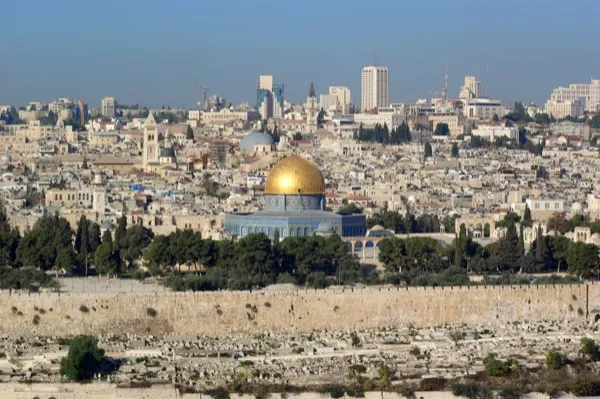
Stand on the Mount of Olives at sunset, looking west across the Kidron Valley, and Jerusalem spreads before you like a page from a very old book — one that has been read by billions but understood by no one completely. The golden Dome of the Rock catches the last light. The ancient stones of the Old City walls glow amber. Somewhere below, the sound of a muezzin’s call mingles with church bells and the murmur of prayer at the Western Wall. Three faiths, three voices, rising from the same small piece of earth.
No city on the planet carries a heavier weight of meaning. Jerusalem has been conquered, destroyed, rebuilt, divided, and reunified. It has been the capital of kingdoms and the object of crusades. It has inspired some of humanity’s most transcendent art and some of its worst violence. And for the Jewish people, it has been, across thirty centuries of exile and return, the place toward which all prayer faces — the city they never stopped longing for, even when it seemed they would never see it again.
David’s City: The Founding
Jerusalem’s Jewish story begins around 1000 BCE, when King David conquered the Jebusite city and made it the capital of the united Israelite kingdom. It was a brilliant political choice — the city sat on the border between the northern and southern tribes, belonging to neither, and thus could serve as a neutral capital for all.
David brought the Ark of the Covenant to Jerusalem, transforming it from a hilltop fortress into the spiritual center of Israelite life. According to the Torah, David yearned to build a permanent house for God, but that task fell to his son.
Solomon built the First Temple around 960 BCE on Mount Moriah — the place where, tradition holds, Abraham had bound Isaac and where Jacob dreamed of a ladder reaching heaven. The Temple was a marvel: cedar from Lebanon, gold overlaying the inner sanctuary, and at its heart the Holy of Holies, where God’s presence was said to dwell on earth.
For nearly four centuries, the Temple stood as the axis of Jewish worship. Three times a year — on Passover, Shavuot, and Sukkot — pilgrims from across the land streamed to Jerusalem.
Destruction, Exile, and Return
In 586 BCE, the Babylonian king Nebuchadnezzar destroyed the First Temple and deported much of the Jewish population to Babylon. By the rivers of Babylon, the exiles wept. “If I forget you, O Jerusalem,” the Psalmist wrote, “let my right hand forget its skill” (Psalm 137:5). This verse became the eternal expression of Jewish longing.
When the Persian king Cyrus the Great permitted the Jews to return in 538 BCE, they rebuilt the Temple — the Second Temple — though many who remembered Solomon’s glorious original wept at the more modest replacement. Under Herod the Great (37–4 BCE), the Temple was magnificently expanded, its retaining walls creating the vast platform whose remnant is the Western Wall.
In 70 CE, the Romans besieged Jerusalem and destroyed the Second Temple. The historian Josephus recorded scenes of unimaginable horror — famine so severe that a mother consumed her own child, streets running with blood, the Temple engulfed in flames despite Titus’s alleged order to spare it. The destruction is mourned every year on Tisha B’Av, the saddest day in the Jewish calendar.
Centuries of Conquest
After the Roman destruction, Jerusalem passed through the hands of empire after empire, each leaving its mark:
- Byzantine period (4th–7th centuries): Christians built the Church of the Holy Sepulchre over the site believed to be Jesus’s tomb. Jews were largely barred from the city.
- Muslim conquest (638 CE): Caliph Umar captured Jerusalem and permitted Jews to return. The Dome of the Rock was built on the Temple Mount in 691 CE, and Al-Aqsa Mosque shortly after.
- Crusader period (1099–1187): European Crusaders captured Jerusalem in a massacre that killed Muslims, Jews, and Eastern Christians alike. Saladin recaptured the city in 1187 and treated its inhabitants with notable mercy.
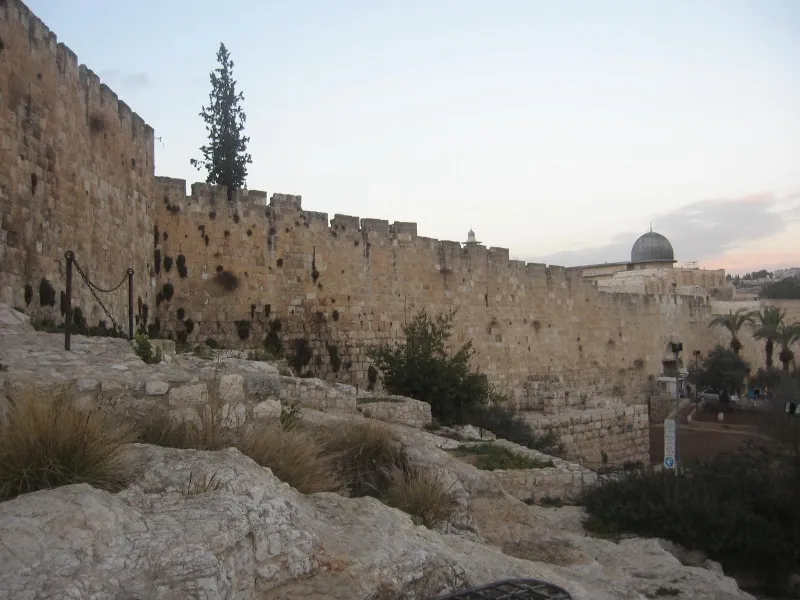
- Mamluk and Ottoman periods (1260–1917): Under the Ottoman Empire, Sultan Suleiman the Magnificent rebuilt Jerusalem’s walls — the same walls that frame the Old City today. Jewish communities persisted, particularly in the narrow lanes around the Western Wall.
Throughout these centuries, no matter who controlled the city, Jews maintained a continuous presence and an unbroken spiritual connection. Every Passover seder ends with the words: “Next year in Jerusalem.”
The British Mandate, Division, and Reunification
World War I brought the collapse of the Ottoman Empire. The British Mandate (1920–1948) saw increasing Jewish immigration and rising tensions between Jewish and Arab communities. In 1947, the United Nations proposed partitioning Palestine, with Jerusalem designated as an international city.
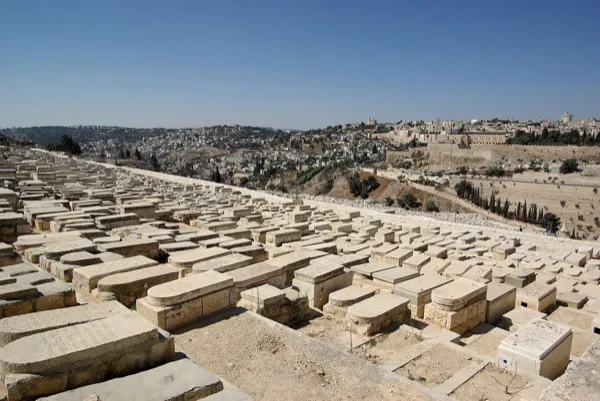
When Israel declared independence in 1948, war erupted. The fighting left Jerusalem divided: Israel controlled the western part; Jordan controlled the Old City and East Jerusalem, including the Western Wall and the Temple Mount. For nineteen years (1948–1967), Jews were barred from their holiest sites. Synagogues in the Jewish Quarter were destroyed. Ancient cemeteries on the Mount of Olives were desecrated.
In the Six-Day War of June 1967, Israeli forces captured the Old City. Paratroopers reached the Western Wall, and their commander, Motta Gur, radioed the words that echoed through the Jewish world: “The Temple Mount is in our hands.” Soldiers wept at the Wall. The chief military rabbi, Shlomo Goren, blew the shofar.
For many Jews, this was a moment of profound spiritual homecoming — the reversal of two millennia of exile. For Palestinians, it marked the beginning of an occupation that continues to generate deep pain and political conflict. Both narratives are real, and both carry enormous weight.
The Holy Sites
Jerusalem’s Old City, barely one square kilometer, holds sites sacred to half the world’s population:
- The Western Wall (Kotel): The last remnant of the Second Temple’s retaining wall, and Judaism’s holiest accessible prayer site. Millions visit annually.
- The Temple Mount / Haram al-Sharif: Sacred to both Jews (as the site of the Temple) and Muslims (home to the Dome of the Rock and Al-Aqsa Mosque). Its status is the single most sensitive religious and political issue in the conflict.
- The Church of the Holy Sepulchre: Venerated by Christians as the site of Jesus’s crucifixion and resurrection.
- The Mount of Olives: Home to the world’s oldest continuously used Jewish cemetery. Jewish tradition holds that the resurrection of the dead will begin here.
The Modern Capital Debate
Israel considers Jerusalem its “eternal and undivided capital.” The Knesset (parliament), Supreme Court, and President’s residence are located there. In 2018, the United States moved its embassy from Tel Aviv to Jerusalem — a decision praised by Israel and condemned by Palestinians and many in the international community.
Palestinians claim East Jerusalem as the capital of a future Palestinian state. Most countries and international organizations consider East Jerusalem occupied territory and maintain their embassies in Tel Aviv.
The city’s future remains one of the core issues in any potential peace agreement. Proposals have ranged from international administration to shared sovereignty to creative arrangements in which both peoples could claim the city as their capital.
Next Year in Jerusalem
For three thousand years, Jerusalem has been more than a city. It has been a promise — whispered in Babylonian exile, smuggled in letters from medieval ghettos, declared at Passover tables in every corner of the diaspora. It is the place where heaven and earth are said to meet, where history accumulates in visible layers, where the past is never truly past.
To walk through Jerusalem today is to feel the full weight of that history pressing up through the stones. And yet the city is also vibrantly, insistently alive — a place of markets and argument, of coffee and prayer, of children playing in courtyards that have held children for a hundred generations.
Jerusalem does not resolve into a single story. It holds many stories, some in harmony and some in bitter conflict. Perhaps that is the truest thing about a city that has always meant more than any one people could contain — and that continues, in its stubborn, luminous way, to hold the hopes of millions.
Frequently Asked Questions
Why is Jerusalem holy to Jews?
Jerusalem is where King Solomon built the First Temple — the dwelling place of God's presence on earth — around 960 BCE. The Temple Mount remains the holiest site in Judaism. Jews have prayed facing Jerusalem for over 2,000 years, and the city appears in Jewish liturgy, blessings, and the Passover declaration 'Next year in Jerusalem.'
Why is Jerusalem sacred to three religions?
For Jews, it is the site of the Temple and the spiritual capital of the Jewish people. For Christians, it is where Jesus was crucified, buried, and (according to Christian belief) resurrected. For Muslims, it is the location of Al-Aqsa Mosque and the Dome of the Rock, from which the Prophet Muhammad is believed to have ascended to heaven.
What is the status of Jerusalem today?
Israel declared Jerusalem its capital and controls the entire city. Palestinians claim East Jerusalem as the capital of a future state. Most countries maintain embassies in Tel Aviv, though some (including the United States since 2018) have recognized Jerusalem as Israel's capital. The city's status remains one of the most sensitive issues in the Israeli-Palestinian conflict.
Sources & Further Reading
Related Articles
Ancient Israel: From Abraham to the Kingdoms
The foundational story of the Jewish people — from the call of Abraham through the united monarchy of David and Solomon.
The Birth of Modern Israel
From the rise of Zionism to the declaration of independence in 1948 — the story of how the Jewish homeland was reestablished.
Tisha B'Av: The Saddest Day in the Jewish Calendar
On the ninth of Av, Jews mourn the destruction of both Temples and centuries of tragedy — through fasting, lamentation, and the haunting words of the Book of Lamentations.