Tisha B'Av: The Saddest Day in the Jewish Calendar
On the ninth of Av, Jews mourn the destruction of both Temples and centuries of tragedy — through fasting, lamentation, and the haunting words of the Book of Lamentations.
A Dimly Lit Room
The synagogue is almost dark. The regular lights have been turned off or dimmed, and only a few candles or low bulbs cast shadows across the room. The congregants are not sitting in their usual seats — they are on the floor, or on low stools and overturned benches, as if the dignity of normal life has been stripped away. Some have removed their leather shoes and stand in socks or canvas slippers. There is no greeting, no small talk. The air is heavy with something ancient and unresolved. And then a single voice begins to chant, slowly, mournfully, from a scroll most Jews encounter only once a year: the Book of Lamentations. Eicha yoshva vadad ha’ir rabati am — “How lonely sits the city that was full of people.”
This is Tisha B’Av — the ninth day of the Hebrew month of Av — and it is the saddest day in the Jewish year.
What Is Tisha B’Av?
Tisha B’Av (literally “the ninth of Av”) is a day of communal mourning and fasting that commemorates the destruction of both the First Temple in Jerusalem by the Babylonians in 586 BCE and the Second Temple by the Romans in 70 CE. But it has become more than a memorial for two ancient buildings. Over the centuries, Tisha B’Av has absorbed the weight of countless Jewish catastrophes, becoming what some have called the “black hole” of the Jewish calendar — a single day onto which the accumulated grief of millennia is projected.
The day falls in mid-summer, usually in July or August, and stands in stark contrast to the bright, warm world outside. While the sun blazes, Jews sit in darkness and mourn.
The Five Tragedies
The Talmud (Taanit 26b) lists five calamities that tradition says befell the Jewish people on or around the ninth of Av:
- The sin of the spies — When the Israelites in the wilderness received the negative report of the spies sent to scout the land of Canaan, they wept and lost faith. God decreed that generation would not enter the Promised Land.
- The destruction of the First Temple (586 BCE) — The Babylonian army under Nebuchadnezzar breached the walls of Jerusalem and burned Solomon’s Temple to the ground. The Jewish population was exiled to Babylon.
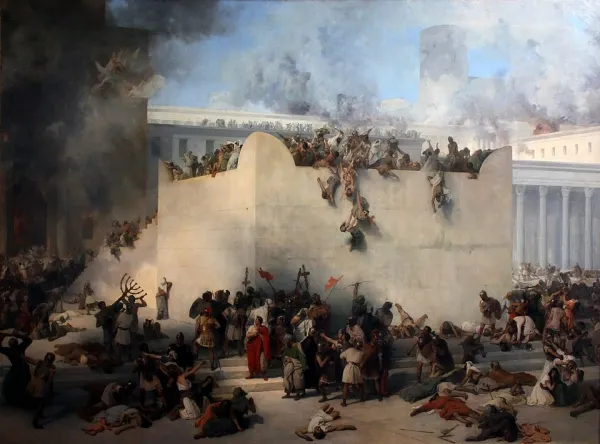
- The destruction of the Second Temple (70 CE) — Roman legions under Titus besieged Jerusalem, destroyed the Second Temple, and slaughtered or enslaved hundreds of thousands. The Jewish people entered a dispersion that would last nearly two thousand years.
- The fall of Betar (135 CE) — The last stronghold of the Bar Kokhba revolt was crushed by Rome, ending the final Jewish military resistance in ancient Israel.
- The plowing of Jerusalem — The Romans plowed the Temple Mount and the surrounding area, erasing the physical traces of Jewish presence.
Later generations added to this litany. The expulsion of Jews from England in 1290, the expulsion from Spain in 1492, the outbreak of World War I in 1914 — all fell on or near Tisha B’Av. During the Holocaust, deportations from the Warsaw Ghetto to Treblinka began on the eve of Tisha B’Av in 1942. The day has become a vessel for collective memory, a point on the calendar where the Jewish people confront the full scope of their suffering.
The Fast
Like Yom Kippur, Tisha B’Av is a full-day fast — approximately 25 hours, from sunset on the eighth of Av to nightfall on the ninth. It is one of only two fasts in the Jewish calendar that lasts this long. The restrictions mirror those of Yom Kippur:
- No eating or drinking
- No bathing for pleasure
- No wearing leather shoes
- No applying lotions or perfumes
- No marital relations
But while Yom Kippur’s fast carries a sense of spiritual elevation — a striving toward purity — the Tisha B’Av fast is rooted in grief. You do not eat because you are mourning. The body’s discomfort is meant to echo the anguish of a people who watched their holiest place burn.
Those who are ill, pregnant, nursing, or whose health would be endangered are exempt from fasting. As always in Jewish law, the preservation of life takes precedence.
Eicha: The Book of Lamentations
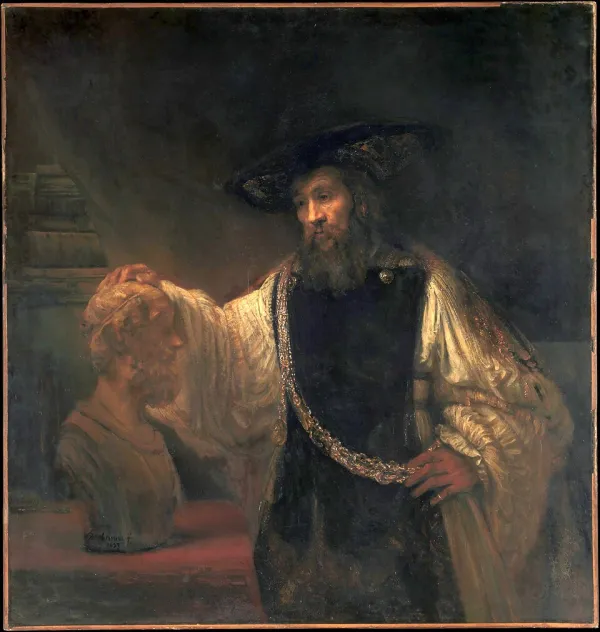
The emotional center of Tisha B’Av is the public reading of Eicha (Lamentations), a slim biblical book attributed by tradition to the prophet Jeremiah, who witnessed the destruction of the First Temple. Eicha is read on the evening of Tisha B’Av — usually by candlelight or in a dimly lit synagogue — in a distinctive, mournful chant unlike any other melody in Jewish liturgy.
The book consists of five chapters, four of which are acrostics following the Hebrew alphabet. Its poetry is raw and unflinching:
How lonely sits the city that was full of people! She has become like a widow… She weeps bitterly in the night, and her tears are on her cheeks. She has no comforter among all her lovers.
Eicha does not flinch from describing starvation, violence, and despair. It is not easy to listen to. But that is precisely the point. Tisha B’Av asks the Jewish community to sit with pain rather than rush past it — to remember that suffering is part of the story, even if it is not the whole story.
Kinot: The Elegies
Following the reading of Eicha, and continuing through the morning service the next day, communities recite kinot — liturgical elegies and poems of mourning composed over many centuries. Some kinot date back to the early medieval period; others were written in response to the Crusades, the expulsion from Spain, or the pogroms of Eastern Europe.
In recent decades, new kinot have been composed to mourn the victims of the Holocaust. These additions reflect a living tradition — Tisha B’Av is not a museum piece but an evolving expression of Jewish grief and resilience.
The kinot can be long and demanding. In many Orthodox communities, the recitation continues for hours. Some modern communities have shortened the service or added study sessions and readings to make the day more accessible.
The Three Weeks
Tisha B’Av does not arrive without warning. It is preceded by a three-week period of increasing mourning that begins on the 17th of Tammuz (a minor fast day marking when the walls of Jerusalem were first breached) and intensifies during the Nine Days leading up to Tisha B’Av. During this period:
- Weddings and celebrations are not held
- Music is avoided
- Haircuts are not taken (in Orthodox practice)
- During the Nine Days, meat and wine are not consumed (except on Shabbat)
- Swimming and bathing for pleasure are restricted
The gradual build-up mirrors the historical siege of Jerusalem — a slow tightening, a growing sense of dread, until the day of destruction itself arrives.
Customs of the Day
Beyond the fast and the readings, Tisha B’Av is marked by several distinctive customs:
- Sitting low — Mourners sit on the floor or on low chairs until midday, as one does during shiva (the seven-day mourning period after a death). The posture is a physical expression of being brought low by grief.
- No Torah study — Because studying Torah is considered a joyful activity, it is restricted on Tisha B’Av (except for sorrowful passages such as Job, Lamentations, and the destruction narratives in Jeremiah).
- The parochet (ark curtain) is removed — The bare ark echoes the emptiness of the destroyed Temple.
- Tefillin are not worn in the morning service — They are considered an “adornment” and are delayed until the afternoon, a sign of the depth of mourning.
- Greetings are avoided — People refrain from greeting one another, as one does in a house of mourning.
Across Communities
While the core observance of Tisha B’Av is consistent, different Jewish communities bring their own traditions:
- Sephardic communities often have distinctive kinot and melodies, some composed by the great poets of medieval Spain and North Africa. The experience of expulsion from Spain in 1492 — which fell on Tisha B’Av — gives the day a particular resonance in Sephardic memory.
- Yemenite Jews have preserved ancient liturgical traditions for Tisha B’Av that differ from both Ashkenazi and Sephardic rites, with unique chants and readings.
- Ethiopian Jews (Beta Israel) observed their own mourning traditions connected to the destruction of the Temple, reflecting their long isolation from other Jewish communities.
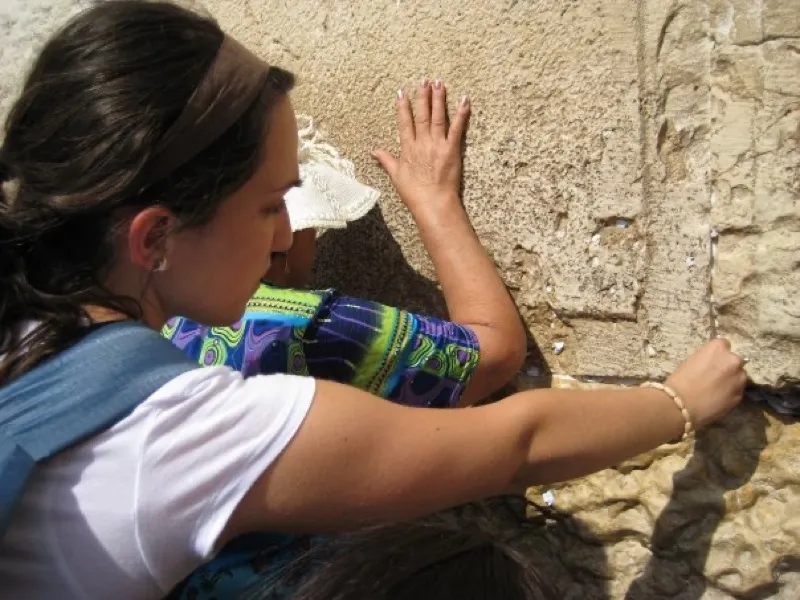
- In Israel, Tisha B’Av is a recognized day of mourning. Restaurants and places of entertainment close. The national mood shifts. At the Western Wall — the last remaining retaining wall of the Temple Mount — thousands gather to pray and weep at the very site of the destruction.
Some modern thinkers have questioned whether Tisha B’Av should still be observed in its full mourning form now that the State of Israel exists and Jews have returned to sovereignty in their ancient land. The Talmud itself imagines a future in which the fast days of mourning will become days of joy. Yet for most observant Jews, the Temple has not been rebuilt, the messianic age has not arrived, and the long history of Jewish suffering — including the Holocaust — demands continued remembrance.
And so each summer, as the world outside basks in warmth and light, Jews around the world dim the lights, sit on the floor, and listen again to the ancient words of Lamentations. It is uncomfortable. It is meant to be. In a tradition that insists on the sanctity of memory, Tisha B’Av is the day when the Jewish people refuse to look away from their deepest wounds — and in doing so, find a strange and stubborn kind of strength.
Frequently Asked Questions
What happened on Tisha B'Av?
According to tradition, both the First Temple (586 BCE) and Second Temple (70 CE) were destroyed on the 9th of Av. Other tragedies associated with this date include the expulsion of Jews from Spain in 1492, the beginning of World War I, and various pogroms and persecutions throughout history.
How long is the Tisha B'Av fast?
The Tisha B'Av fast lasts approximately 25 hours, from sunset to nightfall the following day — the same length as Yom Kippur. It includes abstaining from food, drink, bathing, leather shoes, and marital relations.
Is Tisha B'Av still observed?
Yes, Tisha B'Av is widely observed across Jewish communities. Orthodox Jews observe all restrictions strictly. Conservative and some Reform Jews also observe it. Some secular Israelis mark it as a day of national reflection. There is rabbinic discussion about whether Tisha B'Av should still be observed now that Israel exists.
Test Your Knowledge
Think you know this topic? Try our quiz!
Take the Jewish Holidays: Advanced Quiz →Sources & Further Reading
Related Articles
Ancient Israel: From Abraham to the Kingdoms
The foundational story of the Jewish people — from the call of Abraham through the united monarchy of David and Solomon.
The Holocaust: Remembering the Six Million
The systematic murder of six million Jews during World War II — the darkest chapter in human history and its lasting impact on Jewish identity.
Jerusalem: 3,000 Years of Faith, Conflict, and Hope
For three millennia, Jerusalem has been the spiritual heart of the Jewish people — and a city sacred to three faiths. Its story is one of devotion, destruction, and enduring hope.
Yom HaShoah: Holocaust Remembrance Day
Each spring, a siren sounds across Israel and the nation stands still — remembering the six million. Yom HaShoah is a day of solemn witness, survivor testimony, and the sacred obligation to never forget.
Yom Kippur: The Day of Atonement
The holiest day in the Jewish calendar — a 25-hour fast devoted to prayer, repentance, and spiritual renewal.