Shavuot: The Festival of Weeks
Seven weeks after Passover, the Jewish world celebrates the giving of the Torah at Mount Sinai — with all-night study, dairy feasts, and the reading of the Book of Ruth.
Two in the Morning
It is two o’clock in the morning and the study hall is full. Coffee cups crowd the edges of long tables. A low hum of voices fills the room — pairs of students leaning over open books, debating a passage from the Talmud, pausing to refill their cups, then diving back in. Somewhere across the hall, a rabbi is giving a lecture on the mystical dimensions of the Ten Commandments to an audience fighting sleep and winning. Children who were promised they could stay up all night have long since collapsed on couches in the hallway. Outside, the sky is beginning to lighten, and the first birds are stirring. Nobody is leaving. This is Tikkun Leil Shavuot — the custom of studying Torah through the entire night — and it is one of the most distinctive and beloved traditions in the Jewish calendar.
This is Shavuot, the Festival of Weeks, and the scene playing out here is repeated in synagogues, yeshivot, community centers, and living rooms across the Jewish world. It is a holiday that celebrates the most transformative moment in Jewish history: the giving of the Torah at Mount Sinai.
What Is Shavuot?
Shavuot (Hebrew for “weeks”) falls on the 6th of the Hebrew month of Sivan, exactly 49 days — seven full weeks — after Passover. In Israel it is observed for one day; in the diaspora, for two.
The holiday carries a dual identity. In its agricultural dimension, Shavuot is Chag HaKatzir — the Festival of the Harvest — marking the wheat harvest in the Land of Israel and the bringing of the bikkurim, the first fruits, to the Temple in Jerusalem. In its spiritual dimension, Shavuot is Zman Matan Torateinu — the Time of the Giving of Our Torah — commemorating the revelation at Sinai when God gave the Torah to the Israelites.
These two meanings are not in tension. They are two sides of the same coin: the land yields its bounty, and the people receive the instruction for how to live in it justly. Physical sustenance and spiritual purpose arrive together.
Counting the Omer
The bridge between Passover and Shavuot is a ritual called Sefirat HaOmer — the Counting of the Omer. Beginning on the second night of Passover, Jews count each of the 49 days leading up to Shavuot. Each evening, a blessing is recited and the count is announced: “Today is the seventeenth day, which is two weeks and three days of the Omer.”
The Omer period originally referred to the barley offering (omer) brought to the Temple. Over the centuries, the counting took on deeper spiritual significance. The journey from Egypt to Sinai was not instantaneous — it required seven weeks of preparation, of transformation from a nation of slaves into a people ready to receive divine law. The Kabbalists assigned each of the 49 days a unique combination of spiritual qualities, turning the Omer count into a daily exercise in self-refinement.
The Omer period is also traditionally a time of semi-mourning. Weddings, haircuts, and live music are avoided during most of the 49 days, in memory of a plague that struck the students of Rabbi Akiva. The 33rd day of the Omer, known as Lag BaOmer, is a joyous exception when the restrictions are lifted and celebrations — including bonfires in Israel — abound.
Tikkun Leil Shavuot: The All-Night Study Session
The most iconic Shavuot practice is the Tikkun Leil Shavuot — staying awake the entire first night of the holiday to study Torah. The custom was popularized by the Kabbalists of 16th-century Safed, led by Rabbi Yosef Karo and Rabbi Shlomo Alkabetz (composer of the Shabbat hymn Lecha Dodi).
According to the Midrash, the Israelites overslept on the morning of the revelation at Sinai, and God had to wake them with thunder and lightning. To rectify this, Jews stay awake all night, demonstrating their eagerness and readiness to receive the Torah.
In practice, the Tikkun takes many forms. In traditional communities, a fixed anthology of readings — passages from every book of the Torah, the Prophets, the Writings, the Mishnah, and the Zohar — is studied throughout the night. In modern synagogues and community centers, the night is filled with lectures, workshops, panel discussions, and chavruta (partner) study sessions on topics ranging from Talmudic law to Jewish ethics to contemporary issues. Some communities organize a progressive study crawl, walking from one venue to the next throughout the night.
As dawn breaks, the community gathers for Shacharit (the morning prayer service), often held outdoors or timed so that the Amidah prayer coincides with sunrise — a powerful moment of spiritual renewal after a night of learning.
The Book of Ruth
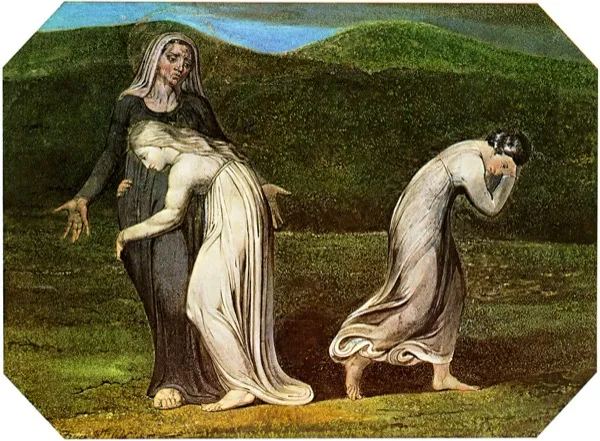
On Shavuot morning, the Book of Ruth (Megillat Rut) is read aloud in the synagogue. This short, luminous narrative — set during the harvest season in ancient Bethlehem — tells the story of Ruth, a Moabite woman who chooses to follow her Israelite mother-in-law Naomi back to the Land of Israel after both their husbands die.
Ruth’s declaration to Naomi is one of the most quoted verses in the Hebrew Bible: “Where you go, I will go; where you lodge, I will lodge; your people shall be my people, and your God my God.”
Why is this book read on Shavuot? Several reasons converge:
- Harvest setting — The story takes place during the barley and wheat harvest, matching Shavuot’s agricultural theme.
- Conversion and acceptance of Torah — Ruth’s voluntary embrace of the Jewish people and their God mirrors the Israelites’ acceptance of the Torah at Sinai. Ruth is considered the model convert.
- Lineage — Ruth is the great-grandmother of King David, who, according to tradition, was born and died on Shavuot.
- Chesed (lovingkindness) — The story is saturated with acts of loyalty and generosity — between Ruth and Naomi, between Ruth and Boaz — reflecting the values at the heart of Torah.
Dairy Foods: Cheesecake, Blintzes, and Beyond
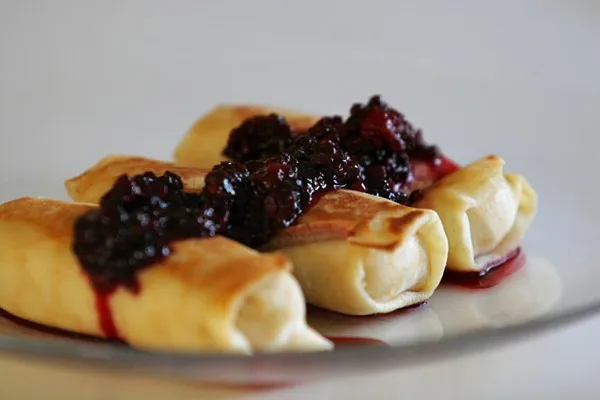
If Shavuot has a flavor, it is creamy, rich, and sweet. It is one of the few Jewish holidays defined in part by a specific category of food: dairy. While most Jewish holiday meals center on meat, Shavuot tables are covered with cheesecakes, blintzes, bourekas, lasagna, quiches, and every variety of cheese-filled pastry imaginable.
Why dairy? The explanations are varied and delightful:
- New laws, no kosher meat — When the Israelites received the Torah at Sinai, they learned the laws of kashrut (kosher dietary laws) for the first time. Since they did not yet have properly slaughtered and prepared meat, they ate dairy.
- Milk and honey — The Torah is compared to “milk and honey” (Song of Songs 4:11), and dairy foods honor that metaphor.
- Gematria (numerology) — The Hebrew word for milk, chalav, has a numerical value of 40, corresponding to the 40 days Moses spent on Mount Sinai receiving the Torah.
- The mountain — The Hebrew word Har (mountain) appears in the word for cheese (charitzei chalav), linking Sinai to the dairy tradition.
In Ashkenazi communities, cheesecake and cheese blintzes reign supreme. The classic Shavuot cheesecake — dense, creamy, often topped with fruit — has become so iconic that many American Jews who observe no other Shavuot custom will bake or buy one. In Sephardi and Mizrahi communities, the dairy table takes different forms: cheese-filled bourekas, sambusak with feta, ricotta-stuffed pastries, and milky rice puddings scented with rosewater.
Synagogue Customs: Greenery, Poetry, and the Ten Commandments
Walk into a synagogue on Shavuot and you may be surprised by the greenery. Many communities decorate the sanctuary with flowers, plants, and branches — transforming the space into a garden. The custom evokes Mount Sinai, which, according to the Midrash, bloomed with flowers and greenery at the moment of revelation. It also connects to Shavuot’s identity as a harvest festival.
In Ashkenazi synagogues, the liturgy includes Akdamut — a magnificent 11th-century Aramaic poem composed by Rabbi Meir ben Yitzchak Nehorai of Worms. Recited before the Torah reading, Akdamut is a sweeping hymn of praise to God, celebrating the beauty of creation, the devotion of the Jewish people, and the rewards of the world to come. Its distinctive double-acrostic structure and lilting melody make it one of the most memorable moments of the Shavuot service. Sephardi communities recite a parallel poem called Azharot, which poetically enumerates the 613 commandments.
The Torah reading on Shavuot morning includes the account of the revelation at Sinai from the Book of Exodus (chapter 19-20), culminating in the Ten Commandments. In many congregations, the entire community stands while the Ten Commandments are chanted — a reenactment, in a sense, of the original moment at Sinai when all of Israel stood at the foot of the mountain.
Across Communities
Shavuot is celebrated with remarkable diversity across the Jewish world:
- Ashkenazi communities emphasize the all-night study session, dairy foods (especially cheesecake and blintzes), the reading of Akdamut, and the decoration of the synagogue with greenery. In many American synagogues, Shavuot has also become a time for Confirmation ceremonies — a modern tradition in which teenagers affirm their commitment to Jewish life.
- Sephardi communities observe the Tikkun with a specific liturgical anthology and recite the Azharot. Dairy dishes lean toward bourekas, cheese pastries, and milk-based desserts. In some Sephardi traditions, a ketubbah (marriage contract) between God and Israel is read aloud — imagining the giving of the Torah as a wedding.
- Yemenite Jews celebrate with distinctive liturgical poetry (shirot) and special dairy foods. The community’s ancient connection to the Torah reading traditions makes Shavuot a particularly meaningful occasion.
- Ethiopian Jews (Beta Israel) historically observed a holiday called Matan Torah, the giving of the Torah, with special prayers and communal gatherings. As the Ethiopian Jewish community has integrated into Israeli society, their Shavuot practices have blended ancient Ethiopian traditions with broader Israeli customs.
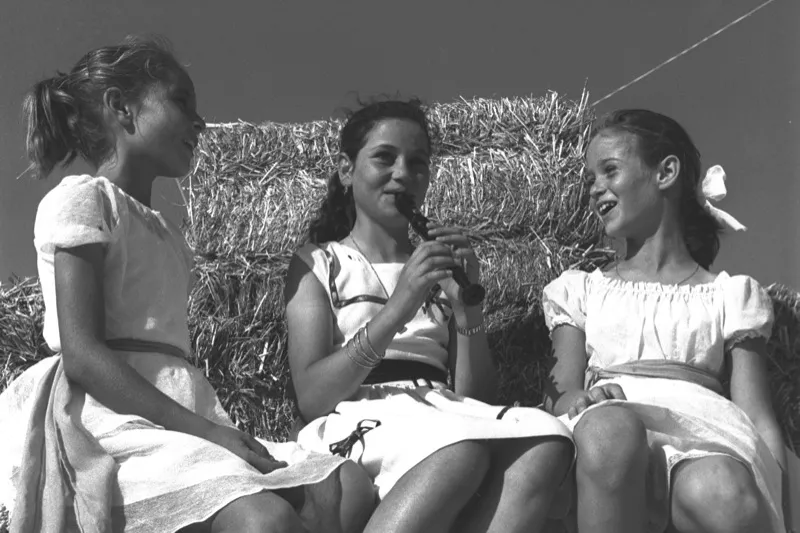
- In Israeli kibbutzim, Shavuot retains its agricultural character. The holiday is celebrated with harvest festivals, parades of first fruits (bikkurim), and outdoor celebrations featuring children in white carrying baskets of produce and wreaths of flowers — a living connection to the holiday’s ancient roots in the Land of Israel.
From Liberation to Purpose
Shavuot completes the arc that begins with Passover. If Passover is the story of physical freedom — the breaking of chains, the escape from tyranny — then Shavuot is the story of what freedom is for. Seven weeks after leaving Egypt, the Israelites stood at Sinai and received not just laws but a purpose: to build a just society, to care for the stranger, to pursue holiness in daily life.
The rabbis teach that at Sinai, every Jewish soul that would ever live was present — past, present, and future. Each year, Shavuot renews that moment. The Torah is not a relic received once and stored away; it is given again, every year, to anyone willing to stay up through the night, open a book, and receive it.
The coffee is cold. The sky is turning pink. Somewhere in a study hall, a student finishes a passage, looks up, and realizes that dawn has arrived without anyone noticing. The night is over. The Torah has been given again.
Frequently Asked Questions
Why do Jews eat dairy on Shavuot?
Several explanations exist: the Israelites received the laws of kashrut at Sinai and didn't yet have kosher meat prepared; the Torah is compared to 'milk and honey'; and the numerical value of the Hebrew word for milk (chalav) is 40, representing Moses's 40 days on Sinai. Popular dairy dishes include cheesecake, blintzes, and bourekas.
What is Tikkun Leil Shavuot?
Tikkun Leil Shavuot is the custom of staying up all night on the first night of Shavuot to study Torah. According to tradition, the Israelites overslept on the morning of the revelation at Sinai, so Jews stay awake to show their eagerness to receive the Torah.
How is Shavuot connected to Passover?
Shavuot falls exactly 49 days (seven weeks) after Passover, connected by the counting of the Omer. Passover celebrates physical freedom from Egypt, while Shavuot celebrates spiritual freedom through receiving the Torah — the journey from liberation to purpose.
Test Your Knowledge
Think you know this topic? Try our quiz!
Take the Jewish Holidays: Advanced Quiz →Sources & Further Reading
Related Articles
Lag BaOmer: Bonfires, Mysticism, and Celebration
On the 33rd day of the Omer count, the mourning lifts and the bonfires blaze — Lag BaOmer is a day of fire, mysticism, first haircuts, and the memory of Rabbi Shimon bar Yochai.
Passover (Pesach): The Festival of Freedom
The story of the Exodus comes alive each spring as Jewish families gather for the Seder — the most widely observed Jewish ritual.
Shabbat: The Weekly Day of Rest
Every week, Jewish life pauses for 25 hours of rest, reflection, and togetherness — discover the beauty of Shabbat.
The Ten Commandments: Foundation of Moral Law
Given at Mount Sinai and inscribed on two stone tablets, the Ten Commandments form the moral bedrock of Judaism — and have shaped ethical thinking across civilizations.
The Torah: The Heart of Judaism
The Torah is more than a book — it is the living constitution of Jewish life, studied and debated for over three millennia.