Jewish Desserts: A Sweet Guide to Every Tradition
From rugelach to malabi, babka to halva — a guide to the beloved desserts of the Jewish world, organized by tradition and holiday.
The Sweet Side of the Story
Jewish cuisine is often described in terms of its savory achievements — the brisket, the chicken soup, the falafel. But the sweet side of the Jewish table is equally rich, equally diverse, and equally tied to memory, tradition, and the calendar. Every holiday has its signature sweet. Every community has its treasured recipe. And every Jewish grandmother (or grandfather) has a dessert that, in the telling, was always “the best anyone ever tasted.”
What makes Jewish desserts distinctive is not any single flavor profile but the sheer variety. The same tradition that produces dense, Eastern European honey cakes also produces ethereal, rosewater-scented Sephardi pastries. The same holiday calendar that demands fried doughnuts in December calls for fruit-filled triangles in March and apple cake in September.
Here is a guide to the most beloved Jewish desserts, organized by tradition and occasion.
Ashkenazi Classics
Rugelach
Rugelach are small, crescent-shaped pastries made from a cream cheese or sour cream dough, filled with cinnamon, sugar, nuts, raisins, chocolate, or jam, and rolled into a curve. The dough is tender, flaky, and barely sweet — the sweetness comes from the filling.
Rugelach originated in the Jewish communities of Poland and Hungary. The name comes from a Yiddish word related to rog (horn or corner), referring to the crescent shape of each pastry. In Israel, rugelach have evolved into a distinct form — often larger, made with yeast dough rather than cream cheese dough, and filled with chocolate spread or halva paste.
Babka
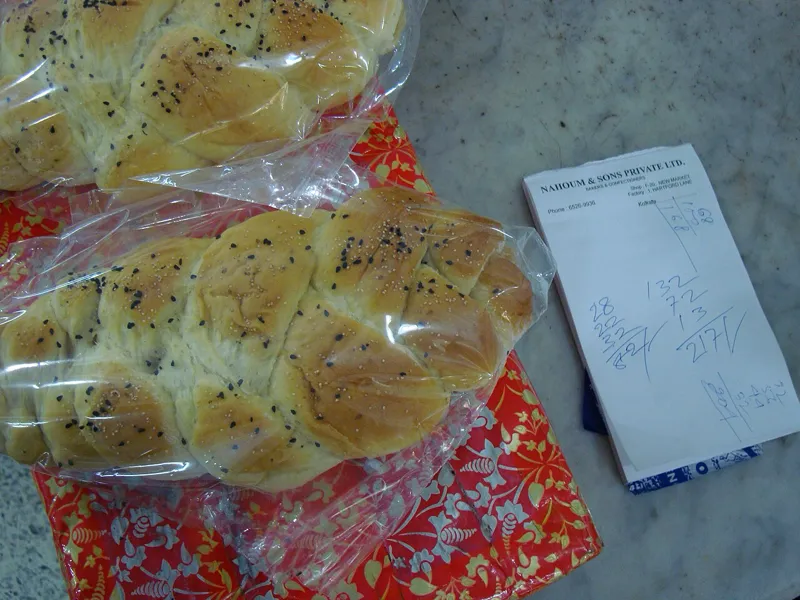
Babka is a rich, yeast-risen cake swirled with chocolate or cinnamon, braided or rolled into a loaf pan. The texture is somewhere between bread and cake — soft, slightly yeasty, and heavily laminated with filling.
The word babka comes from the Polish diminutive of baba (grandmother) — “little grandmother” — possibly because the traditional fluted pan resembled an old woman’s skirt. Babka was a Shabbat and holiday treat in Poland, Ukraine, and Russia. Its chocolate version has become wildly popular in the United States, driven partly by a famous Seinfeld episode debating the superiority of chocolate vs. cinnamon babka.
Hamantaschen
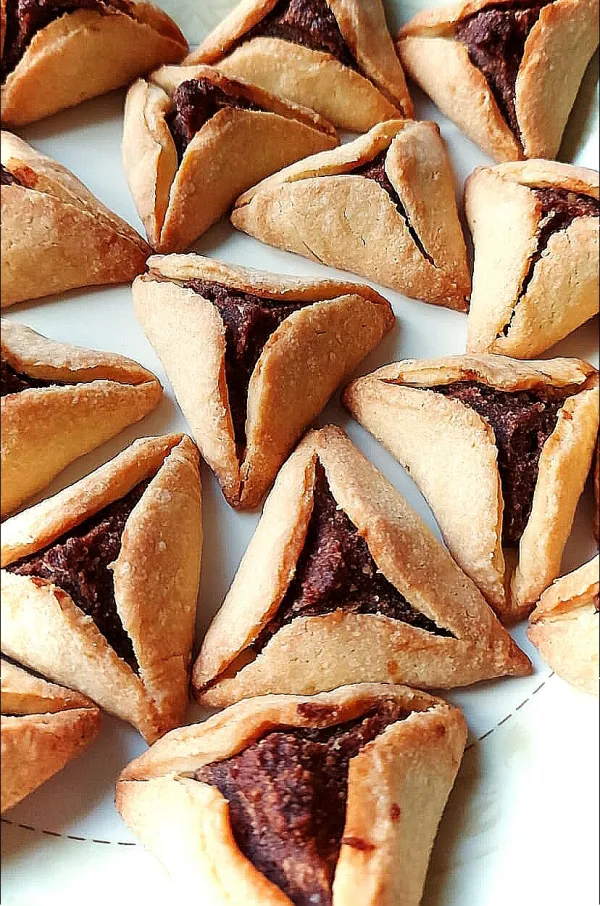
These triangular cookies filled with poppy seeds (mon), prune jam (lekvar), or other fillings are the signature dessert of Purim. The three-cornered shape is said to represent the hat — or ears — of Haman, the villain of the Purim story.
The dough ranges from cookie-like (crisp, crumbly) to more bread-like (soft, chewy), depending on the recipe. Modern fillings include Nutella, dulce de leche, halvah, and lotus spread, though purists insist on poppy seed.
Mandelbrot
Mandelbrot (“almond bread” in Yiddish) is the Jewish biscotti — a twice-baked cookie, crunchy and dry, perfect for dipping in tea or coffee. Unlike Italian biscotti, mandelbrot is typically made with oil rather than butter, making it pareve and suitable after a meat meal.
Honey Cake (Lekach)
Honey cake is the Rosh Hashanah dessert — dark, spiced, and deeply aromatic, symbolizing the hope for a sweet new year. Traditional recipes include coffee or tea in the batter, along with cinnamon, cloves, and allspice. The best honey cakes improve with age, becoming moister and more flavorful over several days.
Apple Cake
Another Rosh Hashanah staple, apple cake is the homier, more approachable cousin of honey cake. Loaded with sliced apples, cinnamon, and brown sugar, it is the dessert that fills the house with the smell of autumn.
Fluden
Fluden is a layered pastry — multiple sheets of dough alternating with fillings of poppy seeds, apples, nuts, and jam. It is particularly associated with Purim and Hoshana Rabbah, though it appears at other celebrations as well. Think of it as the Jewish version of a many-layered torte.
Strudel
Apple strudel — thin, stretched dough wrapped around cinnamon-apple filling — was a prized dessert among Austro-Hungarian Jews. The technique of stretching the dough until it is translucent requires skill and patience. In Jewish communities, strudel was often made pareve (without dairy) to serve after meat meals.
Sephardi and Mizrachi Sweets
Halva
Halva (from the Arabic word for “sweet”) is a dense, crumbly confection made from tahini (sesame paste) and sugar. It comes in dozens of flavors — plain, chocolate-marbled, pistachio, coffee — and ranges from smooth and creamy to dry and crumbly.
Halva is ubiquitous in Israel and throughout the Middle Eastern Jewish world. It is eaten as a snack, a dessert, and increasingly as an ingredient in other desserts — halva cheesecake, halva brownies, halva ice cream.
Malabi
Malabi is a milk pudding — delicate, trembling, flavored with rosewater, and topped with a vivid pink syrup and chopped pistachios. It is the quintessential Israeli street dessert, sold from carts and in cafes throughout the country.
The origins are ancient — variations of milk pudding flavored with rosewater appear in medieval Arabic and Persian cookbooks. Middle Eastern Jews adopted it centuries ago, and Israeli culture embraced it wholeheartedly.
Sufganiyot
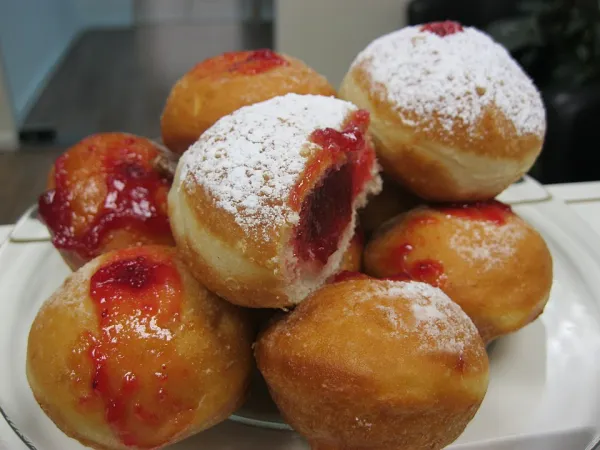
Sufganiyot are jelly-filled doughnuts, fried in oil for Hanukkah. In Israel, bakeries compete annually to create the most elaborate versions — filled with dulce de leche, topped with gold leaf, piped with exotic creams. But the classic remains: a fluffy, yeast-risen doughnut, fried golden, filled with strawberry jam, and dusted with powdered sugar.
Israelis consume an estimated 18 million sufganiyot each Hanukkah season.
The Sweetness of Memory
Jewish desserts are more than recipes. They are time capsules. A bite of honey cake and you are at your grandmother’s Rosh Hashanah table. A hamantasch and you are in costume, shaking a grogger. A piece of babka and you are in a Polish kitchen that no longer exists, preserved now only in flour, sugar, and the muscle memory of hands that learned from hands that learned from hands.
The diversity of Jewish desserts — from Ashkenazi to Sephardi, from ancient to modern — mirrors the diversity of the Jewish people themselves. But the thread that connects them all is the same: sweetness is not frivolity. In Jewish tradition, sweetness is a prayer — a taste of the world as we hope it can be.
Frequently Asked Questions
What is the most popular Jewish dessert?
It depends on the community. In Ashkenazi tradition, rugelach, babka, and hamantaschen are arguably the most beloved. In Sephardi and Mizrachi communities, baklava, halva, and malabi dominate. In Israel, sufganiyot (jelly doughnuts for Hanukkah) are consumed by the millions during the holiday season.
Why are fried desserts eaten on Hanukkah?
Hanukkah celebrates the miracle of oil — a small flask of oil that burned in the Temple for eight days. To commemorate this, Jews eat foods fried in oil. In Ashkenazi tradition, this means latkes (potato pancakes). In Israeli and Sephardi tradition, it means sufganiyot (doughnuts) and other fried pastries.
What makes a dessert 'kosher'?
A kosher dessert must use kosher ingredients and follow the laws of kashrut. The most common challenge is the prohibition against mixing dairy and meat — a dessert served after a meat meal must be pareve (containing neither meat nor dairy). This is why many Jewish desserts use oil rather than butter, or are naturally dairy-free.
Sources & Further Reading
Related Articles
Babka Recipe: Chocolate, Cinnamon, and the Perfect Twist
Rich, swirled, and impossibly good — master the art of chocolate babka with this step-by-step recipe, plus cinnamon and other variations from its Eastern European origins.
Hamantaschen Recipe: The Iconic Purim Cookie
The classic hamantaschen recipe — triangle-shaped Purim cookies with poppy seed, prune, chocolate, and halva fillings. Includes history, folding technique, and tips for perfect results.
Rugelach Recipe: Flaky Jewish Pastry with Classic Fillings
Buttery cream cheese dough, rolled around chocolate, cinnamon-walnut, or fruit fillings — these crescent-shaped pastries are the crown jewel of Jewish baking.