Hamantaschen Recipe: The Iconic Purim Cookie
The classic hamantaschen recipe — triangle-shaped Purim cookies with poppy seed, prune, chocolate, and halva fillings. Includes history, folding technique, and tips for perfect results.
The Cookie That Tells a Story
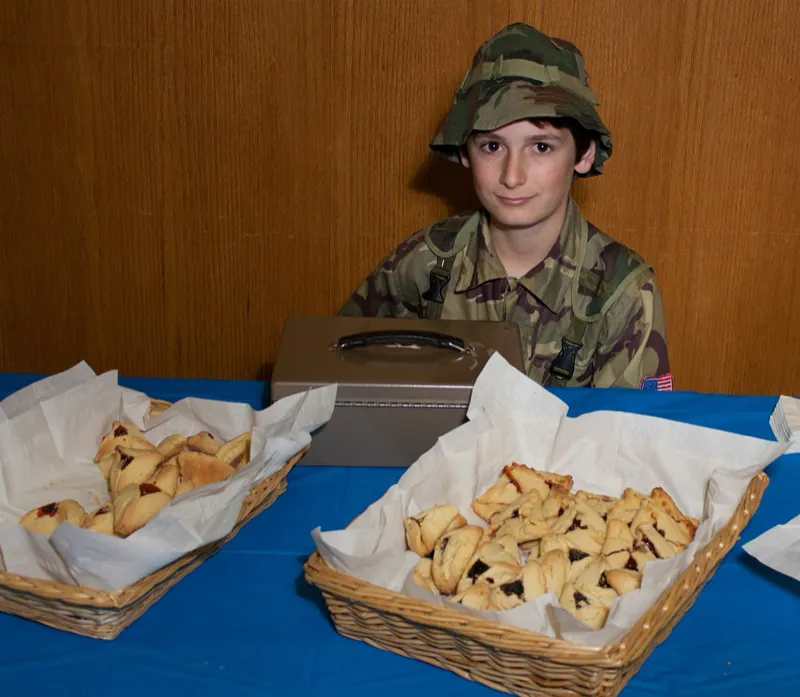
Every year, as Purim approaches, Jewish kitchens around the world fill with flour dust, jam stains, and the particular frustration that comes from trying to fold a circle of dough into a triangle without having the filling ooze out the sides. This is the annual hamantaschen experience — equal parts baking project, family activity, and mild culinary combat.
Hamantaschen are triangular filled cookies that are the most recognizable food of Purim. They are eaten, given as gifts in mishloach manot baskets, shared with friends and neighbors, and debated with an intensity that far exceeds what any cookie deserves. (Poppy or prune? Chocolate or apricot? Cookie dough or yeast dough? These are not casual questions in some households.)
But before we bake, a little history. Because hamantaschen, like everything Jewish, have a story.
The History
The name “hamantaschen” comes from Yiddish and literally means “Haman’s pockets” — a reference to the villain of the Purim story who plotted to destroy all the Jews of the Persian Empire. In Hebrew, the cookies are called oznei Haman — “Haman’s ears,” perhaps referring to an ancient practice of cutting off a criminal’s ears before execution.
But here is the interesting part: the cookies almost certainly predated their connection to Haman. The Yiddish word probably evolved from mohntaschen — “poppy seed pockets” — a common pastry filling in Central European baking. The “mohn” (poppy) became “haman” through folk etymology, and suddenly a simple pastry had a villain’s name attached to it.
The triangle shape has inspired its own theories:
- Haman’s hat: The most popular explanation, though three-cornered hats were not actually worn in ancient Persia
- Haman’s ears: Matching the Hebrew name
- The three patriarchs: Abraham, Isaac, and Jacob, whose merit is said to have saved the Jewish people
- Hidden filling: The concealed filling symbolizes the hidden miracles of the Purim story — God’s name never appears in the Book of Esther, and the salvation operates through apparently natural events
The Recipe
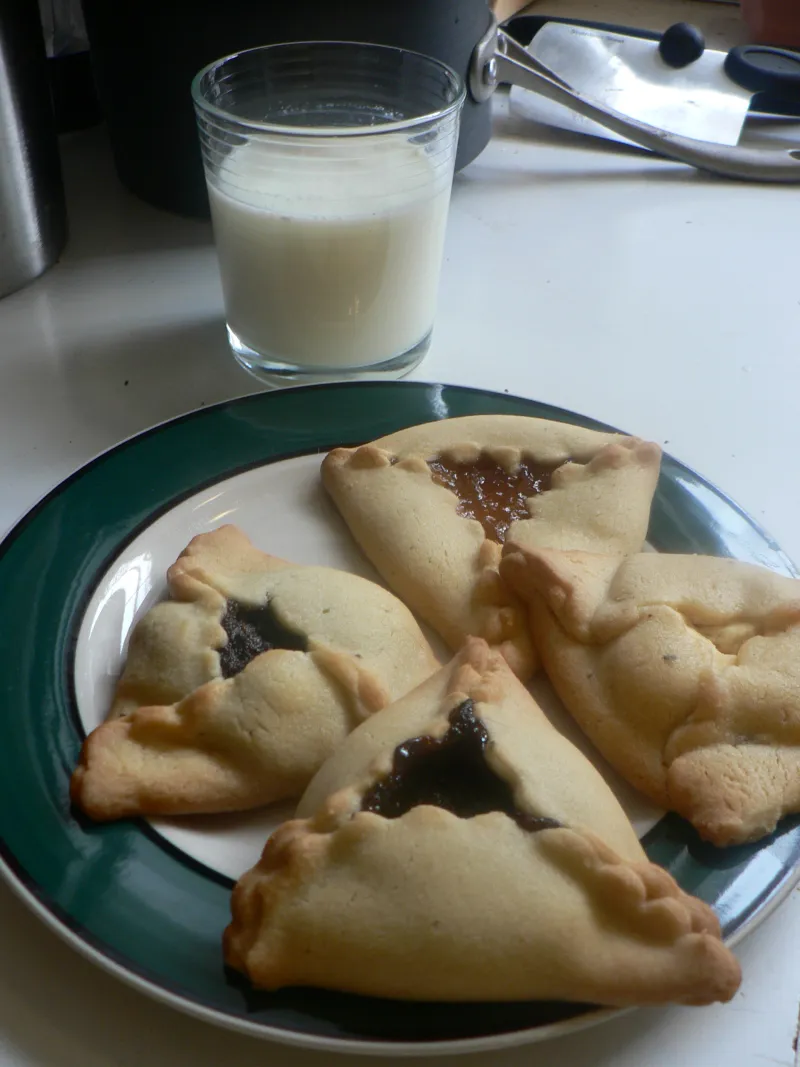
This recipe makes approximately 36 cookies. It uses a cookie-style dough (not yeasted), which is easier to work with and produces the crisp-edged, tender hamantaschen most people expect.
Dough
Ingredients:
- 3 cups (375g) all-purpose flour
- 1 cup (200g) granulated sugar
- 2 teaspoons baking powder
- 1/4 teaspoon salt
- 1/2 cup (1 stick / 113g) unsalted butter, cold, cut into cubes
- 2 large eggs
- 2 tablespoons orange juice (or milk)
- 1 teaspoon vanilla extract
- Zest of 1 orange (optional, but wonderful)
Instructions:
-
In a large bowl, whisk together the flour, sugar, baking powder, and salt.
-
Add the cold butter cubes and work them into the flour using a pastry cutter, two knives, or your fingertips until the mixture resembles coarse sand with some pea-sized pieces.
-
In a small bowl, beat the eggs with the orange juice, vanilla, and orange zest (if using).
-
Pour the wet ingredients into the flour mixture and stir with a fork until the dough just comes together. Do not overmix.
-
Divide the dough in half, flatten each piece into a disk, wrap in plastic, and refrigerate for at least 2 hours (overnight is even better). Cold dough is the secret to hamantaschen that stay closed.
Fillings
Choose one or make several:
Classic Poppy Seed (Mohn):
- 1 cup ground poppy seeds
- 1/3 cup honey
- 2 tablespoons butter
- 1/4 cup milk
- Zest of 1 lemon
- 2 tablespoons sugar
Cook all ingredients in a small saucepan over medium-low heat, stirring constantly, until thick (about 5 minutes). Cool completely.
Prune (Lekvar):
- Use store-bought prune butter (lekvar), or simmer 1 cup pitted prunes with 1/4 cup water and 2 tablespoons sugar until soft, then puree.
Chocolate:
- 1 cup chocolate chips melted with 2 tablespoons butter and 1 tablespoon cream. Or simply use Nutella straight from the jar. (No judgment.)
Halva:
- Crumble halva into small pieces and mix with 1 tablespoon tahini to make it scoopable. This is the trendy option, and it is excellent.
Apricot or Raspberry:
- Use thick, high-quality jam. If the jam is too thin, cook it down in a saucepan for a few minutes to thicken.
The Folding Technique
This is the make-or-break skill of hamantaschen baking. Master this and everything else is easy.
-
Roll out one disk of chilled dough on a lightly floured surface to about 1/4 inch (6mm) thickness.
-
Cut circles using a 3-inch (7.5cm) round cutter or drinking glass.
-
Place filling — about 1 tablespoon — in the center of each circle. This is where most people go wrong. Resist the urge to overfill. A heaping tablespoon is too much.
-
Fold three sides up to form a triangle:
- Imagine the circle as a clock
- Fold the left side (9 o’clock) inward
- Fold the right side (3 o’clock) inward
- Fold the bottom (6 o’clock) up
- Pinch each of the three corners tightly, overlapping the edges slightly
-
The crucial step: Pinch the corners firmly. Press the overlapping edges together. If the dough is warm and soft, the corners will not hold. If the dough feels too soft, return it to the refrigerator for 15 minutes.
-
Chill the formed cookies on a parchment-lined baking sheet for 15-20 minutes before baking. This is not optional — it is the difference between hamantaschen that hold their shape and hamantaschen that become sad, open-faced rounds.
Baking
- Preheat oven to 350°F (175°C).
- Bake for 12-15 minutes, until the edges are just barely golden. The cookies will firm up as they cool — do not wait until they look fully done or they will be dry.
- Cool on the baking sheet for 5 minutes, then transfer to a wire rack.
Mishloach Manot
One of the mitzvot of Purim is sending mishloach manot — gifts of food to friends and neighbors. Each basket must contain at least two different ready-to-eat foods. Hamantaschen are the classic centerpiece of these baskets, often accompanied by fruit, candy, grape juice, and other treats.
The practice of sharing food is one of the most joyful aspects of Purim — neighbors delivering baskets to each other’s doors, children running between houses with bags of treats, the community connected through simple acts of generosity.
Making extra hamantaschen for mishloach manot is a perfect reason to try multiple fillings. The traditional ones — poppy and prune — satisfy the purists. The modern ones — chocolate, halva, cookie butter — appeal to everyone else. A basket with one of each makes everybody happy.
Tips from Years of Experience
- Cold dough is forgiving dough. If it warms up while you work, put it back in the fridge.
- Don’t skip the orange zest. It adds a brightness that elevates the whole cookie.
- Egg wash the tops (one beaten egg with a tablespoon of water) for a golden, professional finish.
- Freeze unbaked hamantaschen on a baking sheet, then transfer to a bag. Bake from frozen, adding 2-3 minutes to the time. This means you can make them weeks in advance.
- Involve children. Yes, their hamantaschen will be lopsided and overfilled. That is the point. The memory of making holiday foods together is worth more than aesthetic perfection.
The hamantaschen tradition is one of those beautiful places where food and faith intersect — where a kitchen table becomes a place of storytelling, where every cookie is a tiny retelling of a three-thousand-year-old story about survival, justice, and joy.
Happy baking. Happy Purim.
Frequently Asked Questions
Why are hamantaschen triangle-shaped?
Several theories exist. The most common says they represent Haman's three-cornered hat (Hamantaschen literally means 'Haman's pockets' in Yiddish). Others suggest they represent Haman's ears (the Hebrew name 'oznei Haman' means 'Haman's ears') or the three patriarchs whose merit saved the Jewish people. Some scholars connect the triangle to the three-cornered pastries common in medieval European baking.
What is the traditional filling for hamantaschen?
The oldest traditional filling is mohn (poppy seed), from which the Yiddish name 'mohntaschen' ('poppy pockets') likely derives — only later associated with Haman. Prune (lekvar) is another classic filling. Modern variations include chocolate, Nutella, halva, dulce de leche, date paste, apricot jam, cookie butter, and savory options like za'atar or everything bagel seasoning.
Why do my hamantaschen open up while baking?
This is the most common hamantaschen problem. To prevent opening: (1) chill the dough thoroughly before rolling, (2) don't overfill — use about a tablespoon per cookie, (3) pinch the corners tightly and overlap the edges, (4) chill the formed cookies for 15-20 minutes before baking, and (5) don't overbake. The dough should be firm but not dry — too much flour makes the seams crack apart.
Sources & Further Reading
- My Jewish Learning — Hamantaschen ↗
- The Nosher — Purim Recipes ↗
- Joan Nathan's Jewish Holiday Baking
- Gil Marks, Encyclopedia of Jewish Food
Related Articles
Classic Challah Recipe: How to Bake the Perfect Shabbat Bread
Golden, braided, and impossibly fragrant — learn to bake the perfect challah with this traditional recipe, plus variations for holidays and special occasions.
Jewish Holiday Foods: What We Eat and Why
Every Jewish holiday has its signature foods — and each dish tells a story of history, symbolism, and tradition.
Purim: The Festival of Joy
Costumes, noisemakers, gifts of food, and the dramatic reading of the Megillah — Purim is the most festive and fun holiday in the Jewish calendar.