Charoset Recipe: Three Traditions for Passover
From Ashkenazi apple-walnut-wine to Sephardi date paste to Yemenite spiced variations — three charoset recipes that bring the Passover seder plate to life.
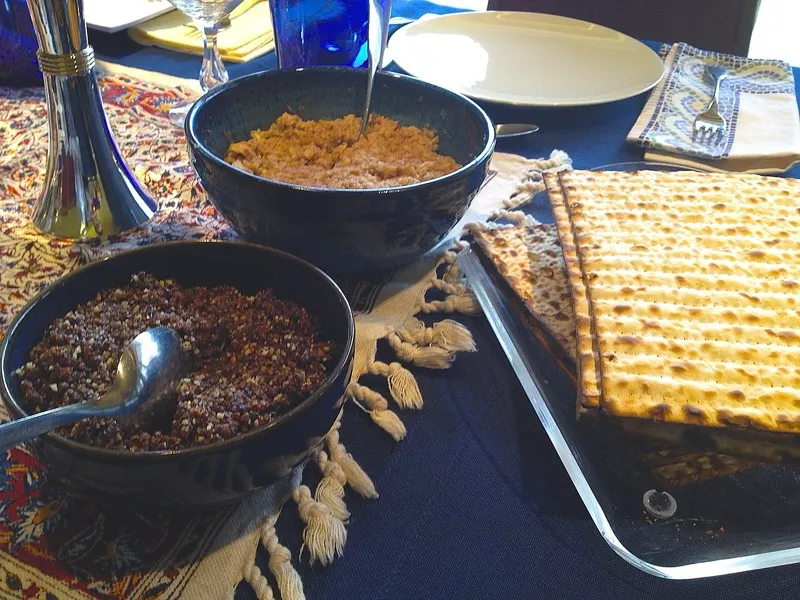
The Sweetest Contradiction
There is something beautifully contradictory about charoset. It represents slavery — the mortar that held together the bricks the Israelites were forced to make in Egypt. And yet it is one of the most delicious things on the seder plate. Sweet, textured, fragrant with wine and spice, it is the item children reach for and adults eat by the spoonful when nobody is looking.
This contradiction is intentional. The Passover seder is built on contrasts — bitter herbs and sweet wine, tears and celebration, slavery and freedom. Charoset embodies all of this in a single bowl. It tastes like liberation disguised as labor.
Every Jewish community has its own version. Ashkenazi charoset uses apples, walnuts, and wine. Sephardi versions build on dates and figs. Yemenite charoset is spiced and complex. All of them are delicious. All of them are correct.
Ashkenazi Charoset: Apple, Walnut, and Wine
This is the version most American Jews grew up with — chunky, fresh, and bright.
Yield: About 3 cups Prep time: 15 minutes
Ingredients
- 4 medium apples (Gala, Fuji, or Honeycrisp), peeled and finely diced
- 1 cup walnuts, finely chopped
- 3 tablespoons sweet red wine (Manischewitz works perfectly here)
- 2 tablespoons honey
- 1 teaspoon cinnamon
- ½ teaspoon fresh lemon juice
Instructions
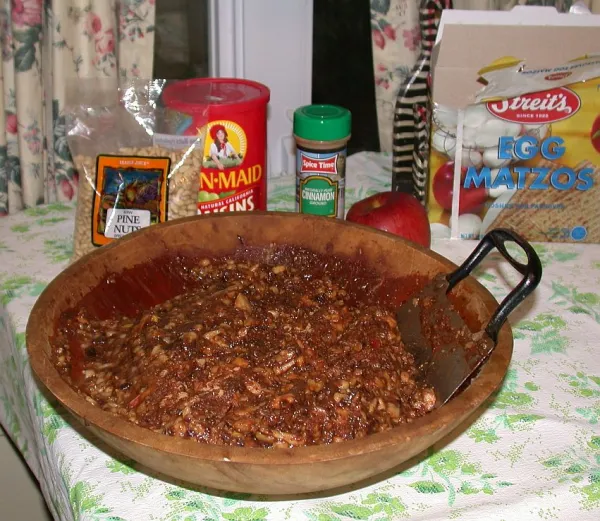
1. Combine the diced apples and chopped walnuts in a bowl. The pieces should be small but still have texture — you want to be able to see and feel the ingredients.
2. Add the wine, honey, cinnamon, and lemon juice. Stir gently to combine.
3. Cover and refrigerate for at least 30 minutes to let the flavors meld. Taste and adjust sweetness — add more honey or wine as needed.
4. Serve in a bowl on the seder plate. It should be thick enough to hold its shape on a piece of matzah.
Sephardi Charoset: Date and Fig Paste
This version is richer, darker, and more complex — a paste rather than a chunky mixture.
Yield: About 2½ cups Prep time: 20 minutes plus soaking
Ingredients
- 1 lb Medjool dates, pitted
- ½ cup dried figs, stemmed
- ½ cup raisins
- ½ cup almonds, toasted
- ½ cup sweet wine or grape juice
- 1 teaspoon cinnamon
- ½ teaspoon ground ginger
- ¼ teaspoon ground cloves
- Pinch of cayenne (optional)
Instructions
1. Soak the dates, figs, and raisins in warm water for 20 minutes. Drain well.
2. Place the soaked fruits, almonds, wine, and spices in a food processor. Pulse until you achieve a thick, spreadable paste. Leave some texture — it should not be completely smooth.
3. Transfer to a bowl, cover, and refrigerate. This charoset keeps well for up to a week and actually improves with time.
Yemenite Charoset
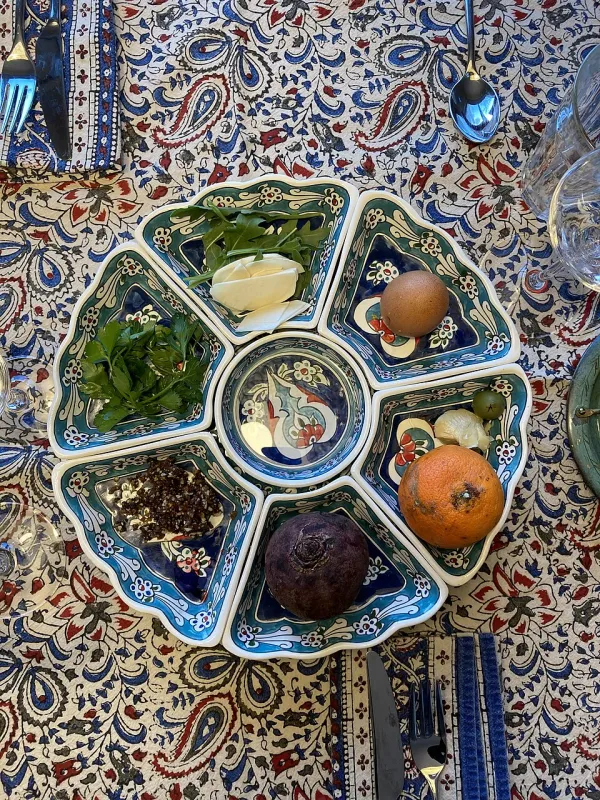
The most complex and aromatic version. Yemenite Jews use a mixture of dates, figs, sesame seeds, and a generous hand with spices.
Yield: About 2 cups Prep time: 15 minutes
Ingredients
- 1 lb dates, pitted and roughly chopped
- ½ cup sesame seeds, toasted
- ½ teaspoon ground coriander
- ½ teaspoon ground cumin
- 1 teaspoon cinnamon
- ½ teaspoon ground ginger
- ¼ teaspoon black pepper
- ¼ cup red wine vinegar or lemon juice
- Matzah meal (as needed for texture)
Instructions
1. Mash the dates into a paste using a fork, mortar and pestle, or food processor.
2. Mix in the toasted sesame seeds, spices, and vinegar.
3. Add matzah meal a tablespoon at a time until the mixture reaches a thick, mortar-like consistency — appropriately, given what it symbolizes.
One Seder, Many Traditions
The beauty of charoset is that it reflects the extraordinary diversity of Jewish life. An Ashkenazi Jew in New York and a Yemenite Jew in Tel Aviv both sit down to the seder, both eat charoset, and both taste freedom — but the flavors on their tongues are entirely different. Consider making more than one version for your seder. It is a delicious way to honor the many traditions that make Passover cooking so rich.
Frequently Asked Questions
What does charoset symbolize at the seder?
Charoset represents the mortar that the Israelite slaves used to make bricks in Egypt. The thick, brown paste evokes the clay and mortar of their forced labor. Despite this somber symbolism, charoset is one of the sweetest items on the seder plate — a reminder that even in the bitterest times, there is sweetness and hope.
Is charoset required at the Passover seder?
Yes, charoset is one of the essential items on the seder plate. It is eaten together with maror (bitter herbs) and matzah in the Hillel sandwich (korech). While there is some Talmudic debate about whether it is a full mitzvah or a custom, all Jewish communities include it as a central element of the seder.
Can charoset be made ahead of time?
Ashkenazi charoset is best made the day of or the day before the seder, as the apples can brown. A squeeze of lemon juice helps. Sephardi and Yemenite date-based charosets actually improve over a few days as the flavors meld, and they keep well in the refrigerator for up to a week.
Sources & Further Reading
- My Jewish Learning — Charoset Recipes ↗
- Gil Marks, Encyclopedia of Jewish Food
- The Nosher — Charoset Around the World ↗
Related Articles
Passover (Pesach): The Festival of Freedom
The story of the Exodus comes alive each spring as Jewish families gather for the Seder — the most widely observed Jewish ritual.
Passover Cooking: A Complete Guide to Pesach in the Kitchen
Everything you need to know about cooking for Passover — chametz rules, the kitniyot debate, Seder plate preparation, matzah-based recipes, Sephardi Passover foods, and practical meal planning.
The Seder Plate Explained
The seder plate holds six symbolic foods that tell the story of the Exodus — from the bitter herbs of slavery to the green of spring and hope. Each item carries layers of meaning and centuries of tradition.