The Seder Plate Explained
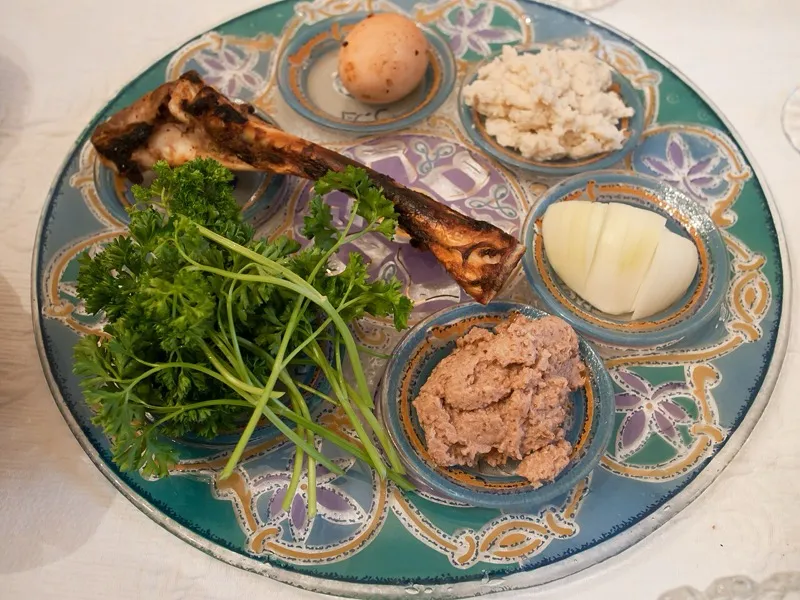
The seder plate holds six symbolic foods that tell the story of the Exodus — from the bitter herbs of slavery to the green of spring and hope. Each item carries layers of meaning and centuries of tradition.
A Plate That Tells a Story
At the center of every Passover seder table sits a plate that is not quite like any other plate in the world. It holds no meal. The items on it are not meant to satisfy hunger — some are barely edible. And yet this plate, with its six carefully arranged symbolic foods, has sat at the center of Jewish family gatherings for centuries, telling the same story every spring: the story of slavery, liberation, and the long journey from one to the other.
The seder plate (ke’arah) is the visual and tactile anchor of the Passover seder. Its items are pointed to, lifted, tasted, and discussed throughout the evening. Each one is a miniature sermon — a physical object that carries centuries of meaning.
The Six Items
1. Maror (Bitter Herbs)
What it is: Most commonly fresh horseradish root (grated or whole) or romaine lettuce
What it means: The bitterness of slavery. The Torah commands: “They shall eat it with matzot and bitter herbs” (Numbers 9:11). The sharp bite of horseradish — the tears it brings to your eyes, the burning in your sinuses — is a deliberate sensory experience. For a few seconds, you taste what it might have been like.
The choice of romaine lettuce as maror (preferred by many Sephardic communities) carries its own symbolism: the leaves begin sweet and turn bitter as they grow — just as the Egyptian experience began with Joseph’s welcome and ended in slavery.
2. Charoset
What it is: A paste or spread, traditionally made from apples, walnuts, wine, and cinnamon (Ashkenazi version) or dates, figs, and nuts (Sephardic versions)
What it means: The mortar that the Israelite slaves used to make bricks for Pharaoh’s building projects. The Talmud (Pesachim 116a) debates its composition but agrees on its purpose: to remember the hard labor.
Charoset is the paradox of the seder plate — it represents suffering but tastes delicious. This is deliberate. Even in remembering pain, there is sweetness. Even in slavery, there was the hope of redemption.
Charoset recipes vary enormously by community. Yemenite Jews use sesame and dates. Italian Jews add chestnuts. Persian Jews include pomegranates. Every family claims their grandmother’s recipe is the authentic one. All of them are right.
3. Karpas (Green Vegetable)
What it is: Usually parsley, though celery or boiled potato is also common
What it means: Spring, new life, and hope — but also tears. During the seder, the karpas is dipped in saltwater (representing the tears of the slaves) and eaten. The green of new growth dipped in the salt of tears captures the emotional complexity of the Exodus story: liberation came at a terrible cost.
Some scholars believe the karpas ritual originated as an appetizer course in the Greco-Roman banquet tradition, which the seder format adopted. Others see it as a way to provoke children’s curiosity — one of the seder’s primary goals is to get children to ask questions.
4. Zeroa (Shankbone)
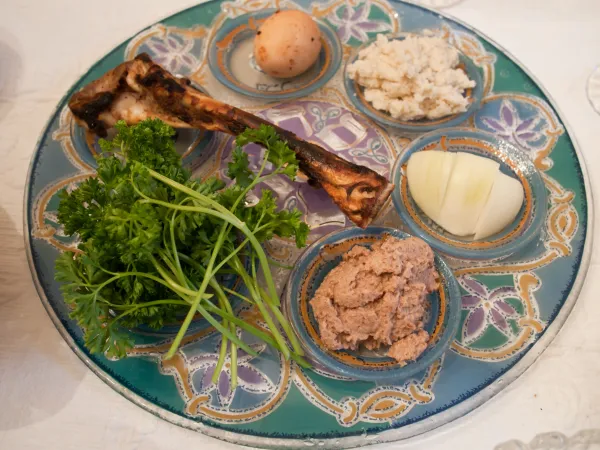
What it is: A roasted lamb or goat shankbone (or, in some traditions, a roasted chicken neck or wing)
What it means: The Passover sacrifice (korban Pesach) — the lamb that the Israelites sacrificed on the eve of the Exodus, marking their doorposts with its blood so that the Angel of Death would “pass over” their homes.
The zeroa is not eaten during the seder. It is purely symbolic — a reminder of the sacrifice that can no longer be offered because the Temple no longer stands. This distinction matters: the item represents a loss as much as a memory. Some families reuse the same shankbone year after year, roasting it briefly to freshen it.
Vegetarian households often substitute a roasted beet — a practice mentioned in the Talmud (Pesachim 114b) as an acceptable alternative.
5. Beitzah (Roasted Egg)
What it is: A hard-boiled egg, roasted or charred slightly on the outside
What it means: The chagigah — the festival sacrifice offered at the Temple on Passover, Shavuot, and Sukkot. Like the shankbone, it commemorates a Temple practice that ceased with the destruction.
The egg also carries additional symbolism:
- Mourning: Eggs are traditionally served as the first food to mourners, and the beitzah reminds us of the destruction of the Temple
- The cycle of life: The egg’s round shape represents the cyclical nature of existence — slavery and freedom, destruction and renewal
- Resilience: Unlike most foods, an egg becomes harder when boiled — a metaphor for the Jewish people, who became stronger through persecution
Many families begin the seder meal by eating a hard-boiled egg dipped in saltwater — a quiet moment of remembrance before the festive meal.
6. Chazeret (Second Bitter Vegetable)
What it is: Usually romaine lettuce (if horseradish is used for maror) or another bitter green
What it means: The chazeret serves as the bitter herb in the Korech (Hillel sandwich), in which maror and charoset are placed between two pieces of matzah — a practice attributed to the great sage Hillel, who combined the Passover sacrifice, matzah, and bitter herbs in a single bite during Temple times.
Not all traditions include a separate chazeret on the plate. Some communities use the maror for both purposes.
Arrangement on the Plate
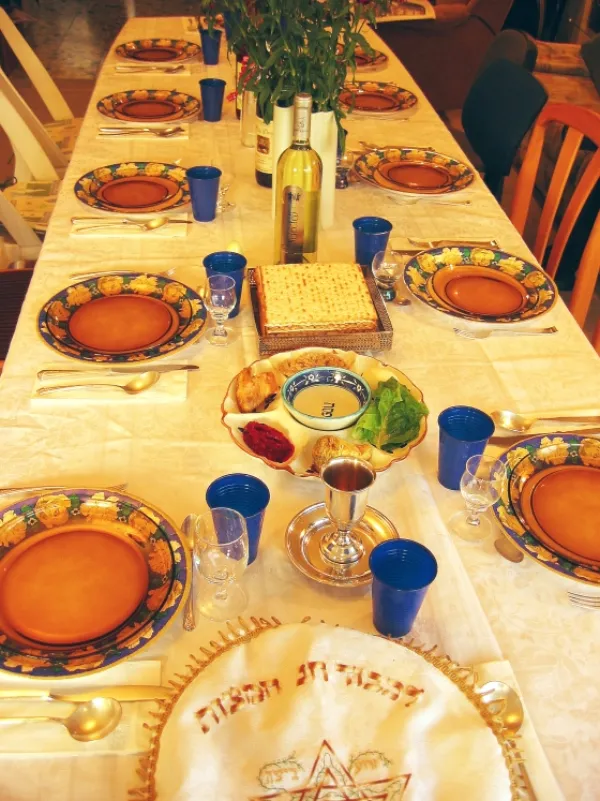
The six items are arranged in specific positions on the plate, but the arrangement varies by tradition:
- The Talmudic arrangement simply requires that the items most frequently used be closest to the leader
- The Kabbalistic arrangement (following the Arizal, Rabbi Isaac Luria) positions the items according to the sefirot (divine emanations) — with the zeroa and beitzah at the top, maror and charoset in the middle, and karpas and chazeret at the bottom
- Different communities have their own traditional layouts, and commercial seder plates often include labeled indentations to guide placement
The Matzah: The Seventh Element
Though not technically on the seder plate, three matzot — placed in a matzah cover or between napkins — are essential to the seder. The middle matzah is broken early in the seder; the larger piece becomes the afikoman, which is hidden for children to find (or, in some traditions, “stolen” by the children and ransomed back to the adults).
Matzah is called both lechem oni (“bread of affliction”) — representing the poverty and haste of the Exodus — and lechem herut (“bread of freedom”). Like much of Passover symbolism, it holds two meanings simultaneously.
Modern Additions
In recent decades, some families have added items to the seder plate to address contemporary concerns:
- An orange: Popularized by Dr. Susannah Heschel, representing the inclusion of marginalized groups — women, LGBTQ+ Jews, and others
- An olive: Representing hope for peace between Israelis and Palestinians
- Fair trade chocolate or coffee: Representing the ongoing struggle against modern slavery and labor exploitation
- An empty chair or extra place setting: For those who cannot celebrate freely — refugees, political prisoners, or Jews in countries where observance is restricted
These additions are controversial. Traditionalists argue that the seder plate should not be altered. Progressives counter that the seder has always evolved — the Haggadah itself has been revised and expanded over centuries.
The Plate Itself
Seder plates range from simple ceramic dishes to elaborate silver masterpieces. Some families use plates that have been passed down for generations — the same plate that a great-grandmother used in Poland, or a grandfather brought from Morocco. Others create their own, often as a family art project.
The holiday foods of Passover extend far beyond the seder plate, but it is the plate that sets the tone. It sits at the center of the table, visible throughout the evening, a tangible reminder that this is not merely a meal but a story — told with food, shared with family, and renewed every spring.
Frequently Asked Questions
What are the six items on a seder plate?
The six traditional items are: (1) Maror — bitter herbs (usually horseradish) representing the bitterness of slavery; (2) Charoset — a paste of apples, nuts, wine, and spices representing the mortar used by slaves; (3) Karpas — a green vegetable (usually parsley) dipped in saltwater, representing spring and tears; (4) Zeroa — a roasted shankbone representing the Passover sacrifice; (5) Beitzah — a roasted egg representing the festival sacrifice and the cycle of life; (6) Chazeret — a second bitter vegetable (often romaine lettuce) for the Hillel sandwich.
Why do some people put an orange on the seder plate?
The orange on the seder plate is a modern feminist addition popularized by Dr. Susannah Heschel in the 1980s. Heschel placed an orange to represent the fruitfulness of including those who have been marginalized — women, LGBTQ+ Jews, and others. She asked participants to spit out the seeds as a gesture of rejecting homophobia and sexism. The practice has been widely adopted in progressive Jewish communities as a symbol of inclusion.
Is the seder plate the same in all Jewish communities?
No — there are significant variations. Sephardic communities may use different ingredients for charoset (dates instead of apples, for example). Some Sephardic families use a lettuce leaf rather than a bone for the zeroa. Yemenite Jews have a distinctive charoset recipe using dates and sesame. Ethiopian Jews had entirely different Passover traditions. The arrangement on the plate also varies — Ashkenazi, Sephardic, and Hasidic communities follow different configurations.
Test Your Knowledge
Think you know this topic? Try our quiz!
Take the Jewish Holidays: Advanced Quiz →Sources & Further Reading
Related Articles
Jewish Holiday Foods: What We Eat and Why
Every Jewish holiday has its signature foods — and each dish tells a story of history, symbolism, and tradition.
Passover (Pesach): The Festival of Freedom
The story of the Exodus comes alive each spring as Jewish families gather for the Seder — the most widely observed Jewish ritual.
Passover Cooking: A Complete Guide to Pesach in the Kitchen
Everything you need to know about cooking for Passover — chametz rules, the kitniyot debate, Seder plate preparation, matzah-based recipes, Sephardi Passover foods, and practical meal planning.