Why Do Jews Break a Glass at Weddings? The Beautiful Tradition Explained
The glass breaks, everyone shouts 'Mazel Tov!' — but behind the joyful moment lies a profound tradition connecting personal happiness to communal memory and historical sorrow.
The Short Answer
At the end of a Jewish wedding ceremony, the groom (and sometimes the bride) steps on a glass and shatters it. The room erupts in shouts of “Mazel Tov!” — and the celebration begins.
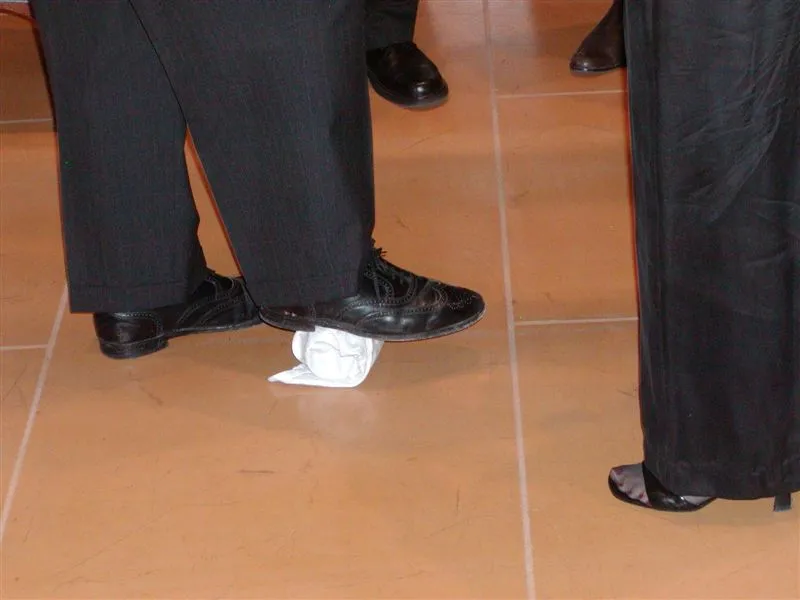
The primary reason for breaking the glass is to remember the destruction of the Temple in Jerusalem — the most traumatic event in ancient Jewish history. Even at the moment of greatest personal joy, Jews pause to remember communal sorrow. This act embodies one of Judaism’s deepest values: that happiness is real and precious, but it is never complete in a broken world.
The Talmudic Origin
The tradition traces back to a story in the Talmud (Berakhot 30b-31a). At the wedding feast of his son, the sage Mar bar Ravina noticed that the rabbis in attendance were becoming excessively merry. He took a precious glass cup worth 400 zuz — a small fortune — and shattered it before them. The celebration fell silent. Joy was tempered.
In a parallel story, Rav Ashi did the same at his son’s wedding, smashing a valuable cup to remind the guests that even in celebration, one must not lose awareness of life’s fragility and the world’s incompleteness.
The Talmud connects this practice to Psalm 137:5-6: “If I forget you, O Jerusalem, let my right hand forget its skill. Let my tongue cling to the roof of my mouth if I do not remember you, if I do not set Jerusalem above my highest joy.”
This psalm, written by Jewish exiles in Babylon after the Temple’s destruction, is one of the most emotionally powerful texts in the Hebrew Bible. By breaking a glass at a wedding, Jews fulfill its demand: they set Jerusalem above their highest joy. They remember.
Joy Tempered with Sorrow
The glass-breaking tradition embodies a distinctly Jewish approach to emotion: joy and sorrow exist simultaneously. Judaism does not ask people to choose between happiness and sadness. It asks them to hold both at once.
A wedding is the happiest day of a couple’s life. The glass-breaking acknowledges that this happiness exists within a world that is not yet redeemed. The Temple lies in ruins. Exile and persecution have shaped Jewish history. The Messianic age has not arrived. And yet — and this is crucial — Jews celebrate anyway. They dance, they feast, they shout with joy. The broken glass does not diminish the celebration. It deepens it.
This is different from pessimism. It is realism saturated with hope. The world is broken, and we remember. But love is real, and we celebrate. Both truths coexist, and the glass holds them together in a single, shattering moment.
Multiple Meanings
Like many Jewish traditions, the glass-breaking has accumulated layers of interpretation over the centuries:
Remembering the Temple: The primary and most widely cited reason. The destruction of the First Temple (586 BCE) and Second Temple (70 CE) by the Babylonians and Romans, commemorated annually on Tisha B’Av, represent the greatest catastrophe in ancient Jewish history. The glass ensures that even at a wedding, this loss is not forgotten.
Irreversibility of marriage: A glass, once shattered, cannot be reassembled. So too a marriage — it fundamentally changes the lives of two people in a way that cannot be undone. This interpretation emphasizes the seriousness and permanence of the commitment.
Fragility of relationships: Glass is strong but breakable. Relationships require care, attention, and gentleness. The shattered glass is a reminder that love must be tended, not taken for granted.
Warding off evil spirits: An older folk explanation holds that the noise of breaking glass frightens away evil spirits or the Evil Eye (ayin hara) who might be jealous of the couple’s happiness. While most modern Jews don’t take this literally, the superstition persists in folk tradition.
Sexual symbolism: Some scholars have noted a connection between the breaking of the glass and the consummation of the marriage — the irreversible transition from one state to another. This interpretation is less commonly discussed but appears in various historical sources.
The Practical Details
What Gets Broken
Traditionally, a small glass — often a wine glass used during the ceremony — is wrapped in a cloth napkin or placed in a small bag to contain the shards. The wrapping prevents injuries and makes cleanup easy.
The lightbulb alternative: Many couples today use a lightbulb wrapped in foil or fabric. Lightbulbs break more easily than glass (avoiding the awkward moment of a groom stomping repeatedly on a stubborn cup), produce a more satisfying crunch, and are cheaper. The symbolism is unchanged — it is the act of breaking, not the material, that matters.
Who Steps on It
Traditionally, the groom steps on the glass with his right foot. In many modern egalitarian weddings, both partners step on it together — a beautiful image of shared commitment.
What Happens Next
The moment the glass breaks, the crowd shouts “Mazel Tov!” (literally “good fortune” or “good star”). The rabbi declares the couple married. Music begins. The couple kisses. And the party starts.
The transition is instantaneous and electric — from the solemnity of the ceremony to the explosion of celebration. It is, by universal agreement, one of the best moments at any wedding.
A Living Tradition
The glass-breaking is one of the most recognizable Jewish customs in the world. Even people with no connection to Judaism know that Jews break a glass at weddings. It appears in movies, television, and literature as a cultural shorthand for Jewish celebration.
But for those who understand its meaning, it is far more than a fun tradition. It is a three-second ritual that contains multitudes: love and loss, joy and sorrow, personal happiness and communal memory, the beauty of the present and the brokenness of history. It says, in one sharp crack, everything that Judaism believes about living fully in an imperfect world.
And then everyone dances.
Frequently Asked Questions
Why do Jews break a glass at weddings?
The primary reason is to remember the destruction of the Temple in Jerusalem. Even at the peak of personal joy, Jews recall communal loss. The tradition comes from the Talmud, which describes rabbis who shattered dishes at celebrations to temper excessive merriment with awareness of what has been lost.
What does 'Mazel Tov' mean when the glass breaks?
Mazel Tov literally means 'good fortune' or 'good luck' in Hebrew. Guests shout it after the glass breaks to congratulate the couple and mark the transition from the sacred ceremony to the joyful celebration. It's the equivalent of cheering and applauding.
Do they use a real glass or a lightbulb?
Traditionally, a real glass (often a small wine glass) is used, wrapped in a cloth napkin or bag to contain the shards. Some couples use a lightbulb instead because it breaks more easily and makes a more satisfying crunch. Either is acceptable — the symbolism matters more than the material.
Test Your Knowledge
Think you know this topic? Try our quiz!
Take the Jewish Holidays: Advanced Quiz →Sources & Further Reading
Related Articles
Jerusalem: 3,000 Years of Faith, Conflict, and Hope
For three millennia, Jerusalem has been the spiritual heart of the Jewish people — and a city sacred to three faiths. Its story is one of devotion, destruction, and enduring hope.
The Jewish Wedding: A Complete Guide to the Ceremony
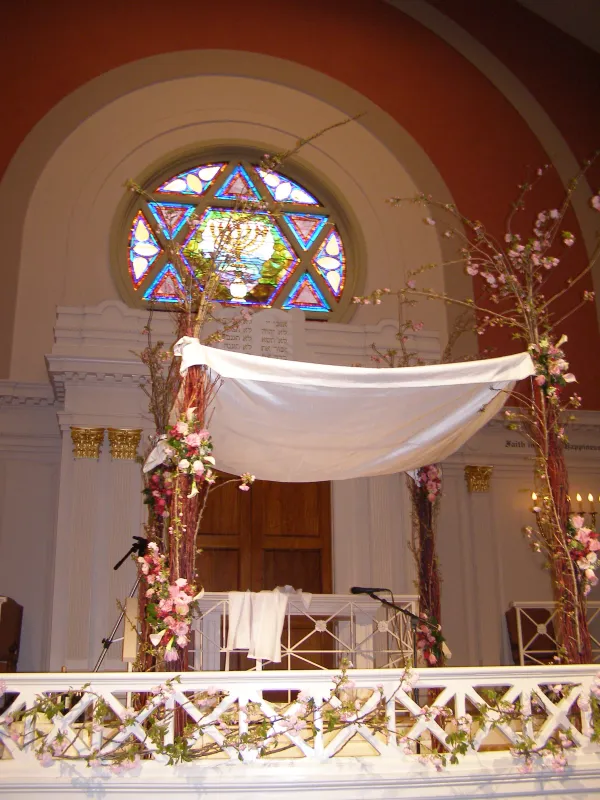
Under the chuppah, surrounded by family and tradition, two lives become one — the Jewish wedding ceremony is a beautiful blend of ancient law, symbolism, and joy.
Tisha B'Av: The Saddest Day in the Jewish Calendar
On the ninth of Av, Jews mourn the destruction of both Temples and centuries of tragedy — through fasting, lamentation, and the haunting words of the Book of Lamentations.