What Is a Seder? The Passover Meal Explained for Beginners
The Passover seder is a structured meal and ritual retelling of the Exodus from Egypt — part dinner, part interactive storytelling, part theological argument. Here is everything a beginner needs to know.
More Than a Meal
If someone tells you they are going to a seder, they are not just going to dinner. They are going to an event — a structured, multi-hour, multi-sensory experience that combines ritual, storytelling, food, argument, singing, and wine (at least four cups of it). The seder is the centerpiece of Passover, the spring festival that commemorates the Israelites’ liberation from slavery in Egypt.
The word “seder” means “order” in Hebrew, and the evening follows a precise sequence of fifteen steps — each with its own purpose, each building toward the central act of retelling the story of the Exodus. If the Torah has one overriding command about Passover, it is this: “You shall tell your child on that day, saying: ‘It is because of what God did for me when I came out of Egypt’” (Exodus 13:8). The seder is how that telling happens.
The Seder Plate
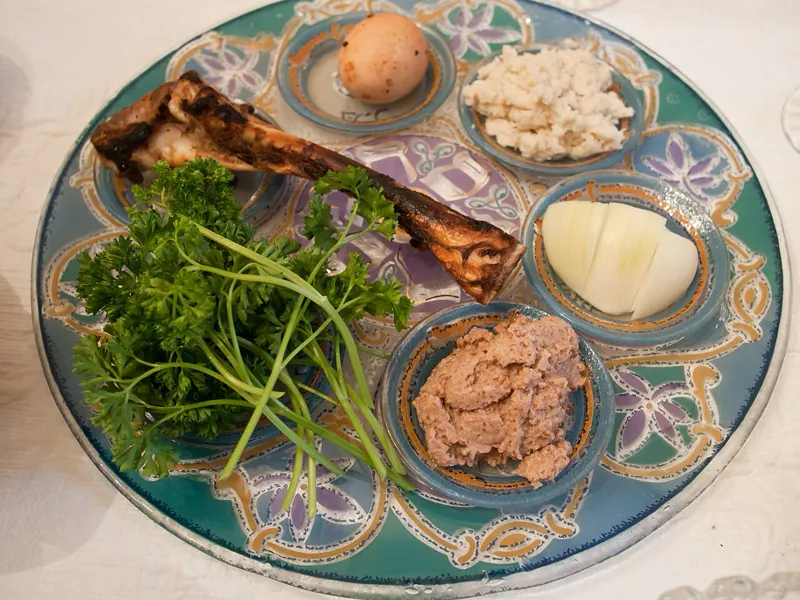
At the center of the table sits the seder plate (ke’arah), which holds six symbolic foods:
- Zeroa (shankbone): A roasted bone representing the Passover sacrifice offered at the Temple. Most families use a roasted chicken neck or lamb shank bone. It is symbolic — you do not eat it.
- Beitzah (egg): A hard-boiled egg, roasted or browned, representing the festival offering and the cycle of life. Some see it as a symbol of mourning for the destroyed Temple.
- Maror (bitter herb): Usually horseradish (or romaine lettuce), representing the bitterness of slavery. You eat this — and it should make your eyes water.
- Charoset: A sweet paste made from apples, nuts, wine, and cinnamon (Ashkenazi) or dates and nuts (Sephardic), representing the mortar that the Israelite slaves used to build Egyptian structures. Delicious.
- Karpas (green vegetable): Parsley, celery, or potato, dipped in salt water to represent tears shed in slavery. Eaten early in the seder.
- Chazeret (additional bitter herb): A second bitter herb (often romaine lettuce), used for the Hillel sandwich later in the evening.
Some families add a seventh item — an orange (symbolizing the inclusion of marginalized groups) or olives (representing hope for peace).
The 15 Steps
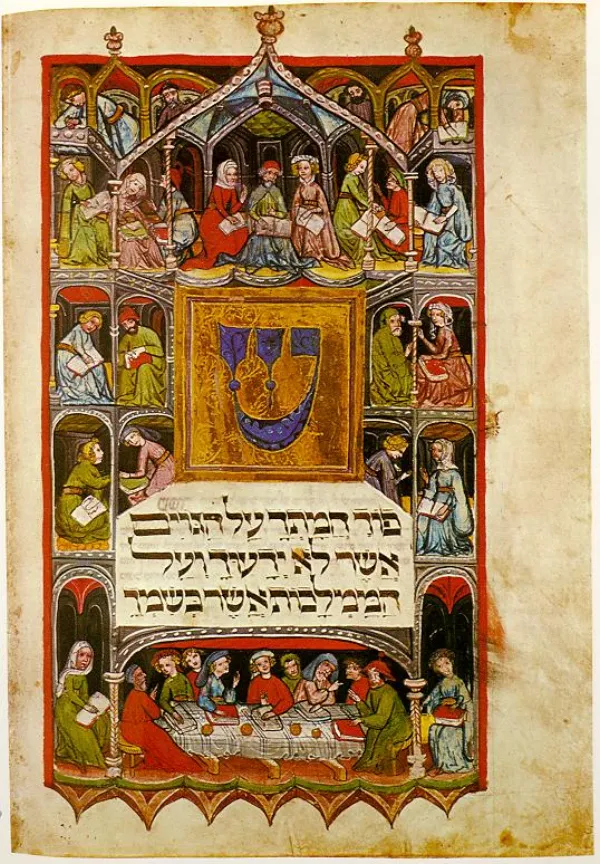
Here are all fifteen steps. Do not panic — your Haggadah will guide you through each one.
- Kadesh — Sanctification. Recite the kiddush over the first cup of wine. The evening officially begins.
- Urchatz — Wash hands without a blessing. A ritual handwashing before eating the karpas.
- Karpas — Dip a green vegetable in salt water and eat it. The salt water represents the tears of slavery.
- Yachatz — Break the middle matzah into two pieces. The larger piece becomes the afikoman, which is hidden for children to find later.
- Maggid — The telling. This is the heart of the seder — the retelling of the Exodus story, the four questions, the four sons, the ten plagues, and the declaration: “In every generation, a person is obligated to see themselves as if they personally left Egypt.” This section ends with the second cup of wine.
- Rachtzah — Wash hands with a blessing, preparing to eat matzah.
- Motzi — The standard blessing over bread (in this case, matzah).
- Matzah — The specific blessing for the commandment to eat matzah. Eat a substantial piece.
- Maror — Eat bitter herb dipped in charoset. The sweetness of the charoset tempers the bitterness — slavery mixed with hope.
- Korech — The Hillel sandwich: matzah, maror, and charoset together. Named after the great sage Hillel, who ate them combined.
- Shulchan Orech — The festive meal. Finally, actual dinner. Typical dishes include matzah ball soup, brisket, roasted chicken, and various vegetable dishes — all without chametz (leavened bread).
- Tzafun — The afikoman is found (or ransomed from the children who hid it) and eaten as dessert. Nothing else is eaten after the afikoman.
- Barech — Grace after meals, followed by the third cup of wine. Elijah’s cup is filled, and the door is opened for the prophet Elijah.
- Hallel — Psalms of praise, completing the liturgical portion. The fourth cup of wine is drunk.
- Nirtzah — Conclusion. Traditional songs, including “Chad Gadya” (One Little Goat) and “Echad Mi Yodea” (Who Knows One). The seder ends with the declaration: “Next year in Jerusalem!”
The Four Questions

The most famous moment of the seder comes early in the Maggid section, when the youngest child at the table asks four questions, beginning with: “Mah nishtanah ha-laila ha-zeh mi-kol ha-leilot?” — “Why is this night different from all other nights?”
The four questions ask:
- Why do we eat only matzah tonight?
- Why do we eat bitter herbs tonight?
- Why do we dip foods twice tonight?
- Why do we recline while eating tonight?
The entire seder is, in a sense, the answer to these questions. The child asks; the community responds with the story of slavery and liberation.
The Four Cups of Wine
Four cups of wine are drunk at specific points during the seder, corresponding to four expressions of redemption that God used in Exodus 6:6-7: “I will bring you out… I will deliver you… I will redeem you… I will take you as My people.” A fifth cup — Elijah’s cup — is poured but not drunk, representing the future, final redemption.
The wine should be red (representing the blood of the Passover sacrifice) and can be grape juice for those who do not drink alcohol. Reclining to the left while drinking symbolizes freedom — slaves did not recline; free people did.
Matzah: The Bread of Freedom
Matzah — flat, unleavened bread — is the signature food of Passover. The Torah explains that the Israelites left Egypt so quickly that their bread did not have time to rise. Matzah must be made from flour and water only, and the dough cannot be allowed to rise for more than 18 minutes from the time the flour contacts the water.
But matzah carries a paradox. The Haggadah calls it both “the bread of affliction” (what slaves ate) and the bread of freedom (what the liberated ate on the way out). Matzah is both poverty and liberation, humility and hope — which is perhaps the deepest message of the seder itself.
Tips for Your First Seder
- Follow the Haggadah. It is your roadmap. Do not try to wing it.
- Ask questions. The whole point is inquiry and discussion. The seder is designed to provoke questions.
- Eat a snack beforehand. The meal does not arrive until step 11, which can be 90 minutes or more into the evening.
- Pace yourself on the wine. Four cups is a lot. Grape juice is perfectly acceptable.
- Participate in the singing. Even if you do not know the words, the tunes are simple and repetitive. Jump in.
- Expect it to be long. But also expect it to be engaging, funny, argumentative, and unlike any other meal you have attended.
Summing Up
The seder is Judaism’s most widely observed ritual — even Jews who do nothing else all year often attend a seder. It survives because it works: it engages every sense, involves every generation, combines the sacred with the delicious, and transforms a historical narrative into a personal experience. You were a slave. You were freed. Now eat, drink, ask, argue, sing — and remember.
Frequently Asked Questions
How long does a seder last?
It depends. A quick family seder might take 90 minutes to 2 hours. A traditional, thorough seder — with extensive discussion, singing, and commentary — can run 3 to 5 hours or more. Some families finish well past midnight. The key is that the seder is not meant to be rushed. But if young children are present, many families abbreviate and focus on the key moments.
Do I need to be Jewish to attend a seder?
No. Seders are famously welcoming to guests of all backgrounds. If you are invited, your host will likely walk you through everything. You do not need to read Hebrew — most Haggadahs have English translations. Bring wine or flowers as a gift, and be prepared for a long, food-filled evening with a lot of talking.
What is the Haggadah?
The Haggadah (literally 'the telling') is the book that guides the seder. It contains the order of the evening, the story of the Exodus, blessings, songs, commentary, and instructions for when to eat what. There are thousands of different Haggadah editions — from traditional to feminist to illustrated children's versions. Every family has a favorite.
Test Your Knowledge
Think you know this topic? Try our quiz!
Take the Jewish Holidays: Advanced Quiz →Sources & Further Reading
Related Articles
The Jewish Calendar: How an Ancient Lunar-Solar System Shapes Jewish Life
The Jewish calendar is a sophisticated lunar-solar system that has kept Jewish holidays, Shabbat, and lifecycle events anchored in their proper seasons for over two thousand years.
Passover (Pesach): The Festival of Freedom
The story of the Exodus comes alive each spring as Jewish families gather for the Seder — the most widely observed Jewish ritual.
Shabbat Foods: A Culinary Journey Through the Day of Rest
From Friday night chicken soup to Saturday afternoon cholent — discover the beloved dishes that make Shabbat the most delicious day of the week.