The Jewish Calendar: How an Ancient Lunar-Solar System Shapes Jewish Life
The Jewish calendar is a sophisticated lunar-solar system that has kept Jewish holidays, Shabbat, and lifecycle events anchored in their proper seasons for over two thousand years.
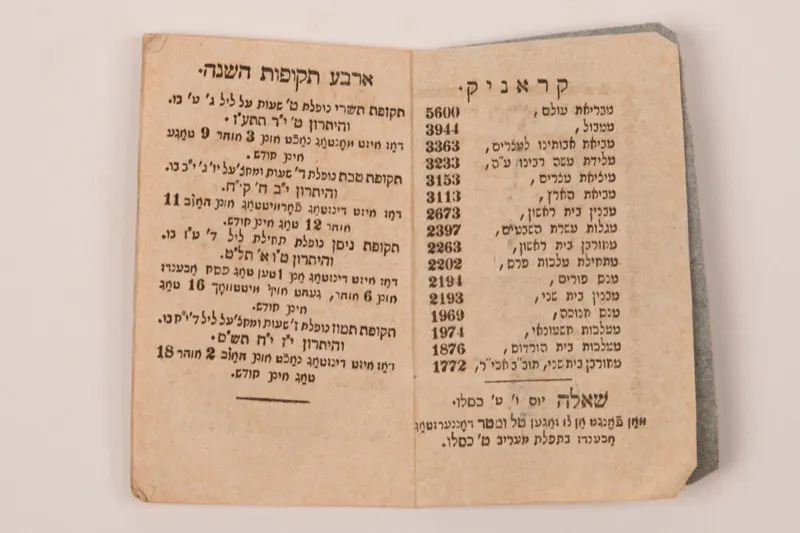
If you have ever tried to figure out when Hanukkah falls this year, you have already encountered one of the world’s most elegant calendrical systems — and one of its most misunderstood. “Hanukkah is early this year,” people say. Or “Passover is late.” But from the perspective of the Jewish calendar, the holidays never move at all. They land on the same Hebrew date every single year. It is the Gregorian calendar — the one most of the world uses daily — that drifts in relation to the Jewish one.
Understanding the Jewish calendar is not just a matter of dates and math, though there is plenty of both. It is a window into how Judaism experiences time itself.
Why Two Systems?
Most modern calendars follow the sun. The Gregorian year is approximately 365.25 days — the time it takes the earth to orbit the sun. Months are artificial divisions that have little to do with any celestial phenomenon.
The Islamic calendar, by contrast, follows the moon. Each month begins with the new crescent, and twelve lunar months make a year of about 354 days. Because this is roughly eleven days shorter than a solar year, Islamic holidays rotate through the seasons over a 33-year cycle. Ramadan, for instance, can fall in summer or winter.
The Jewish calendar does something more complicated: it follows both. Months are lunar — each one begins with the new moon — but the calendar adds a leap month periodically to stay aligned with the solar year. This ensures that Passover always falls in spring, as the Torah commands, and Sukkot always falls during the autumn harvest.
The Months of the Jewish Year
The Jewish year contains twelve months in a regular year and thirteen in a leap year. Here are the months, their approximate Gregorian equivalents, and their lengths:
| # | Hebrew Month | Length | Approximate Gregorian |
|---|---|---|---|
| 1 | Nisan | 30 days | March–April |
| 2 | Iyar | 29 days | April–May |
| 3 | Sivan | 30 days | May–June |
| 4 | Tammuz | 29 days | June–July |
| 5 | Av | 30 days | July–August |
| 6 | Elul | 29 days | August–September |
| 7 | Tishrei | 30 days | September–October |
| 8 | Cheshvan | 29 or 30 days | October–November |
| 9 | Kislev | 29 or 30 days | November–December |
| 10 | Tevet | 29 days | December–January |
| 11 | Shevat | 30 days | January–February |
| 12 | Adar | 29 days | February–March |
| 12b | Adar II (leap years) | 29 days | March–April |
A small note on numbering: although Tishrei — the month of Rosh Hashanah — is popularly considered the start of the Jewish year, the Torah actually designates Nisan (the month of Passover) as the first month. Judaism, characteristically, holds both ideas at once. Tishrei begins the civil year; Nisan begins the religious year.
The Day Begins at Sunset
One of the Jewish calendar’s most distinctive features is that the day does not begin at midnight. It begins at sunset. This comes directly from the first chapter of Genesis: “And there was evening, and there was morning — one day.”
The practical implications are significant. Shabbat begins on Friday evening, not Saturday morning. Holidays start the night before their Gregorian date would suggest. When a family lights candles on Friday afternoon, they are not preparing for Shabbat — they are beginning it.
This orientation toward evening also means that the Jewish calendar tracks sunset and nightfall with precision. In northern latitudes during summer, Shabbat can begin as late as 9 p.m. and end after 10 p.m. Saturday night. In winter, it may start before 4 p.m. The rhythm of Jewish time is not abstract; it is tied to the actual movement of the sun and moon.
Rosh Chodesh: Celebrating the New Moon
Each month begins with Rosh Chodesh — literally, “the head of the month.” In ancient times, the new month was declared by the Sanhedrin (the rabbinical court in Jerusalem) based on eyewitness testimony of the new crescent moon. Witnesses would rush to Jerusalem to report their sighting, and signal fires would relay the news across the land.
Today, Rosh Chodesh is a minor holiday marked by special prayers and Torah readings in synagogue. In many communities, it has become particularly associated with women’s spirituality. The tradition teaches that women were given Rosh Chodesh as a reward for refusing to contribute their jewelry to the Golden Calf.
Leap Years: The Nineteen-Year Cycle
A purely lunar calendar of twelve months adds up to about 354 days — roughly eleven days shorter than a solar year. Left uncorrected, the months would slowly rotate through the seasons, and Passover would eventually fall in winter or summer.
To prevent this, the Jewish calendar follows the Metonic cycle: seven leap years within every nineteen-year period (years 3, 6, 8, 11, 14, 17, and 19). In a leap year, an extra month — Adar II — is inserted before the regular month of Adar. This pushes the spring holidays back into alignment with the agricultural season.

The result is remarkably accurate. Over a nineteen-year cycle, the Jewish calendar and the Gregorian calendar realign almost perfectly. The system, finalized by Hillel II in approximately 359 CE, has required no adjustment since.
Variable Month Lengths
Two months — Cheshvan and Kislev — can have either 29 or 30 days, depending on the year. This flexibility allows the calendar to make fine adjustments so that certain holidays do not fall on days that would create practical or legal difficulties. For example, Yom Kippur — a full day of fasting — cannot fall on a Friday or Sunday, because that would create two consecutive days when cooking is forbidden (Yom Kippur plus Shabbat).
These rules produce six possible year types, ranging from 353 to 385 days. The calendar calculations are complex enough that the medieval scholar Maimonides devoted an entire section of his legal code to them.
The Sabbatical and Jubilee Cycles
Beyond months and years, the Jewish calendar counts in sevens on a larger scale as well. Every seventh year is a Shemitah (sabbatical year), during which, in the land of Israel, agricultural fields are to lie fallow, debts are released, and the earth rests. After seven cycles of seven years — forty-nine years — the fiftieth year is the Jubilee (Yovel), when, according to the Torah, land returns to its original owners and enslaved persons go free.
While the Jubilee is no longer observed in practice, the sabbatical year still shapes Israeli agriculture and finance. And the underlying idea — that time has a moral structure, that even economies need rest and reset — continues to influence Jewish thought.
Living by Jewish Time
For observant Jews, the calendar is not a background detail. It is the organizing principle of life. Each week builds toward Shabbat. Each month is marked by Rosh Chodesh. The year moves through a cycle of holidays — from the solemnity of the High Holy Days in Tishrei, through the joy of Sukkot, the light of Hanukkah in Kislev, the celebration of Purim in Adar, and the liberation of Passover in Nisan — each season carrying its own emotional texture.
Even Jews who do not observe every holiday often feel the pull of this rhythm. There is something grounding about a calendar that connects you to the same cycle your ancestors followed in Babylon, in medieval Spain, in the shtetls of Poland, and in modern Tel Aviv. The moon that marks the beginning of Nisan tonight is the same moon that marked it for Moses.
The Jewish calendar is ancient technology that still works — not because it is a relic, but because it does what all good calendars do: it gives meaning to the passage of time.
Frequently Asked Questions
How is the Jewish calendar different from the regular calendar?
The Jewish calendar is lunar-solar — each month begins with the new moon (lasting 29 or 30 days), but a leap month is added seven times in every 19-year cycle to keep holidays in their proper seasons. The Gregorian calendar is purely solar. This is why Jewish holidays fall on different Gregorian dates each year but always in the same season.
What year is it on the Jewish calendar?
The Jewish calendar counts from the traditional date of creation. The year 2026 CE corresponds roughly to the Jewish years 5786–5787. The Jewish new year, Rosh Hashanah, falls in September or October.
Why does the Jewish day start at sunset?
The practice comes from the creation story in Genesis, where each day of creation is described as 'and there was evening and there was morning.' Evening comes first, so the Jewish day begins at sunset — making Friday evening the start of Shabbat, for example.
Test Your Knowledge
Think you know this topic? Try our quiz!
Take the Jewish Holidays: Advanced Quiz →Key Terms
Sources & Further Reading
Related Articles
Passover (Pesach): The Festival of Freedom
The story of the Exodus comes alive each spring as Jewish families gather for the Seder — the most widely observed Jewish ritual.
Rosh Hashanah: The Jewish New Year
The sound of the shofar marks the beginning of the Jewish New Year — a time of reflection, prayer, and hope for the year ahead.
Shabbat: The Weekly Day of Rest
Every week, Jewish life pauses for 25 hours of rest, reflection, and togetherness — discover the beauty of Shabbat.