How to Run a Passover Seder: The Complete Host Guide
Everything a first-time host needs: shopping list, table setup, the 15 steps of the seder, timing tips, keeping kids engaged, and getting from 'Kadeish' to 'Nirtzah' without losing anyone.
You Can Do This
You have volunteered — or been volunteered — to host a Passover seder. Maybe it is your first time. Maybe Grandma can no longer do it and the mantle has passed to you. Maybe you are the one in your friend group who actually has a dining table. Whatever brought you here, take a breath. You can do this. People have been running seders for over 3,000 years, many of them with less preparation than you are about to receive.
A seder is not a performance. It is a guided conversation, a ritual meal, a storytelling session, and a family gathering rolled into one evening. The Haggadah — the book that guides the seder — provides the structure. Your job as host is to keep things moving, make sure everyone is fed and included, and create an atmosphere where the story of freedom feels alive.
The Shopping List
For the Seder Plate
- Maror: Fresh horseradish root (to grate) or prepared horseradish
- Charoset: Apples, walnuts, sweet wine, cinnamon (see our charoset recipe)
- Karpas: Parsley or celery
- Zeroa: Roasted shank bone (ask your butcher) — or a roasted beet for vegetarians
- Beitzah: Hard-boiled egg, roasted
- Chazeret: Romaine lettuce (additional bitter herb)
- Saltwater in small bowls
For the Table
- Matzah: At least 3 whole matzot per seder plate, plus plenty extra for eating (figure 2–3 sheets per person)
- Wine or grape juice: 4 cups per person (small cups are traditional — about 3.5 oz each)
- Haggadot: One per person
- Elijah’s Cup: One large, beautiful cup filled with wine
- Miriam’s Cup: (optional, popular in many modern seders) Filled with water
- Pillows: For reclining — at minimum, one for the seder leader
- Afikoman bag or cloth: For wrapping and hiding the afikoman
For Dinner
Plan a full Passover meal. Classic options include matzah ball soup, brisket or roasted chicken, roasted vegetables, potato kugel, and Passover-friendly desserts. Everything must be kosher for Passover — no bread, pasta, or leavened products.
Table Setup
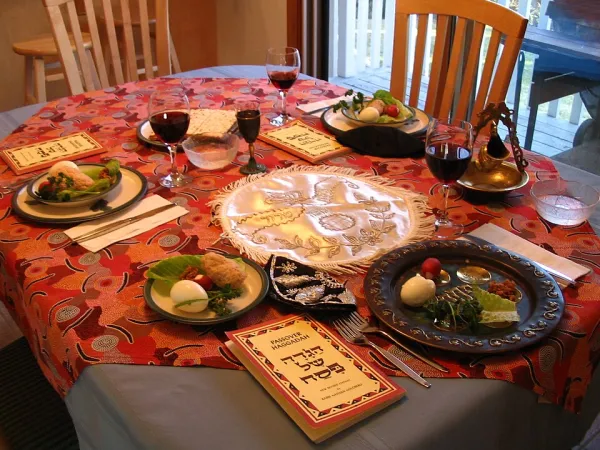
- Place the seder plate at the center or in front of the leader
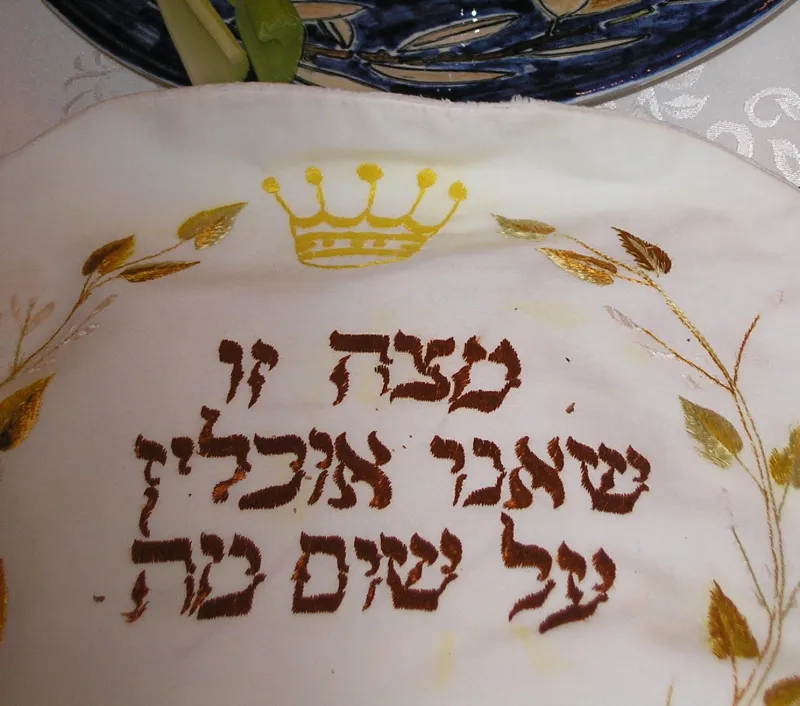
- Stack 3 matzot covered with a cloth or matzah cover nearby
- Set small bowls of saltwater around the table (one per 3–4 guests)
- Place a wine glass at each setting
- Set Elijah’s Cup in a prominent central spot — filled with wine
- Put a Haggadah at each place setting
- Add a pillow to the leader’s chair (and others’ if you have enough)
- Set up a kids’ table if needed, with their own seder plate
The 15 Steps of the Seder
The seder follows 15 ordered steps. Here is what happens at each:
1. Kadeish — Sanctification. Pour the first cup of wine. Recite the Kiddush (the sanctification blessing). Everyone drinks the first cup, reclining to the left.
2. Urchatz — Handwashing. Wash hands without a blessing. The leader can wash at the table with a pitcher and basin, or everyone can take turns at the sink.
3. Karpas — Vegetable. Dip parsley or celery in saltwater and eat. The saltwater represents the tears of slavery.
4. Yachatz — Breaking. Take the middle matzah from the stack of three and break it in half. Wrap the larger piece in a cloth — this is the afikoman. Hide it for the children to find later (or let a child steal it — traditions vary).
5. Maggid — The Story. This is the heart of the seder. Read the Haggadah’s narrative of slavery and liberation. This section includes the Four Questions (traditionally asked by the youngest child), the story of the four children, the ten plagues (dip a finger in the wine and remove a drop for each plague), and the declaration “Dayeinu” (it would have been enough). End by drinking the second cup of wine.
6. Rachtzah — Handwashing. Wash hands again, this time with the blessing.
7. Motzi — Blessing over Bread. Recite the standard blessing over bread (ha-motzi) while holding the matzah.
8. Matzah — Eating Matzah. Recite the specific blessing for eating matzah on Passover. Eat a piece of matzah, reclining.
9. Maror — Bitter Herb. Eat the bitter herb (horseradish), dipping it in charoset. Recite the blessing. This is supposed to make your eyes water — that is the point.
10. Korech — Sandwich. Make a small sandwich of matzah, maror, and charoset. This follows Hillel’s ancient practice of eating the Passover offerings together.
11. Shulchan Orech — The Meal. Dinner! Serve the Passover feast. This is when everyone relaxes, eats, and talks.
12. Tzafun — Afikoman. After the meal, the hidden afikoman must be found (or ransomed from the children who found it). Everyone eats a piece. No more food is eaten after the afikoman.
13. Barech — Grace After Meals. Recite Birkat Hamazon (Grace After Meals). Pour and drink the third cup of wine. Open the door for Elijah the Prophet — tradition says he visits every seder.
14. Hallel — Praise. Recite psalms of praise. Pour and drink the fourth cup of wine.
15. Nirtzah — Conclusion. The seder is complete. Sing “L’Shanah Haba’ah B’Yerushalayim” — Next year in Jerusalem! Follow with traditional songs like “Chad Gadya” and “Echad Mi Yode’a.”
Keeping Kids Engaged
The seder is designed with children in mind — the Four Questions, the afikoman hunt, the songs — but kids still need help staying engaged:
- Assign roles. Give each child a plague to act out, a question to ask, a song to lead.
- Plague props. Plastic frogs, sunglasses for darkness, rubber bugs — props make the ten plagues come alive.
- The afikoman. Announce early that there will be a hunt and a prize. This gives kids something to look forward to throughout the Maggid section.
- Shorten judiciously. You do not need to read every word of the Haggadah. Hit the essential sections and keep the story moving. A seder where the children are engaged for 90 minutes is better than one where they have checked out after 30.
Timing Tips
- Start on time — the seder gets longer than you think
- Plan to reach the meal by 8:30 PM at the latest
- Do not rush the Maggid section — it is the whole point — but do not let it drag
- Have the meal fully prepared and warming so service is fast once you reach Shulchan Orech
- After the meal, keep energy up with singing and the door-opening for Elijah
Cleanup and Aftermath
You will be tired. The kitchen will be a disaster. The kids will be wired from the late bedtime and the afikoman prize. This is normal. This is exactly how a seder is supposed to end — a house full of the evidence of freedom celebrated, a story told, a tradition continued.
Clean up tomorrow. Tonight, you hosted a Passover seder. Well done.
Frequently Asked Questions
How long does a Passover seder take?
A typical seder runs 2 to 4 hours, depending on how much discussion and singing you include. Some families move briskly through the Haggadah in about 90 minutes; some scholarly families go until midnight. A good target for a first-time host is about 2 to 2.5 hours, including the meal. Plan to start around sundown and have dinner on the table by 8:30 or 9 PM.
How many Haggadot do I need?
One per person, ideally. You can find free Haggadot online to print, or purchase inexpensive copies. Having enough copies allows everyone to follow along, read aloud, and participate. If you are short, pairs can share. Many hosts use a mix of traditional and modern Haggadot for variety.
What do I do if I don't know Hebrew?
The seder works beautifully in English. Most Haggadot include transliteration for key blessings and songs, so you can say the Hebrew phonetically. The essential blessings over wine and matzah can be read in transliteration. The storytelling, discussion, and questions — the heart of the seder — work in whatever language your guests speak.
Test Your Knowledge
Think you know this topic? Try our quiz!
Take the Jewish Holidays: Advanced Quiz →Sources & Further Reading
Related Articles
Passover (Pesach): The Festival of Freedom
The story of the Exodus comes alive each spring as Jewish families gather for the Seder — the most widely observed Jewish ritual.
Passover Cooking: A Complete Guide to Pesach in the Kitchen
Everything you need to know about cooking for Passover — chametz rules, the kitniyot debate, Seder plate preparation, matzah-based recipes, Sephardi Passover foods, and practical meal planning.
The Seder Plate Explained
The seder plate holds six symbolic foods that tell the story of the Exodus — from the bitter herbs of slavery to the green of spring and hope. Each item carries layers of meaning and centuries of tradition.