L'Chaim: The Jewish Toast to Life and What It Really Means
L'Chaim — 'To life!' — is more than a drinking toast. It's a Jewish declaration of hope, gratitude, and the choice to embrace life in all its complexity.
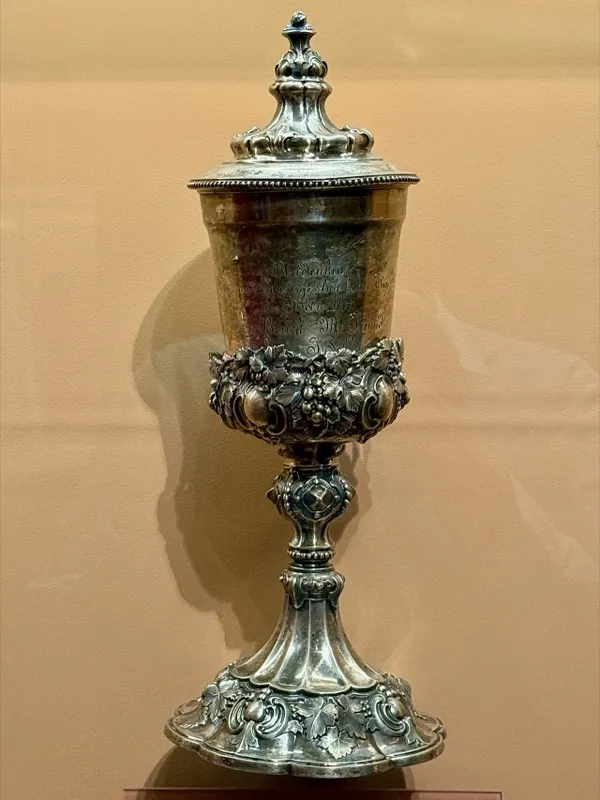
Raising the Glass
There is a moment at every Jewish gathering — a wedding, a Shabbat dinner, a holiday meal, even a casual drink between friends — when someone lifts a glass and says two syllables that carry the weight of centuries: L’Chaim!
The table responds in kind: L’Chaim! Glasses clink. People drink. And life, for that instant, is affirmed.
L’Chaim (לחיים) is Hebrew for “To life!” It is the quintessential Jewish toast, spoken over wine, whiskey, grape juice, or whatever is at hand. But L’Chaim is more than a drinking custom. It is a philosophy compressed into two syllables — a declaration that life, despite everything, is worth celebrating.
The Word Itself
The phrase breaks down simply. The Hebrew letter lamed (ל) at the beginning means “to” or “for.” Chaim (חיים) means “life” — and notably, it is a plural noun. Not life as a singular abstraction, but lives — the full, messy, complicated multiplicity of being alive.
This grammatical detail matters. When you say L’Chaim, you are not toasting to some sanitized idea of life. You are toasting to all of it — the births and the losses, the weddings and the funerals, the triumphs and the Tuesday afternoons when nothing much happens at all. L’Chaim embraces the whole thing.
The pronunciation is luh-KHAH-yim, with the “ch” being the guttural Hebrew sound (like clearing your throat gently). In Yiddish-influenced pronunciation, it often sounds more like luh-KHYE-im.
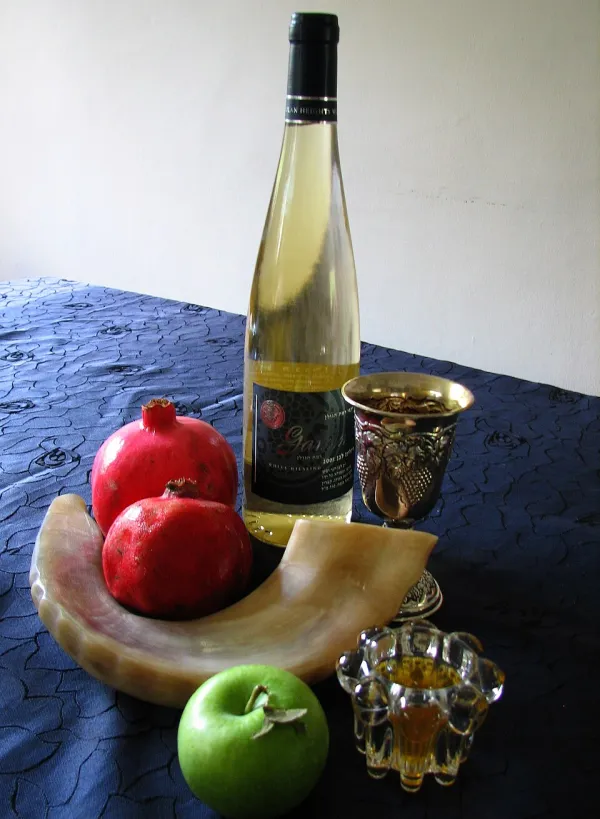
Why Wine? The Kiddush Connection
Wine holds a unique place in Jewish life. Every Shabbat begins with kiddush — the blessing over wine that sanctifies the day. Every holiday, every wedding ceremony, every brit milah includes wine and its accompanying blessing. The rabbis of the Talmud recognized wine as something powerful: it can elevate or it can destroy.
The Talmud (Shabbat 67b) connects the custom of saying L’Chaim over wine to a deep awareness of wine’s dual nature. Wine was used in Temple offerings — sacred, consecrated. But wine is also associated with the story of Noah, who planted a vineyard after the flood and promptly got drunk. By saying “to life!” when we drink, we are consciously choosing the sacred over the destructive.
There is another layer. The Talmud notes that wine was sometimes given to those condemned to death — to numb their pain before execution. By declaring “L’Chaim!” over wine, we distinguish our drinking from that grim context. We are not drinking to forget or to escape. We are drinking to affirm.
L’Chaim at Weddings and Celebrations
At a Jewish wedding, L’Chaim punctuates the entire event. There is often a “L’Chaim” — an engagement celebration — held when the couple first announces their intention to marry. The word itself becomes shorthand for the event: “Are you going to the L’Chaim tonight?”
During the wedding ceremony under the chuppah, the couple drinks wine after the blessings — a ritual L’Chaim built into the liturgy. At the reception, toasts ring out with L’Chaim after L’Chaim. The Hasidic tradition of a farbrengen — an informal gathering with drinks and stories — is essentially one long L’Chaim stretching into the night, fuelled by vodka and wisdom.
At a Shabbat table, the host makes kiddush and the family responds L’Chaim before drinking. At a Passover seder, four cups of wine are consumed — each one an opportunity to affirm life and freedom. The entire rhythm of Jewish time is marked by moments of deliberate, sacred drinking accompanied by this two-word declaration.
Choose Life: The Biblical Root
The deepest root of L’Chaim may be found in Deuteronomy 30:19, one of the most powerful verses in the Torah:
“I have set before you life and death, blessing and curse. Choose life — so that you and your descendants may live.”
Choose life. This is not a passive observation. It is a command — one of the Torah’s most direct. And the Jewish tradition takes it seriously. L’Chaim is, in a sense, the ritual enactment of this biblical commandment. Every time you raise a glass and say “to life,” you are performing the act of choosing life over death, hope over despair, celebration over resignation.
This is especially poignant given Jewish history. A people who have survived exile, persecution, pogroms, and the Holocaust still gather around tables, lift glasses, and declare: to life. There is something almost defiant about it. The world has tried, repeatedly, to extinguish Jewish life. And Jews respond by toasting to it.
Fiddler on the Roof and Popular Culture
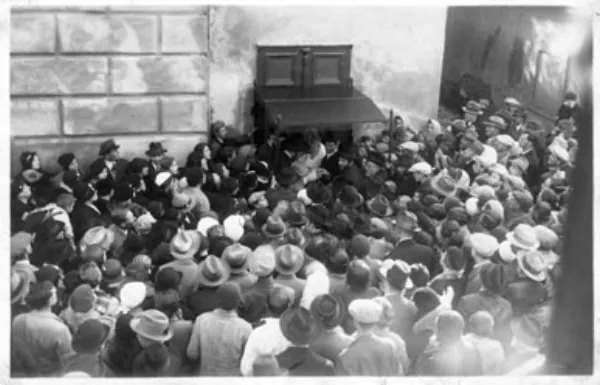
For many people worldwide, their first encounter with L’Chaim came through the 1964 musical Fiddler on the Roof. The song “L’Chaim — To Life!” is one of the show’s most energetic numbers, featuring Tevye and the Russian villagers dancing and drinking together, momentarily united by the universal impulse to celebrate.
The song captures something essential about L’Chaim: it transcends boundaries. In the scene, Jews and non-Jews drink together, enemies and friends raise glasses side by side. L’Chaim is not exclusive. It does not require membership or belief. It requires only the willingness to acknowledge that being alive is, on balance, a remarkable thing.
The phrase has since appeared in countless films, television shows, and songs. It has entered English as a recognized expression, used by people of all backgrounds. Like mazel tov, it has become one of Judaism’s gifts to the wider world — a piece of sacred vocabulary that enriches whatever conversation it enters.
The Full Response
In many communities, when someone says “L’Chaim!” the full response is “L’Chaim tovim ul’shalom!” — “To good life and to peace!” This extended version adds a moral dimension: we are not just toasting to life in the abstract. We are toasting to good life — life lived with purpose, meaning, and peace.
Some Sephardic communities say “L’Chaim ul’vracha” — “To life and to blessing.” The variations are minor, but they all point in the same direction: life is not just a biological fact. It is a moral project. And when we toast to it, we are committing to making it worthy of the toast.
More Than a Toast
L’Chaim is the sound of Jewish resilience distilled into two syllables. It is the grandmother who survived impossible things lifting a glass of Manischewitz at her granddaughter’s wedding. It is the family gathered around the Shabbat table on a Friday night, exhausted from the week, choosing to pause and sanctify the moment with wine and words. It is the friends who clink glasses and laugh too loudly at a bar, because being alive and together is not something to take for granted.
The next time someone raises a glass and says L’Chaim, raise yours back. You are participating in one of humanity’s oldest and most beautiful customs — the deliberate, joyful, slightly defiant act of declaring that life, in all its complexity, is good.
L’Chaim.
Sources
- Talmud Bavli, Shabbat 67b — Talmudic discussion of saying L’Chaim over wine
- Deuteronomy 30:19 — “Choose life” — the biblical root of the toast
- My Jewish Learning — L’Chaim — Overview of the phrase and its usage
- Chabad.org — Why We Say L’Chaim — Deeper exploration of the custom
Frequently Asked Questions
What does L'Chaim mean in English?
L'Chaim (לחיים) literally translates to 'To life!' in Hebrew. It is the most common Jewish toast, said while raising a glass of wine, spirits, or any drink during celebrations. It expresses gratitude for life and hope for continued blessings.
When do you say L'Chaim?
L'Chaim is said whenever glasses are raised at Jewish occasions — at Shabbat dinner over wine, at weddings, engagement parties, holiday meals, and any celebration. It can also be said casually among friends sharing a drink. The response to someone saying L'Chaim is to repeat it back: L'Chaim!
What is the connection between L'Chaim and Fiddler on the Roof?
The musical Fiddler on the Roof (1964) features a famous song called 'L'Chaim — To Life!' sung during a celebration scene. The song helped popularize the phrase worldwide and captures the Jewish spirit of toasting to life even amid hardship and uncertainty.
Test Your Knowledge
Think you know this topic? Try our quiz!
Take the Jewish Holidays: Advanced Quiz →Sources & Further Reading
Related Articles
Jewish Blessings (Brachot): Sanctifying Every Moment
Judaism has a blessing for everything — from bread to thunder, from waking up to seeing a rainbow. Learn about brachot, the system of blessings that turns daily life into sacred practice.
Common Hebrew Words and Phrases Everyone Should Know
Whether you are visiting Israel, attending a synagogue, or just curious, these essential Hebrew words and phrases — from Shalom to Yalla — will open doors and earn smiles.
The Jewish Wedding: A Complete Guide to the Ceremony
Under the chuppah, surrounded by family and tradition, two lives become one — the Jewish wedding ceremony is a beautiful blend of ancient law, symbolism, and joy.