Women of the Wall: The Thirty-Year Fight to Pray
Since 1988, Women of the Wall have fought for the right to pray aloud, wear tallitot, and read Torah at Judaism's holiest site. Their story is one of arrests, court battles, and stubborn faith.
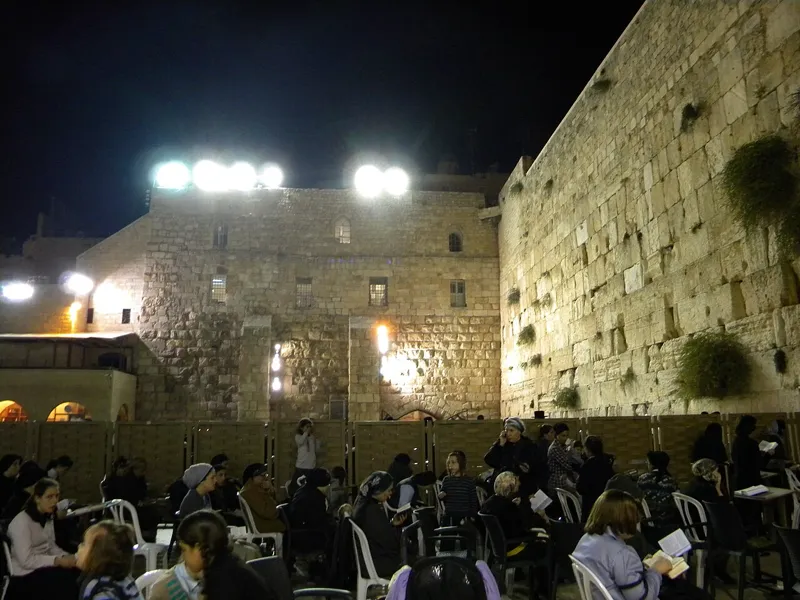
The First Morning
It began on a December morning in 1988. A group of about seventy women — from Israel, the United States, and across the Jewish world — gathered at the Western Wall in Jerusalem. They came from different denominations: Orthodox, Conservative, Reform, secular. They had different practices, different politics, different ideas about almost everything. But they shared one conviction: they had a right to pray.
Not to pray silently, the way women had always been permitted to pray at the Kotel. They wanted to pray aloud. They wanted to wear tallitot — prayer shawls. They wanted to read from a Torah scroll. They wanted to do, in the women’s section of Judaism’s holiest accessible site, what Jewish women did every Shabbat in synagogues across America, Europe, and the liberal Jewish world.
What happened next was not what they expected. As they began to pray, some men and women in the vicinity began shouting. Chairs were thrown. The women were pelted with objects. Police intervened — not to protect the women but to remove them. They were escorted out for “disturbing the peace.”
This was the beginning of Women of the Wall — and a conflict that has lasted more than three decades, involved the Israeli Supreme Court, fractured coalitions, generated international headlines, and become one of the defining struggles in modern Jewish life.
Why the Wall Matters
To understand why this fight is so intense, you have to understand what the Western Wall means — and who controls it.
The Kotel is the last surviving retaining wall of the Second Temple compound, destroyed by Rome in 70 CE. For nearly two thousand years, it has been the holiest site where Jews can pray. When Israel captured the Old City in the 1967 Six-Day War, the moment when soldiers reached the Wall became one of the most iconic scenes in Israeli history.
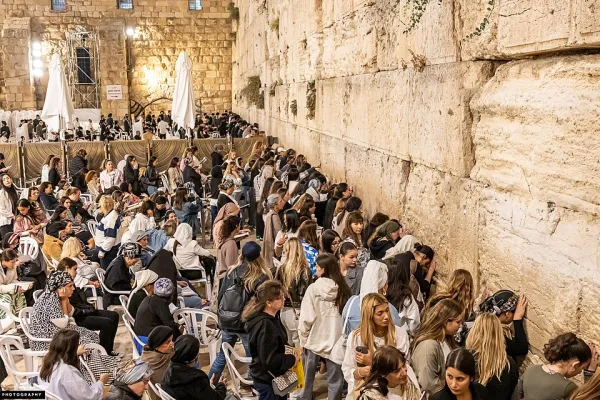
After 1967, the Wall came under the administration of the Western Wall Heritage Foundation, which operates under the authority of the Orthodox rabbinate. The rabbi of the Western Wall — an Orthodox appointment — sets the rules for prayer at the site. Those rules follow Orthodox practice: men and women pray separately, and the customs of Orthodox prayer govern both sections.
For Orthodox Jews, this is entirely appropriate. The Western Wall is a synagogue — the most important synagogue in the world — and it should be governed by halakha (Jewish law) as understood by the Orthodox tradition.
For non-Orthodox Jews, the situation is deeply troubling. The Kotel belongs to all Jews, they argue — not just to one denomination. A Conservative or Reform woman who prays with a tallit in her home synagogue every week is told she cannot do so at the very place that represents the spiritual center of the Jewish people.
This is the tension at the heart of Women of the Wall.
The Legal Battles
Women of the Wall has been to court more times than most people can count. The key decisions:
1994: The Israeli Supreme Court rules that Women of the Wall have the right to pray at the Western Wall but asks the government to find a solution. The government does not.
2000: The Supreme Court again affirms the women’s right to pray but suggests they use an alternative site — Robinson’s Arch, an archaeological area adjacent to the main plaza — to avoid “public disturbance.”
2003: A new law gives the Western Wall Heritage Foundation authority to set prayer regulations. Women of the Wall challenges this but loses. They are directed to Robinson’s Arch.
2013: A Jerusalem magistrate court acquits WOW chairwoman Anat Hoffman of disturbing the peace, ruling that women wearing tallitot at the Wall do not violate any law. This is widely seen as a turning point.
2016: The Israeli government, under the leadership of Natan Sharansky, approves a plan to create an expanded, permanent egalitarian prayer space at Robinson’s Arch. The plan is hailed as a historic compromise. Then, under pressure from ultra-Orthodox coalition partners, the government freezes the plan. It has not been implemented.
The Arrests
The legal technicalities matter, but the human stories matter more.
Over the years, members of Women of the Wall have been detained, handcuffed, strip-searched, and charged with criminal offenses — for wearing a tallit. For singing aloud. For carrying a Torah scroll. These are women — many of them elderly, many of them grandmothers — who have committed no act of violence, damaged no property, and threatened no one. Their crime, such as it is, has been to pray in a way that the Orthodox authorities who control the site do not sanction.
Anat Hoffman, who led Women of the Wall for many years, was arrested multiple times. In one widely reported incident in 2012, she was detained, handcuffed, held overnight, and accused of “performing a religious act that offends the feelings of other worshippers.” She was wearing a tallit.
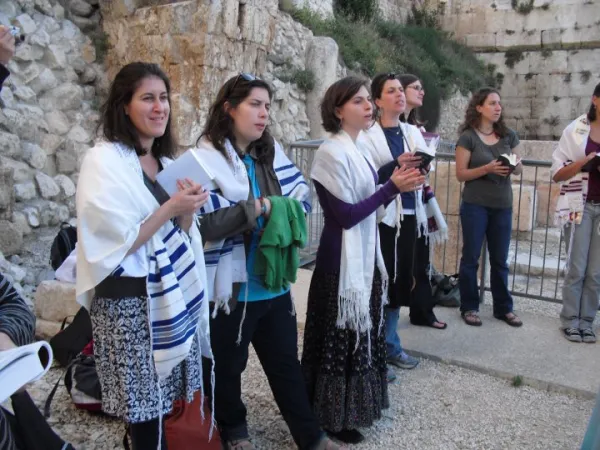
The Opposition
Opposition to Women of the Wall comes primarily from the ultra-Orthodox community, which views mixed or egalitarian prayer practices at the Wall as a desecration. Haredi (ultra-Orthodox) leaders argue that the Kotel is governed by established Jewish law, that women’s public Torah reading and tallit-wearing violate Orthodox norms, and that introducing non-Orthodox practices at the Wall would undermine its sanctity.
This opposition has sometimes turned violent. WOW members have been spat on, cursed, and physically blocked. Counter-protests organized by ultra-Orthodox groups have brought thousands of seminary students to the Wall to drown out WOW’s prayers with whistles and shouting.
The political dimension is critical. Ultra-Orthodox parties hold significant power in Israeli coalition politics, and successive governments have been unwilling to enforce court rulings or implement compromise plans that would antagonize these coalition partners. The 2016 egalitarian plaza plan — negotiated over years, approved by the cabinet — was shelved precisely because of this political calculus.
Global Solidarity
Women of the Wall is not just an Israeli issue. The organization has drawn support from Jewish communities worldwide — particularly from Conservative and Reform movements in North America, which see the Kotel struggle as a reflection of their own status in Israeli religious life.
Major American Jewish organizations, including the Conservative movement’s Rabbinical Assembly and the Union for Reform Judaism, have passed resolutions supporting Women of the Wall and the egalitarian prayer space. Rabbis and lay leaders from abroad regularly join WOW’s monthly Rosh Chodesh (new moon) prayer services at the Wall.
The issue touches a nerve because it symbolizes a larger question: does Israel belong to all Jews or only to the Orthodox establishment? For diaspora Jews who support Israel financially, serve in its advocacy organizations, and feel a deep emotional connection to the Jewish state, the message that their form of Judaism is not welcome at the holiest Jewish site is painful.
Where Things Stand
The egalitarian section at Robinson’s Arch exists, and Jews of all denominations can pray there freely. But it is a consolation prize — smaller, less visible, and lacking the emotional resonance of the main Western Wall plaza. Women of the Wall continues to gather at the main Wall each month, continues to face opposition, and continues to insist that they will not be moved.
The frozen 2016 compromise remains the most viable path forward, but implementing it would require political courage that no Israeli government has yet shown. Meanwhile, the monthly confrontation continues — a small group of women, many of them no longer young, arriving at dawn, wrapping themselves in prayer shawls, opening a Torah scroll, and praying aloud at the place where their ancestors prayed for two thousand years.
They are not going anywhere.
Frequently Asked Questions
What do Women of the Wall want?
Women of the Wall (WOW) seek the right to pray at the Western Wall's women's section with practices that are standard in non-Orthodox Judaism — including wearing tallitot (prayer shawls), laying tefillin, and reading aloud from the Torah. They are not asking to pray in the men's section; they want to pray freely in the women's section, which is currently governed by Orthodox practice.
Is it illegal for women to wear a tallit at the Western Wall?
The legal situation has shifted over the years. In 2003, the Israeli Supreme Court ruled that Women of the Wall should pray at Robinson's Arch rather than the main plaza. In 2013, a Jerusalem court ruled that women wearing tallitot at the Wall were not violating the law. Despite this, women have continued to face harassment and occasional detention. The legal picture remains complex and politically charged.
What is the egalitarian section at the Western Wall?
In 2016, the Israeli government approved a plan to create an expanded egalitarian prayer section at Robinson's Arch, adjacent to the traditional Western Wall plaza. The plan was later frozen under pressure from ultra-Orthodox political parties. The egalitarian section exists but is smaller, less prominent, and less accessible than what was originally agreed upon.
Sources & Further Reading
Related Articles
Jewish Feminism: A History
From the Talmudic sage Beruriah to Sally Priesand's historic ordination, Jewish feminism has transformed religious life — reshaping prayer, leadership, and the fight for women's rights within halakha.
Jewish Prayer: Connecting with the Divine
From the three daily prayer services to personal meditation, discover how Jewish prayer works and what it means.
The Western Wall (Kotel): Judaism's Holiest Place of Prayer
The Western Wall — the last remnant of the ancient Temple Mount — is where Jews have prayed, wept, and celebrated for centuries. It is a place of profound spiritual power.