Torah vs Bible: What's the Difference? A Clear Comparison
Torah, Tanakh, Old Testament, Bible — these terms are often confused. Here's a clear explanation of what each one actually contains and how they relate to each other.
The Question Everyone Asks
It is one of the most common questions in religious literacy: What is the difference between the Torah and the Bible? The answer is simpler than most people think — but it reveals fundamental differences between Judaism and Christianity that go far beyond which books are on the shelf.
Here is the short version: The Torah is the first five books. The Tanakh is the full Jewish Bible. The Christian Bible includes the Tanakh (rearranged and renamed) plus the New Testament. These are not the same book, not the same canon, and not the same tradition — even when they share the same ancient texts.
What Is the Torah?
The Torah (תורה) — also called the Five Books of Moses, the Pentateuch, or the Chumash — consists of five books:
- Bereishit (Genesis) — Creation, the patriarchs, Joseph in Egypt
- Shemot (Exodus) — Slavery, liberation, Mount Sinai, the Ten Commandments
- Vayikra (Leviticus) — Sacrificial laws, purity, holiness code
- Bamidbar (Numbers) — Wilderness wanderings, census, laws
- Devarim (Deuteronomy) — Moses’ farewell speeches, review of the law
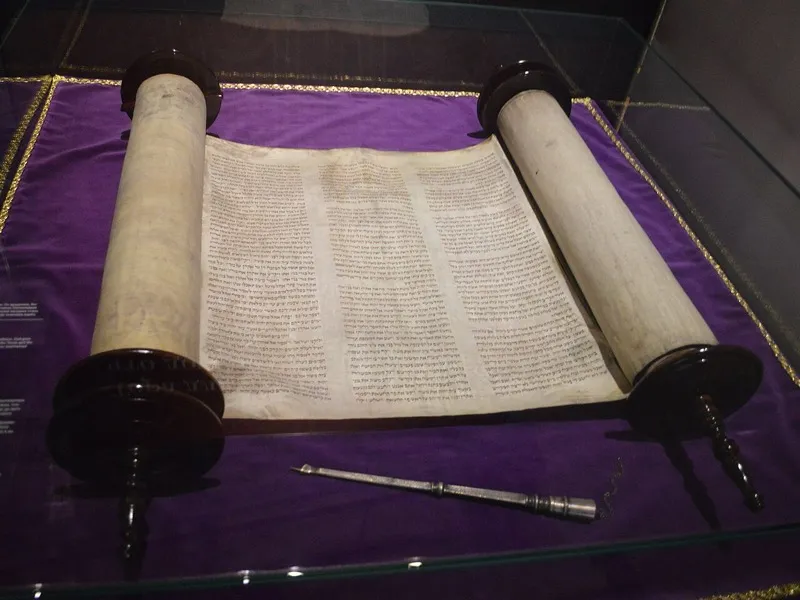
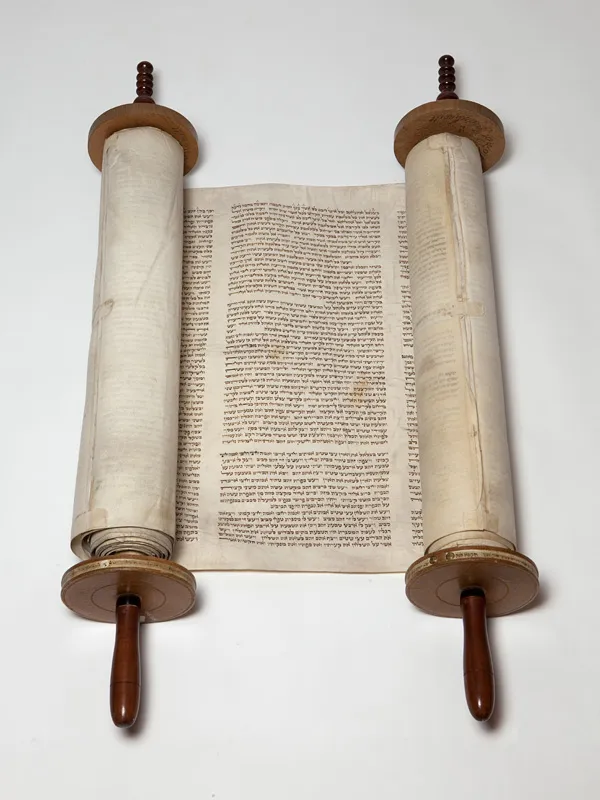
The Torah is the most sacred text in Judaism. In synagogues, the Torah scroll is handwritten on parchment by a trained scribe, housed in a decorated ark, and read aloud in a yearly cycle. When Jews say “the Torah,” they usually mean these five books — though the word can also refer more broadly to all of Jewish teaching.
What Is the Tanakh?
The Tanakh (תנ״ך) is the complete Hebrew Bible. The word is an acronym of its three sections:
- T — Torah (Teaching): The five books described above
- N — Nevi’im (Prophets): Eight books including Joshua, Judges, Samuel, Kings, Isaiah, Jeremiah, Ezekiel, and the Twelve Minor Prophets
- K — Ketuvim (Writings): Eleven books including Psalms, Proverbs, Job, Song of Songs, Ruth, Lamentations, Ecclesiastes, Esther, Daniel, Ezra-Nehemiah, and Chronicles
The Tanakh contains 24 books total. This is the Jewish Bible — the entirety of Jewish scripture. There is nothing after it. No sequel, no continuation, no “new” testament. The Tanakh is complete.
What Is the Christian Bible?
The Christian Bible consists of two parts:
- The Old Testament — which contains (most of) the same material as the Tanakh, but reorganized and sometimes expanded
- The New Testament — 27 books about the life of Jesus, the early church, letters of Paul, and Revelation
The term “Old Testament” is a Christian designation that implies the Hebrew Bible is incomplete — that it has been superseded or fulfilled by a “New” Testament. Jews do not use this term for their scriptures and generally find it theologically loaded.
The Key Differences: A Comparison Table
| Feature | Torah | Tanakh (Jewish Bible) | Christian Bible |
|---|---|---|---|
| Number of books | 5 | 24 | 66 (Protestant) / 73 (Catholic) |
| Sections | One (Torah) | Three (Torah, Prophets, Writings) | Two (Old Testament, New Testament) |
| Languages | Hebrew (some Aramaic) | Hebrew (some Aramaic) | Hebrew, Aramaic, Greek |
| Includes New Testament? | No | No | Yes (27 books) |
| Book order | Same in all traditions | Unique Jewish ordering | Different ordering from Tanakh |
| Final book | Deuteronomy | Chronicles | Revelation |
| Physical form | Handwritten scroll | Printed book (scroll for Torah) | Printed book |
| Oral tradition | Oral Torah (Mishnah, Talmud) | Referenced but separate | Not part of the tradition |
| Canon closed | ~5th century BCE | ~2nd century CE | ~4th century CE |
| Central figure | Moses | Multiple prophets and leaders | Jesus (New Testament) |
The Order Matters More Than You Think
One of the most significant differences between the Tanakh and the Christian Old Testament is the order of the books — and this is not a trivial detail.
The Tanakh ends with 2 Chronicles, which concludes with the Persian king Cyrus declaring that Jews may return to Jerusalem and rebuild the Temple. The last words are: “Let him go up” — an open-ended call to return, to rebuild, to continue the story.
The Christian Old Testament, by contrast, is rearranged so that it ends with the book of Malachi, which includes a prophecy about a messenger who will come before “the great and dreadful day of the Lord.” This reordering creates a narrative arc that points toward the New Testament — toward Jesus as the fulfillment of prophecy.
Same books. Different order. Completely different theological story.
The Oral Torah: What Christians Don’t Have
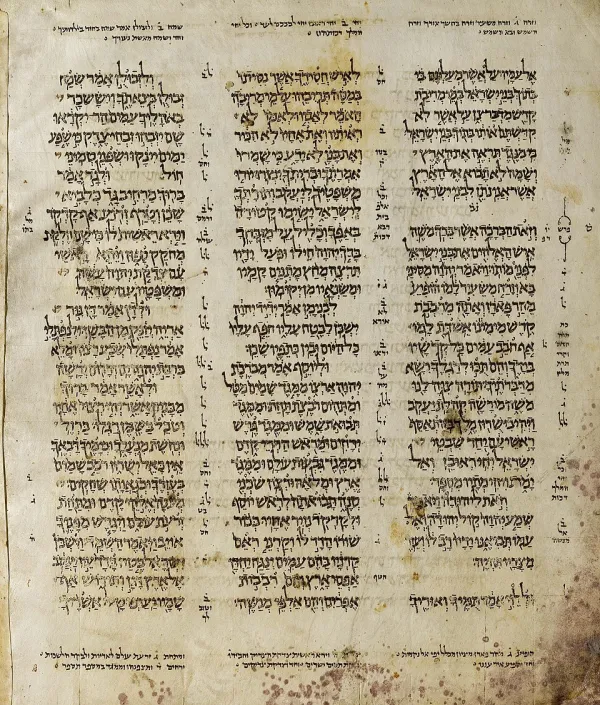
Judaism has a concept that has no parallel in Christianity: the Oral Torah. Jewish tradition teaches that when Moses received the written Torah at Mount Sinai, he also received an oral explanation — a vast body of interpretation, law, and narrative that was transmitted verbally from generation to generation.
This Oral Torah was eventually written down in the Mishnah (compiled around 200 CE) and further elaborated in the Talmud (completed around 500 CE). For observant Jews, the Oral Torah is not supplementary — it is essential. You cannot understand the written Torah without it.
The Christian tradition does not recognize the Oral Torah. This is one of the deepest theological divides between the two faiths: for Judaism, scripture is inseparable from its rabbinic interpretation. For Christianity, the text (and its Christological reading) stands on its own.
Translation Differences
Even where Judaism and Christianity share the same Hebrew texts, they often translate them differently — and these translation choices carry enormous theological weight.
The most famous example: Isaiah 7:14. The Hebrew text uses the word almah (עלמה), meaning “young woman.” Christian translations (beginning with the Greek Septuagint) render this as parthenos — “virgin” — which becomes the basis for the doctrine of the virgin birth of Jesus. Jewish translators insist that almah simply means a young woman of marriageable age, with no implication of virginity.
This single word — almah vs. virgin — has been debated for two thousand years. It illustrates a broader principle: the “same” text is never really the same when it is read through different theological lenses.
Different Books Entirely
Catholic and Orthodox Christian Bibles include several books that are in neither the Jewish Tanakh nor the Protestant Bible. These are called the deuterocanonical books (or Apocrypha) and include:
- Tobit
- Judith
- 1 and 2 Maccabees
- Wisdom of Solomon
- Sirach (Ecclesiasticus)
- Baruch
Jews do not consider these books sacred scripture, though some (like Maccabees) are valued as historical texts. Protestants exclude them from their Bible. Catholics include them. The Christian Bible is not even one thing — it varies by denomination.
Why This Matters
Understanding the difference between the Torah, Tanakh, and Bible is not just an academic exercise. It is the key to understanding how Judaism and Christianity read the same ancient texts and arrive at fundamentally different conclusions.
Jews read the Tanakh as a self-contained, complete revelation. Christians read the Old Testament as a prologue to the New. Same words on the page — different books in the hand.
The next time someone says “the Bible says…” it is worth asking: Which Bible? Whose Bible? And in what order? The answers matter more than most people realize.
Sources
- Sefaria — Complete Torah Text — Full text of the Torah in Hebrew and English
- My Jewish Learning — What Is the Torah? — Overview of Torah in Jewish life
- Jewish Virtual Library — Tanakh — Structure and content of the Hebrew Bible
- Encyclopaedia Britannica — Biblical Canon — History of how different canons were established
Frequently Asked Questions
Is the Torah the same as the Old Testament?
Not exactly. The Torah refers specifically to the first five books (Genesis, Exodus, Leviticus, Numbers, Deuteronomy). The 'Old Testament' is a Christian term for the Hebrew Bible, which contains the Torah plus many additional books. Also, the order and sometimes the text differ between the Jewish Tanakh and the Christian Old Testament.
How many books are in the Jewish Bible vs the Christian Bible?
The Jewish Bible (Tanakh) contains 24 books divided into three sections: Torah (5), Nevi'im/Prophets (8), and Ketuvim/Writings (11). The Protestant Old Testament has the same content but counts them as 39 books (by splitting some). The Catholic Old Testament includes additional books (deuterocanonical). The Christian Bible adds the 27-book New Testament.
Do Jews read the New Testament?
No. The New Testament is not part of Jewish scripture. Judaism does not recognize the New Testament as sacred text. The Jewish canon was established centuries before the New Testament was written, and Jewish theology does not accept the claims about Jesus that the New Testament makes.
Sources & Further Reading
Related Articles
Judaism vs Christianity: Key Differences and Shared Roots
A respectful comparison of Judaism and Christianity — two faiths that share roots but diverge profoundly on God, Messiah, salvation, afterlife, and the meaning of scripture.
The Tanakh: A Complete Guide to the Hebrew Bible
The Tanakh — Torah, Nevi'im, and Ketuvim — is the foundational scripture of Judaism, containing 24 books of law, prophecy, and wisdom. Learn how it was formed and how it differs from the Christian Old Testament.
The Torah: The Heart of Judaism
The Torah is more than a book — it is the living constitution of Jewish life, studied and debated for over three millennia.