The Tanakh: A Complete Guide to the Hebrew Bible
The Tanakh — Torah, Nevi'im, and Ketuvim — is the foundational scripture of Judaism, containing 24 books of law, prophecy, and wisdom. Learn how it was formed and how it differs from the Christian Old Testament.
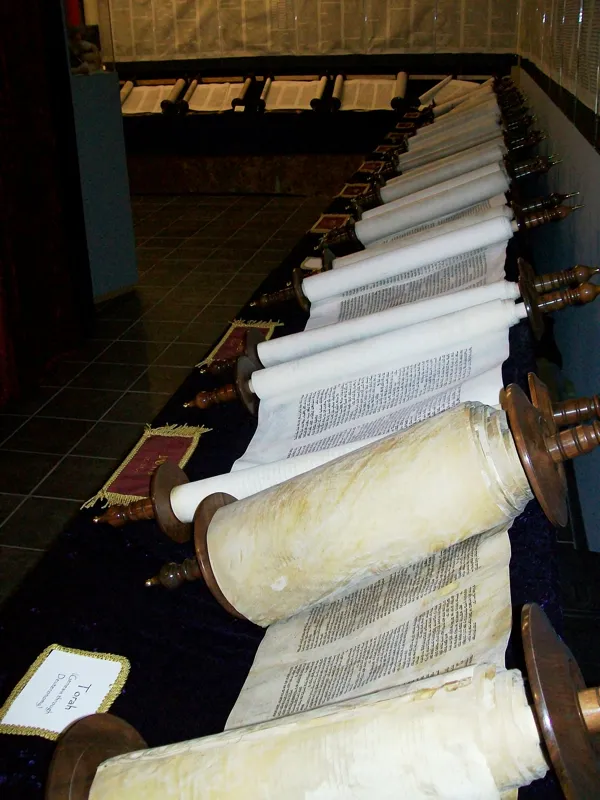
The Book of Books
If you have ever heard someone refer to the “Hebrew Bible,” the “Jewish Bible,” or simply “the Scriptures,” they are talking about the Tanakh. It is the foundational text of Judaism — the wellspring from which Jewish law, ethics, prayer, identity, and storytelling all flow.
The word Tanakh itself is an acronym, formed from the first Hebrew letters of its three divisions: Torah (Teaching), Nevi’im (Prophets), and Ketuvim (Writings). Think of it as three bookshelves within one library, each with its own character and purpose, but all part of a single, coherent collection.
What makes the Tanakh remarkable is not just its religious authority but its literary range. Within these 24 books you will find origin stories and legal codes, passionate love poetry and bitter laments, political history and apocalyptic visions, practical proverbs and existential philosophy. It is not one book — it is an entire civilization’s conversation with God, spanning roughly a thousand years of writing and editing.
Part One: Torah — The Foundation
The Torah (also called the Pentateuch, or the Five Books of Moses) is the most sacred section of the Tanakh. In the synagogue, Torah scrolls are housed in the Ark, dressed in embroidered mantles, and read publicly every week with elaborate ceremony. The five books are:
- Bereshit (Genesis): Creation, the patriarchs and matriarchs (Abraham, Sarah, Isaac, Rebecca, Jacob, Rachel, Leah), Joseph in Egypt.
- Shemot (Exodus): Slavery in Egypt, Moses, the plagues, the splitting of the sea, the revelation at Sinai, the Ten Commandments, the Golden Calf, the building of the Tabernacle.
- Vayikra (Leviticus): Sacrificial laws, purity regulations, the Holiness Code, Yom Kippur rituals.
- Bamidbar (Numbers): The wilderness wanderings, census data, the spies, Korah’s rebellion, Balaam’s talking donkey.
- Devarim (Deuteronomy): Moses’ farewell speeches, a retelling of the law, the covenant renewal, Moses’ death on Mount Nebo.
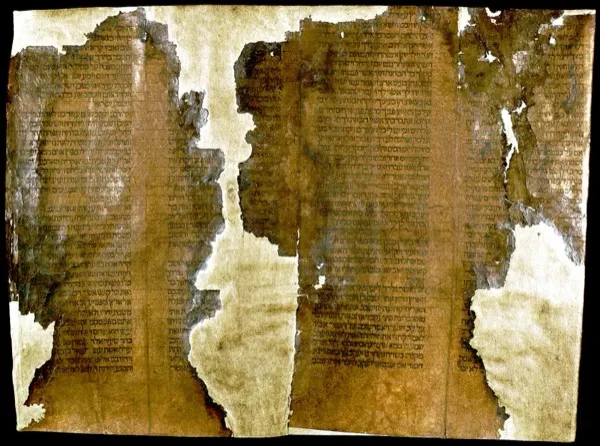
Traditional Judaism holds that the Torah was revealed by God to Moses at Mount Sinai — both the written text and an accompanying oral tradition. Modern scholarship sees the Torah as the product of multiple authorial traditions edited together over centuries. Both perspectives agree on one thing: the Torah is the central document of Jewish civilization, and everything else in the Tanakh radiates outward from it.
Part Two: Nevi’im — The Prophets
The Nevi’im is divided into two sub-sections:
Former Prophets (Nevi’im Rishonim)
These four books read like a continuous historical narrative, tracing Israel from the conquest of Canaan through the monarchy to the destruction of the First Temple:
- Joshua: The conquest and settlement of the Promised Land.
- Judges: The chaotic period of tribal leaders — Deborah, Gideon, Samson — before the monarchy.
- Samuel (1 & 2): The rise of the monarchy under Saul and David, counted as one book in the Tanakh.
- Kings (1 & 2): Solomon’s Temple, the divided kingdom, the prophets Elijah and Elisha, and the fall of both kingdoms — also counted as one book.
Latter Prophets (Nevi’im Acharonim)
These are the prophetic books proper — the words of individuals who spoke in God’s name, often challenging kings and society:
- Isaiah: Visions of justice, comfort (“Comfort, comfort my people”), and the future redemption. Many scholars distinguish between at least two “Isaiahs” — chapters 1-39 and 40-66.
- Jeremiah: The weeping prophet who warned Jerusalem of its coming destruction and lived to see it happen.
- Ezekiel: The visionary prophet of the exile — the valley of dry bones, the divine chariot (merkavah), the future Temple.
- The Twelve (Trei Asar): Hosea, Joel, Amos, Obadiah, Jonah, Micah, Nahum, Habakkuk, Zephaniah, Haggai, Zechariah, and Malachi — counted as a single book. These “minor” prophets are minor only in length, not in importance.
The prophetic books are not merely predictions of the future. They are passionate calls for social justice, warnings against idolatry, and articulations of what it means to live in covenant with God. Amos thunders against those who “trample the heads of the poor.” Micah distills all of religion into a single verse: “Do justice, love mercy, walk humbly with your God.”
Part Three: Ketuvim — The Writings
The Ketuvim is the most diverse section — a collection that defies easy categorization:
- Psalms (Tehillim): 150 poems and hymns attributed to David, covering the full spectrum of human emotion — praise, lament, rage, gratitude, wonder.
- Proverbs (Mishlei): Wisdom sayings attributed to Solomon. “The fear of the Lord is the beginning of wisdom.”
- Job (Iyov): A philosophical drama about innocent suffering. God’s answer from the whirlwind remains one of literature’s most powerful passages.
- The Five Megillot (Scrolls): Song of Songs (love poetry), Ruth (loyalty and conversion), Lamentations (the destruction of Jerusalem), Ecclesiastes (existential reflection — “Vanity of vanities”), and Esther (the Purim story).
- Daniel: Apocalyptic visions and stories of faithfulness in exile.
- Ezra-Nehemiah: The return from Babylonian exile and the rebuilding of Jerusalem (counted as one book).
- Chronicles (1 & 2): A retelling of Israel’s history from Adam through the return from exile (counted as one book).

The Canon: How It Came Together
The Tanakh did not arrive as a finished product. Its canon — the official list of authoritative books — was established gradually:
The Torah was likely finalized first, probably during or shortly after the Babylonian exile (6th-5th century BCE). The Nevi’im was closed as a collection somewhat later, perhaps by the 3rd century BCE. The Ketuvim remained fluid the longest; debates about certain books (Ecclesiastes, Song of Songs, Esther) continued into the rabbinic period.
A common misconception is that a “Council of Yavneh” around 90 CE formally closed the biblical canon. In reality, the process was more organic — a gradual consensus within the rabbinic community about which books possessed ruach hakodesh (the holy spirit of inspiration).
Tanakh vs. the Christian Old Testament
The Tanakh and the Protestant Old Testament contain the same texts but organize them differently. Here are the key differences:
- Book count: The Tanakh has 24 books; the Protestant OT has 39. The difference is in counting: Samuel, Kings, Chronicles, and Ezra-Nehemiah are each split into two books, and the Twelve Minor Prophets become twelve separate books.
- Order: The Tanakh ends with 2 Chronicles — with King Cyrus’ call to return to Jerusalem. The Christian OT ends with Malachi, whose final verses anticipate a future prophet. This structural choice shapes how each tradition reads toward the future.
- Catholic and Orthodox Bibles include additional books (Tobit, Judith, Maccabees, Wisdom, Sirach, Baruch, and additions to Esther and Daniel) that Jews consider sefarim chitzonim — “external books,” not part of the canon.
Living Text
The Tanakh is not a museum piece for Jews. It is read aloud in synagogues every week — the Torah in an annual cycle, the Prophets as Haftarah portions, and the Five Megillot on specific holidays. Children learn its stories in school. Adults study its commentaries — layers upon layers of interpretation spanning two millennia, from the ancient rabbis to contemporary scholars.
The great medieval commentator Rashi (1040-1105) wrote line-by-line interpretations of virtually the entire Tanakh that are still printed alongside the Hebrew text today. To open a traditional page of Tanakh is to enter a conversation that never stopped — the biblical text at the center, surrounded by voices from every century, each adding their reading, their question, their insight.
The Tanakh is not simply what Jews believe. It is how Jews think — a way of reading the world through story, law, poetry, and prophecy, always returning to the text, always finding something new.
Frequently Asked Questions
What does Tanakh stand for?
Tanakh is an acronym formed from the first letters of its three sections: Torah (T), Nevi'im (N), and Ketuvim (K). Torah means 'teaching' or 'instruction,' Nevi'im means 'prophets,' and Ketuvim means 'writings.' Together, these 24 books constitute the complete Hebrew Bible.
How does the Tanakh differ from the Christian Old Testament?
The Tanakh and the Christian Old Testament contain essentially the same material, but they differ in organization and book count. The Tanakh has 24 books; Protestant Bibles count 39 by dividing Samuel, Kings, Chronicles, and Ezra-Nehemiah into separate books and splitting the Twelve Minor Prophets. The order also differs — the Tanakh ends with Chronicles, while the Christian OT ends with Malachi.
How many books are in the Tanakh?
The Tanakh contains 24 books: 5 in the Torah (Genesis through Deuteronomy), 8 in the Nevi'im (Joshua, Judges, Samuel, Kings, Isaiah, Jeremiah, Ezekiel, and the Twelve Minor Prophets as one book), and 11 in the Ketuvim (Psalms, Proverbs, Job, the Five Megillot, Daniel, Ezra-Nehemiah, and Chronicles).
Sources & Further Reading
Related Articles
The Talmud: A Beginner's Guide to Jewish Oral Law
The Talmud is the vast ocean of Jewish thought — centuries of rabbinic debate on law, ethics, storytelling, and the meaning of life, all compiled into one extraordinary work.
The Ten Commandments: Foundation of Moral Law
Given at Mount Sinai and inscribed on two stone tablets, the Ten Commandments form the moral bedrock of Judaism — and have shaped ethical thinking across civilizations.
The Torah: The Heart of Judaism
The Torah is more than a book — it is the living constitution of Jewish life, studied and debated for over three millennia.